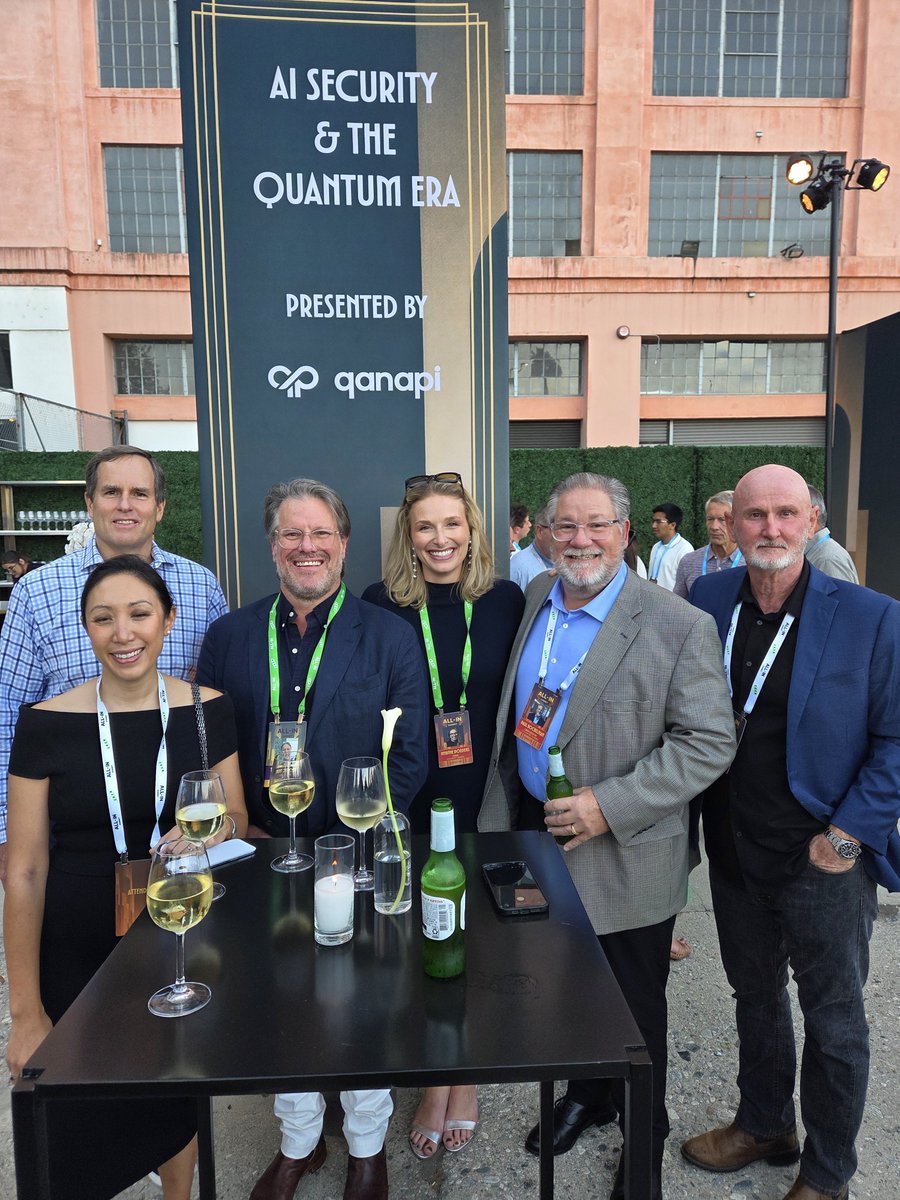
How can agencies keep #sensitivedata protected as encryption standards progress? At #GooglePublicSectorSummit, Martin Rieger, Chief Solutions Officer at @Qanapi, joined @FedGovToday to discuss cryptographic agility and the importance of adaptable, long-term #dataprotection. Watch now: https://t.co/raPOm5Fetg
@ttunguz Or - ensuring sensitive/closely held data never makes it to the LLMs in the first place. Data security at scale locally, fields encrypted before leaving the boundary, and remaining unreadable to the models. + certified integrity of outputs with zK proofs. Just a thought...
The primary users of the Internet are no longer human. They’re AI agents.
As agents move from answering questions to completing tasks, they’ll increasingly decide which products to use, which services to subscribe to, and where to spend money on our behalf.
a16z's Olivia Moore and Justine Moore on the B2A economy: https://t.co/Y4aT9wibgb
At #BillingtonCybersecuritySummit, @HHSGov's Charlee Hess joined @FedGovToday to discuss how practical cybersecurity goals and resources can help providers strengthen resilience and protect continuity of care: https://t.co/CZbHR9Yps4
All cyber-related EOs, Memos, Directives, and more in one place to demystify the unmatched pace of 2026. Data security can be complex, but understanding how it applies to your business shouldn't be. Link in thread for the full breakdown.
@ThisWeeknAI We volunteer as tribute - quantum-proofing the data going into models and mathematically proving nobody tampered with it/your outputs or used your secure data to train their LLMs⚙️
@Jason@ThisWeeknAI We volunteer as tribute - quantum-proofing the data going into models and mathematically proving nobody tampered with it/your outputs or used your secure data to train their LLMs⚙️
Software vendors: your customers inherit your cryptographic posture. Documenting which of your components are sufficiently validated and which are still in the CMVP queue will save everyone time at assessment.
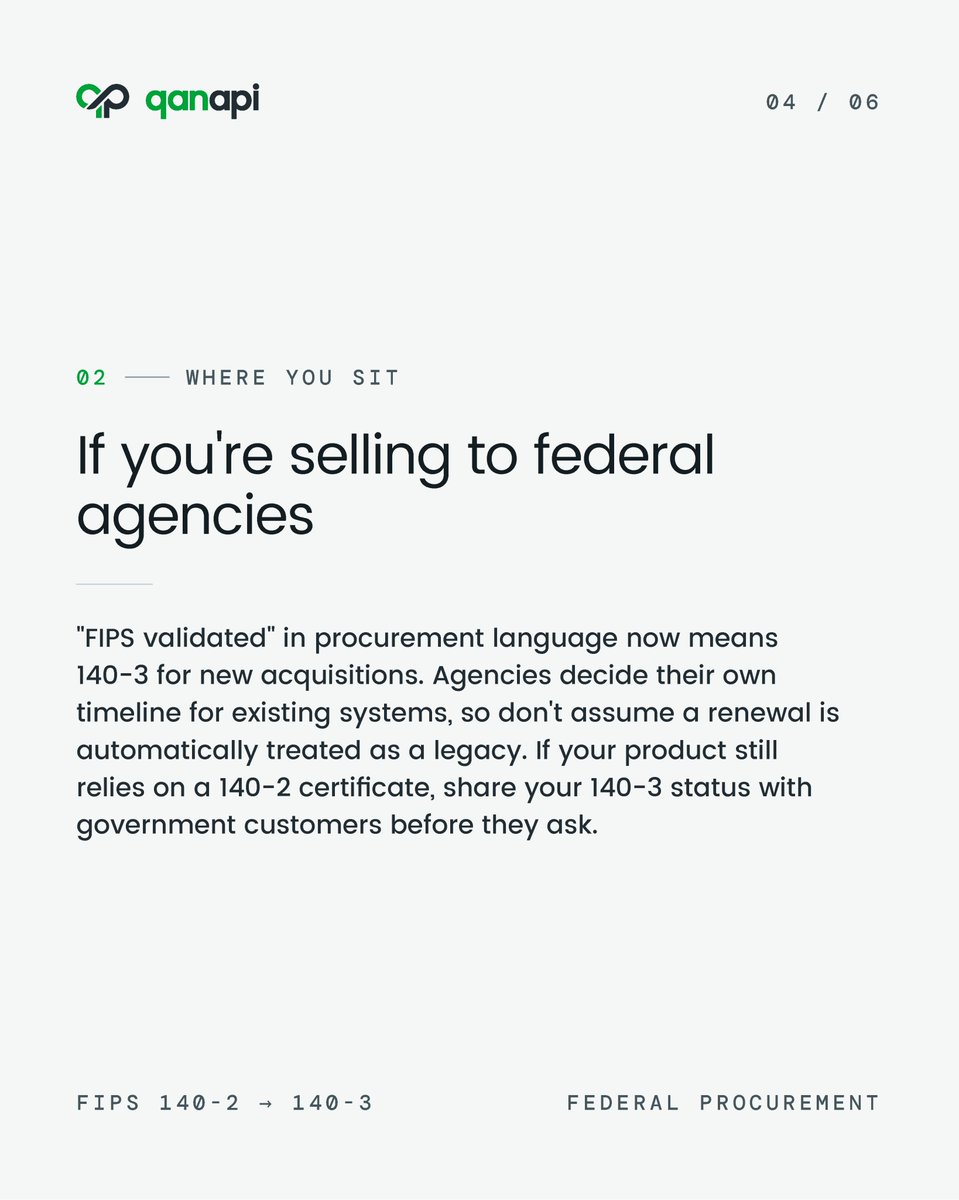
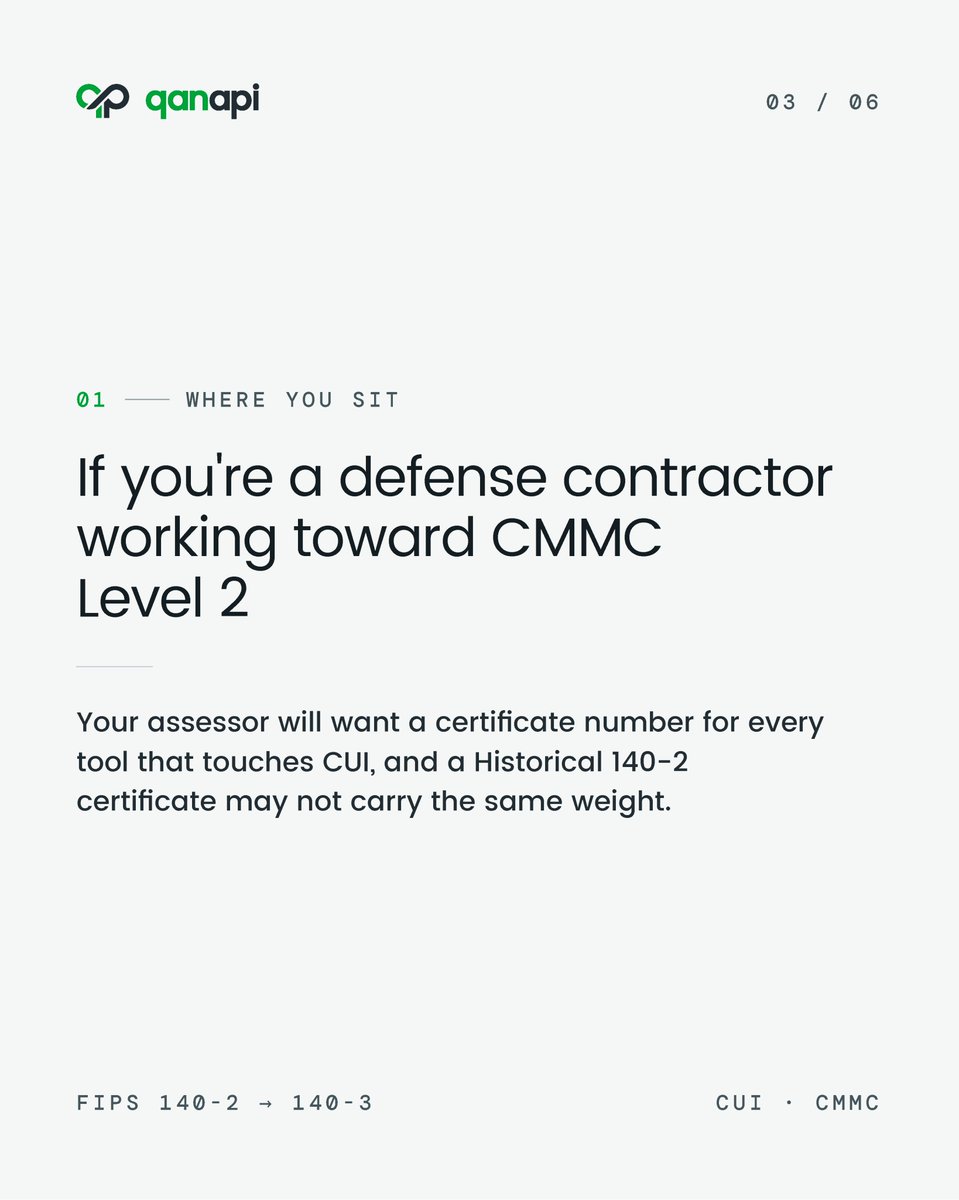
Important Monday read: as of today, FIPS 140-2 becomes a legacy standard.
Every NIST 140-2 certificate moves to the historical list today, meaning they no longer check the box for new federal procurement. Nothing automatically breaks and the modules will continue to work, but 140-3 is now the only route to validated cryptography.
What this means depending on where you sit:
Defense contractors working toward CMMC Level 2: your assessor will want a certificate number for every tool that touches CUI, and a 140-2 certificate may not carry the same weight.
Selling to federal agencies: "FIPS validated" in procurement language now means 140-3 for new acquisitions. Agencies decide their own timeline for existing systems, so don’t assume a contract renewal will be grandfathered in. If your product still relies on a 140-2 certificate, share your 140-3 status with government customers before they ask.
Doesn't matter how high you build the wall if the contents behind it are free for the taking. @EyeOn_AI and @TrentDTelford dive into AI data security on the latest episode: https://t.co/XWO0X48Tcd
@PhillipWylie We'll throw in another option: securing the data before it goes into any LLM and providing the ZK proofs to validate (or flag) the provenance on the other end