It was both insightful and fun to contribute to the “Days of Digital Technologies 2026” in Berlin, discussing European and international collaboration from the perspective of quantum technologies. Opened by @bmftr_bund Federal Minister Dorothee Bär, the event brought together science, industry, start-ups and policy to discuss how research becomes technology, and creates value for society. In our session, Julia Christina Hess, Stephan Ilaender and I made some points in short talks, as part of a wider discussion.
A few points I made: Scientific openness is a source of our strength. International exchange and collaboration are essential to scientific progress. Technological sovereignty requires capabilities of our own: strong research, expertise, infrastructure and the ability to build. Europe would be well advised to step up its efforts. There must be a reliable path from a good scientific idea to a viable technology. This requires sustained support and continuity across research, development and deployment.
Thank you, Johann Schmidt, for the thoughtful and lively moderation, in a debate format inspired by the British House of Commons. A wonderful way to bring different perspectives into conversation!
#QuantumTechnologies #EuropeanCollaboration #Innovation #DaysofDigitalTechnologies2026 #HTAD #TddT
What can #quantumcomputing deliver — and where are its limits? A perspective on the opportunities and realities of the field at the annual meeting of the Gesellschaft Deutscher Naturforscher und Ärzte e.V. (#GDNÄ) in Bremen.
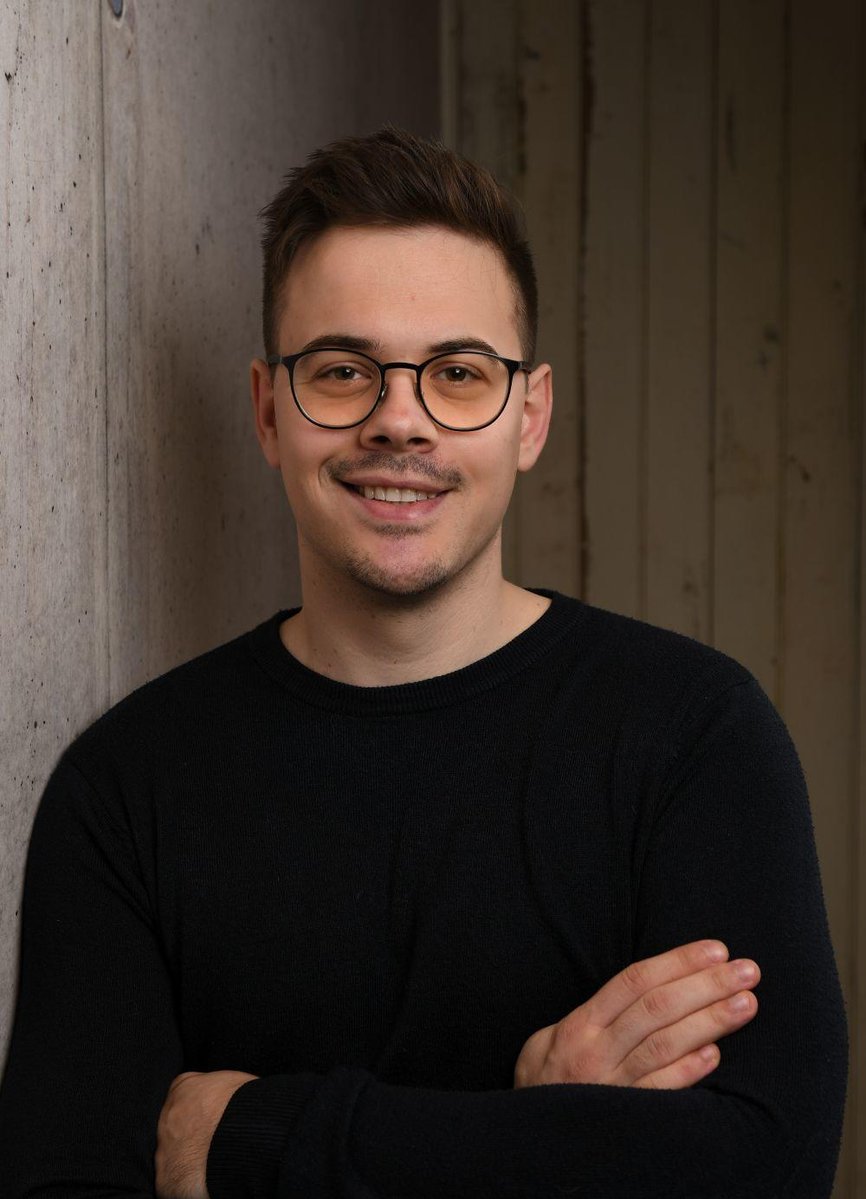
I am thrilled to announce that my PhD student Franz Josef Schreiber has been awarded a 2026 Google PhD Fellowship in Quantum Computing!
I am very proud of Franz. He is an excellent student working at the interface of quantum computing and artificial intelligence, and seeing his ideas and hard work receive this recognition makes me very happy.
What makes this particularly special to me is that this is the third #GooglePhDFellowship in Quantum Computing for our group at @FU_Berlin, following @EliesMiquel and @QuAntonioMele. Having such wonderful young researchers in the group is one of the great joys of my job. Seeing our students recognised alongside researchers from places such as MIT, Oxford and Berkeley means a lot to me. It shows that with good ideas, persistence and quite a bit of sweat, quantum research at the highest international level is possible here in Germany. I feel proud of what we are building together in #Berlin.
I also deeply value our close scientific ties with colleagues at @GoogleQuantumAI. The exchange of ideas and shared enthusiasm for quantum research mean a great deal to me, well beyond any individual award. Thank you for supporting these excellent young scientists.
Congratulations, Franz! Very well deserved. For more about Franz and the fellowship, see the press release of the Freie Universität Berlin. https://t.co/LxtRyBqQUi
The future will be quantum — but how exactly?
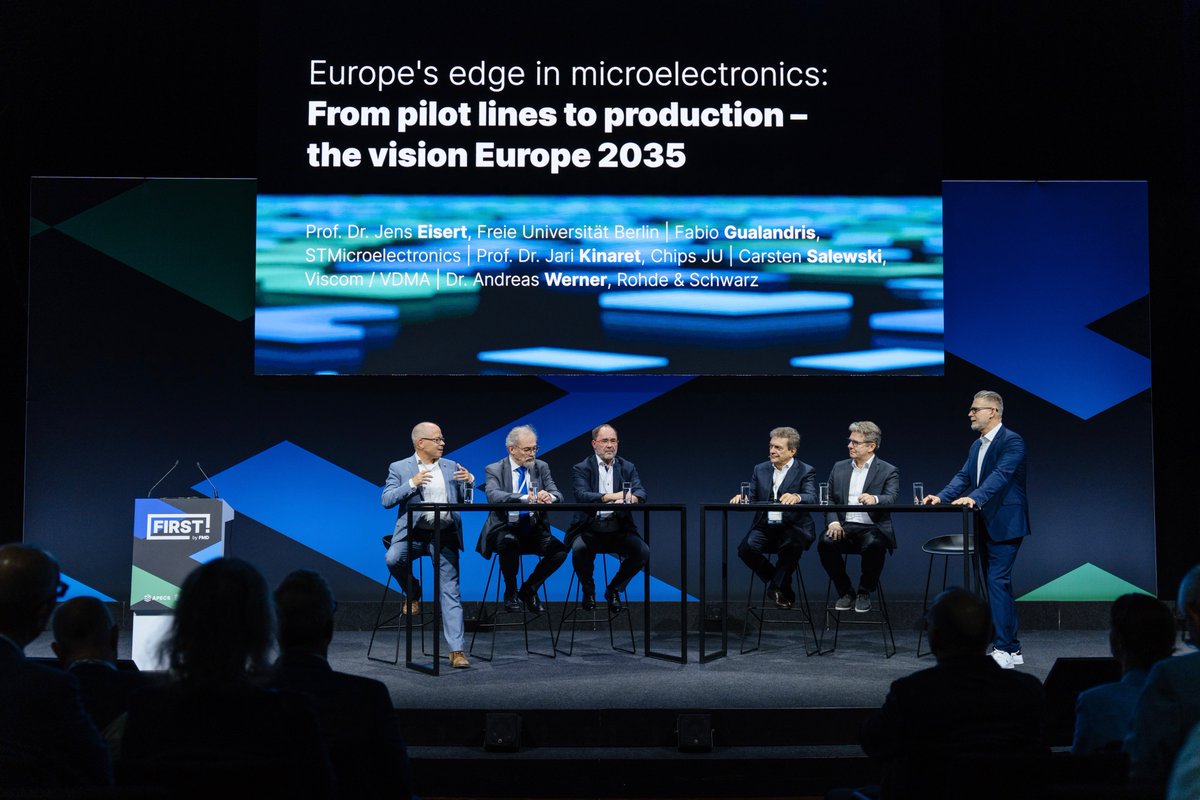
Semiconductors and quantum technologies are converging, as discussed at #FIRST by FMD. Where will quantum computing create value, and what capabilities should Europe build now?
https://t.co/dLav1SUAzH
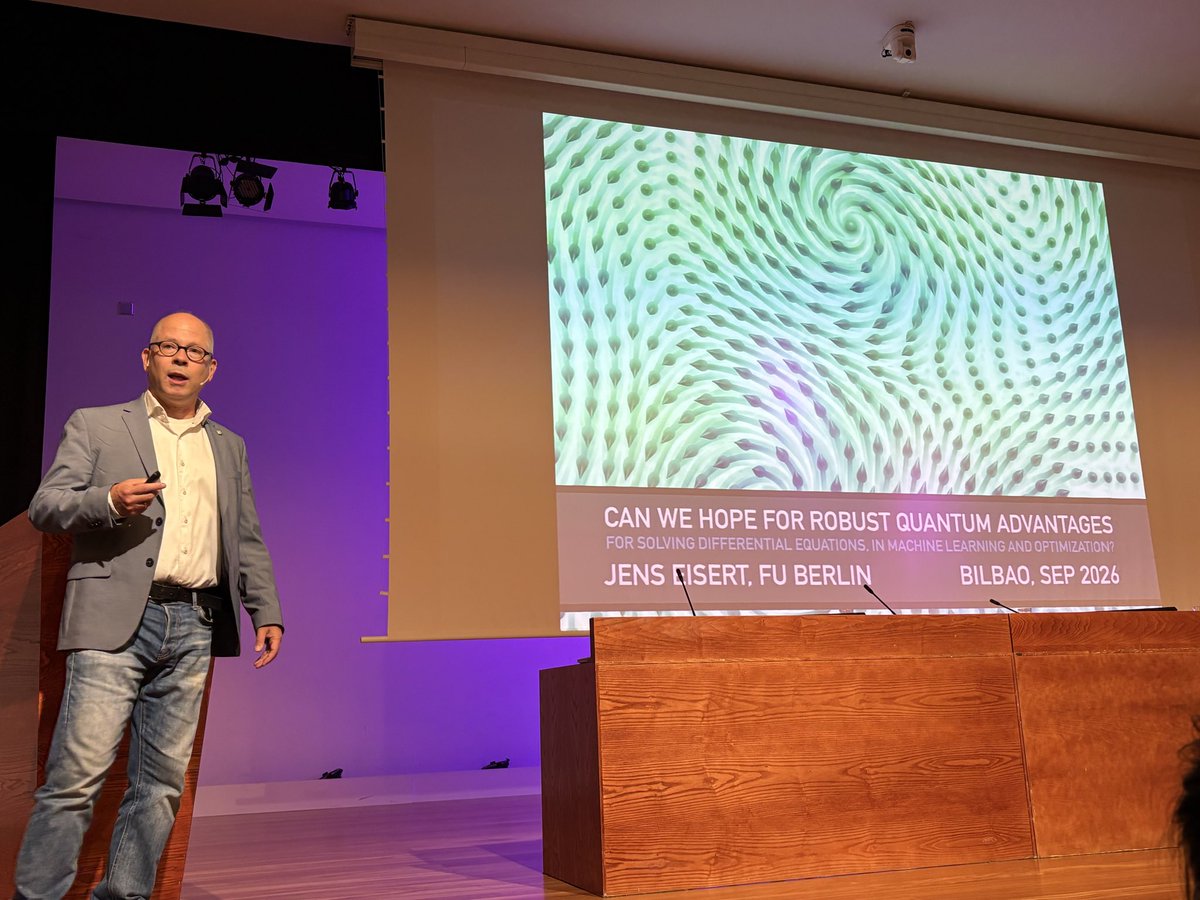
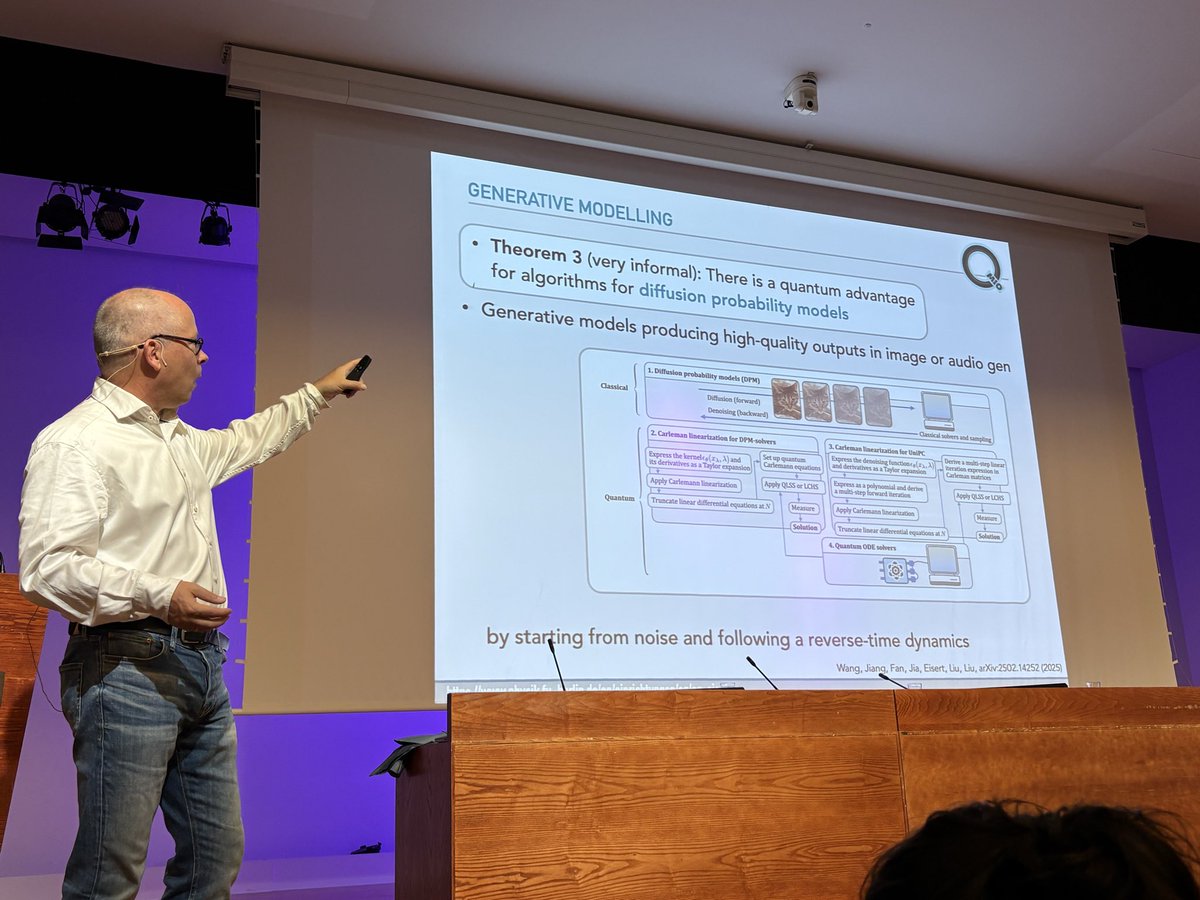
It was a great pleasure to speak at #AIDAQ2026 by @Bitkom_AI_Data in #Berlin about the potential impact of quantum computing on AI and combinatorial optimization — and, importantly, about where we can rigorously establish quantum advantages and where important questions remain open.
Many thanks, Natalia Stolyarchuk, for the kind invitation!
What is a weak or strong classical simulation of a quantum system?
I have always been under the impression that these are well-defined notions that can be readily cast into precise mathematical definitions. But there are some ambiguities in the fine print. We were recently surprised to discover that, even within our own group, we were using the same terms in very different—and sometimes incompatible—ways when discussing the classical simulation of quantum systems. We are now curious to learn whether our individual interpretations are aligned with broader trends in the community.
A group in our team, led by @EliesMiquel, has put together a short poll (it should take less than 10 minutes):
https://t.co/d9DPqNKJCT
We thought it would be fun to sift through the anonymous responses, and we plan to summarize the results in a blog post in case others find them interesting as well.
We would greatly appreciate it if you could share this poll with your network of quantum researchers. We will be collecting responses until July 31, 12:00 noon (Berlin time). If you have any questions, please feel free to contact Elies Gil-Fuster at [email protected].
Wishing you a fun and fruitful summer. Some researchers at @FU_Berlin.
Quantum technologies are set to transform computing, communication, materials science, chemistry, optimization, and AI. Drawing on over 20 years of world-leading research, we provide strategic and technical expertise—without the hype.
Stay tuned. More to come.