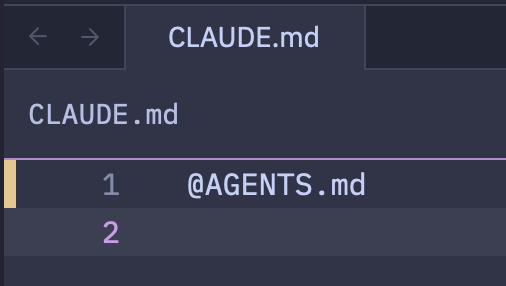
Built an agent skill that ports Christopher Alexander's constraint-first design method into how AI breaks down hard problems: find the most constrained subproblem, solve it first, then move on.
`npx skills add https://t.co/SzCnHnS4cK --skill fewest-degrees-of-freedom`
A few AI automations/skills we run at @PlanetScale:
* e2e sweeper, constantly goes over flakes and finds the root causes, tries to debug them.
* doc refresher. Runs every 6 hours, makes sure any doc is up-to-date, and opens a PR with fixes. Human reads it and merges it. We love docs, humans read them, but also makes sure future agent runs are not confused.
* A bespoke /kube-review skill that runs alongside Bugbot. Makes sure some of the best practices we have about running k8s controllers are implemented.
* Backup sweeper. Checks backups failures across all of PlanetScale fleet, checks slack for any previous conversations, debugs it in production with read-only accesses, and suggests a fix with commands that show exactly why a Backup has failed. We have a rule that backups are always taken. If there is an issue with any customer for straight 2 days, we'll open an incident.
* Feature flag removal check. Checks the whole fleet, making sure a feature flag is either not used, or if in use that it's rolled out to %100. It's triggered only if a feature flag is removed from the codebase.
* Recreate detector check. Ensures that any changes do not cause fleet-wise disruptions or mass-recreate/rollouts of Kubernetes services/objects.
We also have a few more automations that go over slack messages, reads any complaints (i.e.: `looks like a false positive, it's not a backup failure, but a flake`), and then literally adjusts the SKILL that runs the automation. It's making sure the skills are constantly up to date.
So far we really like these. However, I realized that creating initially an automation requires still quite a bit of clean-up and maintenance until it's good enough. It needs tuning because they are not deterministic. Or sometimes the prompt is too vague. But the great thing about them, especially when you use Cursor's automations for example, each automation is an agent run, so you can just jump into it, and continue the agent loop. It's very powerful.
WARNING: Longer post (but worth reading or bookmarking for later).
Your life has seasons.
Each one is unique. Characterized by its own distinct desires, struggles, opportunities, and identity.
But one reflection I've had recently is just how easy it is to completely disassociate with the present season.
To give all your time and energy toward a longing for some nostalgic memory of a prior season or an anticipation for some beautiful state of a future season.
You look back at the past and all you see is sunshine. Because it all worked out. You forget (or glaze over) the struggle you endured. You're here today. You made it. You're alive. You're doing fine.
You look forward at the future and dream on what could be. You'll have so much more. More freedom. More purpose. More health. More deep connection. More everything.
The past is beautiful and the future feels limitless. So, logically, you slowly start to treat everything about the present as the bridge. A dash connecting your past and your future. A gap to be crossed as quickly as possible.
Everything you do today is in anticipation of some eventual end state.
I'm doing this now, so that I can have that later.
Unfortunately, the danger of that dissociation with the present is significant. You may spend your entire life living for a future that has a decidedly mirage-like property. You inch closer, but when it's right in front of you, it disappears and reappears on the horizon.
You may spend your entire life skipping through the present, deferring your presence, your joy, and your very humanity to a future that never comes.
In a classic French fable, a young boy is gifted with a magic ball of golden thread. He's told that if he simply pulls on the thread, time will leap forward. The catch, of course, is that once it's pulled, it can never be put back.
The young boy takes advantage of the newfound powers. Each time he's faced with a boring day at school, a frustrating set of chores, or a scolding from his parents, he pulls the thread, skipping through to the good parts.
As an adult, he continues, leaping through mundane struggles in his marriage, the friction of having a newborn, and the boredom at work. He finds himself pulling on the thread more and more, avoiding even the most minor inconveniences of his life.
But when he wakes up one day and sees an old man looking back at him in the mirror, he's filled with regret. He realizes in that moment that as he chose to skip through the boredom, struggles, and friction, so too did he miss the real texture of being alive.
How often do we all do the same? How easily do we default into this disassociation? Disconnecting from the present in anticipation of some future.
A mentor recently asked me this:
"Where are you going and why are you in such a rush?"
It hit me hard.
And to be honest, I haven't stopped replaying those words since he said them.
Why are you in such a rush?
The world wants you to rush into everything. Rushed decisions. Rushed conversations. Rushed relationships. Rushed timelines.
In doing so, you slowly relinquish your agency. You give up your claim on your own life. Surrender authorship to a pen that was never even yours.
In a world that wants you to rush, the ultimate act of rebellion is presence.
Be in the season you're in. Don't romanticize the past, don't fantasize the future. Be here. Be now. Be in this. All of its texture, depth, and struggle. All of its joy, tension, and pain. Sit with the uncertainty. Become friends with it. Fall in love with it.
Because every single thing you do today is something your younger self dreamed of and something your older self will wish they could go back and do.
The good old days are happening, right now.
And the next time you find yourself skipping through the present, remember these words:
Where are you going and why are you in such a rush?
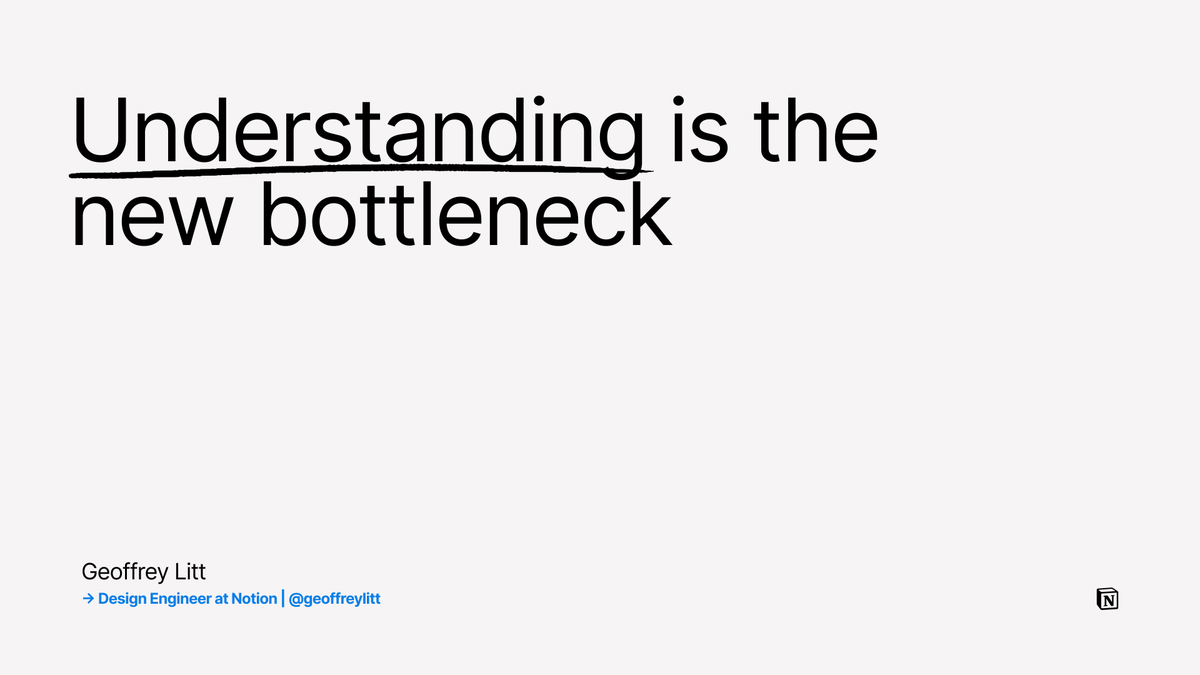
Hot take: I think it's still important to understand the code that our agents write!
In this mega thread (based on my AIE talk today), I will explain why that's the case, and show some ideas for how to efficiently understand code. Alright, let's dive in. 1/
@0xCharlota same. reading is not as intuitive as actually moving the thing. trying to spend more time in planning so it can do a bigger / longer / better job AFK 😆
6. Aprenda uma habilidade vendável de forma obsessiva por 90 dias.
Não o que te interessa. O que o mercado paga. Escolhi criar conteúdo e fui fundo. Monetizei no dia 108. Você não tem tempo para "encontrar sua paixão." Aprenda o que paga. Domine.