the inflation rate is lower because it is capped at a multiple of the dollar value of fees generated - most pools (are maxing out their fee-linked emissions caps meaning the constraining factor is the fees generated
this just means the emissions rate is lower because the pools aren't generating enough fees for the caps to be anywhere near the previous emissions levels
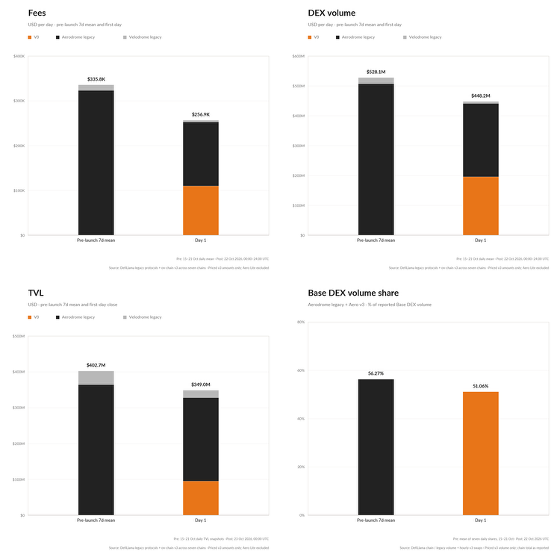
some first day metrics beyond the emissions rate:
> trading fees: $253K (-22% vs previous 7d avg)
> base volume market share: 51% (-5%)
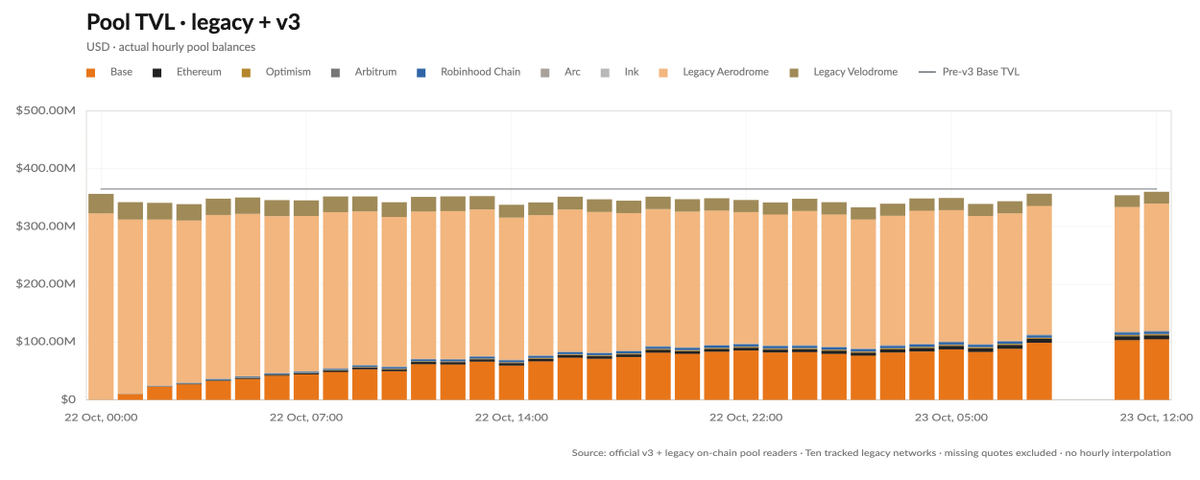
> eod pool tvl: $328M (-10%)
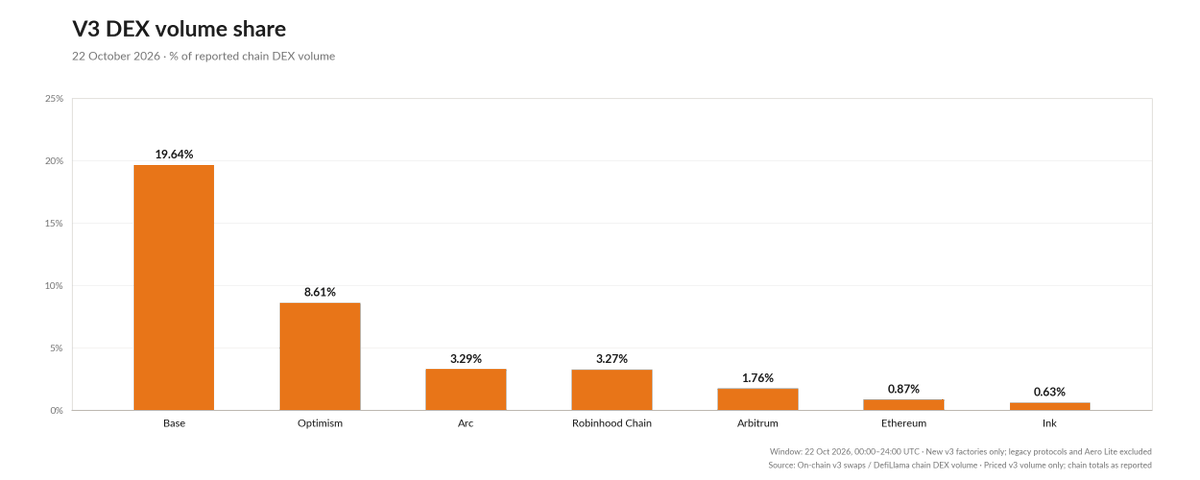
> ethereum mainnet volume market share: 0.87%
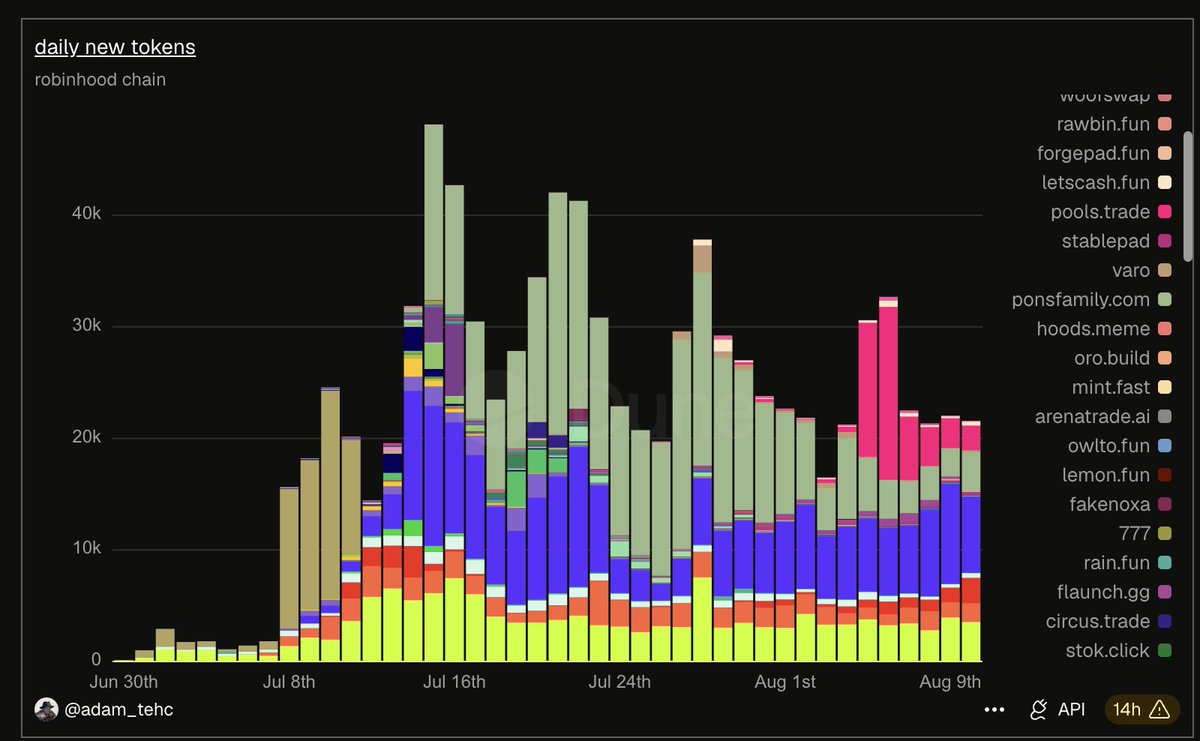
> robinhood chain volume market share: 3.27%
granted, we are very early, so there is time for fees and broader metrics to get back to flat at least, but based on the consensus forecasted growth numbers on the timeline over the last few weeks (some saying revenue would 2x from this etc), it's hard to see this as anything other than falling short of expectations
the total TVL is now only around $5M lower than it was pre-launch (~$360M) but the more interesting point here is that $240M of this is still in legacy aerodrome and velodrome pools earning no emissions or compensation - the key metric to monitor will be how much of this TVL migrates to the new v3 pools and the impact on emissions
most of this data isn't on the public platforms (defillama, artermis etc) yet, so there's still time to close your longs before it becomes accessible and starts being priced in / the bulls who claimed aero would be capturing double digit percentages of market share on mainnet start to unwind
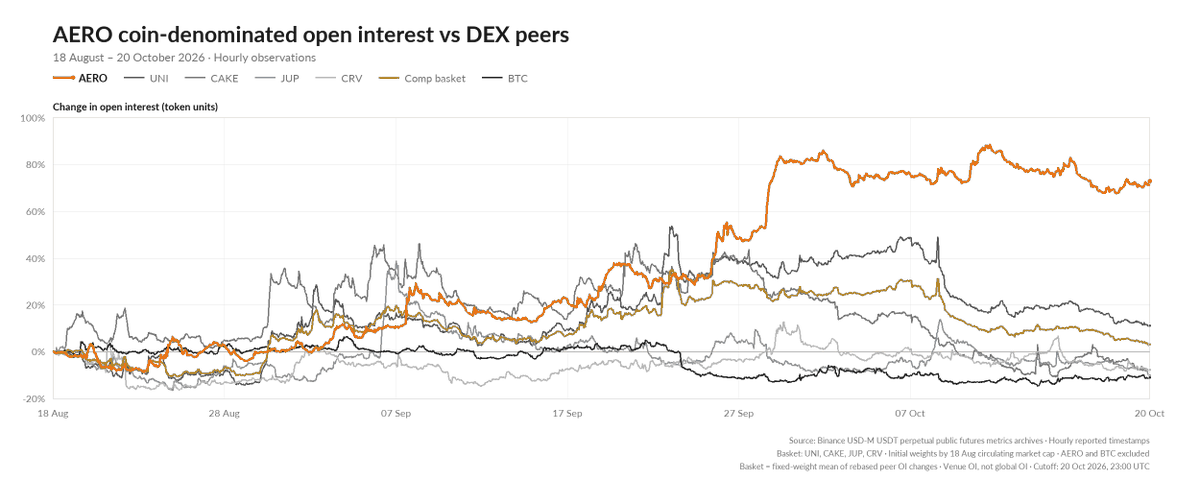
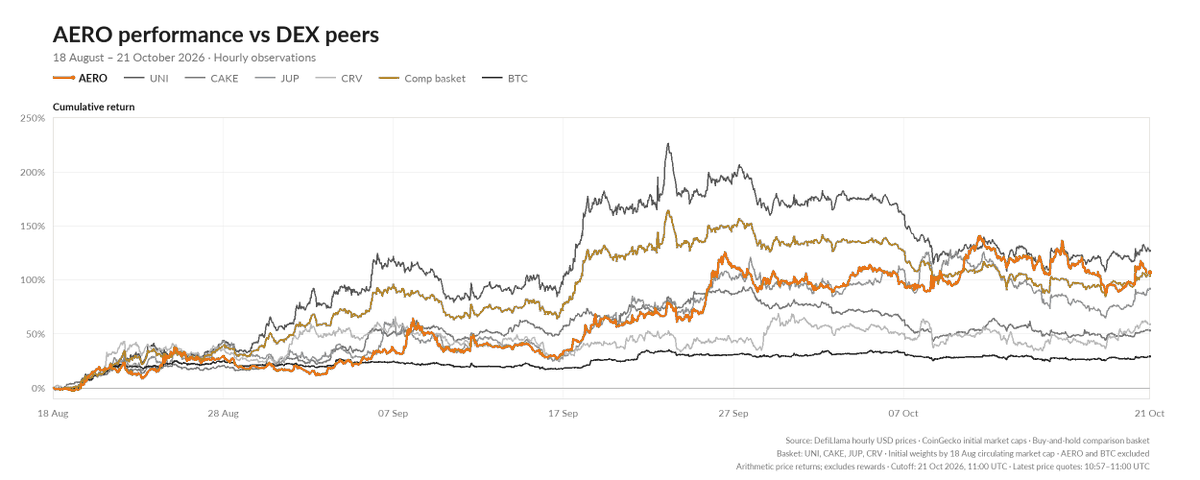
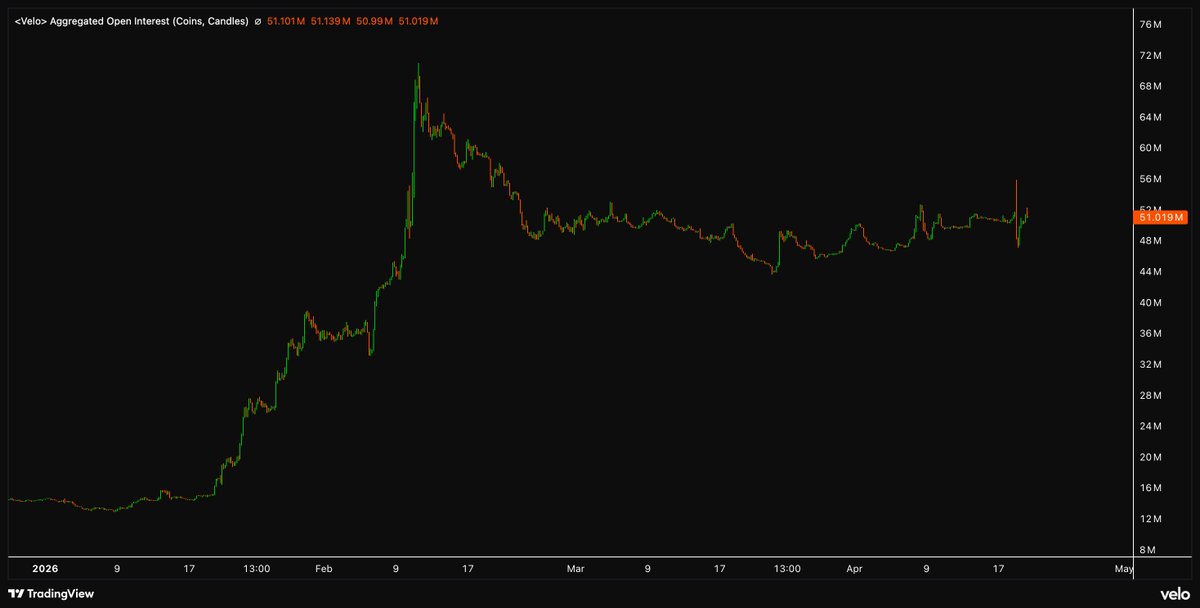
there's also still a pretty significant spread between AERO OI and its peer group which implies to me there is still positioning to be unwound - we are already seeing signs of underperformance; now the catalyst is behind us I expect this to accelerate
invalidation if OI stops dropping and any of the above fundamental metrics mentioned change significantly
~1 day in and the annualized inflation rate for Aero is looking clean.
Aerodrome inflation rate was ~12%
Initial projection for Aero was ~8%
The actual rate since launch? ~6.6%
A first look at the AER Engine's adaptive emissions at work.
the reason I expect the AERO emissions to stay broadly similar (or increase modestly due to the supply base increasing 6% from the merger), is because the team themselves said they expect actual inflation to stay somewhere between 8-12% vs a current rate of ~12%
I agree that the momentum fund could use their voting power to heavily incentivise strategic pools in the new markets, but without the total emissions budget expanding significantly from the forecasted 8-12%, this will mean directing their allocations away from the other existing pools which they were previously incentivising, risking losing market share there instead
on incentive reflexivity, i think you're applying the old fixed-emissions logic to the new model - v3 pool caps cap the dollar value of incentives to a multiple of projected pool revenue
where that cap is binding, a 2x AERO price would approximately halve the tokens required to deliver the same dollar compensation, rather than doubling the value of LP incentives - this improves token dilution, but doesn't automatically improve LP economics
I will concede that upgraded dynamic fees, MEV internalisation and products like metaswaps could improve the economics but the qualifying question is how much incremental value they generate, and whether that's enough to sustain competitive LP returns across the expanded network
overall I still think the market is overly optimistic - I have seen 20 people on the timeline shilling the expanded TAM / protocol upgrades but not a single person questioning whether the dilution of LP compensation could damage competitiveness; the long side of this trade is much more saturated than the short side
if I am wrong then I take a haircut (limited participants left to buy who haven't already), if I'm right, I get to capitalise on all the bulls who haven't read the docs closing their perps longs + LPs selling their emissions
the market structure doesn't reflect this; there appears to be disproportionate residual perps positioning in AERO, which isn't present in similar names or the broader altcoin complex
in my view, the market is pricing a successful aero v3 launch and assuming overly optimistic market share capture on ethereum mainnet + other new chains
the key point the market is misunderstanding is where aerodrome's historical competitiveness on base stems from, and why it won't translate cleanly to new chains:
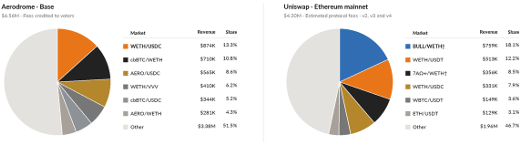
> aerodrome dominates volume on base because it offers more attractive economics for LPs via the emissions subsidy model, which allows them to undercut uniswap on fees whilst still having reasonable depth
> applying the same logic to mainnet and robinhood chain, it initially makes sense to assume that aero will be competitive on these chains too, and perhaps even capture a higher proportion of flow given that there is a larger portion of DEX volume on mainnet routed via aggregators which are front-end agnostic
> in reality, the same emissions (or marginally more emissions depending on how you expect sAERO holders to allocate) will now be spread much more thinly across an order of magnitude more TVL / liquidity and pools, damaging the unit economics for LPs
> AERO emissions per unit of liquidity drops drastically (on average 22% for every additional $100M of TVL) - a haircut almost equivalent to (and greater than in some cases) the uniswap fee switch
> if the economics for LPs are no longer attractive, they are unlikely to provide depth in key strategic markets, leading to disappointment in market share capture, and potentially even loss of market share on base if liquidity is fragmented via more sparse emissions allocation
> the highest-volume markets on mainnet are also gigacompetitive (USDT/USDC and ETH/USDC), so heavy depth incentivisation in low fee pools is really the only route to capturing any flow here
additionally, the value accrual mechanism for vanilla AERO holders is questionable and arguably weaker than UNI: net value accrued to veAERO (trading fee revenue - dollar value of emissions) has been negative for the duration of the project's life so far, let alone net value accrued to the underlying AERO itself via buybacks and fee capture in the momentum fund - if you calculate the multiple using the revenue actually captured by vanilla AERO, it looks much less cheap relative to peers
AERO holders are so hyperfocused on the TAM expansion that they can't see the wood from the trees - what use is a larger addressable market if you lose your competitiveness and subsequent ability to capture it
no one is pricing in a scenario where the chain expansion not only fails to materially increase value capture for aero but also actually damages their existing competitiveness on base - the incentives for LPs on mainnet have to come from somewhere....
risk reward is skewed heavily in favour of an AERO short post-announcement - it's a difficult name to hedge given the low correlations as of recent but long SOL or ETH likely makes the most sense (predictable, mostly beta etc)
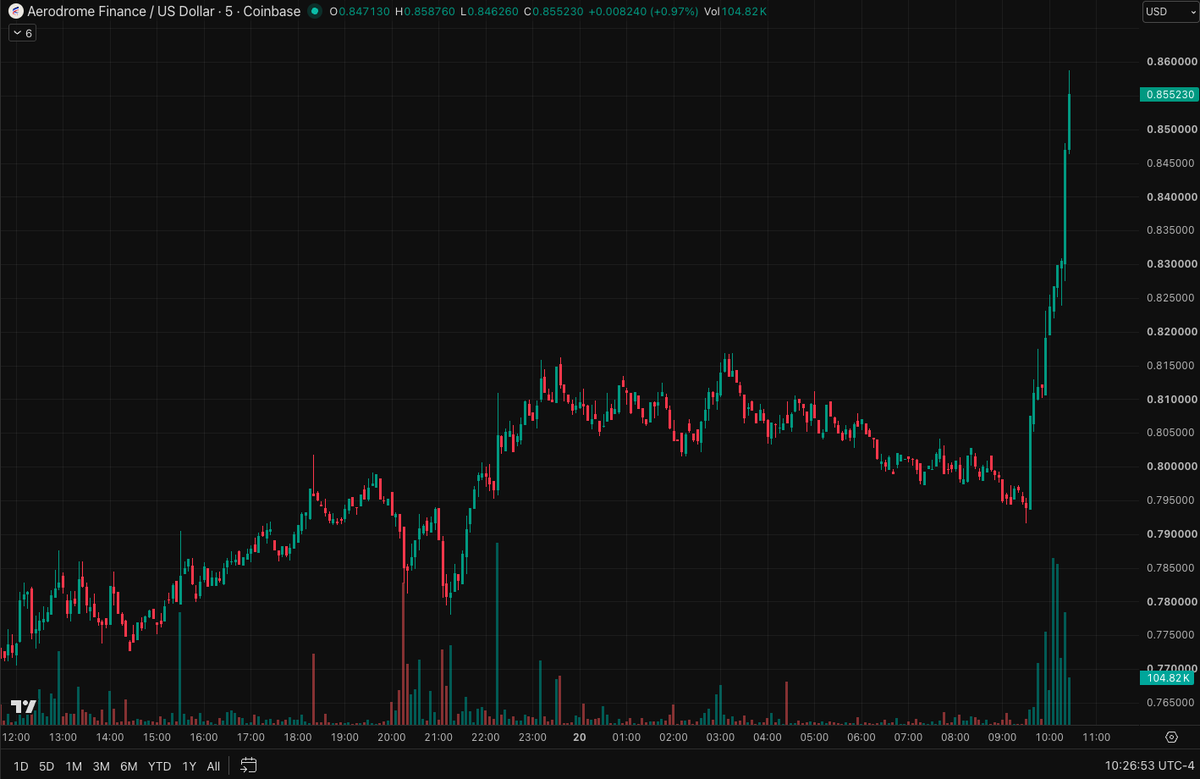
I think all of the buy the rumor sell the news $AERO traders have already exited ahead of tomorrow's launch.
Looks like the traders that actually realize what is about to happen are now front-running the fundamentals
on the 22% avg LP emissions dilution per $100M TVL:
> total aerodrome pool TVL ≈ $365M
> 4.2M AERO weekly emissions budget
4.2M AERO / $365M = 11.5K weekly AERO emissions per $1M of pool TVL
if total pool TVL increases by $100M and the total is now $465M:
4.2M AERO / $465M = 9K weekly AERO emissions per $1M of pool TVL, equal to a 22% reduction
obviously some assumptions built into this which will vary slightly when the emissions model changes:
> the 4.2M per week budget will no longer be fixed but is subject to arguably more conservative fee-linked and global caps that could actually reduce LP yield even more dramatically
> in reality AERO emissions are not distributed evenly across all pool TVL so this is an averag
> total aerodrome pool TVL ≈ $365M
> 4.2M AERO weekly emissions budget
4.2M AERO / $365M = 11.5K weekly AERO emissions per $1M of pool TVL
if total pool TVL increases by $100M and the total is now $465M:
4.2M AERO / $465M = 9K weekly AERO emissions per $1M of pool TVL, equal to a 22% reduction
obviously some assumptions built into this which will vary slightly when the emissions model changes:
> the 4.2M per week budget will no longer be fixed but is subject to arguably more conservative fee-linked and global caps that could actually reduce LP yield even more dramatically
> in reality AERO emissions are not distributed evenly across all pool TVL so this is an average
blatantly untrue
all of the tokens used for cashback come from genesis wallets and most importantly, none of these tokens have ever interacted with a DEX
please let's stop with the paid kol shill campaign
plasma one genuinely seems like a decent user-friendly product and I have no doubt that it will see continued success but no need to exaggerate where they are today
in its current form, plasma is still just the age-old, zero-sum 'token-denominated yield' playbook wrapped in a nice aesthetic neobank UI
I assume protocol revenue would come from ~60bps of merchant fees on card spend (with the remainder captured by rain until plasma can become a visa preferred partner in their own right) and some yield spread on deposits
this revenue is nowhere to be seen on chain and is definitively NOT subsidising the cashback at present
this doesn't mean that in the future the cashbacks won't be financed this way, but neobanks are highly competitive, capital intensive businesses to grow, with essentially unlimited licensing and user acquisition costs, meaning that doing the revenue buyback model implied here would just be a poor capital allocation decision
check yourself on chain:
genesis alloc
0x27e5e719b9edfdd887d2271cf4995dde97a5f203
0xf680b95b01d8e706d2f1e44092a9fd47be44c42e
0xF97Ba376d3ecb36c4472b1d3c5aaf2d158c28558
pass-through
0x5f3e1f6ea6c841055fddf393ab6d8f91148bb58c
0x6f3a0b545c1bf1065a1cbeebbf99fb045e4d5449
0xa1acb0ab13a32f5d6f42045ac4b85d8c25a32757
0x9f9eaeec5b318439af8a0b3d7d0c075b84c1675d
0x9f614ac8fe63eb59ca9c7920ff046f570e74eeb8
0x16ef7bc8d372606a355536f895d4ada8becd01b9
0xbc8a0f5e41857292d12ef620e2a5895ce65a5ce0
+ some additional minor contibutors
aggregation
0xe8fea4cec73b3093a34f7e03a99fe4cca24637af
wrapping
0x3896ae8ace3f6cc08bdbfb8beb84ddf04698e22a
0x31477e9ad6390bcaa547b1a752ad04301820e7e2
0x1c92efdb6c924cb2acf7dceec29b7abb69ab58bc
0x998ca3d778f7d893030b1611d76b7679cd395884
cashback distributor
0x6322196fb6EE14852Ff4901b1885D5a9db7fa302
maybe latecomers buying to lock for platinum before the requirement increases from 100K-150K on friday
trading data doesn't really corroborate that though - seems to be exclusively perp-led buying and only 10 new 100K deposits into lock address, so probably just not that many sellers left after a leverage flush / some repositioning into one of the higher mindshare tokens for a bounce
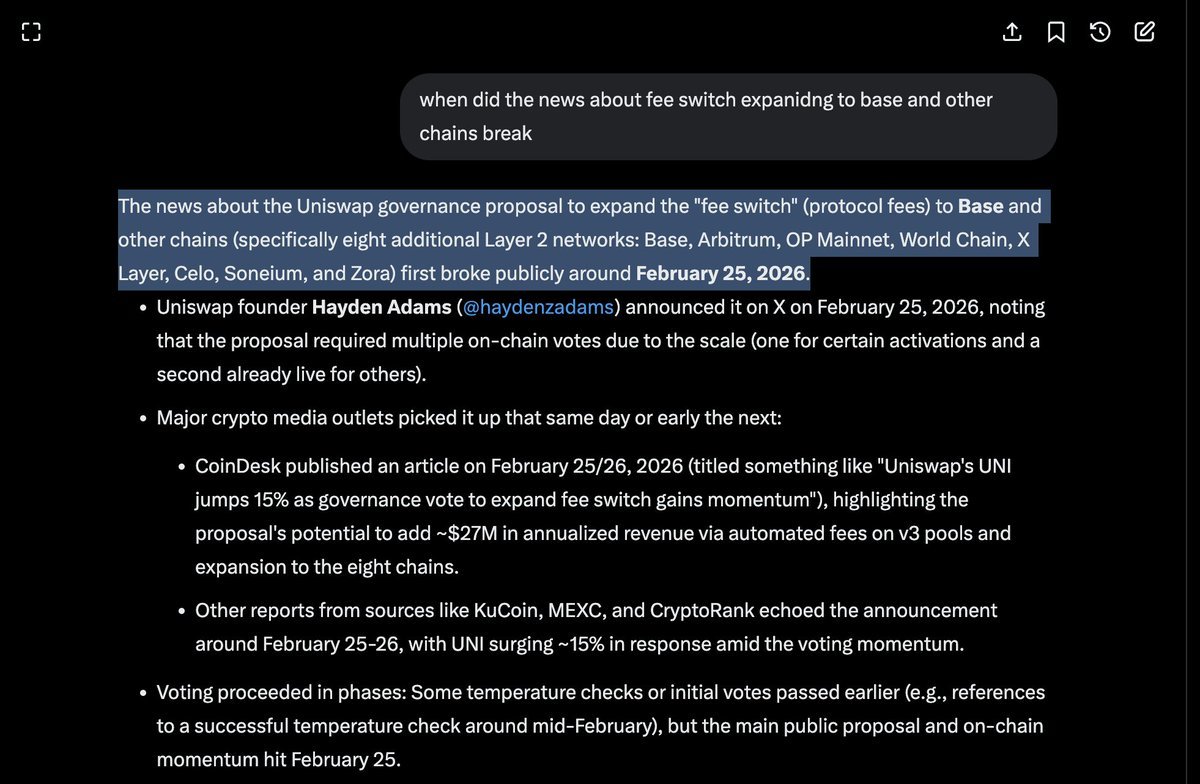
UNI still performing flat / outperforming broader altcoin / defi universe (+25% last 30d) despite this arguably pretty bearish development coming from the last-ditch attempt to boost revenues by expanding fee switch to base and other L2s
coin-denominated OI spiked around the same time this news broke indicating some positioning build up which hasn't yet been fully unwound
wondering whether we are due some UNI underperformance if the drop of in LP TVL and lack of impact on revenues continues, at least until OI is back to pre-announcement levels (driven by residual perp positioning unwind)
there's still about 2.2M UNI ($8.8M) more OI / positioning than before the announcement which has the potential to be gradually unwound now - also maybe worth comparing this OI delta vs wider market OI and normalising for that to ensure the residual OI is specific to UNI and not general altcoin / defi token OI buildup
UNI/BTC still 5% above where it was before the news but in fairness has retraced a decent amount since immediately after so the juice probably wouldn't be worth the squeeze for any sizable short position but I do expect it to unwind at least the remaining 5% of outperformance vs BTC if not more
one more point to add on this is that there is a notable lack of future catalysts in the pipeline for UNI, as a token in structural decline with the proliferation of more specialised prop AMMs and the compression of fee capture on stable / high-volume pairs (which are uniswap's bread and butter)
the one tail risk here is the blackrock investment, which I feel may have been slightly overlooked, but the sheer volume of institutional partnership headline announcements these days massively dilutes the likely impact of this on price anyway
this analysis is from a few days ago so forgive the charts being slightly stale - UNI/BTC is down 8% since then but still think there is some underperformance left given OI hasn't fully reverted