Physicist Nathaniel Craig shares how he worked with GPT-6 Astra to develop a candidate lattice definition of the Standard Model.
It’s the first post on our new science blog:
https://t.co/pLd0XmTUxD
The @mcuban did something great with @costplusdrugs. Healthcare has always lacked transparency for everyone except the financial stakeholders.. and when prices are out in the open, care usually gets better and more efficient
Now he's bringing it to clinical care with Cost Plus Wellness. Self-funded employers contract directly with providers, and the actual contracts are public for anyone to see and use
As an interventional radiology trainee, I think this could be HUGE for us. IR has always struggled to clearly show its value to hospital admins and the financial side. Pricing our procedures directly with employers should let us show that value ourselves
Great conversation @RuchikaTalwarMD@AaronFrittsMD@_backtable@SIRspecialists@linemonkeymd
DeepMind CEO Demis Hassabis:
"One person who really understands AI will outperform an entire startup team
In 5 years, the people who build with AI will run whole companies with a tenth of the headcount"
Ottawa is taking up to a C$1.6B stake in Cohere. Good for Toronto, and for Canadian teams that want AI where they control the data.
Picking the model is the easy part. The hard part: one workflow, one owner, a baseline. That's what our 14-day pilot tests.
DeepMind's new economics paper argues the solo AI agent is the wrong thing to measure. Coordination is the threshold that matters, and most benchmarks don't track it.
Matches what I see in builds. The model is rarely the bottleneck. The handoff is.
@barqers This is the whole job. 'Revenue' often means booked to Sales and recognized to Finance, and both are right for someone. The context graph has to record which one each team means, or the agent quietly picks one.
@JeremyCMorgan Grading every hop as source-backed, inferred, or insufficient is the part more teams should copy. How do you treat a chain where every hop is inferred but the answer turns out right? Fail it, or flag it for review?
@pk_iv@clickup@mathemagic1an@browserbase Agree, with one catch: a dense graph without dates goes stale fast. The edges that hurt are the ones that were true last quarter. Does Brain² track when a fact stopped being true?
Agents can now handle a workday of tasks, yet most companies won't let them update Salesforce. Ghodsi calls it a context problem.
Before an agent writes to a system of record, I want three answers: what it may change, how it knows the record is current, and who reverses it.
The length of software tasks AI agents can complete has doubled roughly every 7 months since 2019, and recent models are moving even faster, from 30 seconds of human work in 2022 to a full workday today.
Yet inside most companies, AI still isn't trusted to reliably update records in Salesforce. "AI does not have an intelligence problem," says Databricks CEO Ali Ghodsi. "It has a context problem."
Ali's answer is what he calls a "system of record for agents."
From the latest Profiles of the Future by @bhorowitz and @mikemcg0 on Databricks & the Future of the Firm: https://t.co/rXjUDb7Oqw
New "Memory Tax" paper (UIUC, Tsinghua, Waterloo and others): many dedicated agent memory systems lose to plain RAG over the raw history.
The mechanism is the useful part. Every summary or extracted fact is a rewrite, and rewrites drop evidence.
Keep a path back to the source.
This is Genie 4, our most realistic and interactive world model yet. 🌐
Explore dynamic environments in real time to see how the scene responds, sounds, and how the people in it move, react, and speak.
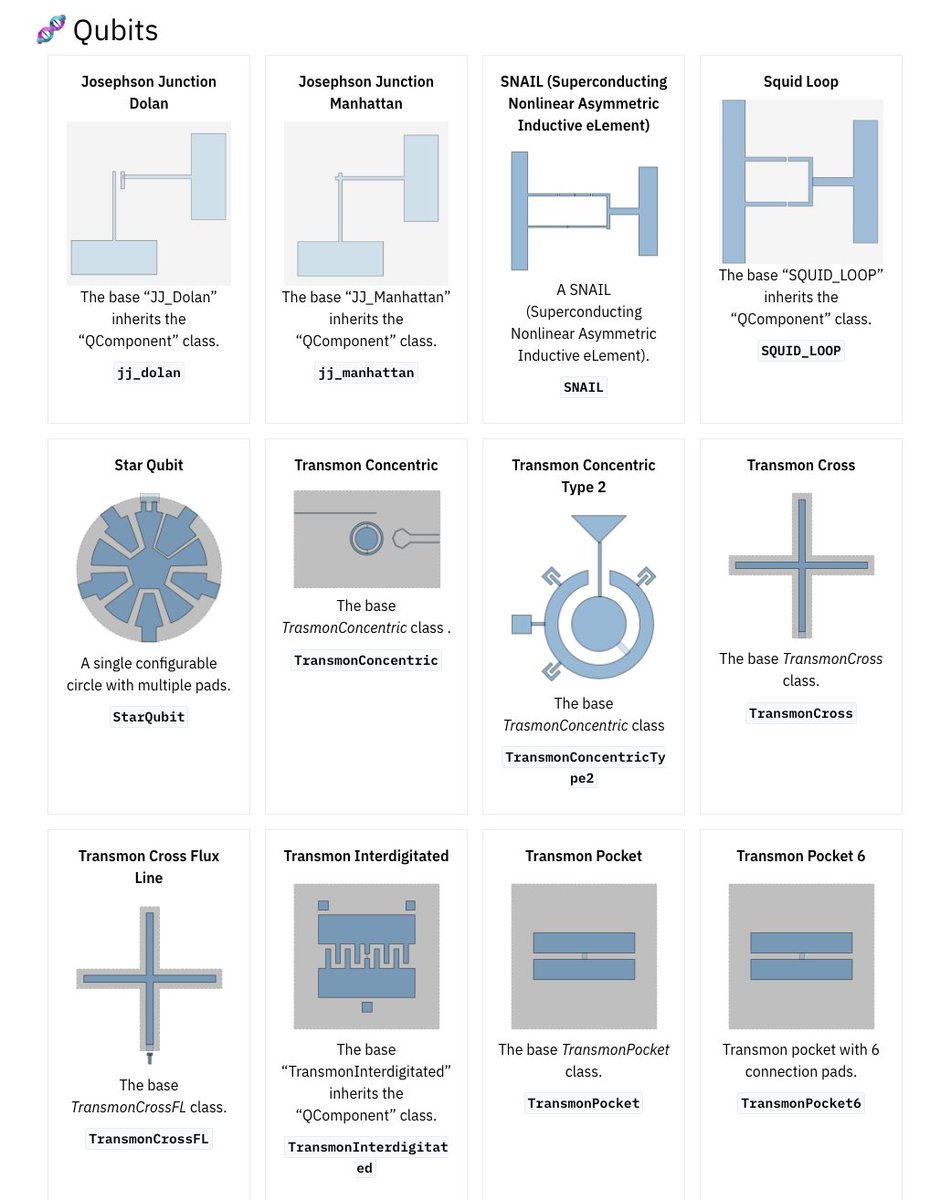
There's a visual gallery of the Quantum Metal components now — browse the whole library as thumbnails and jump to the docs for each, instead of digging through code. Auto-generated from the library, so it stays honest as it grows.