Viel zu selten angesprochen. Easy fire, easy hire und dazwischen eine anreizbasierte Arbeitslosenunterstützung fehlen in vielen EU-Staaten. Auch das hemmt Innovation. https://t.co/qK1uvuUxhS
the core psychology needed to become and remain wealthy via financial markets
is not to become an active trader
it is to train yourself to buy high quality, high potential assets when they are comparatively extremely cheap (and often max hated)
yes, you have to choose wisely and there are MANY traps, but then you also have to hold and sometimes ride your position through hell
it’s so simple, but it is extremely difficult to do for i’d estimate 95% of the population or more
you’re never going to make it if you only buy assets when everyone loves them and is FOMO’ing in, but then avoid them like the plague if they crash for no fundamental reason
in my life experience, this is the core reason why just anyone can’t become rich, even though on paper it looks easy
Amity Warme is a rock climber. She lives in a van and spends much of the year traveling to various climbing destinations.
This clip shows her on the crux of this Yosemite climb, 150 feet in the air.
As one accumulates wealth, their earnings typically shift radically from income to securities and assets. Said differently, they rely less on income and more on equity appreciation.
As such, if the wealthy wanted to benefit themselves the most in tax policy, they would advocate for a lower capital gains tax (or none at all) and modified depreciation or rollover rules, not zero income tax.
So whenever you see a proposal for zero income tax, please try to consider that this benefits lower, lower-middle, middle and upper middle incomes THE MOST.
And it forces the government to abide by lower inflows and be more modest in how the spend your money.
It is estimated that around 1/4 or 1/3 of German population died during Thirty Years' War.
But this doesn't tell the whole story.
Some regions got off relatively lightly while some experienced a living hell.
Many parts of Germany lost more than 66% of population, as you can see on this map.
These were the contested regions where most campaigning took place. War, plundering, starvation and diseases utterly devastated the population there. Large armies, which were marching through these lands, had to survive by living off the land and after decades of ongoing conflict this took its toll. Marauding mercenaries mutinied and looted towns and countryside.
The 1/4 and 1/3 loss of population estimate gets mentioned a lot, but you need to realize that for some parts of Germany, it was even much worse than that.
But how did this devastation look in practice?
One of the quickest ways to find out is to just look up one of random German towns in the most devastated regions and take a look at what was going on during the Thirty Years' War, and it will probably be a lot of bad things happening in a short space of time.
For example the picturesque town of Heppenheim north of Heidelberg in the historic region of Starkenburg. Occupied by the Spaniards in 1620, then by the Swedes in 1630. Then a terrible plague struck in 1635 which killed 80% of population of the region, almost completely depopulating the surrounding countryside. In 1636 the town was sacked by marauding Polish mercenaries in Imperial service who had mutinied over lack of pay. In 1638 the Imperials themselves devastated the Starkenburg region and looted Heppenheim. In 1645 the French entered the region and mercilessly plundered the town of Heppenheim as well. However, as one French officer wrote, there "wasn't much in it" by that point. In 1646 the Imperials took the region back, but the French returned a year later. By the time peace came in 1648, the entire region was completely devastated.
This is just a typical story of many German towns and regions during the Thirty Years' War in the lands that suffered the most.
The most devastating was the late phase of the conflict from 1635 to 1648 when the entry of France prolonged the war in the already exhausted and war torn Germany, and you can also see this in the example of Heppenheim that I described above, where things really kicked off after 1635. It was also the most cynical part of the war as by that time, the religious issues which had ignited the war had been pacified by the Peace of Prague in 1635, after which almost all Protestant princes in Germany pulled out of the conflict. After that point it just became a geopolitical war between the Habsburgs and the Franco-Swedish alliance, which significantly prolonged the disastrous war, and let to these huge casualties.
In no particular order, these books have given me insight into crypto -- markets, money, risk, psychology, sociology, emotions, and more -- over the last few cycles. Books with ** were particularly riveting for me, the greats are underlined for emphasis.
@donalt I appreciate every single tweet of yours duck, please ignore the noise and keep on tweeting. Much, much, much appreciated. (More tweets about your trades would be even better, but I guess as a 500 k acc this has quite an effect on its own)
The Karakoram Highway, connecting Pakistan to China, is one of the highest paved roads in the world, at maximum elevation of 4,714 m. It is often referred to as the Eighth Wonder of the World
[📹 TaveloreAdventures: https://t.co/8R08rm4INX]
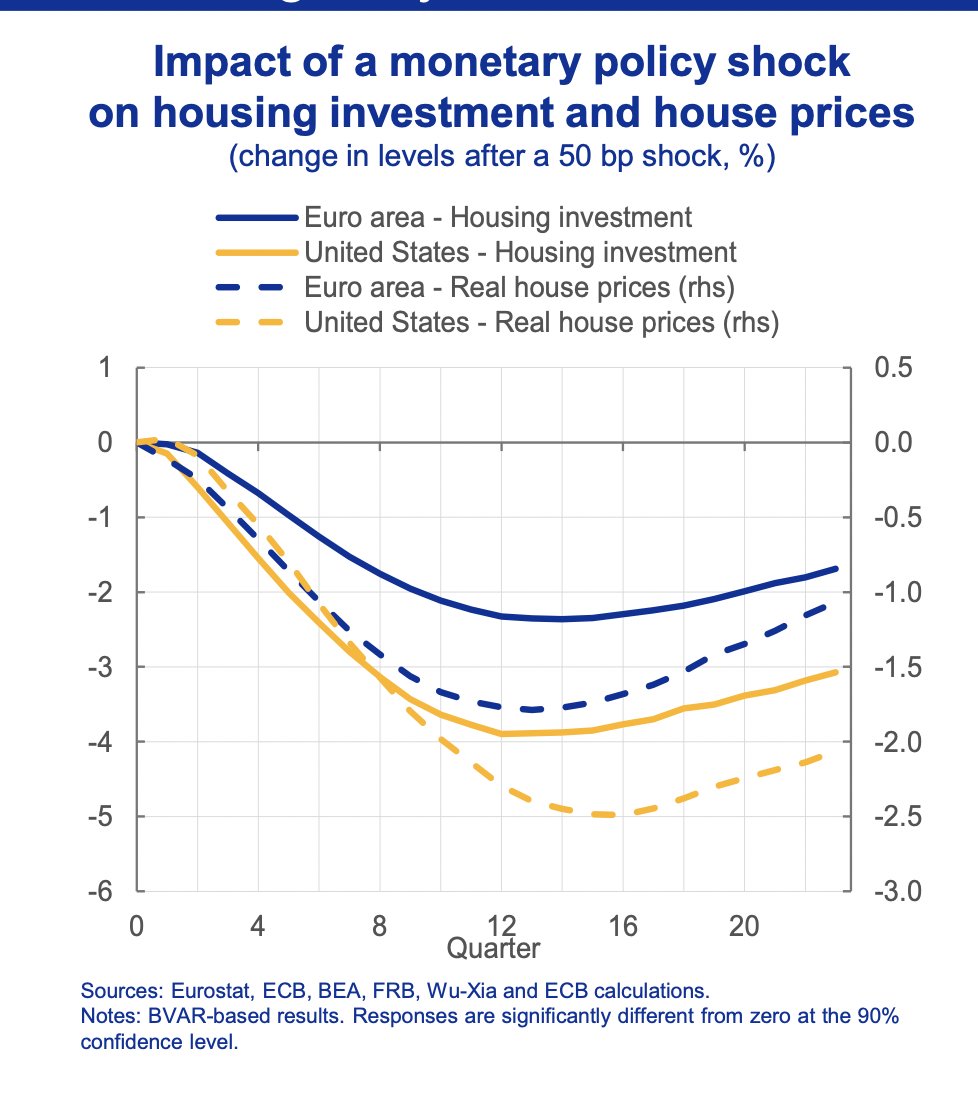
Die Auswirkungen der Zinserhöhungen auf reale Hauspreise werden erst drei Jahre nach dem Zeitpunkt der Erhöhung am stärksten.
In Österreich kommen dann noch die Auswirkungen der Wohnkreditrichtlinien dazu, die wir uns bei dem Ausmaß an Zinserhöhungen vmtl sparen hätten können.
Und bei der Grafik gehts um eine Erhöhung von 50bps. Seit 07/2022 wurde um 350bps erhöht.
https://t.co/Rvxtwksg9N