Welcome to my X social networking site. Aimed as a source for news on carbon credits, carbon credit pricing, carbon credit investment opportunities and more.
@LeninUGReal Xét về thế 2 con rồng phía sau: Con bên cụ Tổng trông cổ to hơn, vươn cao hơn. Con bên Tập mất 1/3 thân giấu mình sau vai ghế.
Xét về thế 2 con rồng phía trước: 1 con đang lè lưỡi hướng về phía Tập cắn Tập, còn 1 con cúi đầu chào cụ Tổng.
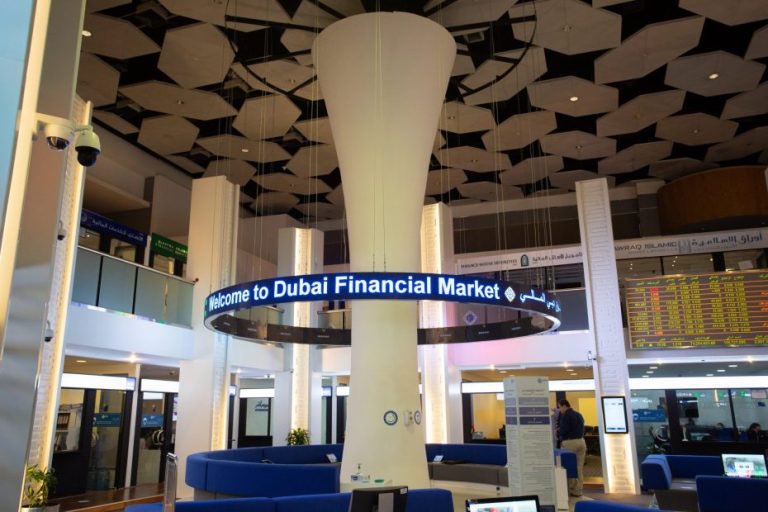
Dubai Financial Market to launch pilot carbon credits programme at COP28
DFM will commence the pilot programme for institutional investors starting from December 4-8, with the offsetting period ending on January 10, 2024.
Dubai Financial Market (DFM) is set to introduce a pilot programme for trading carbon credits at COP28.
The integrated platform will explore the trading and use of carbon credits, offering a “mechanism to help companies manage unavoidable and residual carbon emissions while pursuing direct decarbonisation strategies”, DFM said.
Each carbon credit marks a tangible reduction in carbon emissions, with one credit offsetting one tonne of CO2 equivalent emissions.
According to the Taskforce on Scaling Voluntary Carbon Markets (TSVCM), the demand for carbon credits could multiply by a factor of 15 or more by 2030 and up to 100 by 2050. In aggregate, the carbon credit market is projected to surpass $50bn in value by 2030.
Climate finance: a year on,🇭🇰🇭🇰 Hong Kong’s #carboncredit market sees scant volume as its bridge role to 🇨🇳🇨🇳 #China fails to materialise.
🍁 Trading volume on HKEX’s Core Climate since its October 2022 debut is less than 1 per cent that of the world’s leading carbon market.
🍁 A lack of links with mainland China carbon exchanges, an absence of local demand and a controversy over credit quality have stymied progress.
A year after Hong Kong’s first voluntary carbon credit market debuted with an optimistic ambition to “expedite the low carbon transition journey at scale”, that goal seems no closer to fruition.
Core Climate, the nascent trading venue launched by the city’s bourse operator Hong Kong Exchanges and Clearing Limited (HKEX), may one day achieve the vision articulated by its chairwoman Laura Cha Shih May-lung during its October 2022 launch. So far, a trio of factors has suppressed trading volume far below the potential.
A lack of links with carbon exchanges in mainland China has stymied the aspiration of functioning as a bridge between international funds and vast climate change mitigation opportunities in China – the world’s largest carbon emitter. Limited domestic demand and a global crisis of confidence over the quality of available carbon credits have compounded the growth challenge.
Billed as the only carbon marketplace that offers settlement in both Hong Kong dollars and yuan for international voluntary carbon credit transactions, Core Climate has recorded trading volume equal to only 900,000 tonnes of carbon dioxide reduction since its debut – a fraction of the 116 million tonnes traded last year on CBL, the world’s largest spot exchange for carbon credits, operated by San Francisco-based Xpansiv. And 400,000 tonnes of Climate Core’s volume came within about a month of its launch.
The track record so far has not fazed Glenda So, group head of emerging business and fixed income and currency at HKEX, who said Core Climate’s overall performance has met expectations.