Visited the Embassy of the State of Qatar in Islamabad to offer my heartfelt condolences on the passing of His Highness Sheikh Hamad bin Khalifa Al Thani, former Emir of Qatar.
اِنّا لِلّهِ وَاِنّا اِلَيْهِ رَاجِعُوْن
May Allah سُبْحَانَهُ وَتَعَالَى grant the departed soul the highest place in Jannah and bestow strength, patience and solace upon the family and the people of Qatar in this time of irreparable loss, Aameen.
@qataremb_isb@MofaQatar_EN@AmiriDiwan
Heartfelt congratulations to Prime Minister @han_seongsook on her appointment as Prime Minister of the Republic of Korea!
Every woman leader ascending the democratic ladder reminds us of the great legacy of Shaheed Mohtarma Benazir Bhutto. In Pakistan, our First Lady @AseefaBZ has emerged as a strong and inspiring woman leader, championing the cause of democracy, human rights, and fundamental principles.
We extend our best wishes for the continued development, progress, and prosperity of the Republic of Korea. May the friendly relations and cooperation between Pakistan and the Republic of Korea be further strengthened for the mutual benefit of both nations and their peoples.
🇵🇰🤝🇰🇷
@KoreaEmbassyPK@PresOfPakistan
Productive Meeting with His Excellency Mr. Khalid Kareem Mohammed Zangana, Head of Mission, Embassy of the Republic of Iraq.
As Chair of the Pak-Iraq Parliamentary Friendship Group, I reaffirmed Pakistan’s commitment to strengthening parliamentary ties and bilateral cooperation between our two brotherly nations. We discussed enhancing our role in promoting mutual relations, facilitating Zaireen, and advancing shared interests in peace, stability, and regional development.
Grateful to H.E. Khalid Kareem Mohammed Zangana and the Embassy for their positive gesture and acknowledgment of Pakistan’s constructive peace efforts and mediation role in the US-Iran conflict.
🇵🇰🤝🇮🇶
@IraqinIslamabad@IraqIslamabad@PakinIraq
#PakIraqFriendship #ParliamentaryDiplomacy
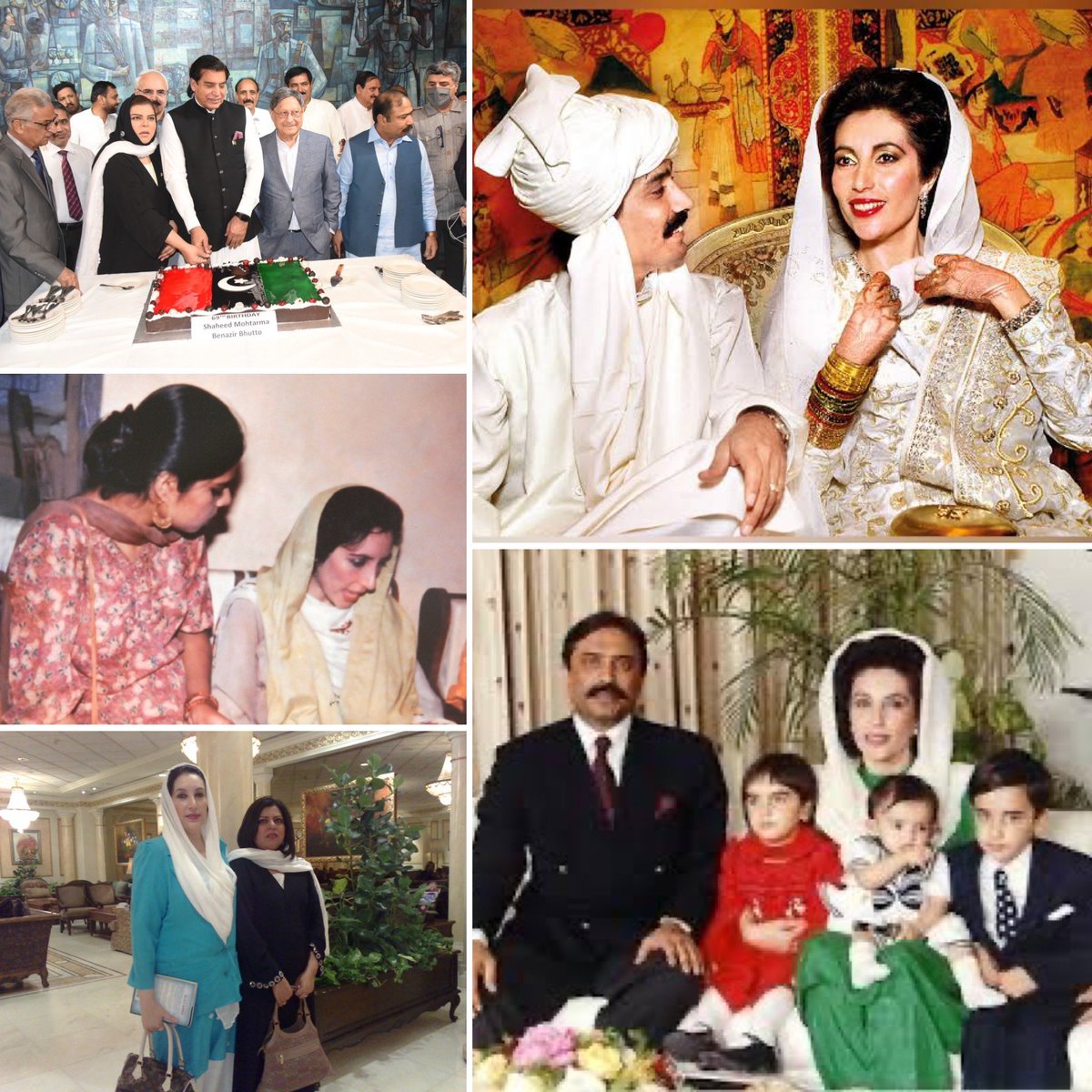
On the 73rd Birth Anniversary of Shaheed Mohtarma Benazir Bhutto
Today, we celebrate with deep reverence the life and legacy of Shaheed Mohtarma Benazir Bhutto — the iconic leader, beacon of hope for millions, and eternal symbol of courage, resilience, and women’s empowerment in Pakistan. ❤️🌹
For the downtrodden and the suffering, she remains a shelter, a source of survival and sustainability, and a powerful voice. A fearless champion of democracy, human rights, and social justice, she broke barriers as the first woman to lead a Muslim-majority nation and became the first female Prime Minister of the Muslim World. Following her vision, President Asif Ali Zardari initiated the Benazir Income Support Programme (BISP) — a globally recognized social security lifeline for families below the poverty line that continues to empower women and transform lives across Pakistan.
Her unparalleled sacrifice and service remain an inspiration for every Pakistani who dreams of a more just and progressive tomorrow.
May her soul rest in eternal peace. Her light will forever guide us. 🤍🇵🇰
#HBDShaheedBenazir 🎂
#ShaheedBenazirBhutto
Live from Islamabad on @Alqaheranewstv 📍
Discussing the latest developments in US-Iran negotiations, the postponement of talks in Switzerland, the fragile ceasefire in Lebanon, and the path toward a lasting agreement.
Pakistan remains actively engaged in mediation for regional peace and stability.
#USIranTalks #MiddleEast #Pakistan #Diplomacy #AlQaheraNews #RegionalStability
My exclusive talk on AlQahera News: War costs are too high for everyone. Both US & Iran want to negotiate, but trust deficit & red lines remain major barriers. Confidence-building is key — Iran won’t accept deals under pressure. Pakistan continues vital mediation for peace.
@Alqaheranewstv@cpgs_org@IRIMFA_EN@WhiteHouse@IraninIslamabad@usembislamabad
AlQaheraNewsTv- القاهرة الإخبارية
🔗 https://t.co/4ZTafPDoPz…
Pakistan’s Mediation: Indirect Talks Are On! War Costs Are Massive – Peace is the Only Option.
Diplomacy & Threats Cannot Go Parallel.
A Pause Creates Possibilities for Confidence Building | My Views on @Alqaheranewstv@IRIMFA_EN@WhiteHouse
CPGS Strategic Assessment & Situation Report: US-Israel Operations Against Iran – Post-Ceasefire Developments and Strait of Hormuz Dynamics – 19 April 2026 (Day 51)
🧵2/2
➡️ Security and Maritime Intelligence: Buildup, Targets, Escalation Risks and Theatre Expansion
The United States continues a strategy of maritime pressure without large-scale ground operations. Iran asserts a coordinating role in Strait of Hormuz traffic management. Assessments indicate Iran maintains capacity for selective maritime actions using available assets. Escalation risks remain tied to compliance with ceasefire terms and transit arrangements in the Strait. Lebanon developments, including ongoing Israeli actions and strikes, are viewed by Iran as connected to the overall situation and have emerged as complicating factors. Gulf Cooperation Council countries continue to prioritise regional stability and uninterrupted energy flows.
➡️ Geopolitical Scenario and Regional Realignment Prospects
A framework for coexistence between Gulf Cooperation Council states and Iran, supported by mutually agreed protocols for safe navigation in the Strait of Hormuz, offers a viable path to stabilise energy markets and reduce tensions. Such a mechanism could involve credible and trustable oversight while fully respecting the sovereignty and interests of coastal and user states. Pakistan, Turkey, Qatar, and Egypt have played active facilitation roles. China and Russia have advocated for calm and sustained dialogue. Regional dynamics remain fluid, with potential for pragmatic arrangements that complement existing partnerships.
➡️ Domestic Implications and Political Fallout
In the United States, the engagement has prompted continued congressional attention regarding costs, timelines, and oversight, including growing domestic criticism, moves to reduce war powers, and discussions of impeachment attempts. President Trump has described efforts toward resolution, while Vice President JD Vance has participated directly in diplomatic processes. Indications suggest the US administration is exploring paths to resolution amid these pressures. In Iran, authorities have emphasised governance continuity and national resilience amid reconstruction needs and economic adjustments following the conflict.
➡️ Assessment, Future Scenarios and Way Forward
🔹Near-term prospects indicate ongoing volatility, with risks of renewed activity if transit issues in the Strait of Hormuz intensify or the pause ends without understandings. 🔹Medium-term stability will depend on incremental diplomatic progress.
🔹De-escalation is only possible when the concerns and sovereignty of all states are fully respected.
🔹Viable solutions could include establishment of a neutral technical consortium, drawing on non-regional expertise where appropriate and acceptable to all parties, for real-time monitoring and verification of Strait of Hormuz transit protocols. 🔹Another approach might link phased sanctions adjustments to joint regional economic initiatives, such as shared infrastructure or energy projects involving multiple Gulf states, to build sustained mutual incentives.
✳️ Recommendations:
• Support development of mutually agreed protocols for safe and stable navigation through the Strait of Hormuz that address the concerns of all coastal and user states while fully respecting sovereignty.
• Utilise ongoing facilitation by Pakistan and other regional actors to advance structured dialogue and confidence-building measures.
• Prioritise protection of civilian infrastructure and humanitarian considerations in all planning.
• Explore broader regional frameworks that promote economic cooperation and security dialogue among Gulf states and Iran to support long-term stability.
The situation remains fluid. CPGS continues to monitor developments closely.
🔹Follow @cpgs_org for updates and analysis.
#GulfSecurity #RegionalStability #Hormuz #MiddleEastPeace
CPGS Strategic Assessment & Situation Report: US-Israel Operations Against Iran – Post-Ceasefire Developments and Strait of Hormuz Dynamics – 19 April 2026 (Day 51)
🧵1/2
➡️ Executive Summary
The US-Israel military campaign against Iran that began on 28 February 2026 has entered a fragile post-ceasefire phase following the Pakistan-brokered pause announced on 7-8 April. Pakistan continues to serve as the primary mediator, demonstrated by Field Marshal Syed Asim Munir’s recent three-day tour to Tehran and ongoing high-level engagements. Iran has reimposed restrictions on commercial shipping through the Strait of Hormuz, requiring coordinated transit arrangements and citing the ongoing US naval blockade of its ports as inconsistent with ceasefire understandings. The United States maintains the blockade in full effect and is preparing to board Iran-linked vessels in international waters in the coming days. The first round of direct talks in Islamabad concluded without agreement, and Iran has not yet confirmed participation in a second round. Pre-conflict planning has enabled Iran to retain significant missile and drone reserves despite infrastructure damage. Developments in Lebanon remain sensitive following the recent ceasefire.
➡️ Latest Developments and Military Posture
In recent days, Iranian naval authorities have required commercial vessels transiting the Strait of Hormuz to use designated lanes, provide transit information, and contribute fees for security and environmental services. Reports indicate instances of warning actions by Iranian forces, including gunfire near non-compliant vessels. US officials have confirmed that the naval blockade of Iranian ports will remain in place until a comprehensive agreement is reached. President Trump convened a meeting in the White House Situation Room to discuss the situation. Preparations are underway for US forces to board and interdict Iran-linked oil tankers and commercial ships in international waters in the coming days. Multiple US carrier strike groups and supporting assets continue to maintain a heightened regional posture. War assessments indicate that Iran retains operational reserves of long-range missiles and thousands of drones due to earlier dispersal measures. Limited activity persists in Lebanon, with both sides expressing concerns over ceasefire adherence.
➡️ Analysis of US-Iran Talks: Obstacles, Opportunities, Challenges and Risks
Negotiations in Islamabad involving senior representatives from both sides ended without agreement after extended discussions. Key differences remain on timelines for nuclear restrictions, management of enriched uranium stocks—including proposals for transfer or down-blending versus preservation of sovereign rights—arrangements for the Strait of Hormuz, sequencing of sanctions relief, and broader ceasefire terms across fronts. Opportunities for progress exist through continued mediation and mutual recognition of economic costs. Challenges include establishing effective verification mechanisms and addressing concerns over past commitments. The current maritime developments, combined with the absence of agreement, increase risks of renewed tensions if incidents in the Strait of Hormuz escalate or the pause expires without further understandings.
Advancing the Climate–Water–Peace Nexus: Strengthening Inclusive Governance and Partnerships for a Sustainable Future.”
Hybrid session in full swing at the Rawalpindi Chamber of Commerce & Industry — powerful in-person discussions with youth leaders, parliamentarians, and civil society, connected virtually with global partners.
Women and youth leading the conversation on gender-inclusive governance, water security, and peacebuilding.
#ECOSOCYouthForum #ClimateWaterPeace #GenderInclusiveGovernance #SDG6 #SDG13 #SDG16 #SDG5 #SDG17 #Pakistan #YouthLeadership #WomenInLeadership #WaterForPeace @youth_ppk
Pakistan Zindabad! 🇵🇰💚
Congratulations on the brilliant and finest diplomacy! #Pakistan 🙌
President @realDonaldTrump just posted on Truth Social:
“Thank you to Pakistan and its Great Prime Minister and Field Marshal — two fantastic people!!!”
President DONALD J. TRUMP
CPGS Strategic Assessment & Situation Report: US-Iran Ceasefire, Blockade and Diplomatic Developments – 14 April 2026
🧵3/3
➡️ Way Forward & CPGS Recommendations
A sustainable path forward lies in transforming the current tactical pause into a structured regional security architecture that addresses root causes rather than symptoms. The most viable long-term anchor remains a GCC-Iran coexistence framework — not as a formal alliance but as a pragmatic, interest-driven condominium that treats the Strait of Hormuz as a shared commercial artery rather than a contested chokepoint. Such a mechanism, backed by mutually agreed neutral monitoring and reciprocal economic incentives, could convert today’s zero-sum confrontation into mutual strategic insurance against future shocks.
✳️ Key Recommendations:
• Convene an immediate second-round meeting in a neutral venue (Islamabad, Geneva or Muscat) within 72 hours to lock in the existing 80 percent consensus and explore compromise language on enrichment caps and Lebanon linkage.
• Establish a GCC-Iran technical working group on security assurances and Hormuz governance — including transparent toll protocols, de-confliction hotlines, and neutral verification mechanisms — to rebuild commercial confidence and deter disruption.
• Integrate Lebanon explicitly into the ceasefire architecture through parallel but coordinated tracks, prioritising civilian protection and phased de-escalation measures to prevent spillover. An end to hostilities in Palestine would further strengthen the overall peace framework.
• Leverage China and Russia for quiet guarantees on sanctions implementation and energy market stabilisation, while positioning Pakistan, Turkey, Qatar and Egypt as permanent facilitation hubs to embed regional ownership, with the United Nations providing broader international legitimacy and monitoring support where appropriate.
• Embed verifiable confidence-building steps — such as reciprocal asset releases, civilian nuclear safeguards, and targeted economic and rebuilding support for Iran — that create irreversible momentum toward de-escalation, recognising that economic interdependence remains the strongest deterrent to renewed war. Involvement or ratification of key elements by the United Nations, along with endorsements from the IAEA on nuclear-related clauses, would enhance trust and provide stronger international guarantees.
This approach offers the highest probability of converting fragile diplomacy into durable regional stability.
🚨 The situation remains fluid. Follow @cpgs_org for updates and analysis.
The Centre for Pakistan and Gulf Studies (CPGS) is an independent, non-partisan policy research institute focusing on geopolitics, peace, security & regional cooperation.
#GulfSecurity #RegionalStability #Hormuz #MiddleEastPeace
CPGS Strategic Assessment & Situation Report: April 12, 2026
US-Iran Talks Conclude Without Agreement
🧵1/3
➡️ Executive Summary
High-level direct talks held in Islamabad and mediated by Pakistan brought together a US delegation led by Vice President JD Vance, alongside Special Envoy Steve Witkoff and Jared Kushner, with a high-profile Iranian delegation led by Parliament Speaker Mohammad Bagher Ghalibaf and including Foreign Minister Abbas Araghchi. The intensive sessions extended for approximately 21-25 hours and concluded without reaching a formal agreement. The two-week ceasefire, announced around 8 April & effective immediately, continues to hold, though it faces notable strains with roughly ten days remaining until its nominal expiry around 22 April. No immediate resumption of major operations has been indicated by either side. The Iranian delegation returned safely to Iran aboard the Minab 168 flight, supported by coordinated Pakistani security measures that included escorts and specific protocols to ensure safe passage.
➡️ Key Developments
In a related regional development, Saudi Arabia has announced the deployment of 13,000 Pakistani troops along with 10–18 Pakistani fighter jets to King Abdulaziz Airbase, consistent with longstanding mutual defence arrangements between the two countries. Both sides have shared public statements that reflect the high-stakes environment of the talks & the value placed on clear communication with their respective domestic audiences.
➡️ Factual Positions
The Iranian delegation stood out for its high-level composition and breadth, underscoring the significance Tehran attached to the Islamabad talks. Led by Parliament Speaker Mohammad Bagher Ghalibaf, the team included Foreign Minister Abbas Araghchi, Secretary of the Supreme National Security Council Ali Akbar Ahmadian, Central Bank Governor Abdolnaser Hemmati, three Deputy Foreign Ministers, parliamentarians, security officials, legal experts, and technical specialists. Organised into specialised committees covering security, political, military, economic & legal domains, the delegation — numbering around 70-71 members — enabled detailed, multi-track discussions across complex files.
In a post-talks statement, Speaker Ghalibaf highlighted that the Iranian side approached the negotiations with goodwill & put forward constructive proposals. He noted that, informed by past experiences, Iran maintained a cautious stance on trust. He added that Washington now appears to understand Iran’s core logic & principles, and the onus lies on the US to determine whether it can earn Tehran’s confidence. Ghalibaf described the talks as part of a broader effort combining diplomatic & defensive measures to protect national rights and build upon the outcomes of recent national defence efforts. He thanked Pakistan for its mediation role & commended the Iranian public and delegation members for their steadfast support during the 21-hour sessions.
On the US side, the delegation presented its positions as the final & best offer, coordinated directly with President Donald Trump. The core elements included verifiable long-term arrangements on nuclear matters, fully secure and unrestricted navigation through the Strait of Hormuz, and measured limits on ballistic missile capabilities and support for regional partners. Vice President JD Vance described the lack of agreement as creating greater challenges for Iran than for the United States.
A notable development during the talks period was a US naval transit on 11 April involving two guided-missile destroyers — USS Frank E. Peterson Jr. and USS Michael Murphy. The vessels conducted operations in the Strait of Hormuz as part of initial efforts to set conditions for mine-clearing in the waterway, marking the first such US warship transit since heightened tensions began. CENTCOM described the passage as successful and routine, aimed at supporting maritime safety and preparing a new safe route for commercial shipping.
CPGS Strategic Assessment & Situation Report: April 12, 2026
US-Iran Talks Conclude Without Agreement
🧵2/3
Iranian accounts, by contrast, viewed the transit as a threat and referenced warnings issued to the vessels along with a reported drone-related response. The timing of the operation, occurring in close proximity to the ongoing negotiations in Islamabad, introduced additional complexity to the diplomatic atmosphere.
➡️ Military & Maritime Posture
US military posture in the region remains substantial, reflecting deployments scaled up earlier in 2026 and representing one of the largest Middle East build-ups since 2003. This includes two carrier strike groups centred on USS Gerald R. Ford and USS Abraham Lincoln, positioned in and near the Persian Gulf and Arabian Sea, supported by air assets at forward bases across the area. No major new surge has been reported following the conclusion of talks, but forward-deployed assets continue to operate at high readiness.
Maritime and security assessments indicate that commercial shipping traffic through the Strait of Hormuz remains significantly below pre-tensions averages. Iran maintains its established influence over navigation patterns and associated mechanisms within its territorial waters. Possible areas of attention in any future scenario could include remaining industrial and missile-related sites, key oil export infrastructure such as Kharg Island, and facilities connected to enriched uranium, alongside considerations for safe passage and hazard mitigation in the maritime domain.
The current two-week ceasefire, with roughly ten days remaining until its nominal expiry around 22 April, continues to shape the operational environment. Assets on both sides remain positioned for rapid response if the pause is not extended or if further talks fail to produce progress.
➡️ Obstacles, Opportunities & Risks
The talks brought into focus several fundamental divergences between the two sides. A central obstacle was Iran’s strong insistence on a comprehensive extended regional ceasefire that would encompass broader regional concerns, including ongoing Israeli strikes in Lebanon. Significant differences also remained on core issues, including nuclear sovereignty and enrichment policy, the scope of sanctions relief tied to war-related matters, security guarantees, and future arrangements for governance and safe navigation through the Strait of Hormuz.
These gaps highlight the inherent challenge of bridging deeply held positions in the aftermath of weeks of conflict. From the Iranian perspective, continued Israeli military actions in Lebanon represented a complicating factor that negatively affected the overall negotiating climate and undermined confidence in the ceasefire framework. Nevertheless, the creation of a direct high-level communication channel — even without an immediate agreement — offers a potential foundation for subsequent rounds of engagement.
Pakistan continues to seek opportunities to play a constructive role, working alongside regional partners to facilitate further contacts and encourage both sides to uphold the current ceasefire.
CPGS Strategic Assessment & Situation Report: April 12, 2026
US-Iran Talks Conclude Without Agreement
🧵3/3
➡️ Assessment & Forecast
A GCC-Iran coexistence framework, supported by mutually agreed practical mechanisms for safe and secure navigation through the Strait of Hormuz, represents one of the more realistic long-term options for promoting regional energy stability and lowering tensions. Such an approach could help manage shared economic interests while respecting fundamental sovereignty concerns on both sides.
Countries such as Turkey, Qatar, Egypt, and Pakistan are well placed to contribute to mediation and confidence-building measures, drawing on their established diplomatic experience and recent facilitation roles. China and Russia can offer complementary economic and diplomatic support that may assist in aligning broader regional and international interests. Any potential realignment or new cooperative arrangements would require broad participation and concrete, incremental outcomes; their long-term effectiveness would likely depend on sustained and pragmatic dialogue rather than rigid or exclusive structures.
Iran continues to maintain significant influence over traffic patterns and related arrangements in the Strait of Hormuz through its territorial waters and associated mechanisms. At present, commercial shipping volumes remain substantially below normal levels and are likely to stay moderated until clearer, mutually acceptable protocols are put in place.
In the near term, with roughly ten days remaining until the nominal expiry of the current two-week ceasefire around 22 April, the risk of escalation remains elevated. Recent reports in Israeli media indicate that the Chief of the General Staff has instructed forces to prepare for a possible resumption of operations against Iran should the ceasefire not be extended or further negotiations fail to progress. The immediate focus will be on avoiding miscalculation and determining whether the newly established direct channel can support further engagement or an extension of the pause.
➡️ Domestic Implications & Way Forward
In the United States, the outcome of the Islamabad talks and the status of the ceasefire are expected to feature prominently in Congressional discussions and deliberations linked to midterm political timelines. These developments will also influence positioning within the administration, including for Vice President JD Vance.
In Iran, the leadership continues to emphasise national resilience, economic priorities, and consistent messaging on sovereignty and defence achievements. On both sides, domestic audiences have received communications that highlight positions achieved during the talks while acknowledging the challenges that lie ahead.
➡️ Recommendations
• Prioritise verifiable steps toward a comprehensive extended regional ceasefire as the immediate priority.
• Advance phased confidence-building measures focused on nuclear transparency, maritime safety, and sanctions-related issues.
• Strengthen the role of existing mediators, particularly Pakistan, in facilitating continued high-level contacts and bridging remaining gaps.
• Develop mutually agreed practical mechanisms for safe navigation through the Strait of Hormuz as a foundational element of any longer-term GCC-Iran coexistence framework.
• Encourage inclusive participation by regional actors including Turkey, Qatar, and Egypt to support incremental confidence-building efforts.
• Maintain open channels for economic and diplomatic engagement involving China and Russia where these can help align broader interests without undermining core sovereignty concerns.
The situation remains fluid. Follow @cpgs_org for further updates and analysis.
#GulfSecurity #Hormuz #RegionalStability #PakistanMediation #MiddleEastPeace
Iran’s war strategy offers a valuable case study for warfare experts in the years ahead.
Focus with @TasadduqGilani | #IslamabadTalks
Sharing my views on the US-Iran Talks
Watch the full interview 👇
https://t.co/9Fgof0FmpI
US President Donald Trump is also seeking an exit from the war.
For lasting peace, credible guarantees for broader regional security are essential — not possible without reining in Netanyahu.
Focus with @TasadduqGilani | #IslamabadTalks
Sharing my views on the US-Iran Talks
Watch the full interview 👇
https://t.co/Ww7YRocaMI
Pakistan has witnessed many historic moments — the 1974 Islamic Summit, the launch of our Nuclear Programme, the 1998 Nuclear Tests, successfully repelling India’s aggression on 10 May 2025, and the recent ceasefire in the US-Israel war against Iran.
Now is the time to focus on economic stability and national unity. We have the resources and opportunities — success will come through collective effort.
The foundations of CPEC and the Iran-Pakistan Gas Pipeline were laid by President Zardari. Completing these projects will be a game changer for Pakistan.
Focus with @TasadduqGilani | #IslamabadTalks
Sharing my views on the US-Iran Talks
Watch the full interview 👇
https://t.co/Ww7YRocaMI
Welcome to Pakistan, H.E. Speaker @mb_ghalibaf.
May Allah سُبْحَانَهُ وَتَعَالَى accept the countless sacrifices of these innocent children and martyrs of #Minab168 — whose pure faces now travel with you as a solemn reminder of unimaginable loss. Grant them the highest ranks in Jannah, and bring healing, strength, and prosperity to their grieving mothers and the resilient Iranian nation, آمین
It was an honour to meet H.E. Foreign Minister @araghchi, along with H.E. Ambassador @IranAmbPak, at the Embassy of Iran in November 2024 during more peaceful times. Today, as you and the Foreign Minister arrive in Islamabad for these critical peace talks with the United States, I welcome you once again with sincere hopes and prayers.
May these negotiations, hosted on Pakistani soil, deliver justice for the innocent blood shed, an end to aggression, and a durable peace that the region so desperately needs — so you may carry hope and stability back home.
🇵🇰🤝🇮🇷
#PakistanIranFriendship #IslamabadTalks #Minab168
@PresOfPakistan