Run a marketing agency with 10 or more customers? Our new partner program pays up to €100 per meeting and 30% of list price per deal. You also get our tools free for your own site. Sign up: https://t.co/TcceH2KB1b #partnerprogram#agency
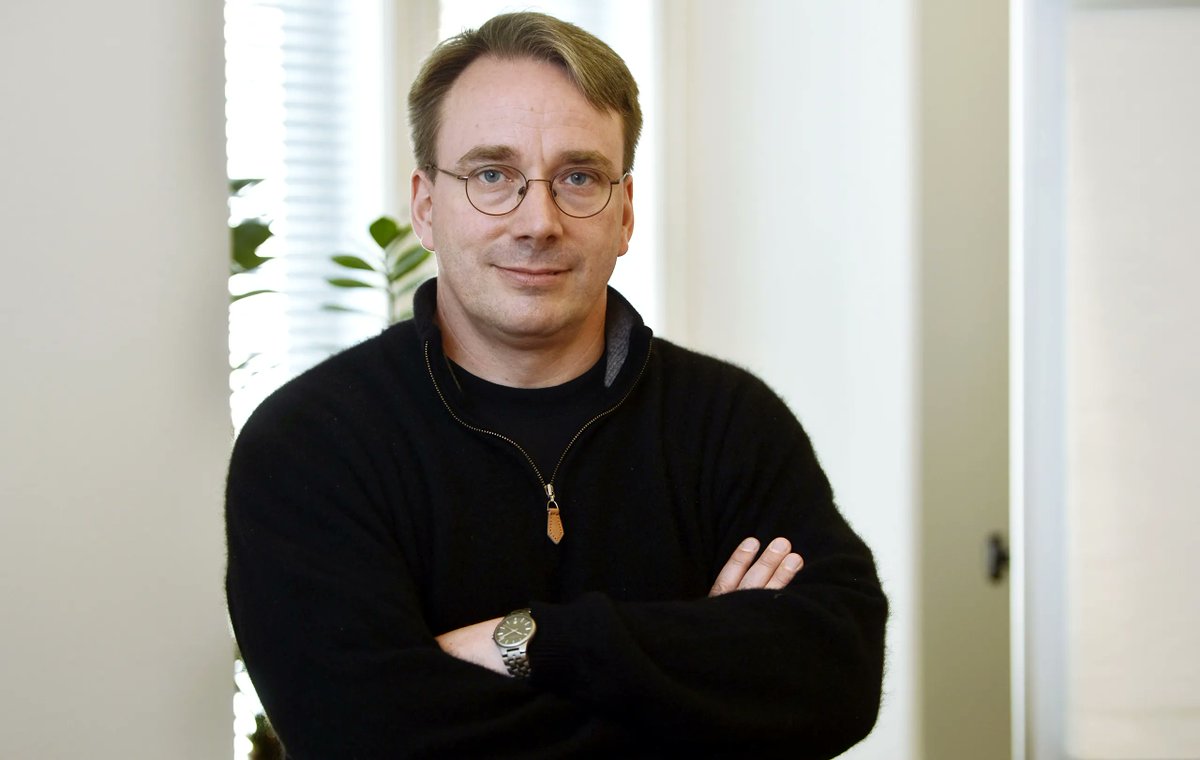
Linus Torvalds created Linux at 21 without Claude or any other AI.
- He didn't have a co-founder.
- No VC funding. No office.
- No team.
- Just a personal project
he posted to a mailing list:
"I'm doing a free OS."
33 years later,
it runs 97% of the world's servers, all smartphones, and the International Space Station.
The most important software in history started as someone's side project.
Absolute legend.
Ainakin kemiassa tohtorinkoulutus yliopistossa auttaa ratkaisemaan nimenomaan vaativia käytännön ongelmia.
Niitä tässä maailmassa riittää. Sairauksiin tarvitaan lääkkeitä, jätteisiin kierrätystapoja, energian varastointiin uusia akkuja…
Näiden ratkaisuun tarvitaan tohtoreita.
Datan automatisoinnilla parempaa tiedolla johtamista
Olympiakomitea, Suomen Urheiluliitto ja Tilastopaja Oy toteuttivat kesällä pilottiprojektin, jossa rakennettiin automatisoitu tiedonkeruu- ja analytiikkapalvelu yleisurheilun tulosdatan hyödyntämiseen⤵️
https://t.co/OJJxxa2QwG
CEO's question: What will be the hourly cost of work of a humanoid robot?
Several projections have been published, e.g. by @CernBasher, @adam_dorr and @GoingBallistic5. Here's my take.
I've produced a long-form video on this question (see link in comments).
Here is the essence - based on very conservative assumptions (see attached image).
- Production cost: $30,000. A humanoid is ~5% the mass of a passenger car. The costly parts are actuators and gearboxes; the rest is electronics, sensors, a few kWh of batteries, and plastics—components that are highly scalable in volume manufacturing.
- Operating cost: $30,000 per year, of which $18,000 is human oversight and coordination. This is likely way too high.
- Operating time: 6,600 hours per year (330 days × 20 hours/day). That equals the yearly working time of more than three people.
- Work speed vs. humans: 100% initially. As with industrial robots, later generations will likely reach 200%+.
- Business model: Most manufacturers will offer Robot-as-a-Service (RaaS) rather than selling units, because it drives far higher revenue and margin. Expect an initial one-time fee roughly equal to manufacturing cost plus a usage fee per year, month, day, or hour.
- Service life (incl. repairs): 8 years.
- Market dynamics: Because humanoids will be highly profitable to use (see below), demand will ramp quickly. But many suppliers will enter, so sustained overly high monopoly pricing is unlikely.
Result: Based on these assumptions, a humanoid work hour will cost at most $14.
That’s the highest realistic value. With learning effects and scale, the hourly cost will drop below $10 and likely below $5. @rethink_x even projects that by 2035 a humanoid hour could cost less than $1.
By comparison, a skilled worker’s fully loaded hour is $42.53.
Strategic consequence: In competitive markets, companies will have no real choice: first to replace labor shortages, and soon to replace existing roles. Even at $14/hour, the financial advantage vs. human labor is close to $200,000 per robot per year.
I’ve published a three-part video series on the societal implications of this inevitable shift (see comments).
Urgent advice: If you make or move anything physical, start rethinking your business around humanoids—as a supplier, service provider, or user. It is quiet now, but the ramp-up will be fast.
How about you? Which tasks would you deploy humanoids for first?
🌟Finland acquires a new national data management and computing environment🌟The new supercomputer Roihu❤️🔥, a BullSequana XH3000 hybrid system by @Eviden_Compute , will triple Finland’s national supercomputers’ resources. Read more 👉 https://t.co/PrCHEDvBTK #HPC#supercomputer
All languages covey information at a similar rate when spoken (39bits/s).
Languages that are spoken faster have less information density per syllable!
One of the coolest results in linguistics.
Tekoälytehtaat, datakeskukset, palvelinsalit, supertietokoneet – Suomi on osoitetusti houkutteleva kohde digitalisaation perustan eli laskentakapasiteetin rakentamiselle. Voimmeko puhua jo omasta toimialasta, datateollisuudesta? https://t.co/A4LD5jDCSB
Teknologiateollisuus esittää hallituksen budjettiriiheen panostuksia digitalisaatioon sekä sen riskien hallintaan. Mitä tämä tarkoittaa? 💡 @RistoRaj@FISCFi vastaa👇 #budjettiriihi#digitalisaatio
https://t.co/zFxjUedhuH
Nordic Cryosphere #DigitalTwin (NOCOS DT) models key sea ice impact sectors across the Arctic, Nordic, and Baltic regions. It helps to predict and understand climate changes, providing essential insights for climate adaptation and disaster management. 🌍🔍
https://t.co/bQyS6q6HDu
Hankkeen ensimmäisessä vaiheessa tarvitusta laskentatehosta on vastannut suurimmalta osin @LUMIhpc , joka sijaitsee CSC:n Kajaanin datakeskuksessa. Lue koko artikkeli Tivin verkkosivuilta (maksumuuri) 👇
🚀 Supercomputing Made Easy with CSC’s “Computing Environment” Courses!
🌟 Get the most out of our #HPC resources
📚 Course now split into basics & advanced sections
🎓 Free & online
🌐 Access via eLena with Haka; exercises on Puhti
Join us: https://t.co/dzZo6c1xBj
Tietoa tutkimuksesta ja sen tuloksista kerätään valtavia määriä erilaisiin tietokantoihin, järjestelmiin ja digitaalisiin palveluihin. @HPuuska ja @laurakoohoo kirjoittavat blogissaan tutkimuksen vastuullisesta arvioinnista https://t.co/LN5PSl4gzu #tutkimustieto