Pair of Tawny Eagles Spotted at Deer Breeding Centre in Rahim Yar Khan
LAHORE (Asif Mehmood): Footage has emerged showing a pair of tawny eagles resting beneath a tree at the H.H. Sheikh Zayed Bin Sultan Al-Nahyan Deer Breeding Centre in Rahim Yar Khan.
According to the Houbara Foundation International, tawny eagles are adapted to dry, open and semi-arid habitats. Their strong build and keen eyesight make them prominent birds of prey.
The foundation said tawny eagles feed on small mammals, birds, reptiles and carrion, playing an important role in maintaining the balance of natural ecosystems. The protected natural habitat at the centre provides a suitable environment for these birds.
This mountain in China looks like it’s burning because the sun hits it at a perfect angle and the clouds are constantly moving.
It is a phenomenon called alpenglow.
This was the world of powerful Pakistani women that we were promised as little wide eyed girls growing up in the 90’s. Rooms of power full of elegant women that we wanted to grow up to be. Islamabad has regressed so much since .
Pakistan was a few years old when she arrived at Cambridge.
The country she had come from was still building its ministries, its courts, its universities, its foreign service from nothing.
She came back with a PhD in political science and spent the next 50 years building what Pakistan needed.
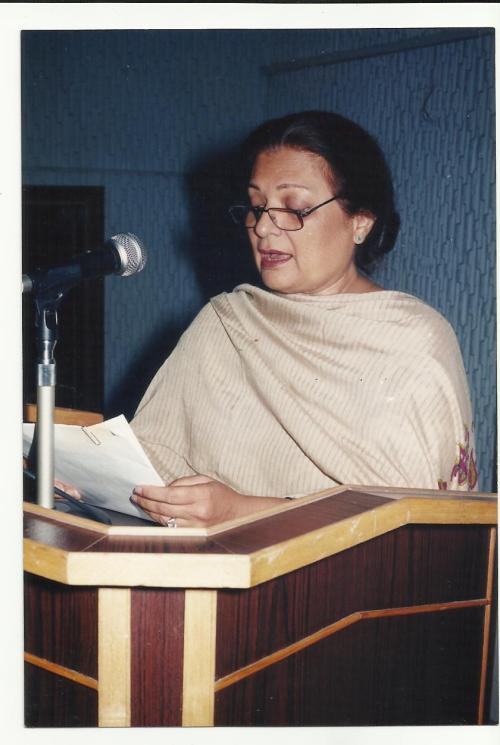
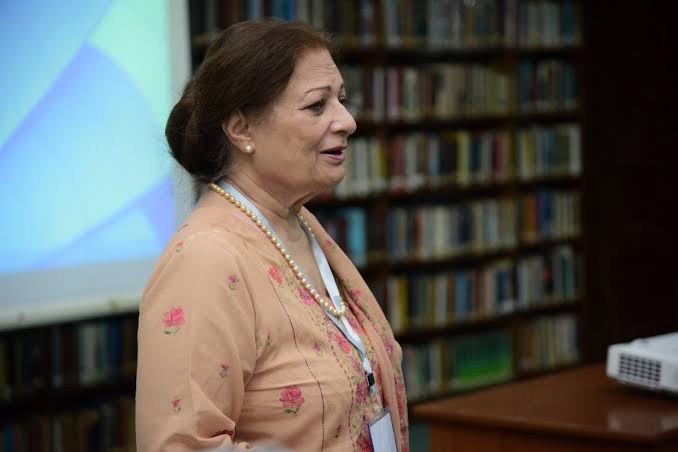
Dr. Masuma Hasan.born 30 April 1941 in Delhi, British India. Descent from Abdullah Ansari, Pir of Herat. Born into an intellectual family in Pakistan's formative decades.
University of Cambridge. PhD in Political Science. Returning to a country where the institutions her degree qualified her to analyse and reform were still being invented.
She chose to build them rather than study them from a distance.
She represented Pakistan at the United Nations General Assembly. A Pakistani woman on an international diplomatic platform in the decades when Pakistani women were not expected to be there.
In 1999 she was appointed Federal Cabinet Minister for Women's Development, Social Welfare, and Special Education. Progressive institutional reforms. Policy frameworks that outlasted the ministry she held. A tenure measured not in press releases but in what changed structurally.
Then the work she is perhaps most associated with.
Chairperson of the Pakistan Institute of International Affairs. The PIIA. Pakistan's premier institution for geopolitical analysis, international relations scholarship, and diplomatic training.
She held that position for decades.
She transformed it.
Under her the PIIA became a serious intellectual hub. Rigorous analysis on regional security. Foreign policy frameworks. Statecraft. The kind of work that informed how Pakistan understood its place in the world rather than simply reacting to it.
She mentored generations of researchers, diplomats, and civil servants. Young people who came to her for guidance and left with a framework for thinking about Pakistan's role in international affairs that they carried into careers across the foreign service, the civil service, and academia.
She authored critical analyses on regional security, foreign policy, and governance. Work that combined scholarly rigour with the practical understanding of someone who had sat inside the institutions she was writing about.
A Cambridge PhD in the turbulent decades after Partition.
50 years of institution-building after that.
Pakistan has produced few people who combined intellectual depth with public service at this level and across this span of time.
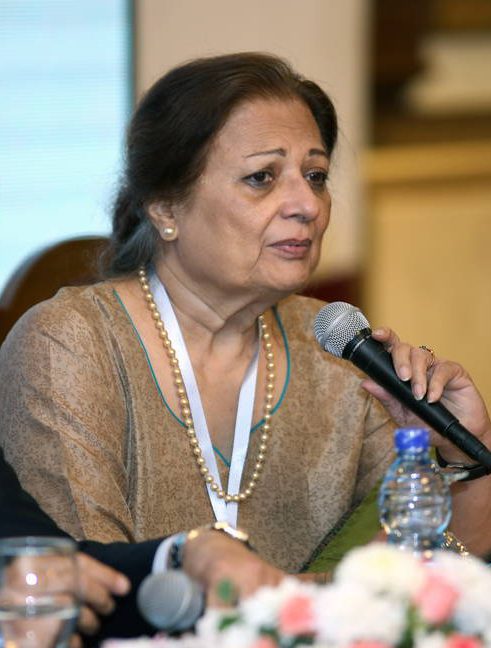
Dr. Masuma Hasan.
Pakistan Zindabad. 🇵🇰
---
**OPTION B: She Came Back hook**
She could have stayed at Cambridge.
She came back.
Dr. Masuma Hasan. Born into an intellectual family in Pakistan.
She earned her PhD in Political Science at the University of Cambridge in the turbulent decades following Partition. A country barely standing was producing scholars who could have built careers anywhere.
She built hers in Pakistan instead.
She represented Pakistan at the United Nations General Assembly. A Pakistani woman speaking for her country on the world's most significant diplomatic platform before that was considered ordinary or expected.
She was appointed Federal Cabinet Minister for Women's Development, Social Welfare, and Special Education in 1999. She used the tenure to push for progressive institutional reforms and policy frameworks that had structural staying power beyond the appointment itself.
Then decades of service as Chairperson of the Pakistan Institute of International Affairs.
The PIIA. Pakistan's premier institution for geopolitical analysis and diplomatic training.
She transformed it.
From an institution that existed into an institution that mattered. Rigorous geopolitical analysis. Regional security scholarship. Foreign policy frameworks. Diplomatic training for generations of young Pakistanis entering the foreign service and civil service.
She mentored researchers, diplomats, and civil servants whose careers spread across Pakistan's public institutions. She authored analyses on statecraft and regional security that informed how Pakistan engaged with the world.
She combined what Cambridge had given her with what Pakistan needed from her.
Intellectual depth. Institutional commitment. 50 years of both simultaneously.
Pakistan produces scholars.
She built the institutions that produce them.
Dr. Masuma Hasan.
Pakistan Zindabad. 🇵🇰
Nobody believed a woman could stabilise the economy.
She said this herself.
Then she stabilised it anyway.
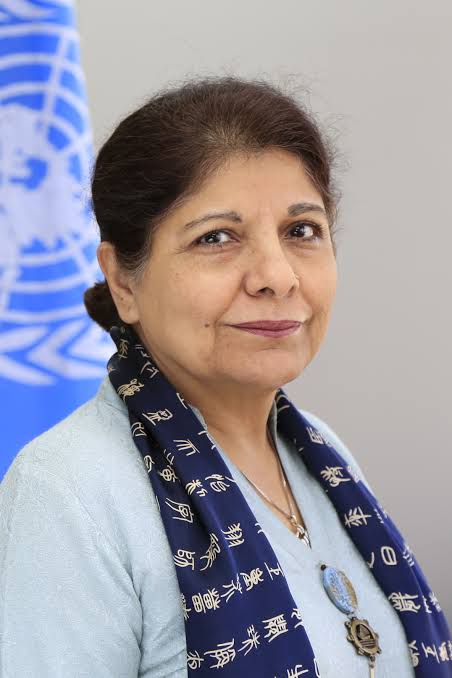
Dr. Shamshad Akhtar. Born Hyderabad, Sindh. Died 2025. Aged 71.
MSc Economics from Quaid-i-Azam University. Master in Development Economics from the University of Sussex. PhD in Economics from Paisley College of Technology, Scotland. Post-doctoral Fulbright Fellow at Harvard University.
She started her career in 1980 at the Planning Commission in Islamabad. Months later she moved to the World Bank's Resident Mission in Pakistan as a country economist.
She spent the next 25 years building one of the most consequential careers in international economic governance that any Pakistani has ever built.
10 years at the World Bank Pakistan office. Then Director General of the Asian Development Bank's Southeast Asia Department. Then the role that brought her home.
January 2, 2006.
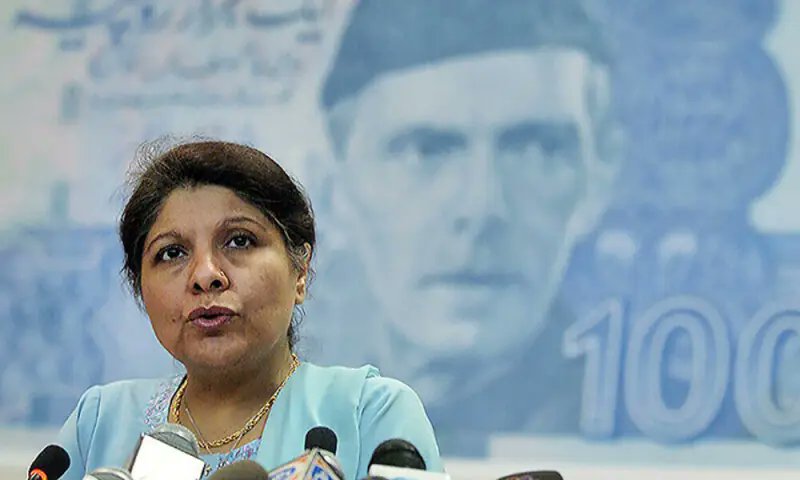
She took over as the 14th Governor of the State Bank of Pakistan. The first woman in the institution's history since its founding in July 1948. Fifty-eight years of the State Bank before a woman sat at its head.
She reinforced the credibility of Pakistan's central bank at one of the most critical moments in the country's economic history. She served until January 2009.
The Euromoney Institutional Investor named her Best Central Bank Governor for Asia in 2007. The Wall Street Journal listed her among the Ten Women to Watch in Asia.
Then the world called.
2011. UN Assistant Secretary-General for Economic and Social Affairs. Senior Special Adviser on Economic and Finance to UN Secretary-General Ban Ki-moon. She served as the UN Sherpa for the G20.
2013. UN Under-Secretary-General. 10th Executive Secretary of the United Nations Economic and Social Commission for Asia and the Pacific. UNESCAP. Leading global work on the 2030 Sustainable Development Agenda, climate change, and financing for development across the Asia Pacific region.
World Bank Vice President for Middle East and North Africa.
Then back to Pakistan.
Caretaker Finance Minister of Pakistan in 2023. Co-Chair of the Debt Relief for Green and Resilient Recovery Project from 2020 to 2025. Chairperson of the Pakistan Stock Exchange.
She was sitting in the PSX chair when she died.
Still working. Still serving. Still there.
UN Women Country Representative Jamshed Kazi called her a global icon in development finance and multilateralism.
Nobody believed a woman could stabilise the economy.
She did not wait for belief.
She stabilised it.
Dr. Shamshad Akhtar.
Pakistan Zindabad. 🇵🇰
16 years of turning a whole generation into vain, insecure shallow beings with inability to stay present and chronically need of external affirmations.
@GulBukhari This divide is making young people anxious. When you label as “3rd tier,” you reinforce the idea that being successful means leaving. Not everyone abroad is exceptional, and staying doesn’t mean lacking ambition. Give them some respect, confidence, and hope.
@Nobdysbussiness No no. Reuse them .. wear the duppatta with contrast plain suit. And use lehenga separately. Use shirt with plain shalwar or trousers… there are plenty of ways of doing this
@Amethystress She is right. You can always utilise them to make a new dress but wearing same full dress is simply not done….should be avoided at any cost