Escribí Historia Mínima de Rusia y Limbos Rojizos @elcolmex. PhD Russian History @HSE_eng Global History of Empires @unito. Profesor tiempo completo @ibero_mx.
Queridos tuiteros:
¡¡¡¡¡Estamos de plácemes!!!!!
Ya salió "Rusia en Voz Alta": un pódcast de Historia de Rusia. Quedó muy, pero muy bonito.
Faltan algunos detalles. Hay sitios que lo bajan por la música, pero escúchenlo en Youtube:
Agradezco difusión.
https://t.co/r6dsaNa41o
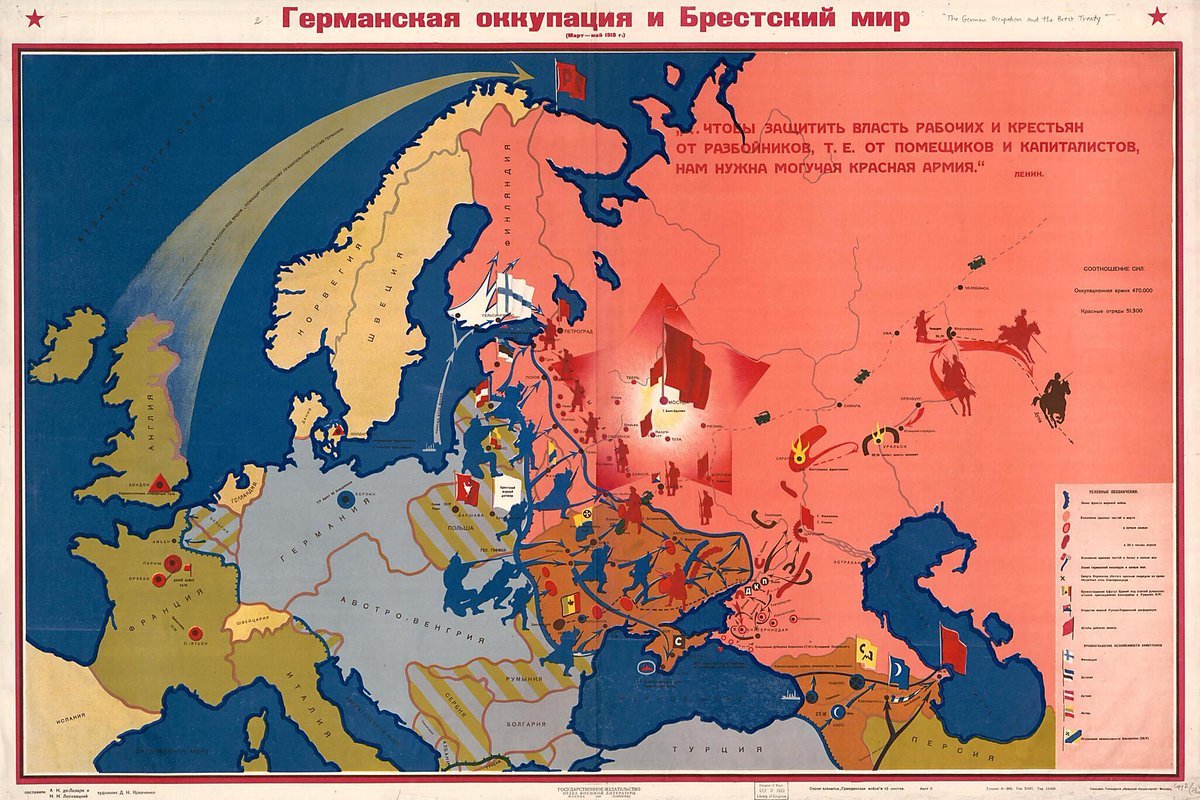
En 1928, por el décimo aniversario de Octubre, Gosizdat publicó diez mapas murales sobre la Guerra Civil rusa.
Una historia gráfica desde Petrogrado a la derrota de los blancos, pasando por Alemania, la intervención extranjera y las campañas de Kolchak, Denikin y Wrangel.
Se cumplen hoy 80 años del fallecimiento de don Manuel de Falla, uno de los compositores españoles más ilustres del siglo XX.
Hace ya más de cinco años (antes de que me llamaran "snob"), cuando Tuiter valía la pena y yo tenía esta sección, le dediqué el "Compositor del día".
Bienvenides a mi página personal! Aquí encontrarán mis publicaciones en libre acceso:
Welcome to my home page! Here you'll find my open-access publications:
Bienvenue sur ma page personnelle! Vous y trouverez mes publications en accès libre :
.
https://t.co/YCfvvP1sft
.
"¿Vieron cómo funciona la manipulación mediática? De Venezuela hablaron 20 años. Del presidente de ultraderecha de Paraguay que le robó todo a 3 millones de personas, no hablaron más."
Apparently, Jeff Bezos has joined Elon Musk in a secret promotion of Katchanovski :)
By now, 865 scholars, according to an AI count, mostly social scientists and humanities scholars specializing in Eastern Europe, have signed on to the unsubstantiated and incompetent conspiracy theory that Elon Musk tweaked Twitter's algorithms to promote Ivan's book.
Barely any reflection on this collective self-embarrassment of a big part of the "field" has followed.
Es fascinante ver como la gente es consciente de que todo va como el culo, pero fallan estrepitosamente en entender que el origen de esos problemas está en el capital.
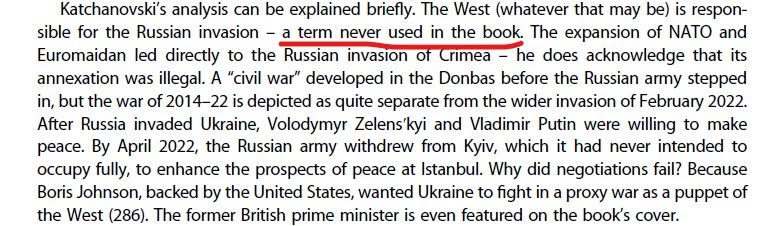
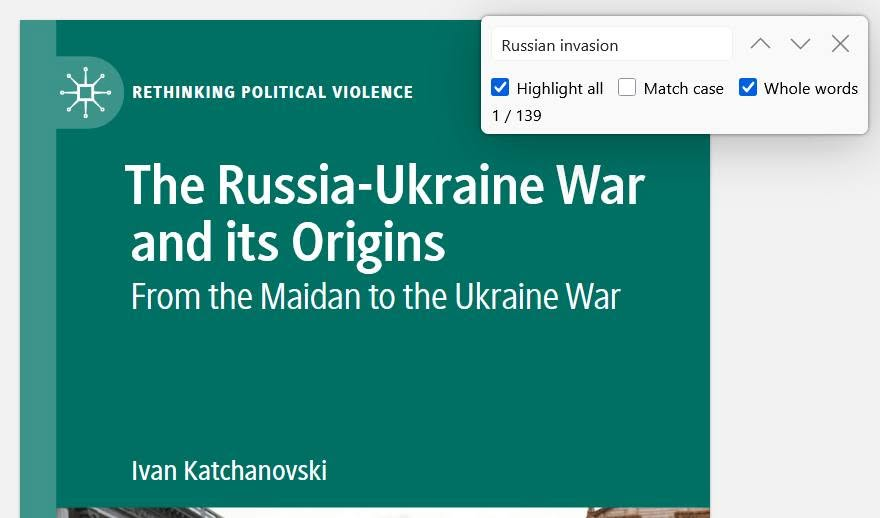
David Marples’s review of @I_Katchanovski’s book is now being widely shared as some devastating debunking. Not only does it not engage substantively with any (literally any) of Ivan’s arguments, but it also contains an incomprehensible misrepresentation of the book on easily checkable factual points.
For example, the review claims that the book never uses the term “Russian invasion,” while an automatic search shows that this exact phrase appears 139 times, which means on every second or third page of the book.
The review claims that the first seven chapters, effectively half of the book, “regurgitate” Ivan’s previous book on the Maidan massacre. However, most of the content discussed in these chapters is not dealt with in any significant detail in the previous book.
It is pretty obvious that this is a lazy and sloppy review. Why pretend otherwise?
After massively signing on to the conspiracy theory about Elon Musk and to statements that, literally, to understand the war in Ukraine one needs to read less about Ukraine, so many in the “field” continue down the rabbit hole of intellectual and moral bankruptcy. The collective gaslighting about this review is a new low.
I can't think of anyone who's fucked up their hit piece as badly as David Marples' hit on @I_Katchanovski. It's such an embarrassing failure of Invective 1A: if you're going to smear someone's work, you can't be this lazy/sloppy! Did Marples have a stroke? https://t.co/zLU4CFHWJi
Liberals losing it: "You can't have 3 guys [leading the 3 most important countries] deciding what happens in the world." As opposed to their ideal: one country, the USA, deciding everything, and its lackeys in Europe and Canada pretending that they too had a say
Thanks @bneeditor for mentioning my new article "The Broken Mirror of the World in Crisis"! It is published in both English and Ukrainian! Available here:
https://t.co/st8cEJH1j1
"A similar study is needed of more than 25 years of predictions that Russia is finished, according to Volodymyr Ishchenko, a sociologist at the Free University of Berlin, who drew the parallel on social media on November 18. Those forecasts "have always failed as predictions of the Russian reality, but they have been useful in undermining negotiated ways out of the path toward the war, out of the war itself, and out of Ukraine's national catastrophe," he wrote.
Ishchenko's new essay, "The Broken Mirror of the World in Crisis", published in Ukrainian in the Ukrainian Forum journal, casts Ukraine's catastrophe as the product of two linked crises, the degeneration of the Soviet revolution that built modern Ukraine and the decline of the US-led order on which most of its elites bet the country's future."