Economist & Author | Chairman Pahle India Foundation. Former Vice Chairman NITI Aayog | Practitioner of Sahaja Yoga and practitioner of regenerative farming.
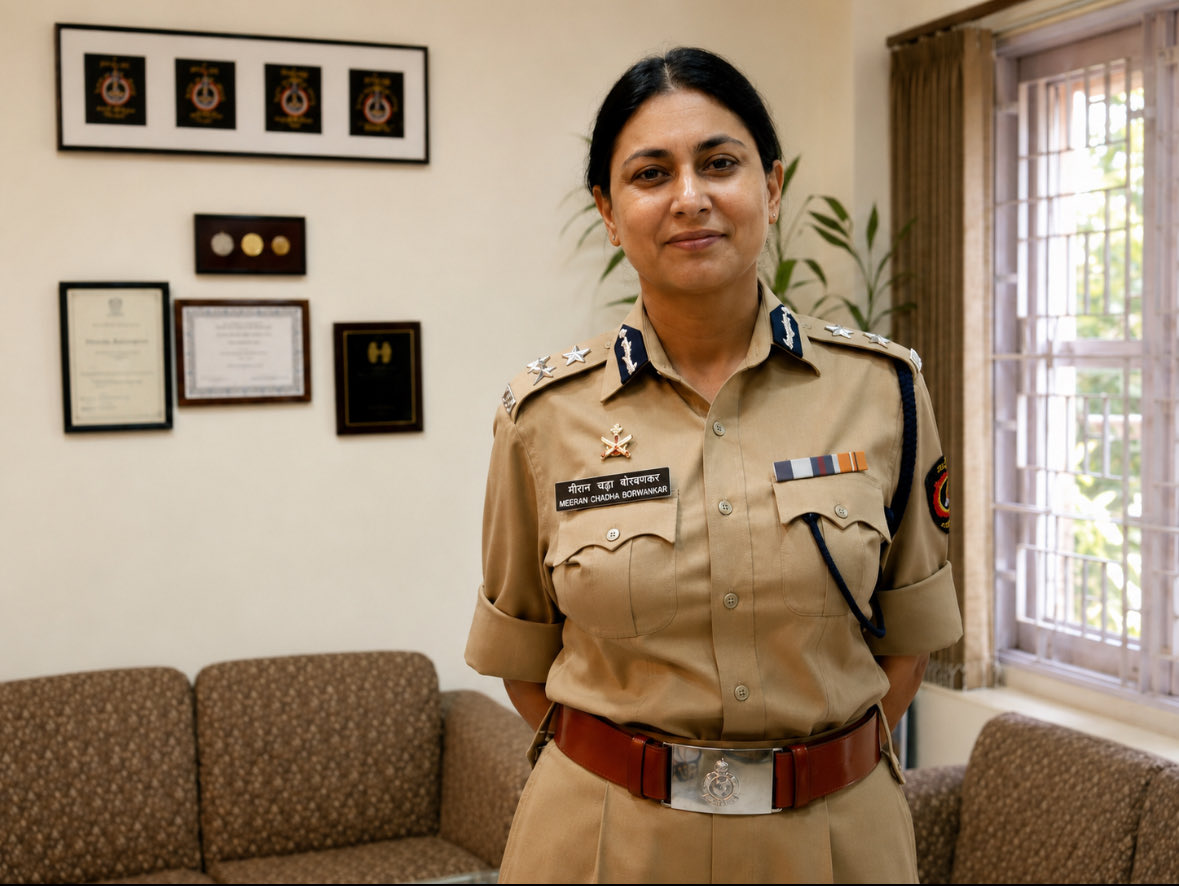
Her name is Meeran Chadha Borwankar.
A minister sat across a table from her and ordered her to hand over three acres of police land to a private bidder.
She said no.
He lost his temper and hurled the map across the glass table between them. She stood up, saluted him, and walked out.
She joined the Indian Police Service in 1981, at a time when a woman in a police uniform in India was almost a curiosity. She went on to become the first woman to head the Mumbai crime branch, and the first woman to lead the Pune police.
In 2010, soon after she took charge in Pune, she was told to complete the handover of a valuable piece of police land in the heart of the city. The land had already been auctioned off to a private bidder before her time. She was expected to simply sign it away.
She looked at it and refused. The land, she said, was needed for the police themselves, for their offices and for homes for the constables and their families, the men and women who guard the city and often cannot afford to live in it. Handing it to a builder, she said plainly, would look like the new commissioner had sold herself out.
The minister overruled her and told her the matter was closed. She told him, gently and finally, that she would not do it.
The map came flying across the table. She saluted, and left.
It cost her. The posting she wanted did not come. But she wrote to the government demanding the whole deal be cancelled, and she kept fighting until the land was returned to the police, where it belonged.
Years later, the bidder who had been due to receive that land was named as an accused in one of the biggest corruption cases in the country.
She had no way of knowing that at the time. She simply refused to hand over what was not hers to give.
Appalling! @MyIndusIndBank is this how you get elderly people to open bank accounts. @UIDAI in the name of updating Aadhaar, senior citizens are being asked to open bank accounts @MyIndusIndBank branch in Kasba, Kolkata. https://t.co/hx1Ux98hVn
#CapitalControls#Hawala#ViksitBharat
In our @Moneycontrol oped, Dr. Rajiv Kumar, & I write: are India’s capital controls still aligned with the country’s economic ambitions?
We argue that while they served India exceptionally well through an era of foreign exchange scarcity and external vulnerability, a Viksit Bharat aspiring to become a global financial and economic power now requires a capital account philosophy rooted in trust, transparency, regulatory predictability and calibrated openness—one that attracts long-term strategic capital, enables Indian enterprise to compete globally and preserves the financial stability that has been India’s greatest macroeconomic strength.
https://t.co/QaRif8KUbp
Hypocrisy in Policy
Advertising alcohol and tobacco products under various forms of subterfuge is a grievous and deliberate breach of policy design and purpose. This goes on unchecked and in open violation of the ban on advertising these two products. Surely all those responsible are aware of this serious hypocrisy which is hugely damaging to public health and welfare. Let’s either lift the ban or enforce it in advertising media as well. @PMOIndia@AshwiniVaishnaw@PiyushGoyal@DPIITGoI @
Wonderful indeed to see a further strengthening of fraternal ties between India and Japan. I first Tokyo in 1984 and have seen the evolution of this win-win relationship over FOUR decades. As @primeministermod’s special envoy for the A’bad- Mumbai bullet for three years, I had a very insightful working relationship with @JPN_PMO and @JapanAmbIndia. I wish the visiting Prime Minister all the very best and look forward to further blossoming of bilateral ties.
Met with Honourable CM @ncbn at the conference on Swaran Andhra at Tirupati. He had invited the top economists and academics for their inputs on AP’s way forward. Found him even more engaging, open to learning and democratic as he was eight years ago when I first met him. Remarkable indeed. @PahleIndia is working closely with planning deptt AP Govt to implement the vision. @PTI_News@EACtoPM@NITIAayog@ANI@BJP4India@RoyLakshman
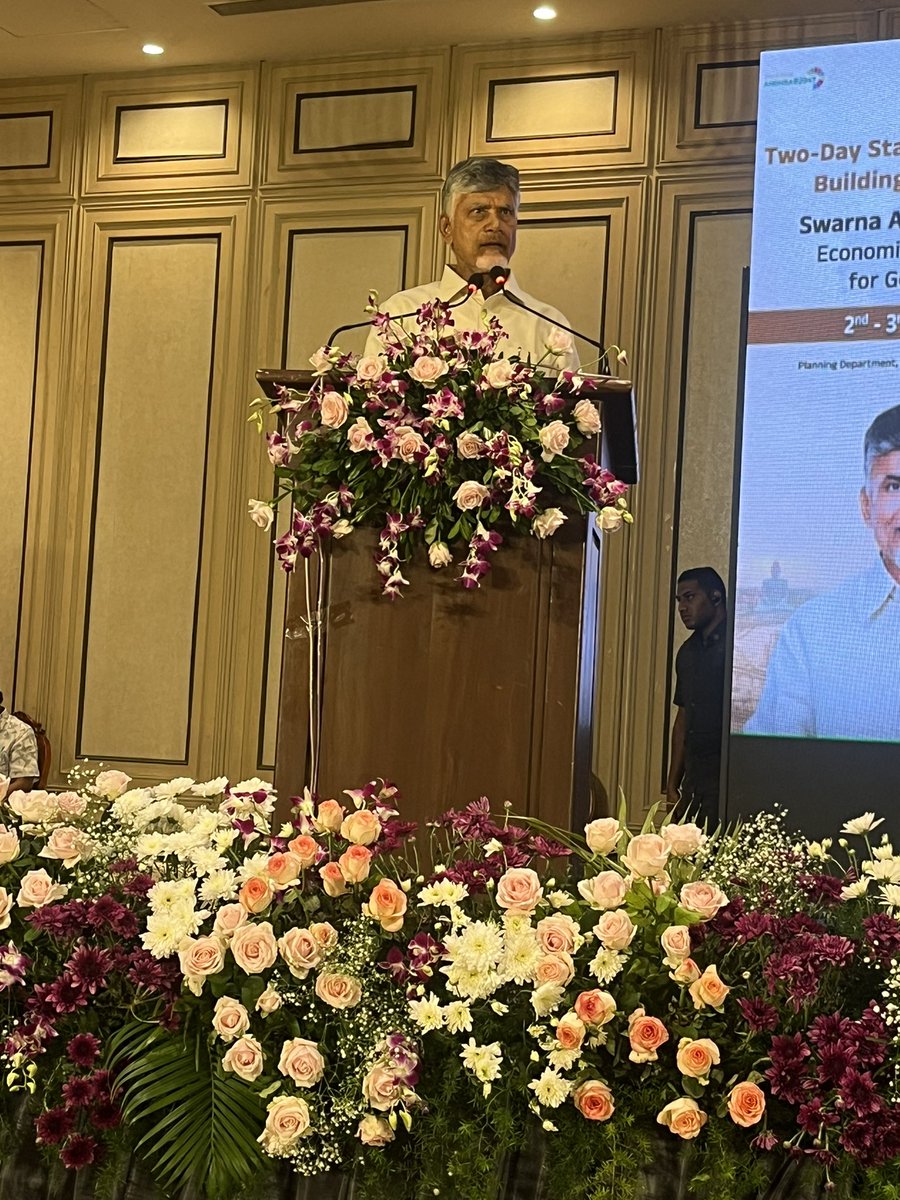
Hon CM N Chandrababu Naidu addressing the two day State Level Capacity Building Program as part of Swarna Andhra@2047. Accepted and announced my suggestion of including ‘promoting private investment and enterprise’ as one of the core principles of public policy. Extremely grateful to him. Hoping other states will follow. The need of the hour @NamoApp@PMOIndia@PahleIndia@NITIAayog@TVMohandasPai @
In the map below, Tobacco use seems to be broadly inversely co-related to States’ per capita incomes. The lower the income, the higher the % of men using tobacco. Will surely be correlated to education levels as well.
Every 2nd digital transaction takes place in India. digital economy will be the backbone for inclusive, sustainable and accelerated growth when all 7.5 lakh villages are connected with fibre network. The present number is already 2.5 lakh villages connected.@MeitY_NICSI
This moving article on @UmarKhalidJNU in prison prompts a simple question: if he really has incited terrorism, why not prove it in a court of law? Why deny him the basic right of any Indian citizen accused of a crime, the right to a fair trial? Languishing six years behind bars, without a chance to defend himself legally, is a travesty of justice and a blot on our democracy. I think the people of India have a right to know why.
And what he says from prison is sad to read:
https://t.co/y0ePYxZvyh
When there is so much evidence of gold, silver and donations looted from all religious places, why do people still donate? As Vipashayana guru Goenka ji used to say- God doesn’t need your money. Why not create livelihoods, give shelter, help under privileged- support rainwater harvesting this year? At least you will see your money doing God’s bidding!! 🙏🙏🙏
🚨 Ironically, Indian Media Didn’t Cover This
Three Indian teenagers created Plas-stick, a biodegradable powder from tamarind seeds that removes microplastics from water without electricity or complex machinery
They won the 2026 Earth Prize, making India proud 🇮🇳
This article is surely a harbinger of major political reshuffle and of a much needed injection of fresh talent and dynamism in the senior echelons of the government. Will keenly await the unfolding developments and wishing the incoming team the very best. Achieving Viksit Bharat needs both passion and commitment at all levels.
: "योगः कर्मसु कौशलम्" (भगवद् गीता - अध्याय 2, श्लोक 50)"
योग का परिणाम कर्म में कुशलता है
क्यूँकि योग प्राप्त होने के बाद ही आत्म शक्ति और ब्रह्म शक्ति मिल कर काम करती हैं।
A very simple but life changing message about the true meaning of Yoga- the Union of our inner spirit with the cosmic energy that pervades the universe. Experience it with the practice of Sahaja Yoga meditation based on the essence of messages of Nanak, Kabir, Gyaneshwar etc
A Japanese immunologist spent 20 years proving that the chemicals trees release into the air walk into your bloodstream, hunt down your stress hormones, and arm your immune system in ways no therapist or pharmaceutical has ever matched, and most of the data has been sitting in Japanese medical journals for two decades waiting to be translated.
His name is Qing Li.
He is a clinical professor at Nippon Medical School in Tokyo and the president of the Japanese Society of Forest Medicine. The Japanese government has been funding his research since 2004, and the body of work he has produced is the reason forest bathing is now an officially prescribed clinical therapy in Japan and Korea.
The story actually starts in 1982, when the Japanese Ministry of Agriculture, Forestry and Fisheries coined the term shinrin-yoku to describe the practice of slow, mindful walking in a forest. They did it for a practical reason.
Japan was urbanizing fast, stress-related illness was climbing, and the country had thousands of square kilometers of forest sitting unused. The idea was to give people a reason to walk into the trees... They had no idea what was actually happening to the human body during those walks until Qing Li ran the first proper experiment in 2005.
He took twelve healthy adult men on a three-day, two-night trip to a forest park. They walked for a few hours each day. Nothing strenuous. No prescribed routes or breathing exercises. They simply walked slowly through the trees, breathing the air, looking at the forest.
Li drew blood and urine samples before the trip, on the second day, on the third day, on day seven after returning home, and again on day thirty.
The numbers that came back from the lab were not what anyone expected.
The activity of a specific type of immune cell called the natural killer cell, which is the cell your body uses to hunt down cancer cells and virus-infected cells before they can spread, had jumped by roughly 50 percent during the forest trip. The actual number of natural killer cells circulating in the bloodstream had increased significantly.
Three different anti-cancer proteins that those cells produce, called perforin, granzymes, and granulysin, had all risen sharply. And the effect did not disappear when the men went home. The immune boost was still measurable on day seven and was still partially present on day thirty.
Two hours a day in a forest had upgraded the immune system for a full month.
Li ran the same experiment with women a year later and found nearly identical results. Then he ran it with a control group who took a three-day trip through an urban area with the same amount of walking, the same hotel quality, and the same diet.
The urban group showed no measurable change in natural killer cell activity at all. The forest was doing the work, not the vacation.
The mechanism turned out to be a class of airborne molecules called phytoncides. Trees produce these compounds to defend themselves against insects, bacteria, and fungi. Pine, cedar, oak, and cypress trees release them in particularly large amounts, especially in warmer weather and after rainfall.
When you walk through a forest, you are inhaling those molecules into your lungs and absorbing them through your skin, and once inside your body they appear to directly stimulate the production and activity of the very immune cells Li was measuring in his lab.
Roughly 50 percent of the health benefit of a forest walk, according to Li's data, comes from the chemistry of the air itself. The other half comes from what the forest is doing to your nervous system.
This is where it stops being only about the immune system and starts being about stress.
A separate Japanese research team measured cortisol, the body's main stress hormone, in 84 participants across 35 different forest sites. They drew samples before and after a 30-minute walk in each forest and compared them to control walks in matched urban environments. The cortisol levels of the people who walked in the forest were lower than the cortisol levels of the people who walked in the city by a significant margin. Their heart rates were lower. Their blood pressure was lower.
The activity of their parasympathetic nervous system, which is the part responsible for rest and recovery, had gone up. The activity of their sympathetic nervous system, which is the part that drives fight or flight, had gone down.
Then a researcher at the University of Michigan named MaryCarol Hunter ran the cleanest version of this experiment ever done. She recruited participants from a city and told them to take a nature pill three times a week for eight weeks.
They were free to choose the time, the place, and the duration of the nature experience, as long as it was outside, in daylight, and free of phones, conversations, and aerobic exercise. They sent her saliva samples before and after each session so she could measure cortisol changes accurately and rule out the normal daily drop in stress hormones that happens to everyone.
The result was that participants experienced a 21.3 percent drop in cortisol per hour spent in nature, with the biggest payoff happening between minutes 20 and 30 of the walk.
After that, the cortisol kept dropping, but more slowly. The threshold dose for measurable stress relief was just 20 minutes outside in something that looked and felt like nature.
What none of this means is that nature is a substitute for therapy or for medication when someone genuinely needs them. Therapy treats different things than a walk does, and Li himself has been careful in interviews to call forest bathing a complementary intervention rather than a replacement for clinical care.
But what the research has settled is that the human body has a physiological response to being among trees that operates on the same biological systems modern medicine is trying to reach with drugs and clinical protocols, and that response is fast, measurable, and free.
The strangest part of Li's work is the implication he keeps repeating in interviews. The average person now spends more than 90 percent of their life indoors. Their cortisol stays elevated. Their natural killer cells stay sluggish.
Their parasympathetic nervous system rarely gets a chance to take over. The system that was tuned by millions of years of life under a canopy of trees is being asked to run permanently inside a box made of drywall and screens.
Your body has not forgotten what it is supposed to do in a forest. It is waiting for you to walk into one.
@PahleIndia offices are now overflowing with the spate of additions to our research team not just here in Delhi but also in Mumbai and Guwahati and other locations. Not a surprise therefore to see colleagues making do with cushions in the open spaces. An institution gets built with every one’s dedication @shaurya_doval@RaviPokharna@AshishDhawanTCF@AmitCTweets@khannaajay@satyatripathi