The Javelin Joint Venture, partnership between @LockheedMartin & @Raytheon, signed an MOU with @tataadvanced to co‑produce the Javelin All‑Up‑Round in 🇮🇳.
It will grow India’s defence manufacturing & boost supply chain resilience across the Indo‑Pacific.
https://t.co/bDU6ILaLXD
@svembu I agree sir, transitioning from a career in armed forces to making products for armed forces, I have decided to do the demonstrations and sales call myself. If you don't sell your product, there is no business. The founder is the best person to explain his product.
These have been inducted into a lot of SF units in our operational areas. Commanding Officers can take a cue from this. Just be careful that IFAKs need to have original standardised items and not cheaper copies.
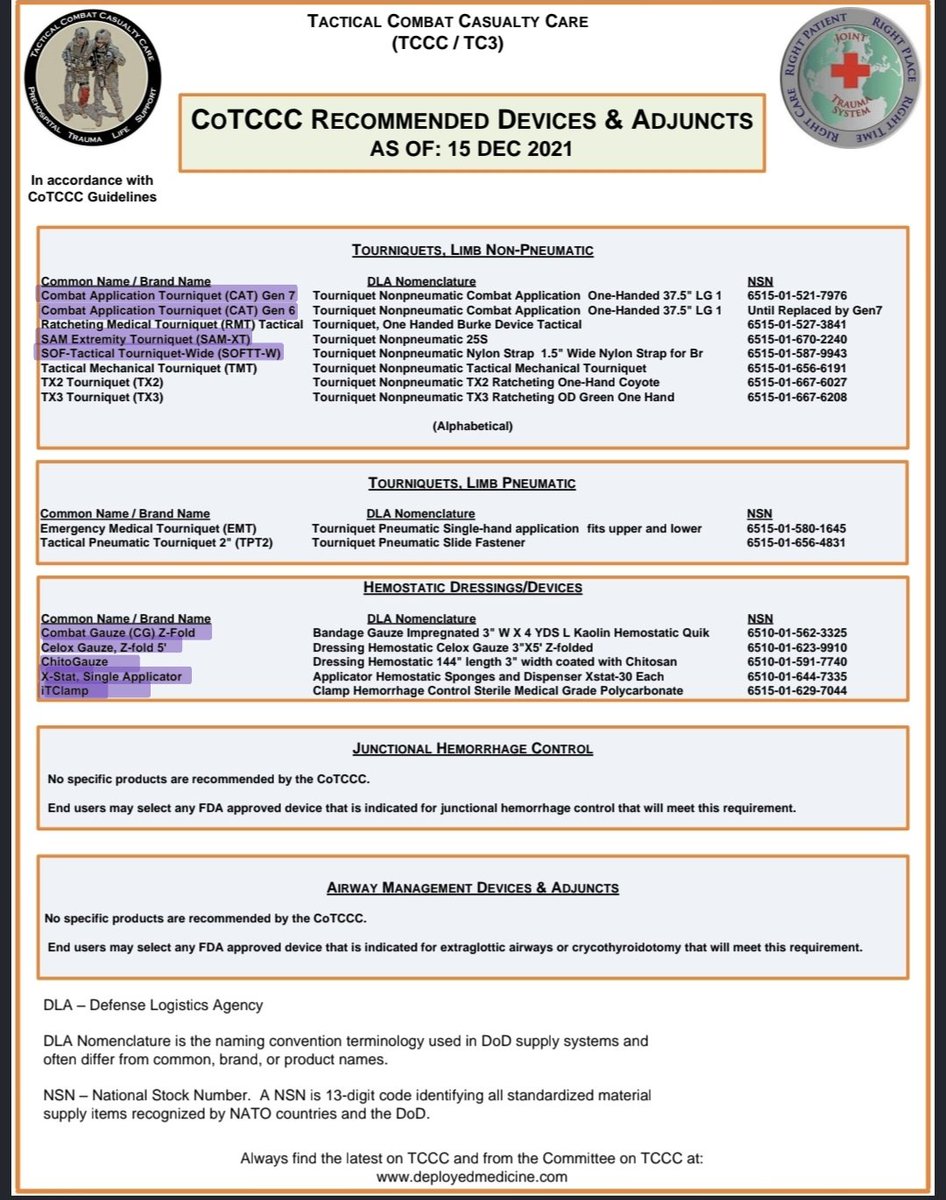
For all units in operational areas or moving to one. A simple, actionable IFAK content list. We had made these during our LC deployment and it saved my 3 boys' lives during fierce firefights. Thanks @rima_medUA
Note - NPA and decompression needles need extensive training.
Attaching the picture of the first version that we made.
Hello my friends! Ok here is everything that goes into an IFAK (individual first aid kit) and what is recommended by the Committee on Tactical Combat Casualty Care in terms of tourniquets and hemostatic gauze.
The most common tourniquet here is CAT7 but also have SAM and SOF-T
IFAK Contents:
CAT7 tourniquet
Celox or Quikclot combat hemostatic gauze
Compressed gauze
Trauma bandage
NPA (nasopharyngeal airway)
Hyfin/SAM/halo chest seals
NAR Decompression needle (if requested)
Gauze rolls
Gauze pads of varying sizes
Thermal blanket
Eye shield
Combat wound medication pack (pill pack)
Bandaids
Burn shield
Triangle bandage
Alcohol pads
Medical tape
Gloves
Trauma shears
Sharpie
More explanation here: https://t.co/NlKLomVrID
It may not be Death of Combined Arms but Transformation of Combined Arms. Tanks and infantry replaced or complemented by unmanned ground vehicles, massed artillery/air replaced or complemented by drones, humans are only in the loop producing effects using these systems. One day autonomy may reduce human intervention even more.
Russia’s armed forces have moved decisively away from their previous reliance on overwhelming volumes of artillery fire and towards a more precision-led approach to strike warfare in Ukraine.
Our latest paper by Dr Sidharth Kaushal and @Sam_Cranny presents a detailed account of how Russia’s precision strike capabilities have evolved, from a chaotic and under-resourced opening campaign to a more potent precision strike capability.
Read the paper: https://t.co/MyZaDbbybL
@vkansagra Thank you Vishal. Business and military operations are a lot alike - same principles, different battle fields. I am glad you enjoyed the read.
HOW SHOULD A COMMANDING OFFICER IMPROVE THE COMBAT FIRING OF HIS UNIT?
If your unit is deployed in an operational area or likely to induct into one soon, good range classification alone should not give you confidence.
A soldier who groups well from a comfortable position, at a known distance and on a clearly marked target may still struggle when a target appears suddenly, remains exposed briefly or has to be identified before being engaged.
Combat firing is not basic marksmanship conducted in combat dress.
If I were preparing a unit today, I would concentrate on the following:
1. ESTABLISH THE CORRECT BASELINE
Assess every soldier under realistic time pressure. Train and test weapon handling, target identification, speed of engagement and accuracy and not merely grouping.
The purpose is not to embarrass weak firers but to identify exactly what each soldier needs. Often we keep training all soldiers equally. Yet operational performance is often limited by the weakest firers. The baseline will help you identify them and devote greater attention to their improvement.
2. TRAIN SUB UNITS TOGETHER
Take out one complete platoon or section at a time and train it intensively for a few days, along with its supporting and specialist elements. Rotate systematically until the entire unit has completed the process.
Combat is fought by teams, not by separately trained individuals assembled at the last moment.
3. CREATE ACCESS TO FIRING
Wherever space and safety considerations permit, establish a small range in every Company Operating Base.
Daily firing is essential. A large annual firing exercise cannot replace frequent repetition.
Even a 25 metre range can be used for weapon handling, rapid acquisition, reflex shooting and different firing positions. Ten purposeful rounds fired regularly are often more valuable than fifty rounds fired mechanically after months of inactivity.
Dry training, Combat TsOETs (check out from Inf School) must also continue regularly. Correct repetition builds instinct; careless repetition reinforces bad habits.
4. USE THE TIME IN CORPS BATTLE SCHOOLS GAINFULLY
CBSs often have excellent firing range infrastructure. During PIT, account for every minute of those 15 days, especially the time available on the ranges. Use it to develop safe weapon handling, fire control and discipline under realistic live fire conditions
Use the opportunity to develop confidence in realistic weapon states under controlled conditions, with uncompromising muzzle awareness, tactical move with weapons ready, trigger discipline and fire control.
5. TRAIN IN THE EQUIPMENT YOU WILL FIGHT IN
Soldiers must fire wearing the full combat equipment they are expected to operate with, including their protective equipment, ammunition carriage and other essential load.
Equipment changes stance, balance, weapon presentation, visibility and access/retrieval of magazines. A pouch which has difficult access and retrieval of magazine makes the difference between a successful and a failed engagement. Discovering these problems during operations is too late.
Train as you will fight, not in the clothing most convenient for the range. This will enhance his confidence in himself and his equipment.
6. BEGIN WITH A REALISTIC STIMULUS
Operational contact rarely begins with the range staff announcing, “Bhar, ready, fire.”
Start practices through a realistic external stimulus. It may be a field signal, radio command or another cue appropriate to the scenario. The soldier must recognise the situation, make the decision and respond.
The first action should come from awareness, not anticipation of a range command.
7. INTRODUCE FAILURE DRILLS
Weapons stop. Magazines empty. Soldiers under stress must perform Fauri Ilaaj and magazine changes instinctively.
Under properly supervised and controlled conditions, inert dummy rounds can be inserted into magazines to create unexpected stoppages. Soldiers can also be issued magazines without knowing the exact number of rounds in each.
This prevents rehearsed counting and forces the firer to recognise the problem, remedy it and continue the engagement without waiting for assistance.
8. DEVELOP UNIT FIRE DISCIPLINE
Decide upon and train a recognisable cadence of fire appropriate to your unit’s operational requirements. You can also train your entire unit to use specific words for magazine change, for suppressing fire etc. Use it consistently so that soldiers understand how their comrades are expected to engage.
It can assist recognition during confused engagements. However it must never become the sole means of identifying friendly troops. Any predictable pattern can be observed and copied.
Fire discipline should create control, not rigidity.
9. MAKE THE TARGET BEHAVE LIKE AN ENEMY
The enemy will not stand still with scoring circles painted on his body.
Targets should appear unpredictably, remain exposed for varying durations and present different engagement decisions. Soldiers must identify, decide and engage and not merely fire when ordered.
Introduce limited visibility, physical exertion, changing positions, multiple targets and no-shoot situations progressively. Add pressure only after safety and sound weapon handling are firmly established. Advanced Combat Target System developed by YudhVeer Defence provides you many such inbuilt drills and is an effective tool for realistic combat firing practises.
10. MEASURE MORE THAN THE FINAL SCORE
Record reaction time, first-round hit, shot placement, penalties and consistency over successive practices.
A single score tells you how a soldier fired once. A training record tells you whether he is improving and whether that improvement survives pressure.
11. CONDUCT HONEST AFTER ACTION REVIEWS
After every practice, ask:
Why was the target missed?
Was the delay in identification, weapon presentation or firing?
Did accuracy collapse under pressure?
Was the firer unsafe or merely slow?
Could he clear a stoppage without prompting?
Correct the cause, not merely the score.
12. THE COMMANDING OFFICER MUST FIRE
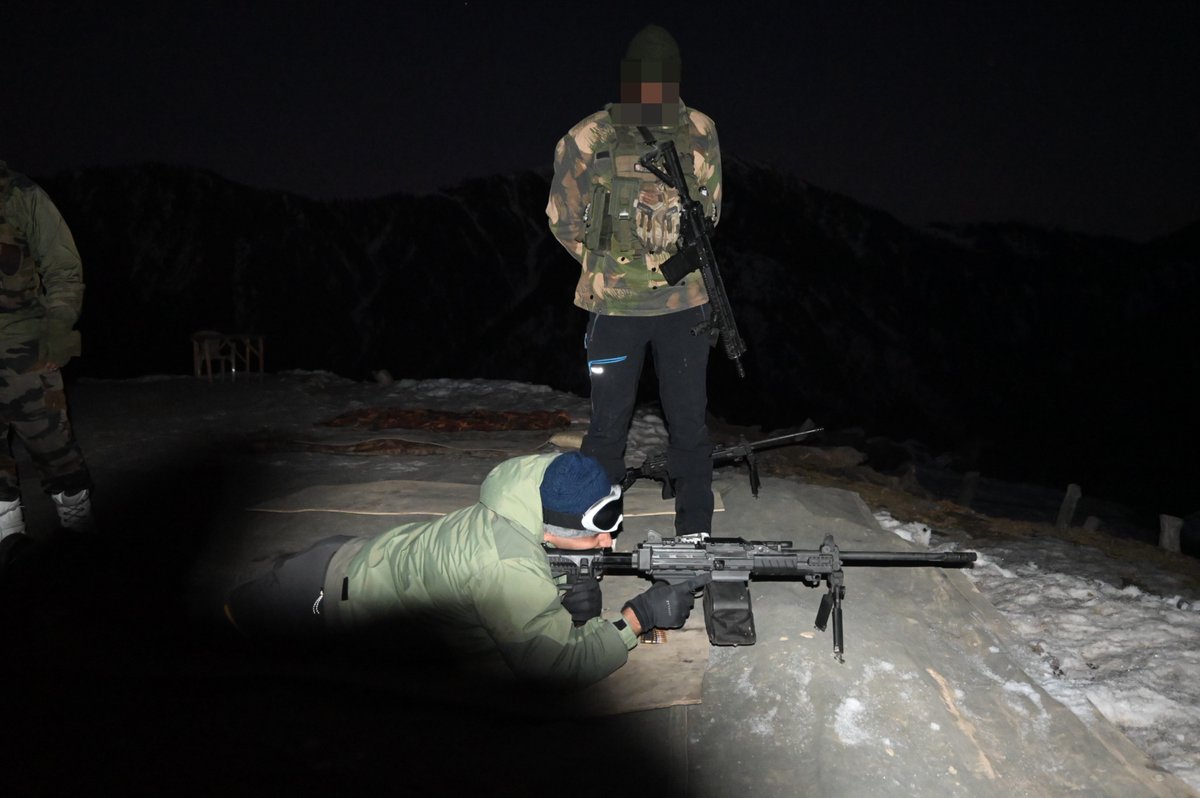
Nothing communicates seriousness better than the CO arriving with his own weapon, carrying the same equipment and participating in the same practices.
If the CO makes it part of the unit’s daily culture, standards will rise. The photograph is from my command days on the active Line of Control. We practised firing around the clock, and I made it a point to fire with the boys whenever I visited the forward posts.
Technology such as the Advanced Combat Target System can make practices more realistic, measurable and repeatable. But no target system can substitute for command emphasis, intelligent training design and relentless repetition.
The objective is not to produce soldiers who shoot well on range day.
It is to build soldiers who can identify correctly, react instinctively, overcome a failure and place the first effective shot when it truly matters.
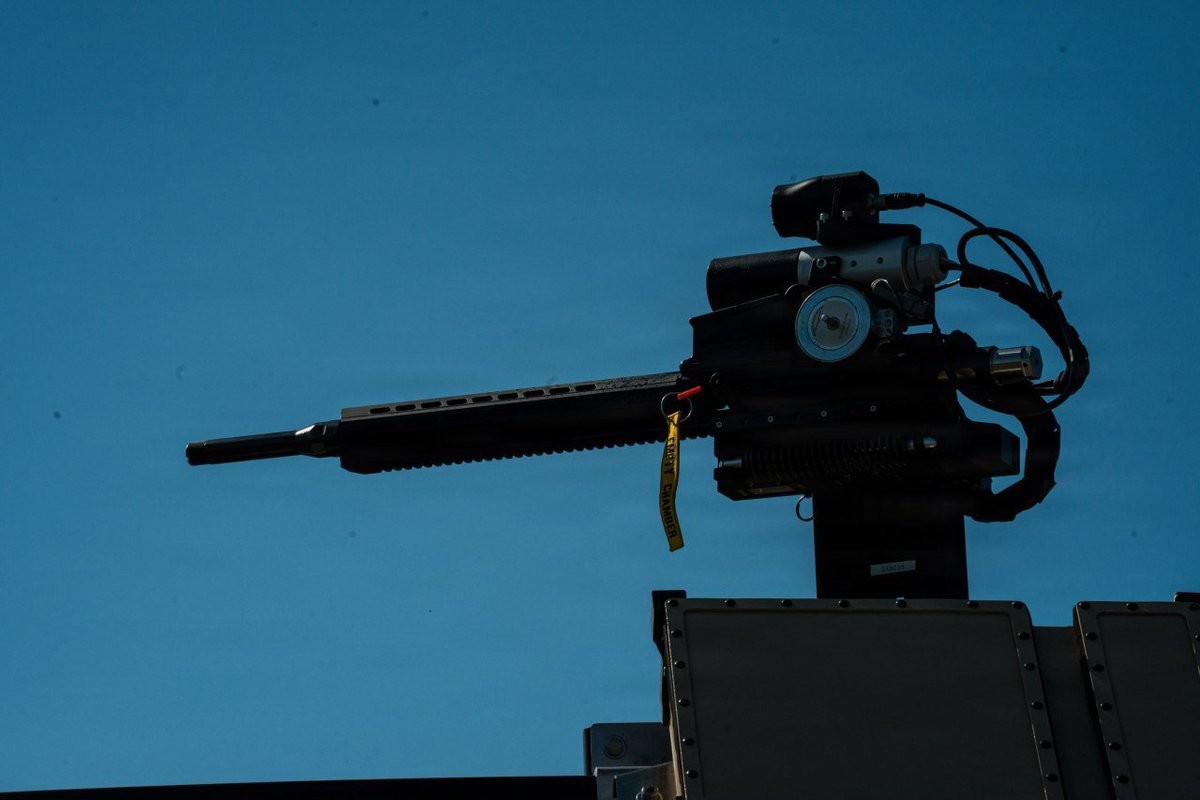
American company 9Mothers introduced the anti-drone system Edda.
The turret weighs 23 kg and features acoustic detection of drones, as well as a 12-gauge shotgun used to eliminate targets at a distance of 10-100 meters.
During a demonstration at Fort Bragg, the Edda turret was installed on a Ford F-250 pickup truck equipped with the AutoDrive autonomous system from Forterra.
This combination allows for the autonomous delivery of goods and protects them and the vehicle from drones.
My advice for defense startups: winning on a challenging, evolving battlefield is everything. If you do that better than anyone else, you will have done a great service to the free world and built an enormously valuable company.
The Pentagon is just the middleman between you and the enemy. Investors are their own kind of middlemen. Don't confuse middlemen with customers.
The above applies only during wartime—which alas we're in now. In peacetime, don't be a defense company at all. Be an agile commercial company with the ability to pivot on a dime.
Reflex, not reaction! Advanced Combat Target System - is made by YudhVeer Defence precisely for this kind of combat firing under realistic scenarios. Forging Gen Steel with high tech training systems.
@NorthernComd_IA@easterncomd@adgpi
Pic is AI generated. For details pls contact us.
@nnaammeinkyahai Indian Army has a strong drone philosophy and drones of all types are now integral part of all our operations - war, counter terrorist or disaster management. I'll post about this some time.
Just 36 days since Vikram-1 launched, the hardware for our next launch is en route to the launch site. Team Skyroot keeps building and building—from India for the world. 🚀🔥
Just over a month ago, Vikram-1 reached orbit on its very first flight. 🚀
Today, on #NationalSpaceDay, Stage 1 for our second Vikram-1 is already on its way to the spaceport at Sriharikota — beginning our next journey to orbit.
From one flight to the next.
Onwards & Upwards. 🇮🇳🚀
Optimizing Fragmentation Effects
The MAPAM mortar by SAAB shows the benefits of Pre Formed Fragmentation, which is the use of small BB's instead of a solid metal tube; 60mm MAPAM outperforms a 81mm regular shell.
PFF is especially relevant for designing drone munitions.