A South African mathematician walked into MIT in the 1960s, looked at how schools were starting to use computers, and said they had it backwards. The machine should not teach the kid. The kid should teach the machine. And in arguing that, he accidentally invented modern coding education.
His name was Seymour Papert, and almost every coding class your kid takes today traces back to that one inversion.
He did not arrive at it from a love of computers. Before MIT, Papert spent years in Geneva working alongside Jean Piaget, the psychologist who proved children build knowledge instead of absorbing it. They are not empty cups you pour facts into. They are builders.
Papert took that idea and ran straight at the most expensive machine of his era.
In 1967, when a single computer cost as much as a house, he and his team built Logo. The first programming language ever made for children. It came with a turtle. A small robot, or a shape on the screen, that moved when a child typed a command.
Type "forward 50." The turtle moves. Type "right 90." The turtle turns. Tell it to repeat, and a square appears.
Watch what just happened. The child was not memorizing a math fact. The child was giving instructions to a machine and watching them play out in real time.
Papert wrote down the whole philosophy in his 1980 book Mindstorms. The line that defined a movement is this one.
He said in most schools the computer was being used to program the child. In his vision, the child programs the computer, and in teaching the computer how to think, the child begins to explore how they think themselves.
That last part is the part most people miss.
The turtle was never really about drawing squares. When a kid's square came out crooked, they could not blame themselves and shut down. They had to look at their own instructions, find the broken step, and fix it. Papert called this debugging, and he argued it was the most honest form of learning a child could do. A wrong answer was not a verdict. It was information.
The schools fought him. He was called an elitist for wanting computers in classrooms when only rich families had them. Critics said his ideas would damage children.
They were wrong about all of it.
Logo's DNA runs through everything now. Scratch, the colorful block coding millions of kids use today, was built at MIT by Mitch Resnick, who was Papert's student and friend. Code. org now reaches kids in over 180 countries. Every "hour of code" event is running on the bet Papert placed sixty years ago.
He died in 2016. He never wrote a viral thread or sold a course. He just kept insisting that a child handed real power over a real machine would learn more than a child handed a worksheet.
The whole industry teaching kids to code was built on a man who did not want to teach them anything.
He wanted them to do the teaching.
@GabbbarSingh I lived this 10 times during my college days..and to top of it if u had boarded the train as 5/10 boys with few rac,few waiting list and few confirmations. The sleeping rotation, TT cooperation and hoping for ticket after some junction. The slight sutta breaks near door.
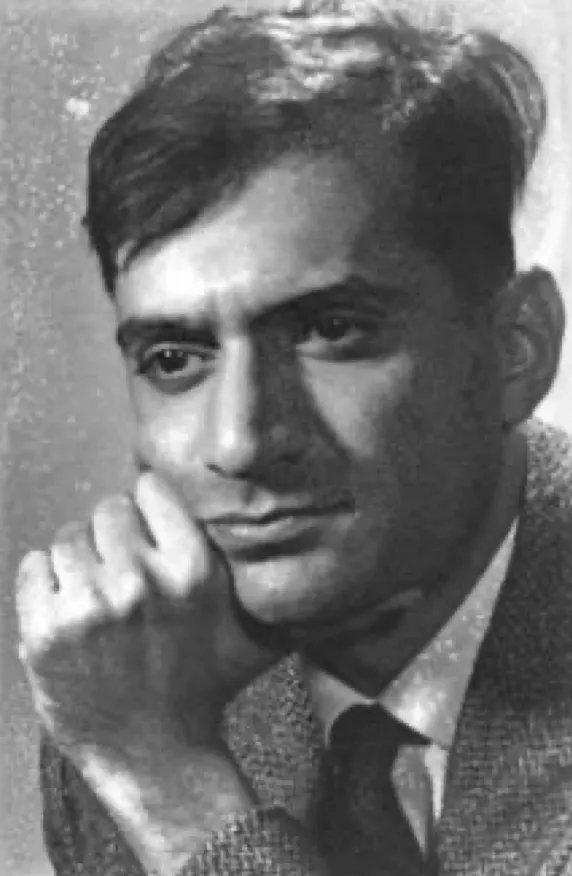
Imagine a man standing on a rooftop in Calcutta at midnight. The city is asleep, but he is awake, watching an invisible pulse of energy bounce off the edge of the world & come back home. He was the 1st Indian to realize that the Void above us is actually a bridge. In 1935, while the British Raj dismissed Indian science as theoretical & primitive, a man in a quiet corner of Calcutta was aiming a radio beam at the heavens like a silver spear. He was not looking for God; he was looking for a mirror in the sky that everyone said did not exist & when he found it, he realized he had discovered the secret Electric Skin of the planet.
Before Sisir Kumar Mitra, the world knew of the Ionosphere, but they thought it was a simple, single layer. Mitra was the 1st to prove the existence of the E-Layer & the complexity of the F-Layer specifically over the tropics. Using a primitive, hand-built radio transmitter, he sent signals upward & timed their return. He discovered that the air 100km above Calcutta was ringing like a bell.
He proved that the Sun does not just give us light; it strips the air of its electrons, creating a celestial mirror. This is why we can hear a radio station from a 1000 KMs away at night. Mitra was the 1st man to map the Radio-Geography of the Indian sky.
In the 1920s, the British were very protective of Broadcasting. They did not want Indians having the power to transmit information wirelessly. Sisir Kumar Mitra did not care. He set up the 1st amateur radio station in India at the University College of Science in Calcutta.
He was essentially a pirate for science. He began broadcasting a call-sign that could be heard across the city, proving that an Indian could master the most advanced tech of the era. The British were furious but could not stop him because he was doing research. He paved the way for All India Radio using a rebel transmitter.
In 1947, he published his magnum opus, The Upper Atmosphere. When the book arrived in the United States & the USSR, the scientists there were stunned. They thought a colonial scientist would only have outdated data. Instead, Mitra’s book was so advanced that it became the "Holy Book of Space Science" for the 1st decade of the Space Age.
When the Soviets launched Sputnik in 1957, the engineers tracking its signal were using the atmospheric models created by a man in a humid room in Calcutta. The 1st satellite in space was talking through a sky that Sisir Kumar Mitra had already mapped.
Near the end of his life, Mitra turned his eyes toward the Moon. He was one of the 1st to mathematically suggest that the Moon might have a plasma envelope/a very thin atmosphere of ions. For decades, this was dismissed. It was not until the Chandrayaan-1 mission & modern probes that the Lunar Ionosphere was confirmed. Mitra was right about the Moon half a century before India actually went there.
Sisir Kumar Mitra was the man who turned the sky into a lab, proving that even under the weight of an Empire, an Indian mind could reach 300 kilometers straight up & touch the edge of space with nothing but a radio wave & a dream.
Her name was Subhadra Kumari Chauhan.
She was born on August 16 1904 in Nihalpur village, Allahabad. At nine years old she wrote her first poem. It was published in a national magazine.
At 16 she married and moved to Jabalpur. At 18 she was pregnant and leading protesters through the streets of Nagpur holding the Indian flag.
She was arrested. She became the first woman satyagrahi to be sent to jail in India.
She delivered her first daughter Sudha safely at home after her release. Then went back to the streets.
In 1942 the British came for her again. Her husband had already been arrested. She had five children. The youngest was a toddler with a cleft palate who could barely speak.
She prepared her eldest daughter to look after the younger ones. Left food for them. Then walked to prison carrying her sick youngest child in her arms.
Inside jail she gave up her own food to prisoners facing harsher punishment. She was released months later with a life threatening condition and underwent immediate surgery.
She later described all of this with humor. She said the garlands placed around her neck on the way to jail were so many that she made a pillow of them in her prison cell. They reminded her of the flowers on her wedding night.
Between arrests, pregnancies, court dates and protests she wrote 88 poems and 46 short stories.
Her most famous poem was Jhansi Ki Rani. The one every Indian child has read in school.
Khoob ladi mardaani woh toh Jhansi wali Rani thi.
She wrote it about a queen. She lived it herself.
On February 15 1948 she died in a car accident near Seoni, Madhya Pradesh, while returning from a legislative assembly session in Nagpur. She was 43 years old. A mother of five. A poet. A prisoner. A freedom fighter.
Today is Mother’s Day.
Most Indians know her poem. Almost none know her name.
Follow for stories India deserves to remember.
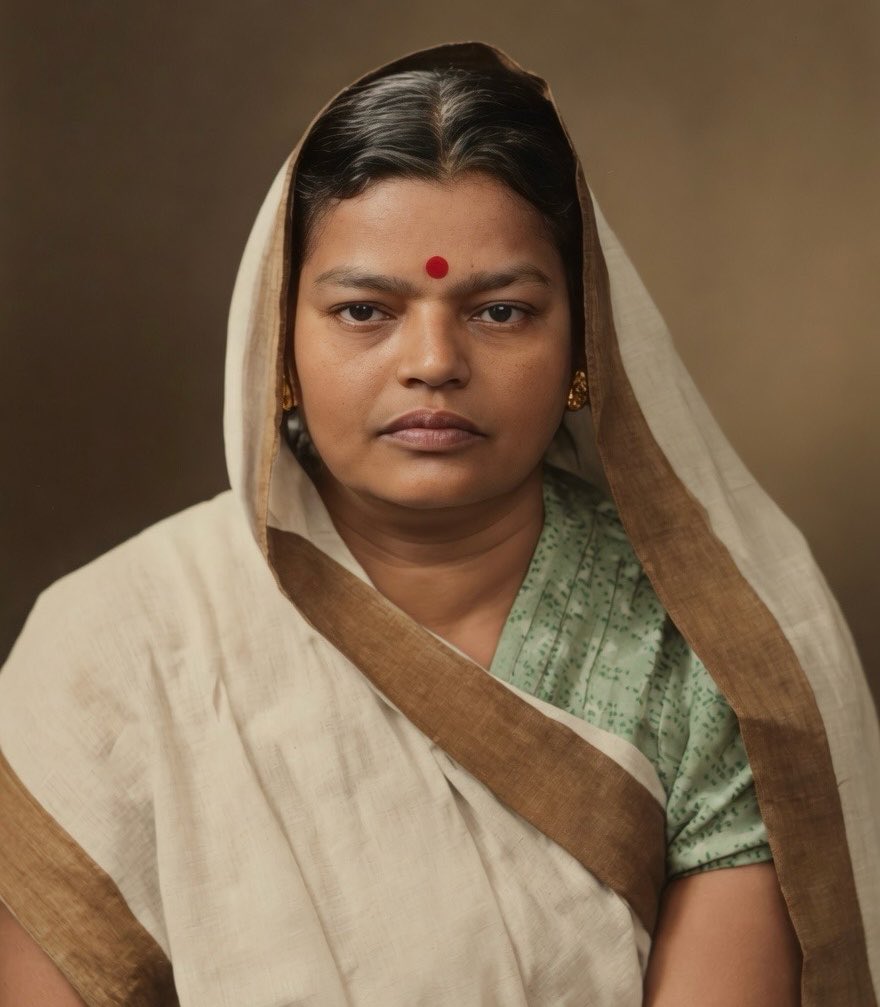
Her name was Sindhutai Sapkal.
She was born on November 14, 1948, in Wardha district, Maharashtra, into extreme poverty. Her family called her Chindi. A rag. Because to them, she was unwanted.
She was married at nine years old to a man thirty years older.
At twenty, she was pregnant with her fourth child. Her husband accused her of carrying another man’s child. He beat her and threw her out of the house.
She gave birth that night alone in a cowshed. She cut the umbilical cord with a stone.
She begged on trains to survive. She ate what people discarded. She slept in railway stations and cremation grounds.
Then she saw a child crying alone on a platform.
She picked the child up.
Then another. Then another.
She began collecting abandoned children from railway stations across Maharashtra. She gave each of them a name, an education, and a future.
She gave her own biological daughter up for adoption so that none of her children would ever feel less loved than the others.
She raised more than 1400 orphaned children. Over 200 of them became lawyers, doctors, and professors.
She received the Padma Shri in 2021 and more than 750 national and international awards.
She called all 1400 of them her children. All 1400 called her Maa.
She passed away on January 4 2022. She was 73 years old.
Follow for stories India deserves to remember.
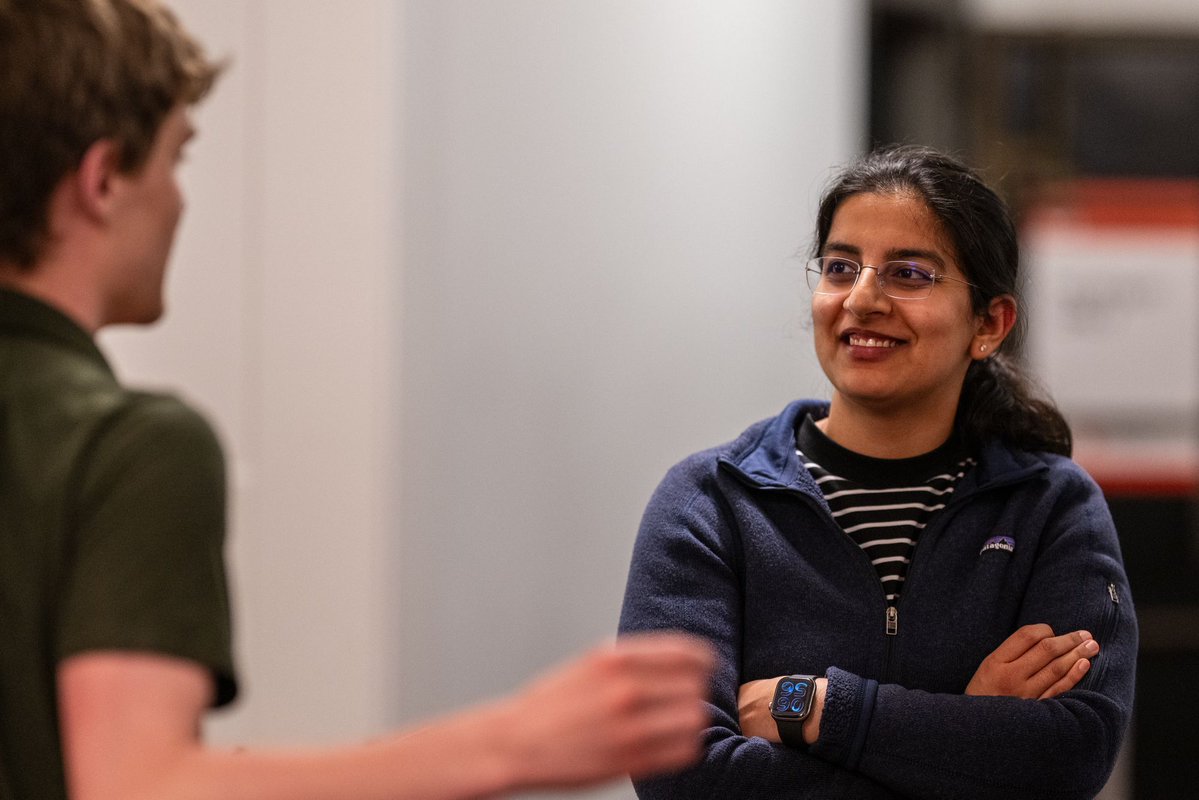
Meet Anima Anandkumar
(Every time AI predicts the weather faster than supercomputers, she made that possible)
> Born in Mysore, Karnataka
> Her grandfather was a mathematician. Science ran in the family.
> Studied Bharatanatyam for years alongside engineering
> https://t.co/TMjo4uhO8z from IIT Madras, 2004
> PhD from Cornell University, 2009.
> Postdoc at MIT.
> Principal Scientist at Amazon AWS.
> Helped launch Amazon SageMaker.
> In 2017 became Bren Professor at Caltech
> The youngest named professor in Caltech's history
> Joined NVIDIA as Senior Director of AI Research in 2018
> Invented Neural Operators, AI models that solve complex physics 1000x faster than traditional methods
> Built the first AI based high resolution weather model
> Now running at premier weather agencies around the world
> IEEE Fellow, Alfred P. Sloan Fellowship, NSF Career Award Faculty fellowships from Microsoft, Google, Facebook and Adobe. All four.
> Cited over 69,000 times in research papers worldwide
A girl from Mysore who danced Bharatanatyam is now teaching machines to understand the laws of nature.
"AI is not just about language. It is about understanding the physical world."
She built that belief into reality. Equation by equation.
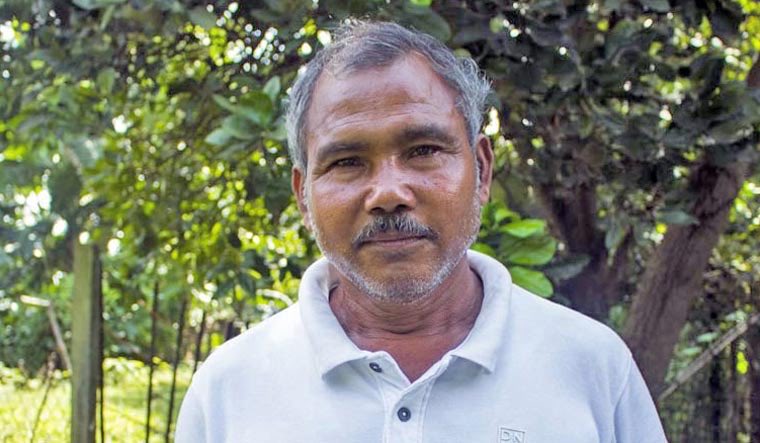
His name is Jadav Payeng.
He was born on October 31, 1959, in Jorhat, Assam, into the Mising tribal community. He grew up on Majuli, the largest river island in Asia, on the banks of the Brahmaputra.
In 1979, a devastating flood hit Majuli. The floodwaters left hundreds of snakes stranded on a barren sandbar with no shade and no shelter. Jadav was 16 years old. He watched them die one by one in the scorching heat.
He said when I saw it I thought even we humans will have to die this way without any tree cover. I sat down and wept. And in my grief for those dead snakes I decided to create this forest.
He had no funding. No government support. No formal education in ecology. He started planting bamboo seedlings on that sandbar the next day.
He planted every single day for the next 40 years.
Nobody knew for decades. He walked three kilometres to fetch water for his saplings. He sold cow’s milk to buy more seeds. He lived inside the forest he was building in a bamboo hut with no electricity.
Birds arrived first. Then deer. Then wild boar. Then elephants who now visit for three months every year. Then Indian rhinoceroses. Then Bengal tigers.
In 2008, a journalist from The Hindu discovered a forest on a sandbar that was not on any map. He found Jadav living inside it. Jadav had been planting for 29 years without telling anyone.
The forest today covers 1360 acres. Larger than Central Park in New York. It is home to Bengal tigers, Indian rhinoceroses, elephants, deer, monkeys, vultures and hundreds of bird species.
In 2012, JNU named him the Forest Man of India. Padma Shri in 2015.
He still travels to his forest every day. He still plants.
He said it is not as if I did it alone. You plant one or two trees and they have to seed. And once they seed the wind knows how to plant them. The birds know. The elephants know. Even the river knows.
Follow for real stories India never makes headlines about.
His name is Arunachalam Muruganantham.
He was born in 1961 in Coimbatore, Tamil Nadu. His father died in a road accident when he was a child. His mother worked as a farm labourer to keep him in school. At 14, he dropped out to support her.
In 1998, he married Shanthi. One day, he saw her hiding a dirty rag she had been washing and reusing during her menstrual cycle because sanitary pads were too expensive.
He decided to make her affordable ones.
He made a pad from cotton and handed it to her. The feedback was devastating. He went back to experimenting. He needed volunteers to test each prototype. Medical students were too embarrassed. He tested the pads himself.
He built a uterus from a football bladder filled with animal blood and wore it under his clothes. He walked, ran and cycled to test the absorption. His clothes began to smell. The village concluded he was mad.
His wife filed for divorce. His mother left. His neighbours ostracised him.
He kept experimenting alone.
For years, he could not figure out what commercial pads were made of. Then one day, a courier arrived while he was out. His dog tore it open. Inside were samples from an American supplier. He examined the material closely.
Pine bark wood pulp. That was the secret.
He spent four years building a machine to process it. Commercial pad making machines cost Rs 35 million. He built one for Rs 65000.
He took it to IIT Madras in 2006. Out of 943 entries in the National Innovation Foundation competition, his machine came first. The President of India presented him the award.
Multinational corporations offered to buy the patent. He turned every one of them down. He sold the machines exclusively to women’s self help groups. Today, over 1300 units operate across 23 states employing thousands of women.
Five years after she filed for divorce, Shanthi saw him on television receiving the award. She called. She came back.
He held no grudge.
TIME magazine named him one of the 100 most influential people in the world in 2014. Padma Shri in 2016. A documentary inspired by his work won the Academy Award for Best Documentary Short in 2019.
He still lives in a modest apartment. He said if you get rich you have an apartment with an extra bedroom. And then you die.
Follow for stories India deserves to remember.
Her name is Malavika Hegde.
In July 2019, her husband VG Siddhartha walked onto a bridge near Mangalore and told his driver he would be back shortly.
He never came back.
Siddhartha had built Cafe Coffee Day into India’s largest coffee chain. 1700 cafes. 25000 employees. He had also buried the company under Rs 7214 crore of debt.
The board panicked. Analysts wrote CCD off.
Nobody had accounted for Malavika.
She was an engineer. A mother of two. She had never run a company in her life. Her father SM Krishna was a former Chief Minister of Karnataka. She could have lived in that shadow comfortably.
She chose the debt instead.
In December 2020, she took over as CEO. In the middle of a pandemic. Her first act was a personal letter to all 25000 employees. She wrote the CCD story is worth preserving. I will fight for this brand.
Then she got to work.
She called every lender personally and renegotiated terms. She sold Global Village Tech Park to Blackstone. She closed every loss making outlet. She exported premium Arabica beans from her own 20000 acre farm to international markets to generate fresh revenue.
She never raised the price of a single cup of coffee.
By 2021, the debt was down to Rs 1731 crore. By 2023, it was Rs 465 crore.
A 93 percent reduction in four years.
Today, CCD runs 423 cafes and 55733 vending machines across India. Netflix is developing a web series on her life. Business schools are teaching her turnaround as a case study.
She had no playbook. She had no mentor. She had grief and 25000 people depending on her.
That was enough.
Follow for real stories India never makes headlines about.
His name was V Rajaraman.
Born in 1933 in Erode, Tamil Nadu. Most Indians have never heard his name. Every Indian IT professional owes their career to him.
He studied physics at St Stephens College Delhi, then engineering at IISc Bangalore. Won a government scholarship to MIT. Got his PhD in 1961.
The world wanted him. He came back.
In 1963, a massive IBM 1620 computer arrived at IIT Kanpur. It was so large they had to break down a wall to bring it inside. It came on a bullock cart.
Rajaraman stood next to it and asked one question nobody else was asking.
What if India taught this as a subject.
In 1965, he launched India’s first Computer Science academic programme at IIT Kanpur. His first batch had 20 students. One of them was Narayana Murthy, who went on to build Infosys.
He designed the MCA programme that opened IT careers to an entire generation of Indian graduates. He chaired the committee that created C DAC to build India’s first indigenous supercomputers.
He authored 23 textbooks. Guided 30 PhD students. Won the Padma Bhushan in 1998.
He passed away on November 8, 2025. Aged 92.
India’s IT industry is worth 250 billion dollars today. He built the classroom it started in.
Follow for real stories India never makes headlines about.
Her name is Swati Mohan.
Born in Bengaluru. Moved to America at age one. Grew up in Virginia.
At nine, she watched Star Trek and told her parents she would find new places in the universe. They expected medicine. She chose aerospace.
Engineering at Cornell. Masters and PhD in Aeronautics from MIT. Then NASA.
In 2013, she joined the Mars 2020 mission. She spent eight years making sure a rover would safely land on a planet 300 million miles away.
On February 18, 2021, she sat at her console at NASA’s Jet Propulsion Laboratory. Bindi on her forehead. She was the voice of the mission.
The Perseverance rover was falling through the Martian atmosphere at 12000 miles per hour. Seven minutes of terror. No human could intervene.
She narrated every second.
Then she said three words.
Touchdown confirmed.
The room erupted. She stood there calm and said Perseverance is safely on the surface of Mars, ready to begin seeking the signs of past life.
She was born in Bengaluru. She landed a rover on Mars.
Follow for real stories India never makes headlines about.
Her name was Shehla Masood.
She was 38 years old, lived in Bhopal, and ran an event management company.
Then in 2009, she discovered the RTI Act.
She filed over 200 RTI applications in two years. She exposed illegal construction happening in plain sight. She fought to save tigers being poached by the very forest officers meant to protect them. She took on Rio Tinto, a global mining giant sitting on 27.4 million carats of diamonds inside a protected forest in Chhattarpur. Two district collectors were transferred to make that mining happen. She filed RTIs, went to parliament, and stopped it.
A month before she died, she gave an interview. She said she feared for her life but would not stop, because the nexus between politicians and babus was slowly poisoning this country.
On August 16, 2011, she sat in her car outside her home, about to leave for an Anna Hazare rally.
A hired gunman shot her once through the throat.
The CBI said the motive was a love triangle. Four people were convicted and sentenced to life. The mining angle was never investigated.
Her father told investigators that high profile people had conspired to kill his daughter.
Nobody listened.
She was posthumously given the SR Jindal Crusade Against Corruption Award, an honour shared with APJ Abdul Kalam.
India rewarded her with a bullet, then gave her an award, then forgot her name.
Follow for real stories India never makes headlines about.
His name is Bant Singh.
He is a farmer and folk singer from Jhabhar village in Mansa district, Punjab. He had been singing since he was ten years old.
In 2000 his daughter was studying in Class 9 when three men gang raped her. The panchayat told him to settle it quietly. He was offered ten lakh rupees and three acres of land to drop the case.
He refused. He filed a police complaint. He went to court. In 2004 all three men were convicted and sentenced to life imprisonment.
The village did not forgive him.
On January 5 2006 he was cycling home through wheat fields after campaigning for a labour rally. Seven men ambushed him with iron rods and axes. He lost both arms and his left leg.
He was moved from Mansa to Patiala to PGI Chandigarh where doctors operated for hours to save his life.
When he regained consciousness he asked for his harmonium.
He said they cut my arms thinking they would silence me. They were wrong.
All seven attackers were eventually convicted. He kept performing at rallies. He kept singing.
He still sings today.
Follow for real stories about people India must never forget.
Harshita Arora (@aroraharshita33) just became a General Partner at Y Combinator, making her the youngest in the accelerator’s history. She’s 25 years old, which is young enough that most VCs her age are still grinding as associates, hoping to make principal in five years if they’re lucky.
She also dropped out of school at 15, which is the kind of detail that would normally disqualify you from every traditional path to venture capital.
Between dropping out and becoming a partner... she discovered coding at 13, built a crypto portfolio tracker at 16 that Apple featured in the App Store, got it acquired, and won India’s Bal Shakti Puraskar (one of the country’s highest honors for young achievers).
Then she got an O-1 visa, moved to SF, and applied to YC with her co-founder.
Their idea got killed by Covid three weeks into the batch. They had zero background in trucking, zero background in payments, but had a dead startup with 3 months left to figure something out.
So Harshita spent weeks visiting truck stops across California, talking to drivers, watching how they paid for fuel, and realizing that the entire payments infrastructure for trucking was totally broken. Ancient systems, hidden fees, rampant fraud, still running on technology from the 1990s despite moving billions of dollars.
She built AtoB to fix it. Stripe for Trucking. A modern fuel card with transparent pricing, instant payouts, and financial tools that don’t feel like punishment.
Today AtoB is a Series C company serving over 30,000 fleets across the US, processing millions in payments daily, and building the financial infrastructure that the backbone of the economy actually deserves.
Now she’s a YC partner at 25, which is absurd when you consider that most VCs spend a decade climbing the ladder at banks or consulting firms, collecting the right credentials, and Harshita skipped the entire ladder and built a $700M company instead.
Credentials stop mattering when you build something that works, and this is one of the embodying principles of YC, so it is great to have seen her so active this last year in supporting YC batches as visiting partner, and now a GP.
Maybe as batches skew younger (like my post yesterday) partners will too...
- Meet Anders Hejlsberg
- Creator of C# and TypeScript
- A self-taught programmer
- Joined Microsoft
- Saw that Java dominated everything
- Microsoft needed a modern language for its new platform .NET
- But there were legal conflicts around Java
- He said: “Fine… I’ll build something better.”
- Wanted a language that is:
> Easy like Java
> Powerful like C++
- Launched C# in 2000
- it became one of the most widely used languages for:
> Enterprise applications
> Game development (Unity)
> Windows software
But He Wasn’t Done…
- Later noticed problems with JavaScript:
> Hard to scale for large applications
> Bugs and maintainability issues
- Created TypeScript
- Designed it to:
> Work with existing JavaScript (no breaking changes)
> Compile into plain JavaScript
Today, TypeScript is widely used in Angular, React, Node.js and more
Adopted by major companies like Google, Microsoft, Airbnb
didn’t code it alone
but without him, it wouldn’t exist.
absolute legend 🔥
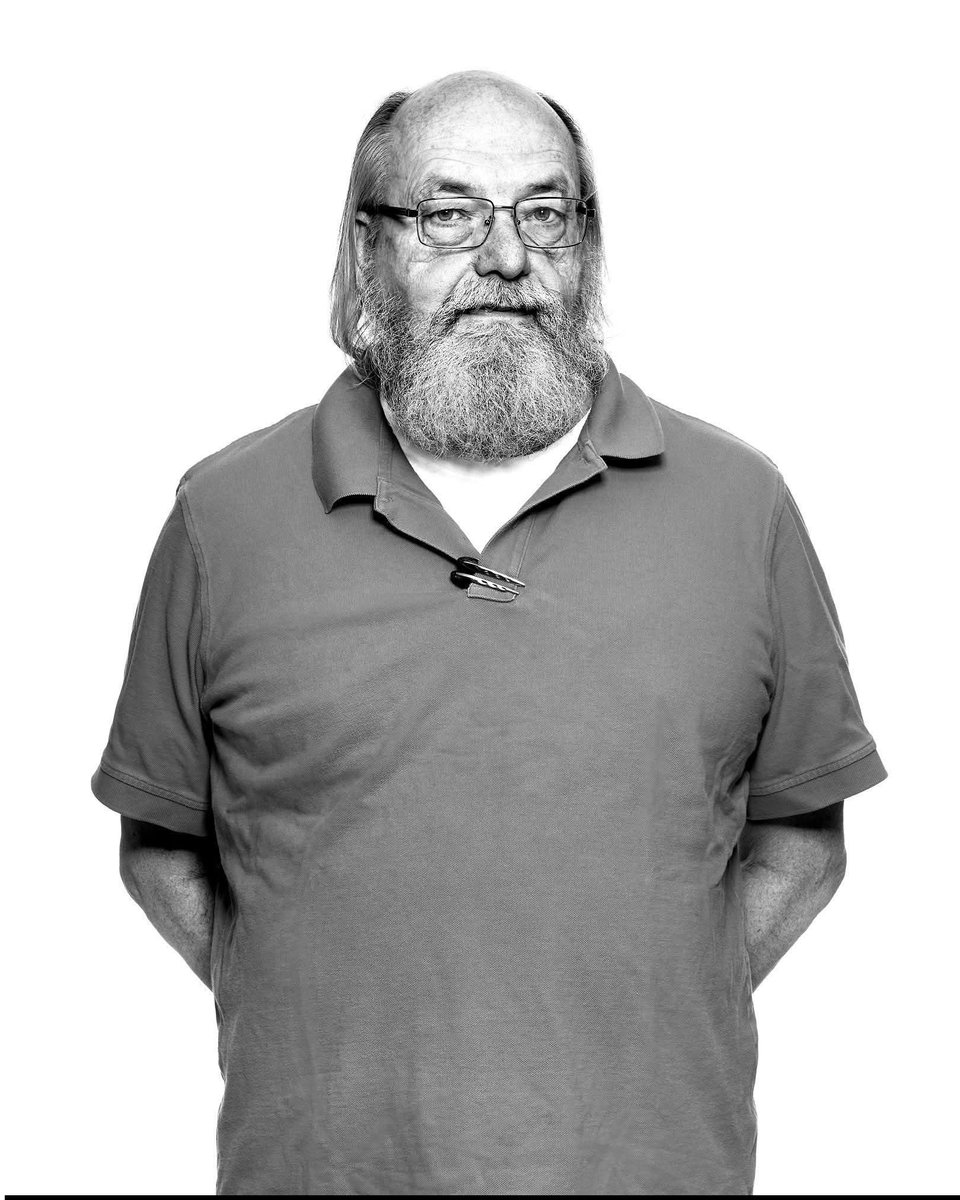
No disrespect to Linus Torvalds, but this guy is the greatest geek alive 🫡
Created UNIX in 1971 when he was 28 years old.
Created Go in 2009 when he was 66 years old😲
He also developed the B programming language (which led to C), created UTF-8 encoding (making international text possible online), and designed essential tools like grep that developers still rely on daily.
He also helped with the development of Multics (that led to UNIX), Plan 9 from Bell Labs and Inferno operating systems.
That's 4 operating systems in total... Most people don't even use these many OS.
Pretty impressive resume, right? 🔥
And it's a shame that many people, even the ones in the IT and tech industry, don't know him.
Ken Thompson.... Remember the name 🙏
Those who saw’A Beautiful Mind’, would remember that John Nash’s doctoral thesis had just 26 pages and 2 references, yet it was instrumental in advancing “Game theory”. What if I told you there is a scientist whose achievement is so astounding that he is perhaps the only Indian to “create” an intersectional branch of science? What if I told you that every year, his name echoes across the hallowed halls of science in foreign lands, but most of our students haven't even heard of him?
Aneesur Rahman was born in Hyderabad in British India in 1927. His father was a professor and a philanthropist. His family generously donated their property for the creation of Urdu Hall in Hyderabad. His maternal uncle was a professor too. Rahman had a natural flair for subjects that would terrify ‘normal’ students — maths and physics. After getting BSc in Mathematics, he went on to get Tripos in Mathematics and Physics at the prestigious Cambridge University in the UK. From there, he went to Louvaine University in Belgium and got DSc in Physics under Professor Mannenbeck. It’s here that Rahman met a Chinese student Yueh-Erh Li who was doing MD( called Dr Jady by friends). They fell in love and got married.
He came back to teach in Osmania university along with his wife. Soon after, he developed interest in the structure of water molecule - especially the polarisation of the hydrogen atom. Unfortunately research in India was at infancy in those days and Dr Rahman realized he was a whale in a tiny pond. He had to move to the ocean. He joined the Argonne National Laboratory in Illinois.
His foundational paper in 1964 birthed “molecular dynamics” , one of the two pillars on which a vast body of computational physics rests.(the other is Monte Carlo method). His equation made it possible to calculate the trajectory of large number of interacting atoms with ease.
His work, like Ramanujan’s , was so ahead of his time - that even today, potential applications are being discovered. The Nobel prize in physics for 2013 went to Karplus, Levitt and Warshel whose work depended heavily on Dr Aneesur Rahman’s.
Some say there is an inverse association between genius and compassion -Dr Rahman was a prominent exception. He was known not just for his intellect, but also kind nature and mentored many students all over the world. His quiet, unassuming nature made him a much loved professor — and he remained so, until he got Non Hodgkin’s lymphoma — a cancer that took him away from us prematurely, at the age of 59. Perhaps he might have got a Nobel, if only he had lived longer.
American Physical Society honors him as the father of computational physics and has instituted an annual award in his name.
As a doctor with little idea of theoretical physics, writing Dr Aneesur Rahman’s portrait has been difficult , because of the complex nature of his work that straddles so many areas of science : mathematics, physics, computer science and chemistry. His equations are mind boggling, even intimidating, but
what I do understand is this : Dr Rahman didn't just have a beautiful mind, but also a beautiful heart.
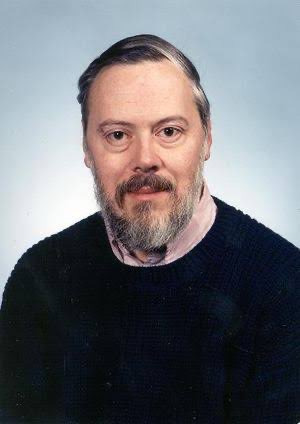
Dennis Ritchie created C in the early 1970s without Google, Stack Overflow, GitHub, or any AI ( Claude, Cursor, Codex) assistant.
- No VC funding.
- No viral launch.
- No TED talk.
- Just two engineers at Bell Labs. A terminal. And a problem to solve.
He built a language that fit in kilobytes.
50 years later, it runs everything.
Linux kernel. Windows. macOS.
Every iPhone. Every Android.
NASA’s deep space probes.
The International Space Station.
> Python borrowed from it.
> Java borrowed from it.
> JavaScript borrowed from it.
If you have ever written a single line of code in any language, you did it in Dennis Ritchie’s shadow.
He died in 2011.
The same week as Steve Jobs.
Jobs got the front pages.
Ritchie got silence.
This Legend deserves to be celebrated.