Hey @sobhabuilder, why is your after-sales service so poor? Once the sale is done, no one seems to care. Your CRM team is so unresponsive that even after sending all the requested documents multiple times, there hasn’t been a single acknowledgment email after 10+ emails.
Just discovered a stunning AI model that brings Indian art traditions to life! This text-to-image generator specializes in Madhubani, Warli, and Rangoli styles. Perfect for artists and culture enthusiasts wanting to explore digital heritage.
I still can’t believe this is free.
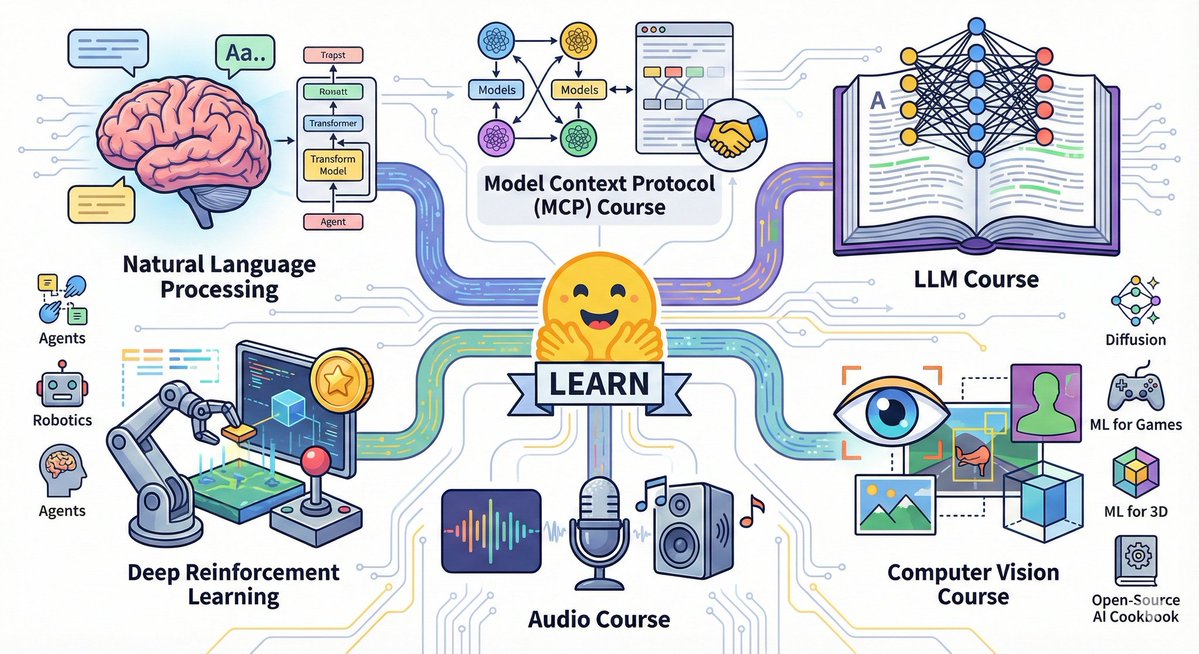
Most bootcamps are charging $3,000 to teach you outdated material.
Meanwhile, @huggingface is giving away the state-of-the-art curriculum for $0.
• Agents? ✅ • Robotics? ✅ • The new MCP standard? ✅
Check this. Bookmark.👇
Why Do You Keep Thinking About Someone Who’s No Longer in Your Life? | Mindfulness | Buddha Mind
https://t.co/Mj1FCCOnyI.
A must watch video. Loved it #mindfulness#motivational journey #life-lessons
#RatanTata is the World's Biggest Donor.
He has donated ₹829,734 crore.
Built multiple free hospitals, schools & saved millions of lives.
Today, on his death, the whole world is crying.
Some unheard instances of Mr. Tata that will make you cry: 🧵
Beautiful visual guide to quantization, which is becoming a super important technique for compressing LLMs.
This is such a fun guide with lots of visuals to build intuition about quantization. Highly recommended!
After reading 100s of AI papers this week, it's clear how useful small language models will be and the importance of efficiently enhancing reasoning and understanding in LLMs.
If you are looking for some weekend reads, here are a few notable AI papers I read this week:
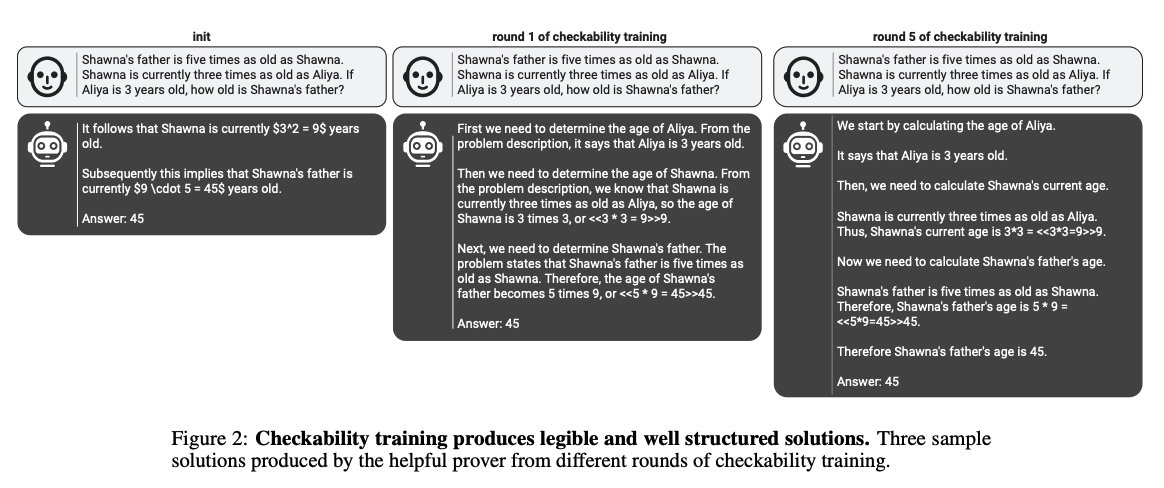
- Improving Legibility of LLM Outputs: iteratively trains small verifiers to predict solution correctness, helpful provers to produce correct solutions accepted by the verifier, and sneaky provers that produce incorrect solutions that fool the verifier. This process helps train models that can produce text that is correct and easy to understand by both humans and AI systems which leads to more trustworthy systems. https://t.co/Z3aqzV0lSP
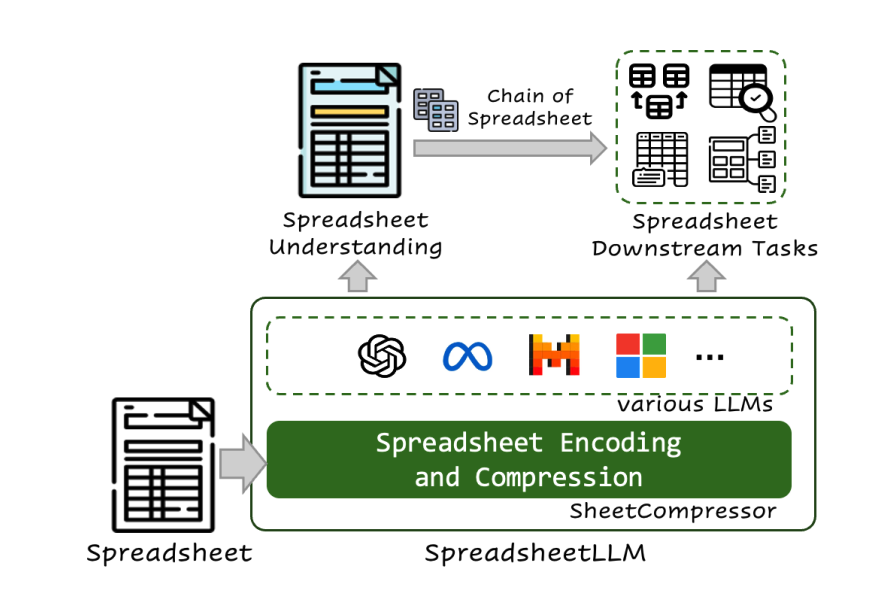
- SpreadsheetLLM: presents an efficient encoding method to optimize an LLM’s understanding and reasoning capability on spreadsheets. Develops a sheet compressor consisting of structural-anchor-based compression, inverse index translation, and data-format-aware aggregation modules to efficiently compress and encode spreadsheets. In GPT-4’s in-context learning, it improves performance in spreadsheet table detection by 25.6%. https://t.co/rgKABF004P
- Weak-to-Strong Reasoning: demonstrates the use of weak supervision to elicit strong reasoning capabilities in LLMs without relying on human annotations or advanced models. Reports that strong models can automatically refine their training data without explicitly being trained to do so. Enables expanding a model's learning scope and scaling performance on reasoning. https://t.co/Zegf0xz5Jv
- Distilling System 2 into System 1: investigates self-supervised methods to distill high-quality outputs from System 2 techniques and then fine-tune System 1 to match the predictions of the System 2 technique but without generating intermediate steps. The process of distilling reasoning into System 1 results in less inference cost than System 2 while retaining strong reasoning capabilities. https://t.co/QDSCmWgjNV
- Context Embeddings for Efficient Answer Generation in RAG: proposes an effective context compression method to reduce long context and speed up generation time in RAG systems. The long contexts are compressed into a small number of context embeddings which allow different compression rates that trade-off decoding time for generation quality. Reduces inference time by up to 5.69 × and GFLOPs by up to 22 × while maintaining high performance. https://t.co/kzTGhxt74I
There are a few more exciting papers that I will highlight tomorrow in the Top ML Papers of the Week @dair_ai. Stay tuned!
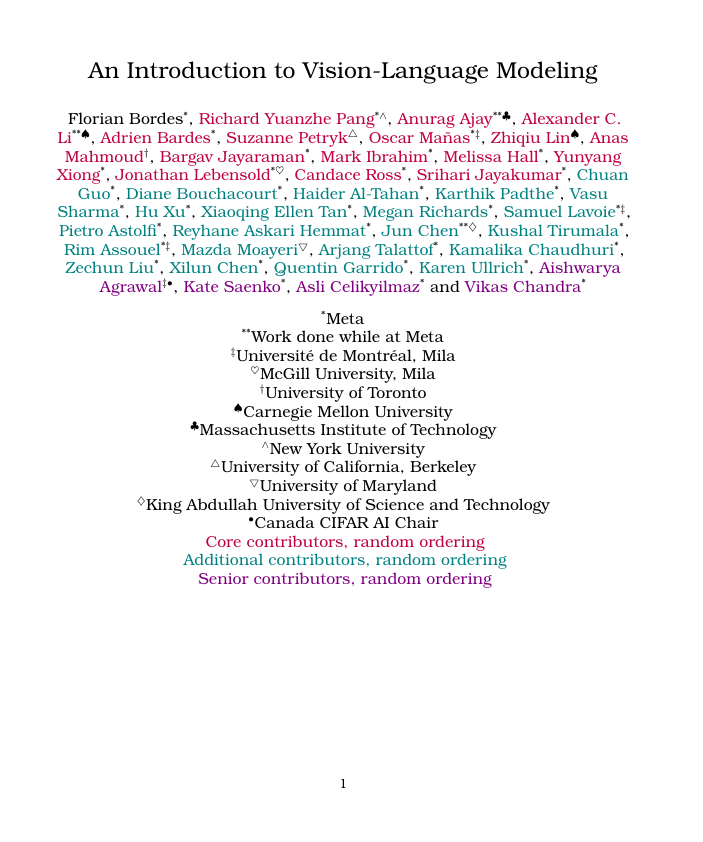
📝 New from FAIR: An Introduction to Vision-Language Modeling.
Vision-language models (VLMs) are an area of research that holds a lot of potential to change our interactions with technology, however there are many challenges in building these types of models. Together with a set of collaborators across academia, we’re releasing ‘An Introduction to Vision-Language Modeling’ — we hope that this new resource will help anyone who would like to enter this field to better understand the mechanics behind mapping vision to language.
Full paper ➡️ https://t.co/lid1qBuT0N
This guide covers how VLMs work, how to train them and approaches to evaluation — and while it primarily covers mapping image to language, it also discusses how to extend VLMs to videos.
We hope that releasing this guide will inspire and enable more work in this space.
A Survey on Retrieval-Augmented Language Models
This paper covers the most important recent developments in RAG and RAU systems. It includes evolution, taxonomy, and an analysis of applications.
There is also a section on how to enhance different components of these systems and how to properly evaluate them. It concludes with a section on limitations and future directions.
Worst service by Godrej Interio, Whitefield, Bangalore. Booked a dining table made complete payment and they committed to give it within 2 weeks but after 10 days they haven't allotted the table and providing false info. @gdijon@GodrejAppliance@GodrejInterio4U @GodrejGroup
Worst service by tata play d2h in Sobha Dream Acres, Bangalore. Relocation to different flat within the same society has already taken more than 3 weeks no connection till now no body cares after mails and calls. #worstservice#tataplayd2h@haritnagpal@TataPlayin@TataPlayBinge
@DTDCIndia, I'm completely disappointed with the service in Bangalore.
The delivery status was changed to "RECEIVER REQUESTED DELIVERY ON ANOT" without any communication from my end.
It's going to be day 3 and I'm still waiting for my emergency medicine sent via DTDC Express.
📢We're thrilled to announce the 3rd Open Catalyst Challenge @NeurIPSConf 2023!
This year's focus: computing adsorption energy — which builds on our past challenges and moves closer to practical applications. Visit our website to learn more! https://t.co/x3d9Tzc46y
🧵1/8
So many misconceptions about architectures (esp encoder-decoder vs decoder) partially due to nomenclature being confusing.
- EncDec, PrefixLMs, Causal Dec-onlys are *all* autoregressive. Even T5/UL2's objective is autoregressive.
- All 3 archs are not that different. People somehow imagine that EncDec to be "not good at generation or chat". Not true. It's the objective function that matters.
- PrefixLM are causal decoders with non-causal input (but causal targets).
- Encoder-Decoders are prefixLMs with non-shared weights that connects two (enc/dec) stacks with cross attention.
- Everything is technically seq2seq. Just whether it has a mask and whether the 'inputs' is empty.
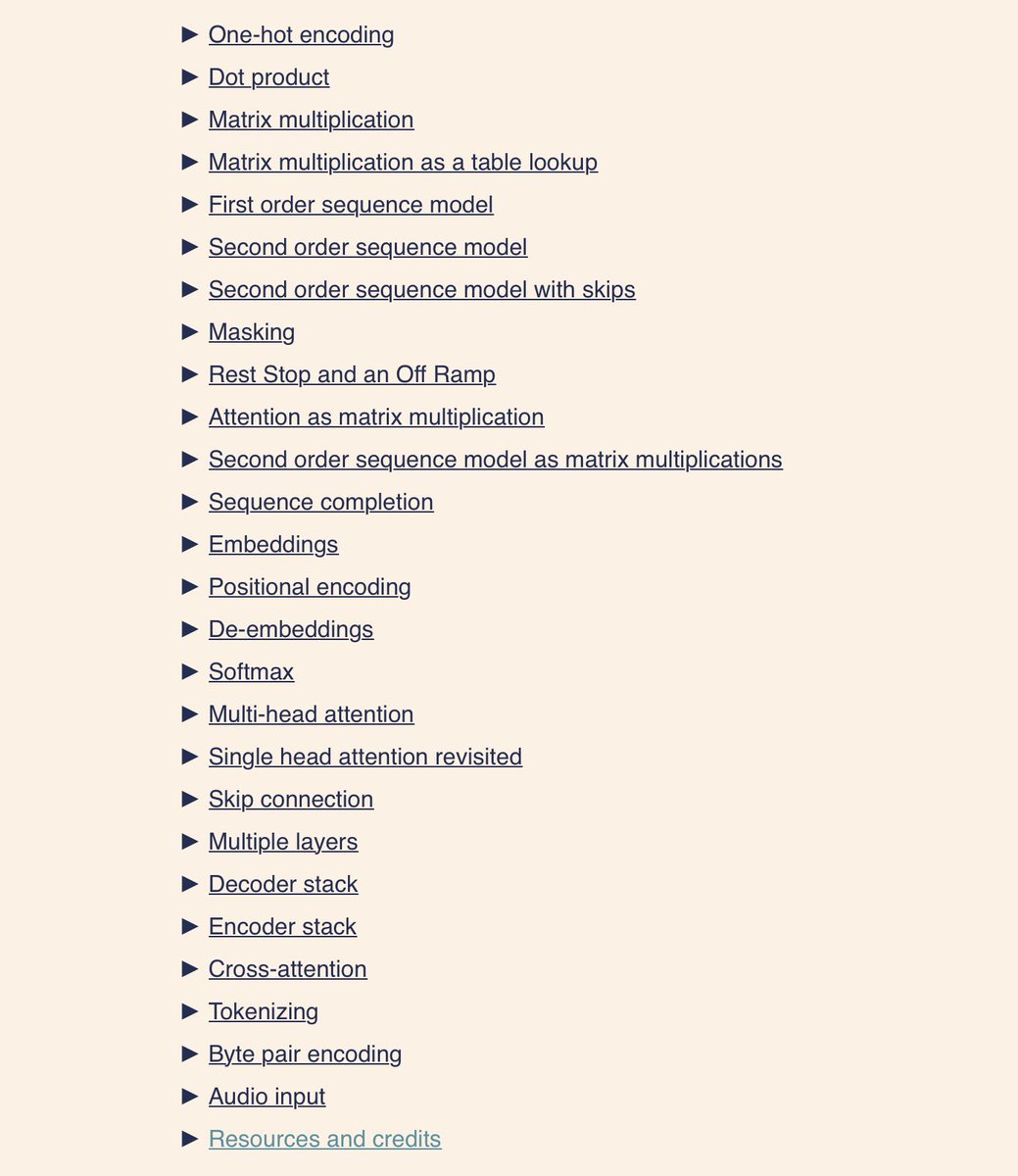
“Transformers from scratch” by Brandon Rohrer 🤖
This is one of the best write ups, that starts from 0 and explains every single detail of the model architecture.
Even if you need a refresher or don’t, I would still highly recommend reading it:
https://t.co/D25bs6TP5X
The Little Book of Deep Learning
A very concise/brief book on deep learning. Covers almost any topic you'd want to know today from foundations, efficient computation, model architectures, training models, synthesis(generative AI), etc...
And it's free: https://t.co/HyKmcFJWSx