Next in who after the Ramanujan Series?
2 students walked out of the same prof's office in Bombay. One of them is now permanently linked to Paul Erdős, one of ~500 people on Earth who can say that. The other one ran the department. Nobody remembers her name.
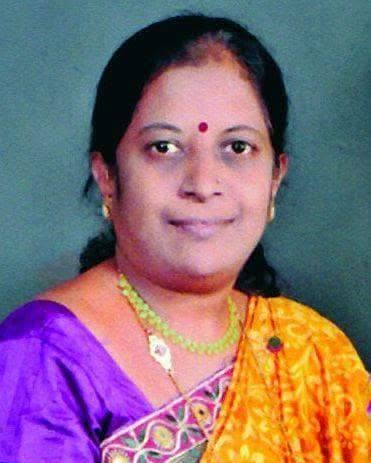
Go looking for Vasanti N. Bhat-Nayak and you find a CV with no life attached to it.
She was raised in Pune, in a Goud Saraswat Brahmin family. Earned her MSc. in mathematics at Pune University, then went to Bombay for her PhD, completed in 1970, on block designs and combinatorics, under an advisor whose own story is famous:
S.S. Shrikhande, one of three mathematicians (with Bose and Parker) who in 1959 did something that made international headlines, they disproved a 178 year old conjecture of Leonhard Euler's about Graeco-Latin squares, a result so unexpected the New York Times put it on the front page and called them "Euler spoilers."
That is the kind of origin story that usually gets a student's own career remembered too. It did not happen for her.
She stayed on at Mumbai University after her doctorate, eventually became head of the mathematics department, and over her career published 44 papers in combinatorics, real, citable, still-referenced mathematics: balanced incomplete block designs, graceful graphs, frequency partitions, bivariegated graphs.
"Graceful labeling", one of her core areas, is the theory behind how we can number a network's nodes so every connection gets a unique, non-repeating identifier, work that quietly touches radio-frequency assignment and network addressing.
She personally trained the next generation too, at least two of her own PhD students: Ranjan Naik (1977) and Medha Javdekar (1979), meaning there is a line of mathematicians in India today who exist, academically, because of her.
Her own advisor, Shrikhande, also trained Navin M. Singhi, one of the handful of Indian mathematicians with an Erdős number of 1. Same advisor, same department lineage, same era.
One student's name is tied permanently to Paul Erdős. The other ran the department for years, taught the next generation herself, and has a very few sentences on the internet.
Real, substantial, decades-long academic careers can simply generate almost no public record at all, especially for a few, and nobody is under any obligation to notice until someone happens to go looking.
When I first had the opportunity to travel to the United States, I had almost no knowledge about international travel, visa procedures, or even the documents that needed to be submitted. Because of my lack of understanding, my visa application was rejected four times in succession. People told me that obtaining a visa after so many rejections would be nearly impossible. I could not even understand what mistakes I had made.
At that time, when I was deeply disappointed and discouraged, a devotee of Lord Hanuman advised me to undertake a Sundarakanda Parayanam, a devotional recitation of the Sundarakanda.
This recitation is usually completed over a period of forty days. However, for quicker results, he advised me to finish it within eleven days. Yet, a strong determination arose within me to complete it in just seven days. I recited it in three sessions every day and ate only one meal a day. In this way, I completed the recitation of nearly 3,000 verses within seven days.
Fifteen days later, I applied for the visa again. To my great surprise, the entire visa interview was completed in less than ten minutes. Before I could fully understand what was happening, my visa had been approved. Everything happened so quickly that it felt like a dream. A few people from the American university also extended valuable help and support.
That experience became one of the most important turning points in my life. It was the first major step in both my personal journey and my research career.
Whenever you face a difficult problem, feel unable to move forward in life, or find yourself surrounded by deep disappointment, try undertaking a Sundarakanda Parayanam with faith and sincerity. I truly believe that it can give you strength, hope, and success in your endeavour.
My new book The Pantheon, ranking the 50 best cricketers of all time is out in November - it's been selected for a special @Waterstones early promotion
Enter the code SUMMER26 at checkout to get 25% off
Persi Diaconis - Professor of Mathematics at Stanford University.
a coin toss isn't 50/50. it's biased ~51% to land the way it started. "flip it to the moon" - the bias stays. it's not a guess, it's a theorem.
Diaconis shows a "random" flip is pure physics: know the coin's speed and spin and you'd know the outcome. he measured it - ~5.5 mph, ~40 spins per second, half a second in the air. and he counted the spins with dental floss.
the beautiful part is the scale: a coin also precesses, so an honest description of its flight is a 12-dimensional problem. childish "randomness" hides physics at the edge of what can be computed. the takeaway: if it started heads, bet heads.
"FreeCAD is NOT for engineers. FreeCAD is not CAD" I'm sick of hearing this. So I designed and manufactured this entire project from scratch just to prove them wrong.
Full video link below👇
@FreeCADNews#madewithfreecad#opensource#cad
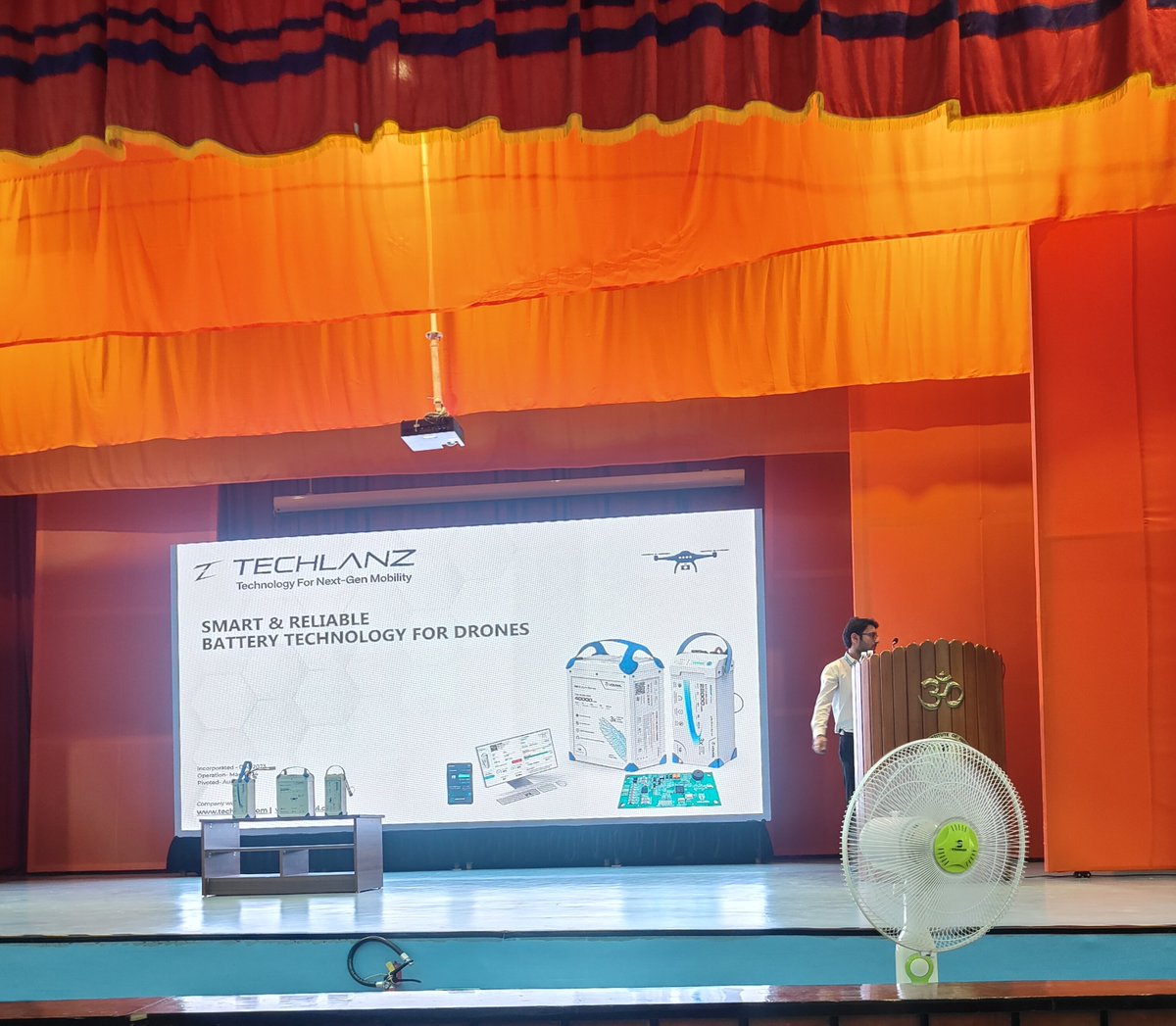
Sunday morning well spent at the Brindavan, Whitefield campus of the Sri Sathya Sai Institute of Higher Learning. I was here to moderate a session on deep tech, climate, and impact at their annual Industry Leadership Conclave.
Over the years, I've had the fortune of knowing Sathya Sai alumni from Puttaparthi, Anantapur, and Brindavan. They've always struck me as some of the smartest, wisest, kindest, and most socially conscious people I've met.
Here's wishing every student the very best in their ventures.
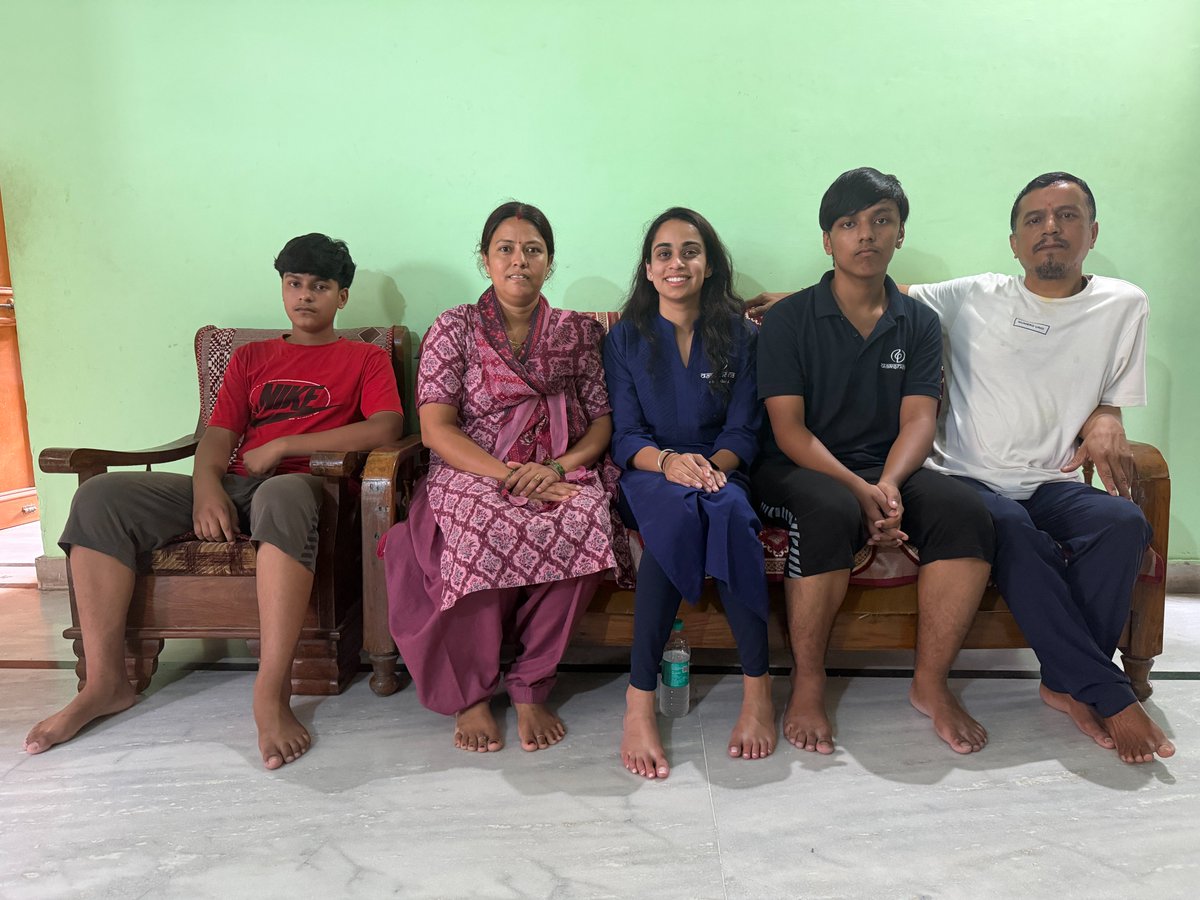
The fourth student we visited in Uttarakhand was Shivam.
Shivam lives in a village at the foothills of Kedarnath with his mother, father, younger brother, grandmother, and a large joint family made up of his uncles, aunts, and cousins. In total, four brothers and their families share the same home.
His father runs the family's small textile shop, which was started by Shivam's grandfather a few kilometers from their home. When we asked how business was going, his father explained that sales have declined significantly as Amazon has become more common, even in this remote part of Uttarakhand. The family survives on less than $130 a month.
Their home sits less than 15 feet from the river that flows down from Kedarnath. The sound of the river was beautiful. We asked whether it ever bothered them, but they said they enjoyed it. The area was affected by the devastating floods in 2013, but thankfully their village has not experienced any flooding since.
The small light blue building in the background is the local school. Shivam's younger brother and cousins all attend classes there. It was nice to see that this family has at least one very short commute.
Shivam, however, will be joining IIT Kharagpur to study Mechanical Engineering.
Shivam has been a top student from a young age. After earning admission to JNV Rudraprayag in Class 6, he continued to excel academically and was eventually selected to attend the Dakshana Valley campus. From there, he worked tirelessly to prepare for the IIT JEE and earned admission to IIT Kharagpur.
The biggest smile during our visit belonged to Shivam's grandmother. She was thrilled that her grandson would soon be an IITian.
@MohnishPabrai@DakshanaIndia
Stanford professor Judy Fan went on stage at MIT and broke down why humans are so good at making the invisible visible...
And why AI hasn't actually learned to "see" the way we do.
It completely changes how you think about Human Intelligence v/s Artificial Intelligence:
1. Nature never gave us straight lines or sharp corners. The number line, the coordinate plane, even basic geometry are all human inventions. We created tools that do not exist in nature simply because we needed a way to think more clearly.
2. The coordinate system Descartes invented solved a problem that had stumped mathematicians for centuries, doubling the volume of a cube. Once invented, this tool became so indispensable that virtually every math curriculum on Earth still depends on it.
3. Humans have been doing this for at least 30,000 to 80,000 years. The story of human progress is inseparable from the story of marking up our environment, from cave walls to Galileo's telescope to Feynman diagrams of particles we will never see with our own eyes.
4. Every major scientific breakthrough relied on a visual tool that made something invisible visible. Darwin needed side-by-side illustrations of finches to see variation that was otherwise too subtle to notice. Cajal needed detailed drawings of neurons under a microscope to map how the nervous system was wired.
5. Fan's research group studies something deceptively simple: how people decide what to put into a drawing and what to leave out. When two people played a drawing game, sketchers used far more detail when the target object had close competitors than when it stood alone, all the way down to using fewer strokes and less time when more detail was not necessary.
6. People are not just copying what they see. They are making constant judgment calls about what level of detail actually serves the goal of communication, and they do this naturally without ever being taught the theory behind it.
7. There is a real difference between drawing something so someone can identify it and drawing something so someone can understand how it works. In one study, participants drew explanatory diagrams that emphasized moving, causal parts of a machine while depictive drawings emphasized background and overall appearance, even though both were drawing the exact same object.
8. Explanatory drawings were genuinely better at helping someone figure out how to operate a machine, but worse at helping someone identify which machine it actually was. You cannot optimize a single drawing for both goals at once. Communication always involves tradeoffs.
9. AI vision models trained on photographs generalize surprisingly well to simple, sparse sketches, suggesting that resemblance based recognition is not just a story we tell ourselves. It is something modern neural networks can replicate with real accuracy.
10. But there remains a large, measurable gap between how confidently AI models recognize sketches and how confidently humans do, even when both groups answer the same questions about the same images. Humans are simply far more reliable and far more consistent in their judgments.
11. When researchers compared human-made sketches to AI-generated sketches under tight stroke budgets, both were similarly recognizable at higher budgets, but diverged sharply as the budget shrank. Humans and AI systems simplify drawings in fundamentally different ways once resources get scarce.
12. Reading a graph is not one single skill. It involves perception, knowing where to look, mapping that visual information onto the actual question being asked, and then translating that mapping into an answer. Each of these steps can independently break down, and people fail for very different underlying reasons even when they land on the same wrong answer.
13. When tested directly against humans on graph reading tasks, leading multimodal AI models, including GPT-4V, showed a meaningful performance gap. Even when a model's overall accuracy approached human levels, its pattern of mistakes looked nothing like how humans actually get things wrong.
14. People choose entirely different types of charts depending on what specific question they are trying to answer, not out of a generic preference for bar charts or scatter plots. Their chart choices closely tracked which visualization would genuinely help someone answer that specific question correctly.
15. Two of the most widely used graph literacy tests in education research turned out to correlate strongly with each other, suggesting they measure overlapping skills. But when researchers dug into the actual error patterns, the standard categories used in textbooks, like "find the maximum" or "identify a cluster," failed to explain why people got things wrong nearly as well as a more basic, underlying four-factor model did.
16. The deepest goal behind all of this research is not just academic curiosity. It is to eventually help students and everyday people develop genuine literacy with the visual tools that science and modern decision-making increasingly depend on, because every generation should be able to see further than the last by standing on the visual tools the previous generation built.
Follow @yasminekho for more ideas on thinking better, becoming clearer & building a more intentional life.
https://t.co/8x3gGjXpaV
Friends, I have great news. I have been selected for the 27th conference of the European Association for South Asian Archaeology and Art from 6-10 July, 2026. The title of my paper : “Garhwa: An Early Centre of the Rāma
Cult.”
In 2024, I discovered the oldest known Ram temple Prashasti at this site, with the evidence of Ram worship at this site going as far back as the 5th century in the Gupta era. As an independent researcher, I am seeking support to help cover the expenses associated with attending the conference, including:
• International airfare
• Accommodation in Belgium
• Conference registration fees
• Visa and travel insurance
• Local transportation and subsistence expenses
Every contribution, regardless of size, will directly support my participation in this important academic event and help ensure that Indian archaeological and cultural research is represented on a global platform. Much thanks