Onboarded noob friend to crypto this week
Tl;dr
=> Retail will flock to Solana because it is easy, cheap and straightforward
=> Coinbase Wallet (buggy) and marketing (confusing) needs to be improved big time
Asked to open a @coinbase acct on desktop & download app
1/4
Privacy is defining the next generation of apps, both financial and agentic.
Privacy-first AI platform @AskVenice ($VVV) has 3M+ users and is growing fast. NEAR is the infrastructure making it possible, from private inference to confidential execution.
How NEAR powers Venice 🧵
@Old_Samster My simplistic take: I have used NEAR without being aware of it (with intents), very straightforward
I still have to see a real world use of $TAO / subnets
I own both but thinking of dropping TAO as I cannot figure out what is real there
$NEAR: the already functioning coordination layer of the upcoming AI Agent economy
TVL, TPS, dAPPS not the relevant metric anymore, but volume coordinated through NEAR (private) intents catering to Non KYC-able agents
Verifiably private AI is NEAR AI.
Major platforms and nation-scale systems like Venice, Brave, Abound, and the Government of Bermuda are integrating NEAR AI to bring confidential inference to their users 🧵
Crazy, and not very fun fact
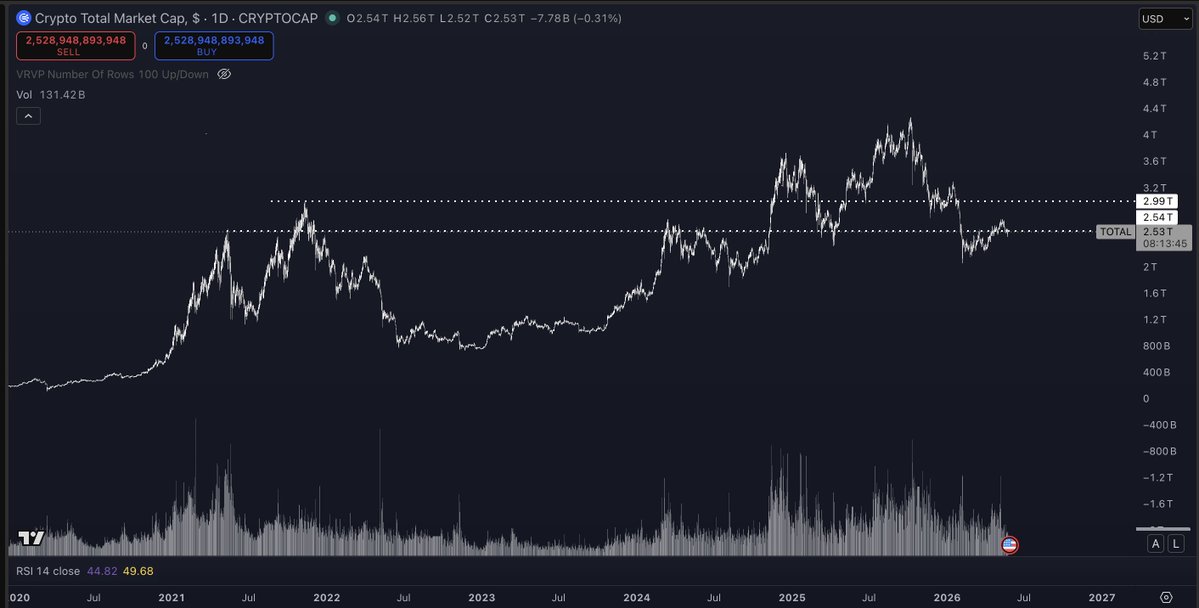
If you had been in t-bills OR cash the past 5 years and not taken a single trade, you'd have out-performed the total crypto marketcap, including BTC. And that's without adjusting for inflation
If we exclude stablecoins, btc, eth and just go with alts it's the only market in the world to not be or have made ath's during that period.
Wild story unfolding around the KelpDAO hack funds frozen on Arbitrum.
Quick context: in April, Lazarus Group (DPRK-linked) hacked KelpDAO for $292M via a LayerZero bridge bug. Some of the stolen ETH flowed through Arbitrum, and Arbitrum's Security Council froze $71M before the attacker could move it further.
The industry mobilized to recover. Aave, KelpDAO, LayerZero, EtherFi, and Compound co-authored a proposal asking Arbitrum DAO to release the frozen ETH to a multisig that would compensate hack victims. The vote is passing.
Then this week, a plot twist. Lawyers showed up with a restraining order. But not on behalf of the KelpDAO victims.
The plaintiffs are Han Kim and two other groups - family members of people killed in DPRK-backed terrorist attacks years ago. They hold combined ~$877M in unpaid US court judgments against DPRK. North Korea never paid. They have been hunting for any reachable DPRK asset for over a decade.
When Arbitrum's frozen ETH was publicly identified as "DPRK money," they saw a target.
Their argument: this is DPRK property, we have $877M in judgments against DPRK, give us the money.
The counter-argument: DPRK does not actually own this ETH - they stole it. The real owners are the KelpDAO hack victims. The old terrorism creditors are trying to grab money that was never really DPRK's.
Arbitrum is now caught in the middle. The industry wants to release funds for hack recovery. NY court is saying "do not move anything until we resolve this." If multisig signers transfer the ETH while the restraining order is active, they become personally liable.
This is the first real test of DAO funds against competing US court claims. The precedent set here will shape how every future DAO incident response handles legal pressure.
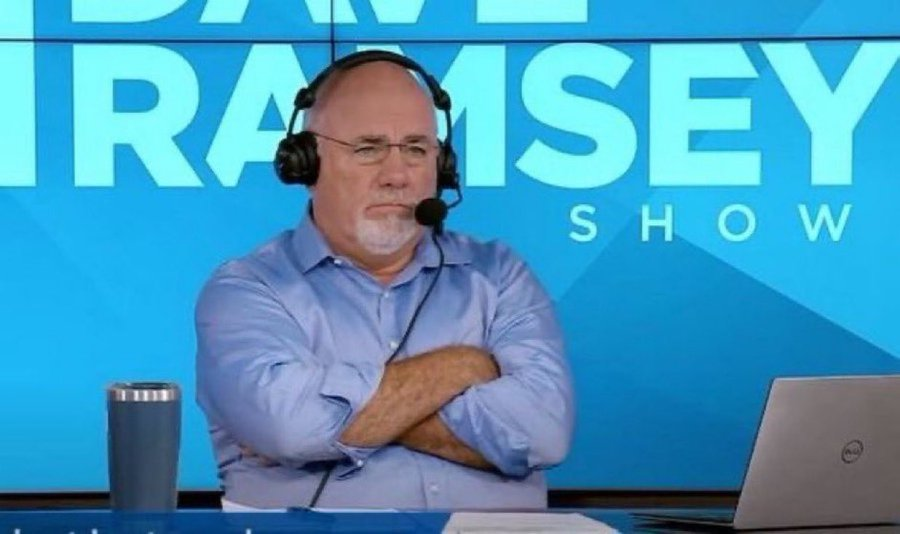
"so you staked your ETH on the Ethereum blockchain to earn yield?"
"yes, Dave"
"except you didn't want your capital to be locked up so you actually staked it with a liquid staking protocol called Lido?"
"that's correct, Dave"
"and Lido gave you a liquid staking receipt token called stETH in return?"
"yes, Dave"
"and then you didn't think that was enough, so you juiced the yield even further by depositing your stETH receipt tokens into a restaking protocol called Eigenlayer?"
"you are correct, Dave"
"and now you didn't want to lock up your capital, so you actually restaked with a liquid restaking protocol called KelpDAO who provided you with a liquid restaking receipt token called rsETH?"
"you got it, Dave"
"and then that was surely not enough juice, so you then deposited your rsETH tokens into a lending protocol called AAVE so that you could open a leveraged looping position that borrows ETH against the rsETH collateral and restakes the ETH into rsETH which is then deposited as collateral, except it turns out rsETH used a cross-chain bridge called LayerZero whose security is held together by a 1/1 toothpick, which was obviously hacked by north koreans causing rsETH to become undercollateralized and now these looping positions are stuck and unprofitable, and everyone is pointing fingers at each other, and also DeFi is a very serious industry"
"you are 100% correct, dave"
jfc.
0/ DeFi needs circuit breakers and other safety mechanisms which slow down large transactions and provide time for reaction. Borrow lend protocols should not allow a new user to show up with a $300M position and take out a loan against it immediately. Some ideas:
Today is a monumentous day for quantum computing and cryptography. Two breakthrough papers just landed (links in next tweet). Both papers improve Shor's algorithm, infamous for cracking RSA and elliptic curve cryptography. The two results compound, optimising separate layers of the quantum stack. The results are shocking. I expect a narrative shift and a further R&D boost toward post-quantum cryptography.
The first paper is by Google Quantum AI. They tackle the (logical) Shor algorithm, tailoring it to crack Bitcoin and Ethereum signatures. The algorithm runs on ~1K logical qubits for the 256-bit elliptic curve secp256k1. Due to the low circuit depth, a fast superconducting computer would recover private keys in minutes. I'm grateful to have joined as a late paper co-author, in large part for the chance to interact with experts and the alpha gleaned from internal discussions.
The second paper is by a stealthy startup called Oratomic, with ex-Google and prominent Caltech faculty. Their starting point is Google's improvements to the logical quantum circuit. They then apply improvements at the physical layer, with tricks specific to neutral atom quantum computers. The result estimates that 26,000 atomic qubits are sufficient to break 256-bit elliptic curve signatures. This would be roughly a 40x improvement in physical qubit count over previous state-of-the-art. On the flip side, a single Shor run would take ~10 days due to the relatively slow speed of neutral atoms.
Below are my key takeaways. As a disclaimer, I am not a quantum expert. Time is needed for the results to be properly vetted. Based on my interactions with the team, I have faith the Google Quantum AI results are conservative. The Oratomic paper is much harder for me to assess, especially because of the use of more exotic qLDPC codes. I will take it with a grain of salt until the dust settles.
→ q-day: My confidence in q-day by 2032 has shot up significantly. IMO there's at least a 10% chance that by 2032 a quantum computer recovers a secp256k1 ECDSA private key from an exposed public key. While a cryptographically-relevant quantum computer (CRQC) before 2030 still feels unlikely, now is undoubtedly the time to start preparing.
→ censorship: The Google paper uses a zero-knowledge (ZK) proof to demonstrate the algorithm's existence without leaking actual optimisations. From now on, assume state-of-the-art algorithms will be censored. There may be self-censorship for moral or commercial reasons, or because of government pressure. A blackout in academic publications would be a tell-tale sign.
→ cracking time: A superconducting quantum computer, the type Google is building, could crack keys in minutes. This is because the optimised quantum circuit is just 100M Toffoli gates, which is surprisingly shallow. (Toffoli gates are hard because they require production of so-called "magic states".) Toffoli gates would consume ~10 microseconds on a superconducting platform, totalling ~1,000 sec of Shor runtime.
→ latency optimisations: Two latency optimisations bring key cracking time to single-digit minutes. The first parallelises computation across quantum devices. The second involves feeding the pubkey to the quantum computer mid-flight, after a generic setup phase.
→ fast- and slow-clock: At first approximation there are two families of quantum computers. The fast-clock flavour, which includes superconducting and photonic architectures, runs at roughly 100 kHz. The slow-clock flavour, which includes trapped ion and neutral atom architectures, runs roughly 1,000x slower (~100 Hz, or ~1 week to crack a single key).
→ qubit count: The size-optimised variant of the algorithm runs on 1,200 logical qubits. On a superconducting computer with surface code error correction that's roughly 500K physical qubits, a 400:1 physical-to-logical ratio. The surface code is conservative, assuming only four-way nearest-neighbour grid connectivity. It was demonstrated last year by Google on a real quantum computer.
→ future gains: Low-hanging fruit is still being picked, with at least one of the Google optimisations resulting from a surprisingly simple observation. Interestingly, AI was not (yet!) tasked to find optimisations. This was also the first time authors such as Craig Gidney attacked elliptic curves (as opposed to RSA). Shor logical qubit count could plausibly go under 1K soonish.
→ error correction: The physical-to-logical ratio for superconducting computers could go under 100:1. For superconducting computers that would be mean ~100K physical qubits for a CRQC, two orders of magnitude away from state of the art. Neutral atoms quantum computers are amenable to error correcting codes other than the surface code. While much slower to run, they can bring down the physical to logical qubit ratio closer to 10:1.
→ Bitcoin PoW: Commercially-viable Bitcoin PoW via Grover's algorithm is not happening any time soon. We're talking decades, possibly centuries away. This observation should help focus the discussion on ECDSA and Schnorr. (Side note: as unofficial Bitcoin security researcher, I still believe Bitcoin PoW is cooked due to the dwindling security budget.)
→ team quality: The folks at Google Quantum AI are the real deal. Craig Gidney (@CraigGidney) is arguably the world's top quantum circuit optimisooor. Just last year he squeezed 10x out of Shor for RSA, bringing the physical qubit count down from 10M to 1M. Special thanks to the Google team for patiently answering all my newb questions with detailed, fact-based answers. I was expecting some hype, but found none.