Raised by Cobain, Tendulkar, Federer. Advertising writer. Runner. Poet. Loves his Enfield, books, beer, heavy metal. Indian. Fights the good fight everywhere.
On the onging students protest, read this lovely piece by @vargheseKgeorge --
"The BJP has had the toolkit to tame the WhatsApp universe and make it dance to its tune; in the Instagram universe, the BJP is like a deer in the headlights... That is the disconnect between the WhatsApp generation and the Instagram generation. That is the disconnect that is mirrored in the disconnect between the BJP-controlled Indian state and the country’s youngest generation."
https://t.co/Qt7kESZiIN
Possibly the most important tweet thread you'll read today. There can be no politics when it comes to our kids' education and future. There are enough glaring discrepancies to merit a thorough discussion.
This is an unbelievable piece of work by Sarthak and something that requires amplification.
Let me explain what he found, in simple terms.
Sarthak is a Class 12 student from the 2025-26 batch, one of the 17 lakh students whose answer sheets went through CBSE's new On-Screen Marking system.
He spent days reading through CBSE's evaluation tenders, scraped all 576 tenders CBSE has issued, and tracked how the rules changed across three versions of the same tender.
The core finding is that the company that won the contract to scan and grade 17 lakh students' answer sheets is Coempt Eduteck.
Coempt used to be called Globarena Technologies. Globarena was the company behind the 2019 Telangana intermediate exam disaster, where software failures led to 3.8 lakh students getting wrong or missing marks, and 23 students died by suicide.
A government committee found systemic failure and negligence. Six months later, Globarena rebranded to Coempt Eduteck.
So a company with that track record won a contract to handle 17 lakh CBSE students. Sarthak's investigation is about how the rules were rewritten to let that happen.
The tender was issued three times.
> First tender, February 2025. It existed, then disappeared from the public GeM portal. Sarthak scraped all 576 CBSE tenders and this one was missing from the archive entirely.
> Second tender, May 2025. Four companies applied including TCS and Coempt. All four failed the technical evaluation. Cancelled.
> Third tender, August 2025. Coempt won. Between the second and third tender, a series of rule changes happened, and every single one made it easier for Coempt to qualify.
Here is what changed, one by one.
01. The old rules disqualified any company with a history of abandoning work, failing to complete contracts, or financial weakness. The new rules deleted this clause entirely. Coempt's Telangana history stopped being a barrier.
02. The old rules disqualified any company that was "blacklisted earlier." The new rules changed this to "currently blacklisted." Because Globarena rebranded after Telangana, removing the word "earlier" effectively erased their past.
03. The rules required Rs 50 crore average turnover over three years. Coempt's exact average came to Rs 50.86 crore. They cleared the bar by less than 1%. Earlier, a smaller company had asked CBSE to lower the bar to Rs 30 crore for fairer competition. CBSE refused. So the bar was kept high enough to block small players, but sat exactly low enough for Coempt to scrape through.
04. Software maturity is measured on the CMMI scale, 1 to 5. The old rules required Level 5. The new rules dropped it to Level 3. Coempt is a Level 3 company.
05. The cooling-off period for engaging retired CBSE officials was cut from two years to one. This makes it easier to use recently retired insiders to influence the process.
06. The old rules required experience with large projects of at least 5 lakh students each. The new rules removed the student count and counted cumulative answer-book volume across small projects instead. Coempt has many small fragmented university contracts. This helped Coempt and hurt TCS.
07. The old rules required bidders to own their own data centre and disaster recovery centre on Indian soil. The new rules allowed third-party MeitY-empanelled cloud hosting. Coempt runs on AWS and Azure. This helped Coempt and hurt TCS, which owns its own data centres. It also means student data is no longer on sovereign, Indian infrastructure.
08. The old rules required the bidder to own or control the complete source code of its software. The new rules deleted this. Coempt's platform runs on Microsoft's proprietary IIS, which they don't own.
09. A last-minute corrigendum, issued right before bid submission, removed CBSE's own power to blacklist the firm if its software failed catastrophically. So even a Telangana-scale failure couldn't get Coempt banned from future government tenders.
10. The penalty structure shifted from punishing mistakes to punishing delays. The old rules fined the vendor for wrong scanning, merged pages, and unscanned books. The new rules dropped those and instead levied Rs 50,000 per day for delays. This incentivises rushed scanning over accurate scanning.
11. The old rules had a hard accuracy threshold, error rate not to exceed 0.5%. The new rules removed this number entirely.
12. The old rules specified proper book and robotics scanners. The new rules just say "sufficient scanners." The definition was vague enough that, as Sarthak notes, the scanning could be done with a phone on a stand.
13. On the security side, the contract required a VAPT (vulnerability and penetration test) certified by CERT-In before go-live, and a restricted beta phase before launch. The system clearly wasn't restricted, because the other researcher, Nisarga, was able to access it and find vulnerabilities four days before go-live. So the mandatory security audit appears to have been bypassed.
These are more than a dozen rule changes, all between the failed tender and the winning tender, all pushing in the same direction, all benefiting the one company with the worst track record in the field.
The security holes Nisarga found last week now have an explanation. The system was built by a vendor that was specifically allowed to skip the security certification, the source code ownership, the data sovereignty, and the quality thresholds the original rules demanded.
Following things need to happen immediately;
1. An immediate CAG audit of the tender process.
2. A parliamentary debate on the topic.
3. An independent investigation into
> Why the first tender vanished?
> Why the disqualification clauses were deleted?
> Why the turnover bar was held exactly where it was?
> Why the security level was dropped?
> Why the blacklisting power was removed at the last moment?
Sarthak, this is genuinely exceptional investigative work. Far better than most journalists with full resources ever manage. Take a bow. :)
@ihteshamali Read it, and yes, it's pure gold. But he also says that getting people to positively act is also propaganda. That propaganda helps society function by organising information and thought. Fascinating book.
Breaking News: The Justice Dept. is planning to drop charges against India’s richest man, Gautam Adani, after a lawyer for the billionaire made an unusual investment offer. https://t.co/08sl331XCJ
I don't think people understand the gravity of the situation as the UN is preparing for possible nuclear weapon use in Iran.
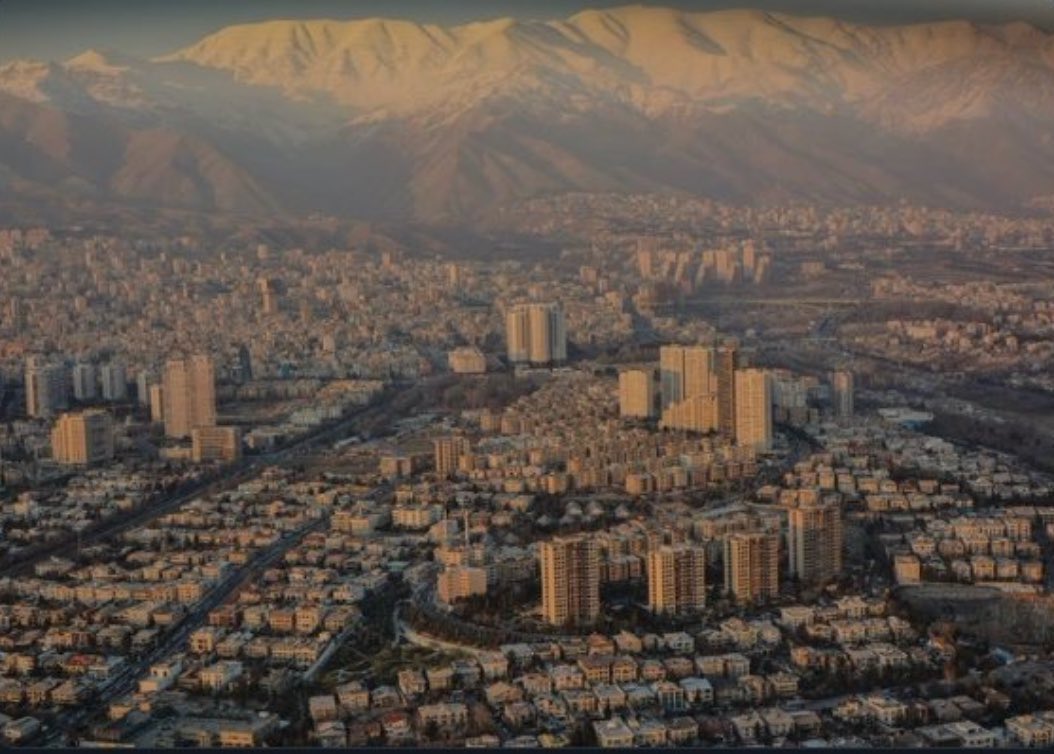
This is a picture of Tehran. For you uneducated, untraveled, never-served, warhawks licking your chops at the thought of bombing it. It's not some low population desert. There are families, children, family pets. Regular working class people with dreams. You're sick to want war.
Tehran is a city of nearly 10,000,000 people. Imagine nuking Washington, Berlin, Paris, London, or beyond, bombed with nuclear weapons.
I gave up my diplomatic career to leak this information. I suspended my duties so as not to be part of or a witness to this crime against humanity, in an attempt to prevent a nuclear winter before it is too late.
Yesterday, nearly ten million people protested “No Kings” in the United States. The possibility of the use of nuclear weapons must be taken very seriously. It's dangerous. Act now. Spread this message worldwide. Take the streets. Protest for our humanity and future. Only the people can stop it. History will remember us.
Clarifying a few things, starting with the MoU.
Are you taking taxpayer money?
No. The MoU signed with the UP Government is structured as a public-private partnership. It does not involve any cost to the taxpayers of Uttar Pradesh. On the contrary, it brings investment into the state. The project will be executed in phases, with support from external investment partners. We have not taken any money, any GPUs, or any other form of support from the Government. The only part of this MoU that involves citizens is that they'll receive free access to AI, in their own language and through familiar interfaces, via AI Commons.
Is your revenue ₹42.9 lakh?
No. This is a bug in Google’s AI, which has confused Puch AI with another company called Pucho AI. The ₹42.9 lakh revenue figure belongs to Pucho AI, not Puch AI. Puch AI’s revenue is not public.
What’s your valuation/annual revenue? Are you bootstrapped?
We’ll share those details when the time is right. For now, as a private company, we’re not required to make our valuation or revenue public. But, if you’re curious, we're not bootstrapped. We’re a well-funded startup.
Do you have a foundational model of your own?
No, and we do not believe it is necessary for our mission to build one at this stage.
What is your mission?
We want to bring AI to everyone in India. Today, many people already use tools like ChatGPT and Gemini, but millions still cannot. Your parents, shopkeepers, drivers, and many others are being left out because AI, in its current form, is not built for them.
What exactly is Puch AI doing?
Puch AI is building the domestic consumer AI offering for the masses. We're bringing AI to people through simple, familiar interfaces like WhatsApp and voice calls, so that it is easy to use even for those who cannot type and prefer to interact through voice.
Why don’t you have your own app?
We understand the frustration people feel about this, and at times it is frustrating for us as well (currently fighting Meta on the WhatsApp policy). But so far, this has been a conscious choice. A new app becomes one more thing to learn and one more barrier for the millions of people who are currently not using AI. Try teaching your parents a new app!
So are you asking me to not use ChatGPT or other AIs in the name of nationalism?
No, not at all. People should use whatever AI works best for them. Our effort is simply to expand access to AI by bringing it to millions who, today, are unable to use the existing tools.
Is Puch AI just a wrapper?
Wrappers are generally defined as making API calls to AI providers like OpenAI and Anthropic. So no, Puch AI is not a wrapper. We do not use any APIs. We have built our entire infrastructure in-house on top of open-source models, and engineered it for the Indian context. However, if you define a wrapper as any company that does not have a foundational model pretrained from scratch, then yes, Puch AI is a wrapper.
What is the point of Puch AI if you haven’t even built a model?
The problem is data. Today, ChatGPT and Gemini are the default go-to AI apps for almost everyone in India who uses AI. As more people use them, these companies keep getting more and more data to improve their models. That data will never help Sarvam, BharatGen, or any other domestic AI model builder. More importantly, the bulk of India will end up accessing information through OpenAI or Google: their systems and their narratives that may ultimately be shaped by foreign actors. With Puch AI, we are trying to build sovereign distribution, so that India has at least one alternative, no matter how hopeless it may seem to compete with OpenAI or Google’s marketing.
Puch AI seems relatively simple. I can build it in a weekend. Are you even doing anything?
The choice of a simple interface is deliberate, but the underlying infrastructure is far from simple. Happy to give ₹50 lakh to anyone who can build it in a weekend, match our performance in Indian languages, and offer it for free at our consumer scale.
How was your experience building for India?
It is a very interesting situation, where the Government understands the importance and wants to do good, but it becomes difficult to do any good when so many bad actors are rooting for you to fail. Thousands of paid accounts are ready to try to shape narratives to fit their own political agenda. Everything from Community Notes to actual news articles and journalism gets weaponized against you, because your failure gets more views.
Will you keep fighting?
Not sure. Quite exhausted. Maybe this is the time to sign off.
@varchasvadelhi I'm proud of your courage, brother. I know it can be incredibly gutting. But before you owe anything to anyone else - you owe everything to you. Everyone looks at the world from their lenses; they just don't have the eyes to see you as you 💪🏼❤️👏🏼🤘🏼