Why texts read at school should be challenging, extracts can be useful, and reading stories to the class is not always a good option: US literacy researcher @ReadingShanahan talks to @Helen_Amass about the best way to teach reading https://t.co/pUOqhwmqwi
My latest substack post is a personal reflection on curriculum booklets: what they can do well, what needs to sit around them, and the potential pitfalls to avoid. Booklets can support curriculum coherence, intellectual preparation, non-specialist teaching and workload — but only when used thoughtfully. https://t.co/2zyifNgmWn #geographyteacher #curriculumdesign #KS3 #bookletisedcurriculum
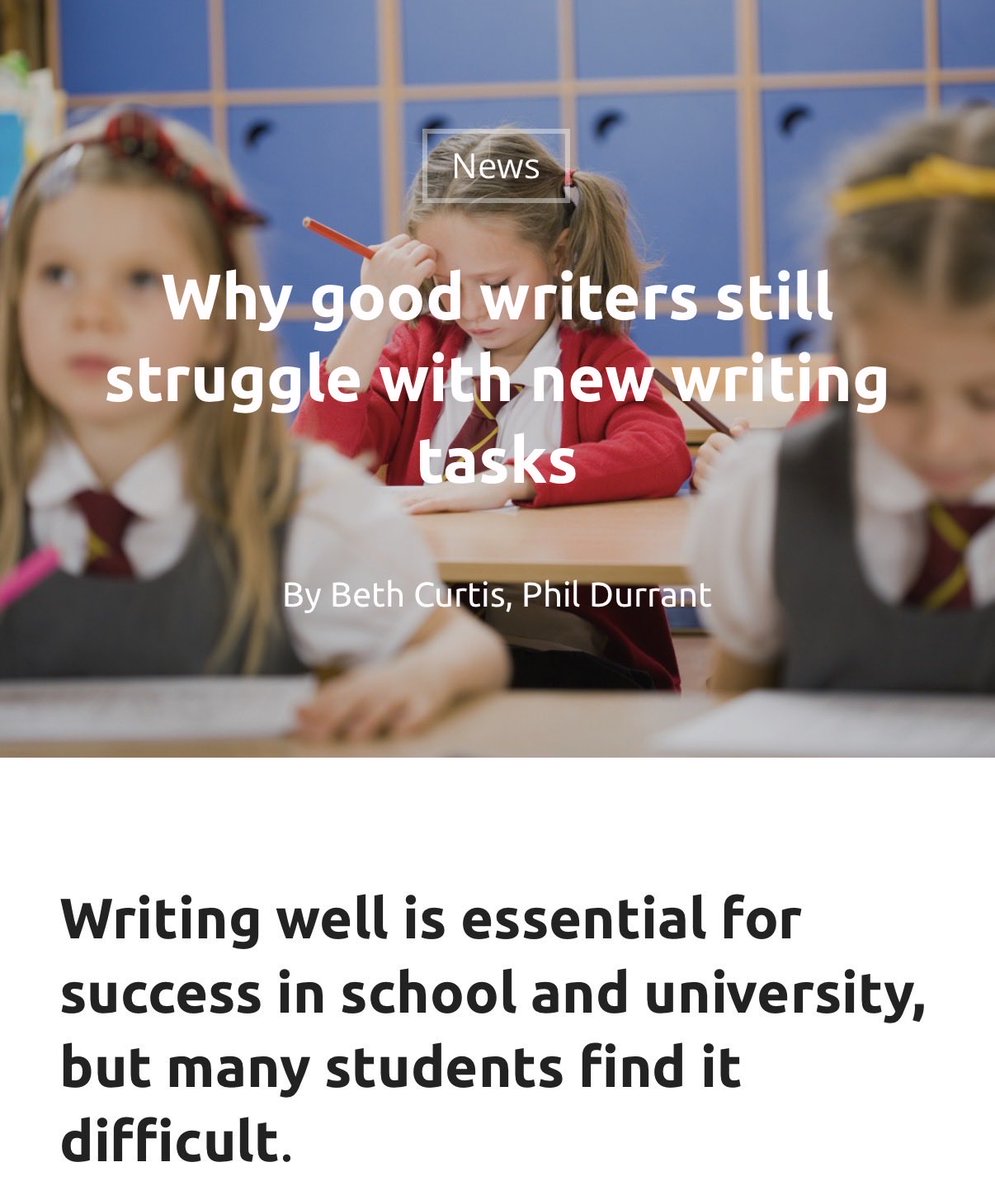
Interesting article in @NATEfeed on ‘Why good writers still struggle with new writing tasks’
It explains new research exploring how writing in history, science & English varies and the different demands & opportunities they create.
https://t.co/b7RgxMpnRV
In this great article, @BarbaraBleiman explores what the momentum behind oracy means for English classrooms, drawing together research, policy and practice to highlight the ideas we should keep in mind as we prepare for the new National Curriculum.
https://t.co/qF0lspMNr7
A reading culture is easier to build when there's agreement about why reading matters.
Everything else grows from there.
Read: Building a Reading Culture: Starting with Why?
https://t.co/lqsjMBEIuC
"A child isn’t born with SEND. They aren’t born knowing that they don’t fit," says the writer. "This is something they learn; something that they’re taught."
This piece is one of the most beautiful mediations on SEND I have read.
https://t.co/L4F473Xhis
💡Latest post 💡
‘Literacy and Key Stage 3 Success’
“…too few secondary teachers have received explicit training in recognising or addressing the nuanced literacy barriers students face in their subjects.”
https://t.co/h7Z2rey0DR
The problem wasn't resources. It was assumptions.
Schools getting this right raise the pitch from September. Rich texts, sharp questions, high expectations.
KS3 isn't the bridge. It's the foundation.
Book out now: https://t.co/M3mk9TR8tv
'Reading clusters to build language'
Books build far more than reading skill alone. The build schema that helps meaning & learning stick.
https://t.co/a9UPmezU6S
With schools reporting an ‘explosion’ of requests for extra time in exams, is this really the best access arrangement to help students with SEND? Ellen Peirson-Hagger investigates
https://t.co/B6pWQAX575
Despite national gains in reading, pupils from disadvantaged backgrounds still make less progress than their peers, says Alex Quigley. So, what can be done to help?
https://t.co/cHEGWKxSGR
KS3 is becoming a national conversation again, and this matters because Years 7, 8 and 9 are not the warm-up years. They are not a holding pattern before GCSE and they are not simply the bridge between primary and Key Stage 4
Professor Jessie Ricketts sets out the importance of secondary schools making reading a strategic priority, as she offers three freely available initiatives to help students
https://t.co/joADbMeczn
Prompted by the cultural impact of Adolescence, Harmeet Matharu invited Year Eight students to explore masculinity through literature, history and debate — creating space for thoughtful, non-judgemental discussion.
https://t.co/p8cMCnnALv
If students can decode words yet still miss meaning, the problem runs deeper than vocabulary. Eleanor Nicholls Steed argues that closing the reading gap needs a shift from word-by-word instruction to teaching students how to build meaning across texts.
https://t.co/No8o3VHFss
Students remember more when they write it down on paper. Not type it. Not screenshot it. Write it!
The act of writing slows students down, adds tactile feedback, and helps lock it into memory.
💡NEW POST 💡
'SHARE to support struggling readers and writers'
S – Scaffolding challenging tasks
H – High expectations for every student
A – Assessment-driven adaptations
R – Responsive interventions
E – Explicit teaching
https://t.co/d5dUBzyxnq
Here is the link to the recording of a webinar I hosted focusing on Questioning for Teaching & Learning.
Feel free to share with colleagues if you think it's useful. 😊
https://t.co/U24NtUmn6X