I really enjoyed this interview.
Adam is knowledgeable and articulate and gave very thoughtful answers to some of the vexing challenges facing Canada.
What I particularly liked was that he made clear distinctions between his considerations and Conservative policies. In a world where you’re expected to be a “team player” and toe the party line, he still found a way to rhetorically explore ideas that aren’t part of the official platform.
Being of a similar age to Herle, I can remember a time when Cabinet ministers were expected to actually make decisions and “govern”, imagine that.
Listening to Adam layout the challenges and consider them from unique perspectives, made me wonder if the country would have been better served if intelligent, competent individuals, having been recruited to run for political office, were given real power to make policy. Diversity of thought and opinions would produce outcomes much different than having the country run out of the PMO.
@Qantico_nxe I feel your pain. I use a lot of AI for content creation and even though it’s getting better, I publish without giving it a good second look at my peril.
This isn’t just disagreement anymore.
Something has changed in how people think, react, and see each other.
Left vs right feels more personal than ever — but not for the reasons most people think.
Watch this and see it clearly.
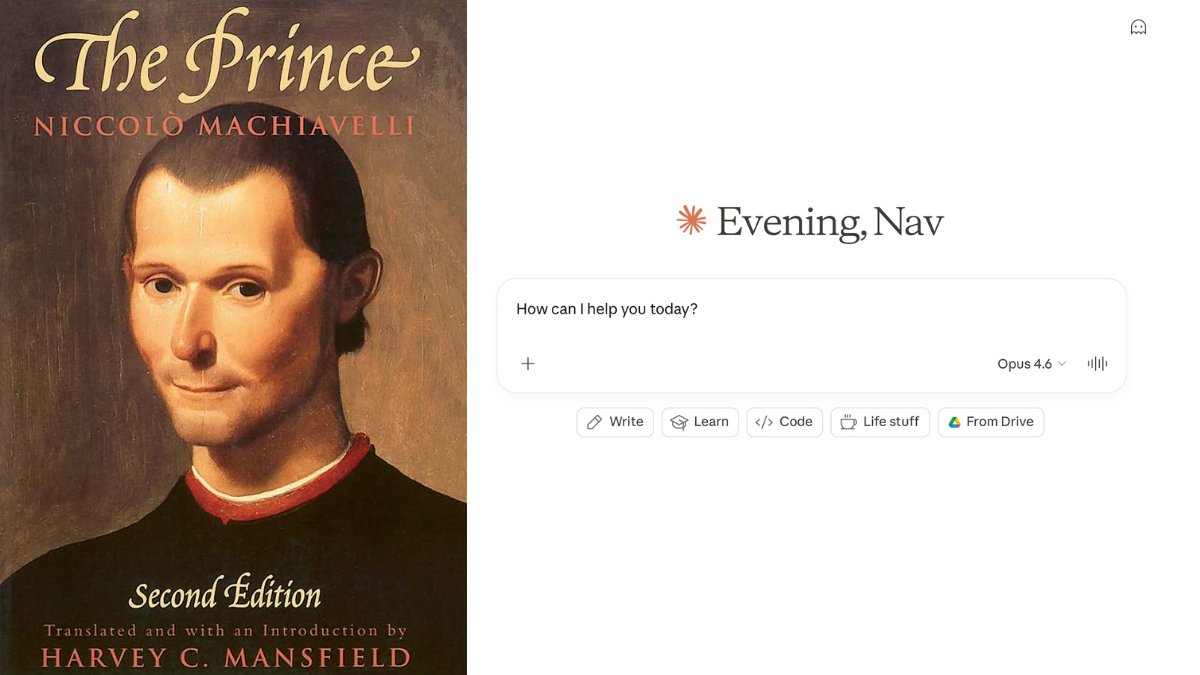
🚨 In 1513, a man was thrown in prison, tortured, and exiled. So he wrote a book about power.
The Catholic Church banned it. Napoleon was caught with a copy in his carriage after his final defeat. Stalin kept it on his bedside table and wrote notes in the margins. Mussolini read it. Kissinger and Nixon used it as bedtime reading.
The book is The Prince by Niccolò Machiavelli. It's 500 years old. It invented the word "Machiavellian." And it's still the most dangerous book on power ever written.
I turned Machiavelli's core strategies into 12 Claude prompts.
You describe any power struggle (office politics, negotiations, competition, leadership) and it gives you the exact Machiavellian counter-move.
Here are all 12:
Definitely a sobering observation and the conclusion is chilling, as my pessimistic observation is that were are doing a poor job of preparing many “seeds for revival.”
Sir John Glubb, a British Lieutenant General, spent 36 years commanding armies in the Middle East.
He studied every major empire in recorded history and found something he didn't expect.
Every single empire (Assyria, Persia, Rome, the Arabs, the Ottomans, Spain, Britain) lasted about the same length of time.
250 years.
And they all died the same way. (thread) 🧵
Fascinating overlay.
In both continents the cities were based on trade corridors.
In early British Canada that meant fur trade.
The Canadian Arctic trade route is more attractive in theory than practice thus far.
The northern cities that remain are centred on resources extraction.
@itsAdamGraham@lady_valor_07 It was after (and during) a torrential downpour. At one point there were three nested rainbows, each more vibrant and stunning than the next. I’ve had never before seen such a dramatic display.
https://t.co/0UHj6DhH75
Kelly Tough, was as her name might suggest, was not as sweet as Dorothy, I don’t doubt she was a little better prepared when she hit Hollywood.
I haven’t seen her since high school but the Venn diagram of our social circles overlap a bit so I’ve heard about some of her trials and triumphs. Last I heard she was doing okay.
https://t.co/0UHj6DhH75
Kelly Tough, was as her name might suggest, was not as sweet as Dorothy, I don’t doubt she was a little better prepared when she hit Hollywood.
I haven’t seen her since high school but the Venn diagram of our social circles overlap a bit so I’ve heard about some of her trials and triumphs. Last I heard she was doing okay.
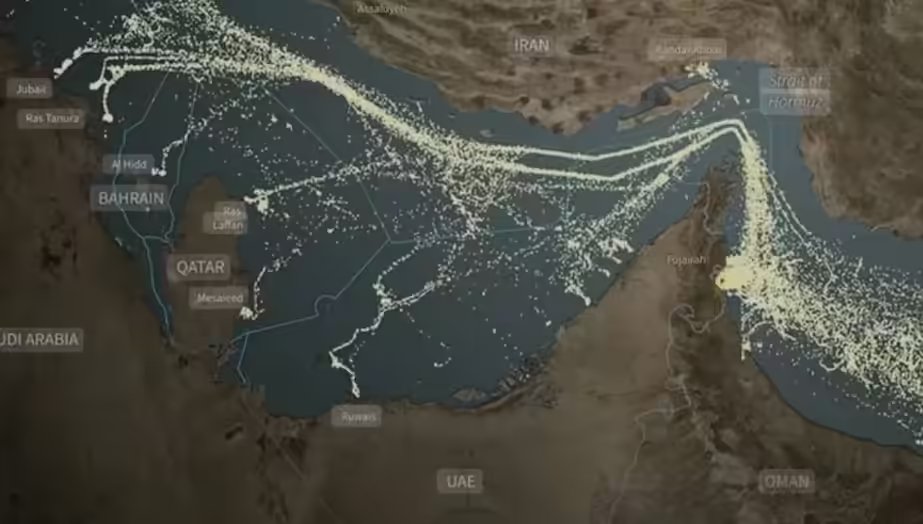
Everyone is debating escalation after the Iran strikes. Missiles, retaliation, regime survival. But almost no one is asking the question serious strategists ask first.
Why did this happen NOW?
The answer lies in a full systems transition in US foreign policy.