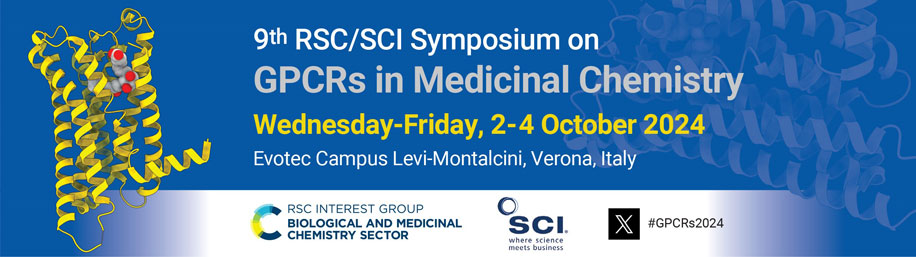
Our Principal Scientist, Christine Oswald & Senior Scientist, Raphael Reinbold will be attending the 9th @RSC_BMCS / @SCIupdate Symposium on GPCRs in Medicinal Chemistry taking place from 2nd – 4th October in Verona, Italy.
Get in touch to find out more about our #GPCR programs.
Hot off the press! Check out our ‘mutate and conjugate’ paper in @ACSBioMed 🔥
Here we demonstrate that combining site-directed mutagenesis and reactive fragments can be used to rapidly identify selective covalent probes for target validation studies.
A big welcome to Raphael Reinbold who joins our Oxford team as Senior Scientist.
Our team continues to expand as we enter an exciting stage of development.
To learn more about OMass, visit our website: https://t.co/eB63lkzrth
#drugdiscovery#proteinbiochemistry#newjoiner
I'm thrilled to share my latest paper which is now out in PNAS! We report a NADP(H)-dependent enzyme system that runs without any added NADP(H) when entrapped in a nanoporous electrode.
@OxfordChemistry@TrinityOxford@PNASNews@Clarendon_OU https://t.co/KR7kKaH9Ct
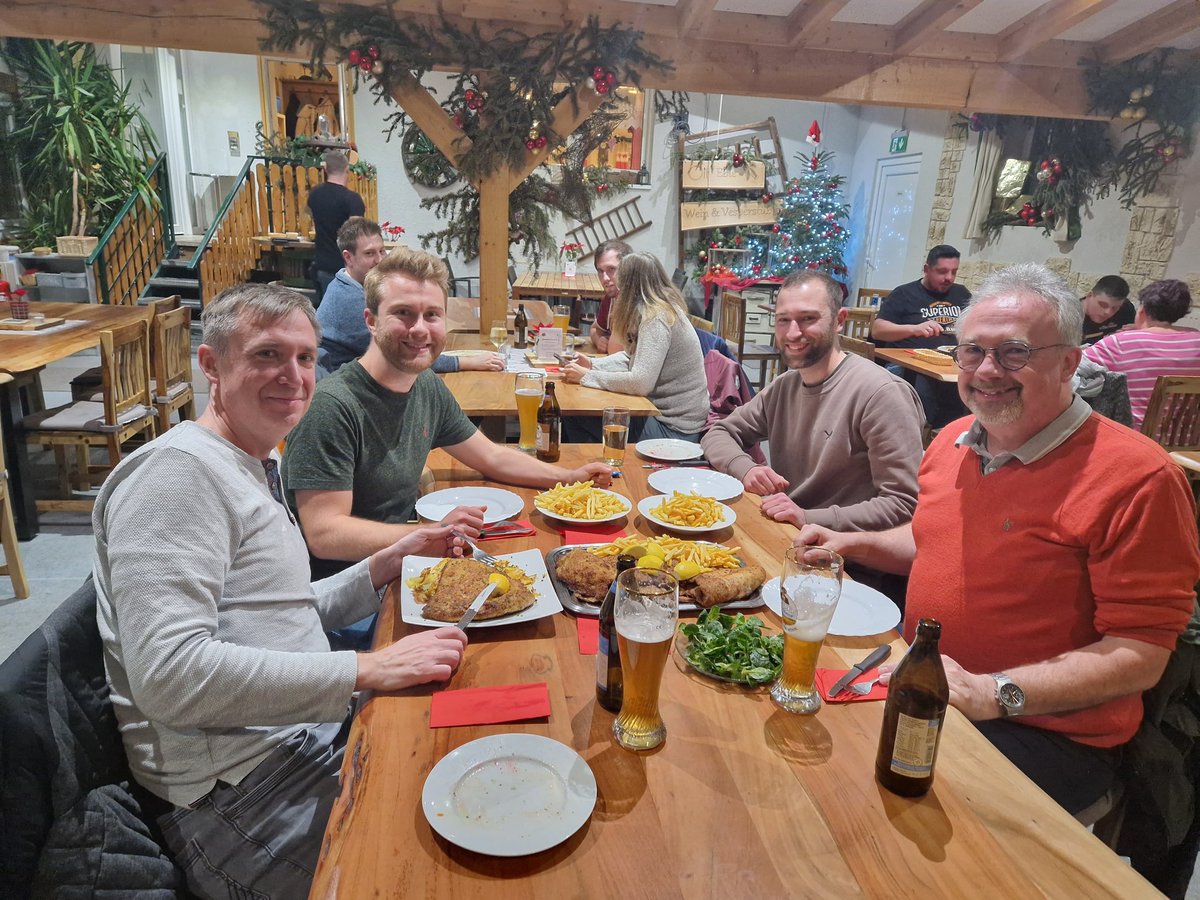
@RaphaelRe1 visting home from Oxford. Together with alumnus Jörg and PhD Student Maxi (also alumnus of @SchofieldOxford ) at the local Schnitzel palace Eble in Sexau
@RaphaelRe1 visting home from Oxford. Together with alumnus Jörg and PhD Student Maxi (also alumnus of @SchofieldOxford ) at the local Schnitzel palace Eble in Sexau
Researchers at @OxfordChemistry, @RaphaelRe1 and @SchofieldOxford, report studies on resistance to the pioneer drug ivosidenib leading to identification of inhibitors retaining activity.
https://t.co/AgOsr1509x
Researchers from @OxfordChemistry have published a study investigating the mechanism behind a resistance to the drug ivosidenib that has developed in some types of cancer.
More info ⬇️
https://t.co/mHV91mC0My
You can read about our latest story on overcoming drug-resistant cancer mutations with novel inhibitors on @OxfordChemistry website: https://t.co/dOSSqgi5mD #sciencecommunication
Finally, our story about overcoming IDH1 drug resistance is out in @NatureComms. While ivosidenib loses actvity, two other inhibitors (FT-2102, DS-1001B; both in phase 2 trials) retain activity in a cellular environment https://t.co/5AxpdR6IIu
@SchofieldOxford@OxfordChemistry