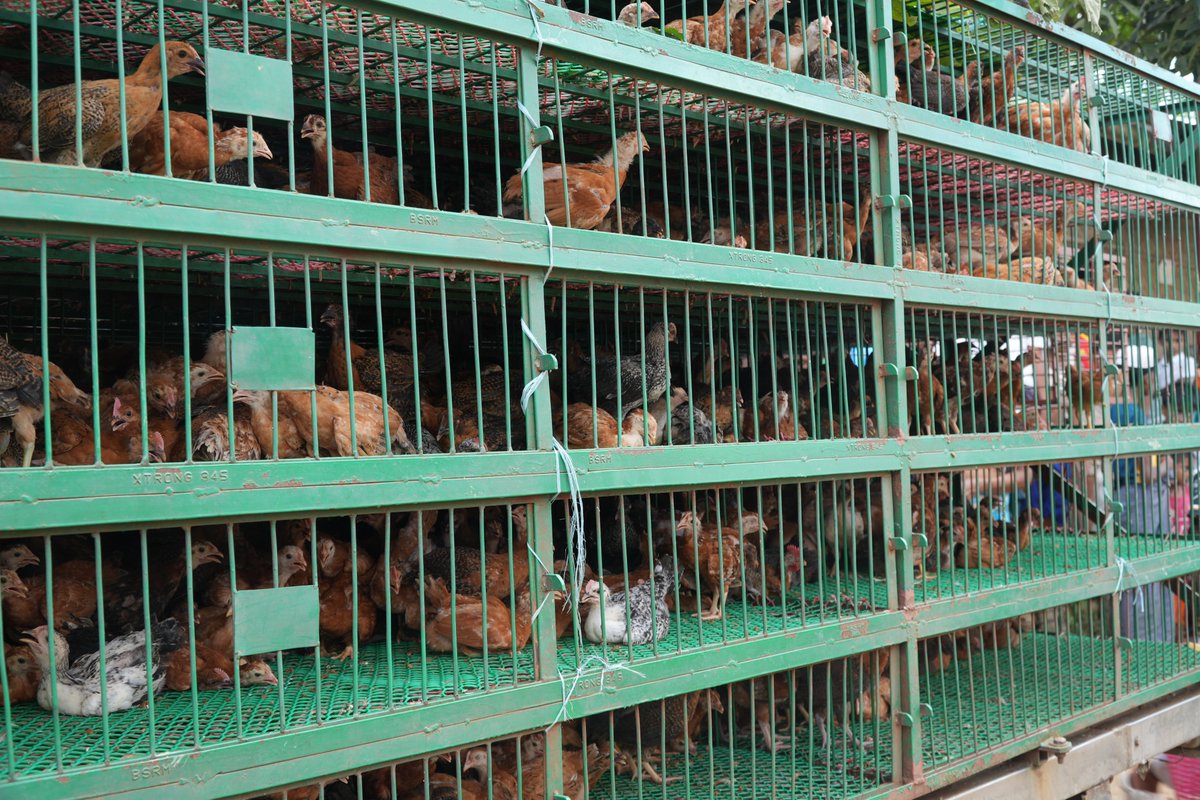
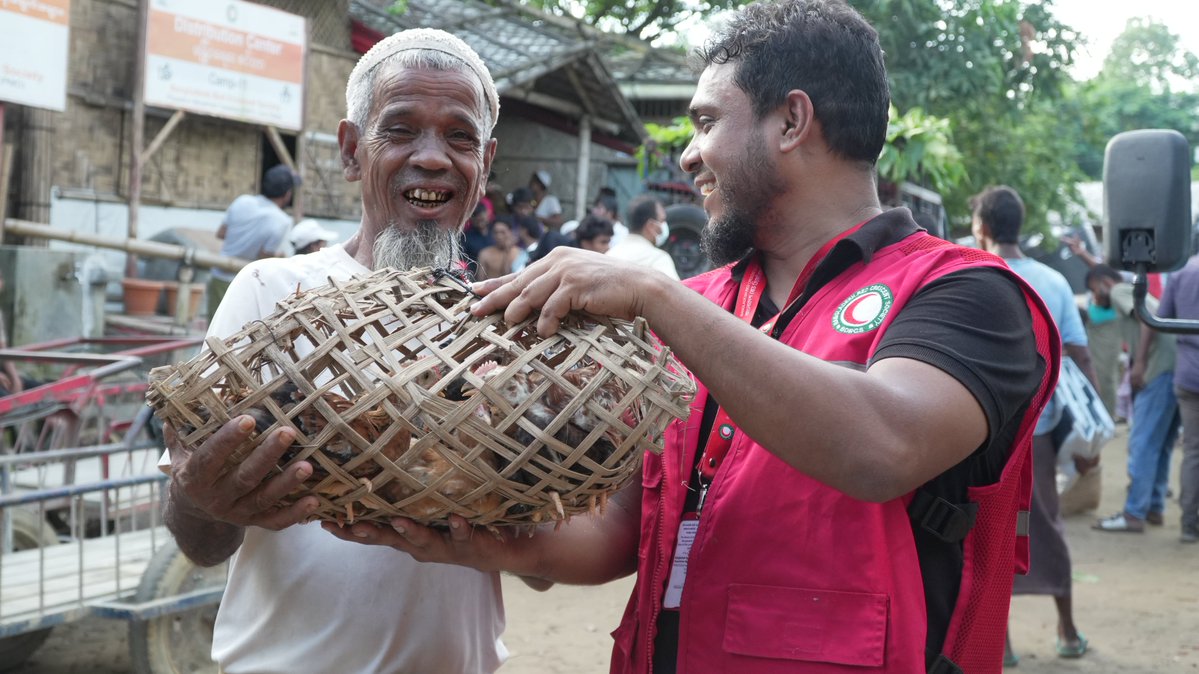
For many families in Cox’s Bazar, a flock of 10 chickens is more than just livestock. It is a step towards greater food security and a more sustainable future.
Supported by the Bangladesh Red Crescent Society, 860 families each received 10 live chickens, along with poultry feed, feeders, bamboo materials and rope to establish small household poultry shelters.
Before the distribution, one member from every household completed a three-day training on chicken rearing, gaining practical skills to care for and raise the birds. The poultry-rearing initiative aims to improve household nutrition while creating opportunities for families to generate income.
We are all part of this thing called humanity together as a team." Former Astronaut @StationCDRKelly on #earthsmissingtreaty.
Right now, countries are discussing a potential Treaty that will protect people before, during and after disasters.
Help us spread the word and learn more at https://t.co/mFqlRThXrH
I'm in Nepal and have just visited Nuwakot where I saw the devastating impact of the recent disaster. Homes, schools and livelihoods have been severely affected.
I also met someone I call a hero: headmaster Mr Dawadi. Drawing on Red Cross preparedness training, he evacuated 900 children, teachers and staff in less than nine minutes. His school was destroyed, but every life was saved.
This is why we must continue investing in preparedness. It saves lives and livelihoods and helps communities recover.
Climate change is no longer a future threat. Communities around the world are already facing devastating floods, extreme heat, and other climate shocks.
The latest status report from the @IFRC’s Global Climate Resilience Platform shows that the IFRC network-wide resilience portfolio has reached at least CHF 601.6 million. Of this, CHF 431.5 million is being delivered in 82 of the world’s 100 most climate-vulnerable countries. 👉https://t.co/Qr6mZnNHeN
When disaster strikes, what protection can you count on?
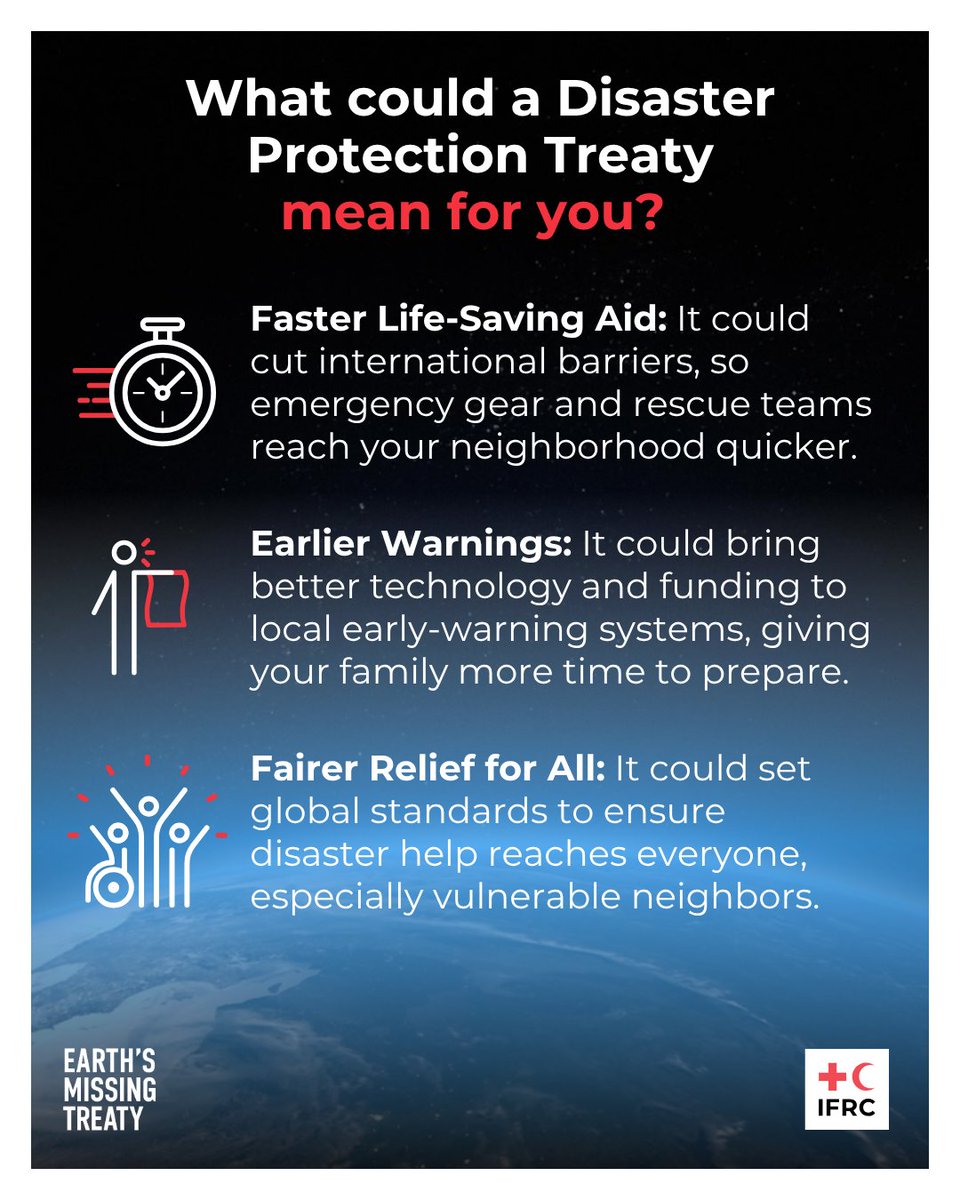
Today, there is no comprehensive international treaty setting out how countries should cooperate to protect people before, during and after disasters.
That could change.
In 2027, UN Member States will be negotiating the world’s first international treaty dedicated to the protection of people in disasters. Through our newly launched global campaign, Earth’s Missing Treaty, the @IFRC is calling on governments to seize this historic opportunity and put people first when they need help most.
The world should not wait for the next major disaster to decide how we will work together.
What could this treaty mean for you? https://t.co/scle0p1FQb
Nearly one month after devastating floods struck Nepal, families in Nuwakot are still facing immense loss.
From the affected area, IFRC Asia Pacific Regional Director @AJMatheou shares what people told him: traumatic tales of having lost everything.
The @NepalRedCross and @IFRC are supporting communities now and will continue to help with cash assistance, safe water, sanitation and shelter as they recover.
It will be a long journey, and we are here for the long haul.
You can donate to support the flood response here: https://t.co/jnMQmnWkvC
Dengue cases are rising sharply across Bangladesh after heavy monsoon rains. By 14 September, 53,570 people had been hospitalised and 157 had died, placing growing pressure on health services. Through an
@IFRC_DREF operation, the Bangladesh Red Crescent Society aims to reach around 300,000 people over six months with community prevention, support for timely care, blood services for severe cases, and cash assistance for vulnerable households.
@IFRCAsiaPacific
#DREFinAction
"What will happen to us?"
That was the question 67-year-old Jafor Ahmod asked when he arrived in the displacement camps in Bangladesh nine years ago.
For nine years, the Bangladesh Red Crescent Society (@BDRCS1) and the @IFRC have stood alongside Rohingya people and host communities, providing essential services, strengthening resilience, and supporting dignity in the face of ongoing challenges.
As humanitarian needs persist, so too does our commitment to ensuring that vulnerable communities are supported, protected, and not forgotten.
Three spaces in New York today at #UNGA81, one message.
At the Yale Club’s climate adaptation event, a session with the Clinton Global Initiative and, later, in an interview with the BBC, I stressed that a warning alone saves nobody. Prepared, trusted and locally led action does.
We need earlier action, stronger partnerships and a new international treaty to protect people when disasters strike. We must also ensure humanitarian personnel and volunteers can carry out their vital work safely.
The @IFRC is participating in the High-Level Week of the 81st session of the United Nations General Assembly in New York.
Led by IFRC Secretary General @jagan_chapagain, the IFRC delegation will engage with governments, UN partners and key stakeholders to help shape global priorities on humanitarian action at a time when communities around the world are facing increasingly complex crises.
Throughout the week, the IFRC will advocate for stronger support to locally led action and bring the voices of communities most affected by crises to the heart of global discussions and decision-making. #UNGA81
At the @IFRC, we believe that every act of humanity, no matter how small, can help build a more peaceful world.
Peace begins in communities, through kindness, solidarity and local action. Every day, our IFRC network teams work alongside people to ease suffering, strengthen trust and bring hope.
As we observe today's International #PeaceDay, let us reaffirm our commitment to humanitarian action as a key pathway to lasting peace.
Every day, people on the move face health risks and barriers to care.
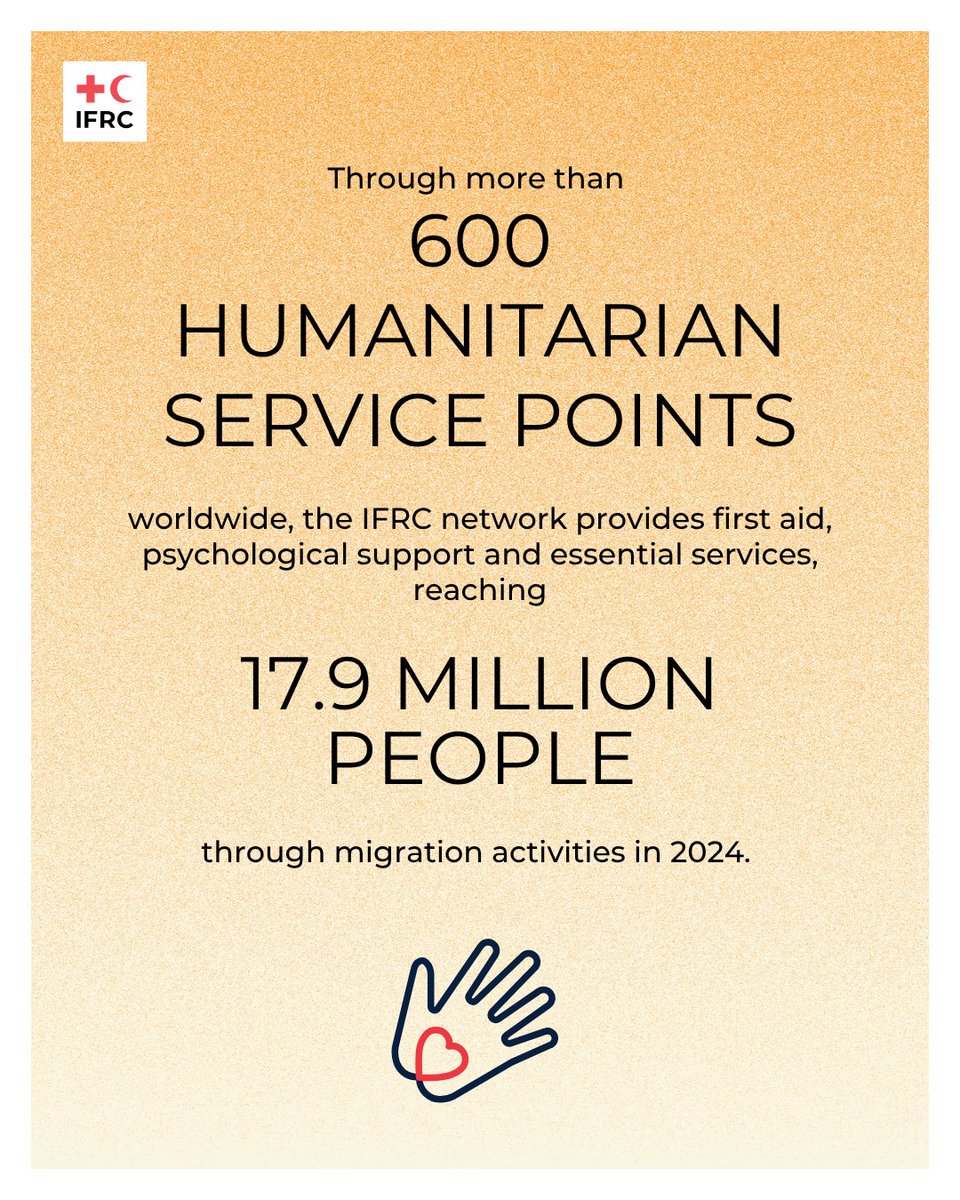
Through 600+ Humanitarian Service Points and the IFRC Global Migration and Displacement Platform, our IFRC network helps ensure they can access first aid, support and protection with dignity.
On this #WorldFirstAidDay, I would like to thank our volunteers and staff who bring humanity to life every day.
The @IFRC has mobilized its global network, released emergency funding, and launched a CHF 25 million Emergency Appeal in response to the devastating flash floods in Nepal. Current estimates suggest around 93,000 people may have been affected, while assessments continue in hard-to-reach areas.
The response on the ground is at its full speed, with @NepalRedCross staff and volunteers providing life-saving support to affected communities since the first day of the disaster.
The appeal will help scale up assistance and support communities as they recover and rebuild in the months and years ahead.
Learn more. 👇
Nepal has been struck by a terrible flooding disaster, with massive flash floods causing devastation across Rasuwa and other districts downstream.
In response, IFRC announces release of emergency funds totalling CHF 997,000 from @IFRC_DREF to reinforce Nepal Red Cross Society’s operations giving teams rapid access to life‑saving resources.
This rapid mobilisation is possible thanks to our @IFRC‑DREF donors, whose support enables us to act quickly and decisively when disasters strike.
The scale of destruction is severe: homes swept away, roads and bridges damaged, and critical infrastructure disrupted. The humanitarian impacts are significant and still unfolding. @NepalRedCross volunteers are already responding, delivering initial assistance, deploying additional teams, and working tirelessly to assess needs and support affected communities.
My thoughts, solidarity, and full support are with all those affected, and with the volunteers responding under extremely challenging conditions.
On today's #WorldHumanitarianDay, we call on States, donors and organizations to join us and do their part to ensure that humanitarians can work safely and reach people in need.
Together, we must #ProtectHumanity.
A powerful earthquake struck Flores, Indonesia this morning, causing casualties, damage and fear across several communities. My thoughts are with all families affected and with those who lost loved ones.
Indonesia Red Cross (PMI) volunteers are already supporting evacuations, first aid and coordination with local authorities as aftershocks continue. Their courage in these first critical hours reminds us once again that humanitarian action begins locally — with volunteers who step forward even as the ground is still shaking.
IFRC is closely monitoring the situation and will work with PMI as needs become clearer. In moments like this, solidarity matters. We will work together to ensure people receive the help, protection and comfort they need.
Gratitude to all responders on the ground. Humanity is strongest when we act together.
As humanitarian needs continue to grow while resources come under increasing pressure, flexible funding has never been more important.
Today's @StateDept contribution to the @IFRC will help us support National Red Cross and Red Crescent Societies across multiple countries, respond to new emergencies quickly, and direct assistance where needs are most urgent. This funding will enable the IFRC to surge support to National Societies as needed, helping them meet immediate humanitarian needs.
Through the power of local action and our network of 18 million volunteers, we can reach communities quickly and effectively, often before others are able to mobilize.
We thank the United States for its continued commitment to humanitarian action. https://t.co/RGMubsZWN5
Relentless rainfall has caused severe flooding and landslides across Bangladesh, claiming lives, displacing thousands, and damaging homes and farmland.
The @BDRCS1 working together with @IFRC and partners, has mobilized volunteers to provide search and rescue, first aid, emergency food, evacuation support, and early warning to help communities affected by this growing emergency.
As heatwaves become more frequent & intense, it's encouraging to see media attention focused on heat as a humanitarian challenge, not just a weather event.
Thanks for this thoughtful piece on #HeatActionDay2026.
The conversation on extreme heat is growing, and it needs to.
@ifrc
Today is Heat Action Day, a global initiative led by the @IFRC to raise awareness and take action on the growing threat of extreme heat
More than 500,000 people die each year from heat-related causes, yet it remains a silent crisis.
Through the IFRC’s Extreme Heat Initiative, we are helping communities prepare for and adapt to extreme heat. Resources must reach local communities, and local actors must be empowered to lead. Governments, businesses and communities all have a role to play.
We can no longer afford to look away. Extreme heat is here, and it is deadly. Let’s act now and #BeatTheHeat together.