@NikoSarcevic@PhillipHelbig@CburgesCliff Hopefully, your data can be recovered! Unfortunately, backups can be annoying to maintain just before you need them. Hourly Time Machine can also break some HDDs within months, but I've kept one at home and one at the office + Dropbox since a close call ~4 years ago.
I am defending on Monday! My public thesis talk will be streamed at https://t.co/mm9ZW2VNBL on May 5 from 9:00 a.m. Eastern US time, everyone is welcome to watch!
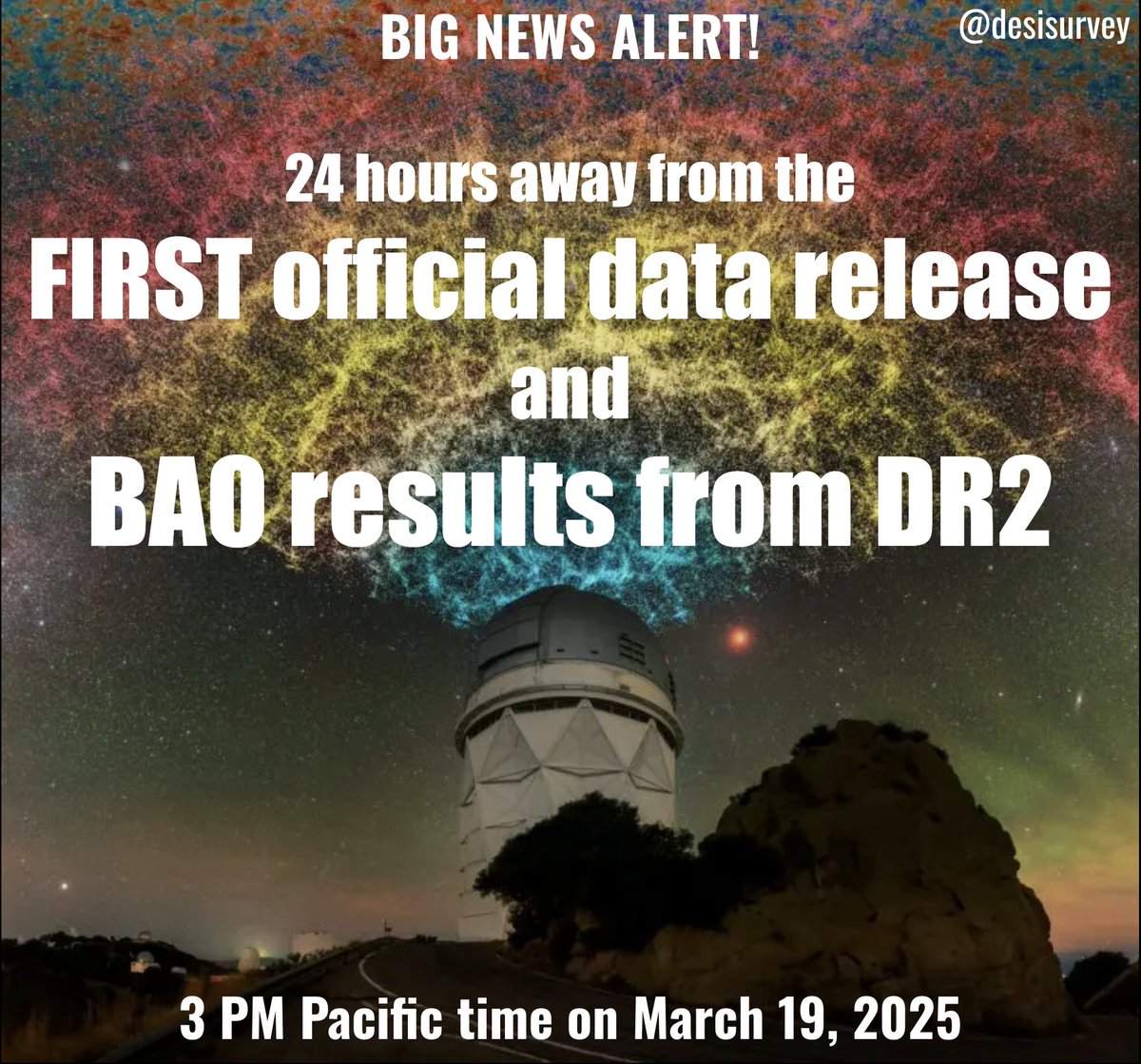
🚨 BIG NEWS ALERT! 🚨
We’re just 24 HOURS AWAY from a MAJOR DESI release! 🌉🔭
Tomorrow at 3 PM PT, DESI is unveiling DR1, our first official Data Release—the largest dataset of its kind, packed with information on 18.7 million galaxies, quasars, and stars! But that’s not all…
@GregTrayling@NikoSarcevic Apparently, grey squirrels were often released as ornamental species into estates and parks. Some might also have escaped from zoos and private animal collections.
@NikoSarcevic@GregTrayling I believe red squirrels (with pointy ear-tufts) are more common in (continental) Europe, but in a big part of Britain they have been displaced by the eastern gray squirrels from North America.
On November 19, 2024, the DESI Collaboration released three Key Publications (KP) 📝 and other supporting papers. This post provides a brief summary to the “DESI 2024 II: Sample Definitions, Characteristics, and Two-Point Clustering Statistics” paper (arXiv: 2411.12020) 🔭
👇🧵
Visualization made from simulated DESI data displaying the shift in galaxy positions between real and redshift space.
Credit: Claire Lamman and Michael Rashkovetskyi / DESI collaboration
🎉DESI released another set of papers based on Y1 data. These new results provide an extended, “full-shape” analysis of the Y1 data by looking at how galaxies and quasars cluster on different scales, both in the plane of the sky and along the line of sight in redshift space.
We are excited to present the new power spectrum Full-Shape results on DESI DR1 data @desisurvey. Check all the new papers at https://t.co/zeTynP4tV6. A thread🧵👇
Breaking news!🎉 Today we announce the most precise measurements of our expanding Universe using the BAO signal in 6.1 Million galaxies and quasars from Year 1, tracing dark energy through cosmic time. See @BerkeleyLab PR at https://t.co/3BZm4VQU9A 1/10
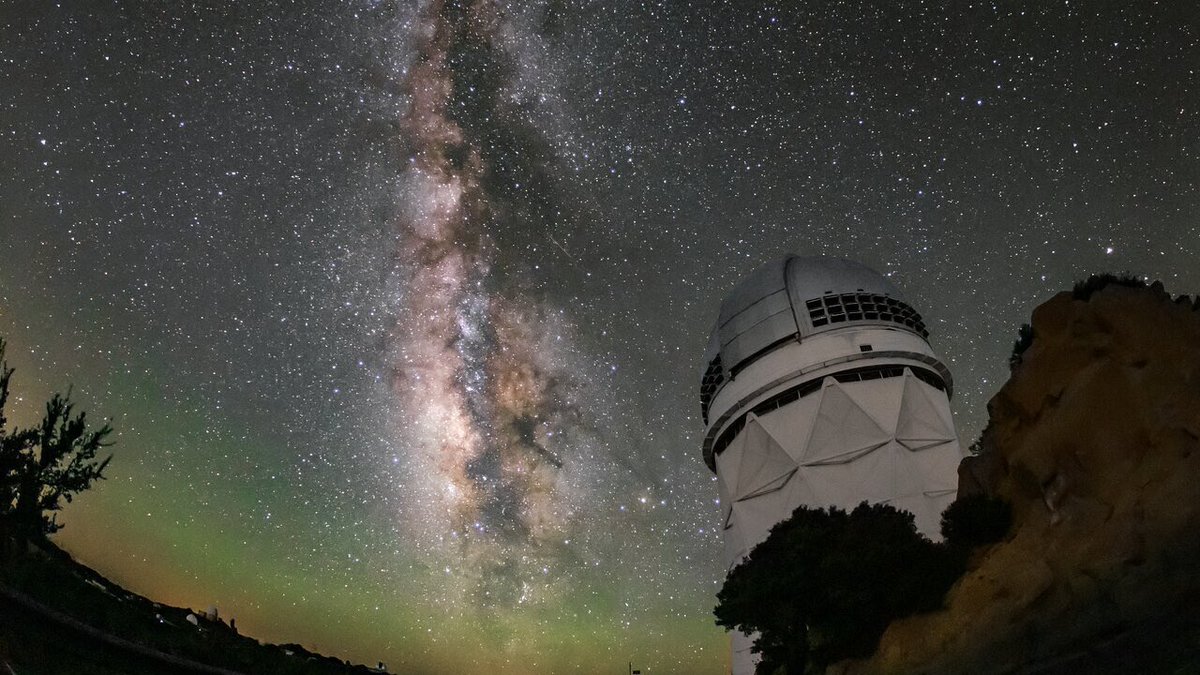
📸 Credit: @ClaireLamman
@freyablekman@NikoSarcevic Wow. When we had a discussion about scientific presentations in class, one of the repeating points was that people never complain about a talk being too understandable. Guess this is proven wrong…
@MilesCranmer I felt this when I was trying to find key equations in the translation of Lagrange's analytical mechanics book. Differences in notation and logical ordering made it challenging, while the ideas are familiar.