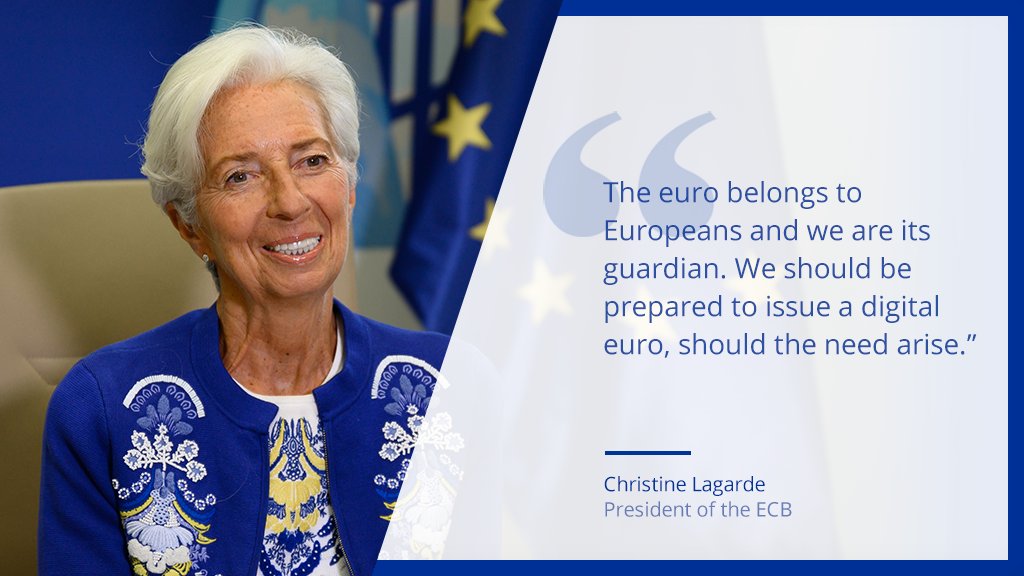
(THREAD) As technological changes are transforming how we pay, a digital euro could offer a universally accepted, risk-free and trusted means of payment to complement cash. We’ve analysed its possible benefits and challenges in our report https://t.co/RiwOCers68 1/3
Yesterday the Governing Council @ecb took important decisions, further easing the liquidity conditions for banks & fostering lending to the economy. Philip Lane provides a comprehensive explanation of the macro environment & our measures in a recent blog post. #ECBexplains 1/12
My interview @DIEZEIT is now available on the @ecb's website in English and German. Main message: The ECB stands ready to do everything to counter market disruptions that impair the transmission of its monetary policy, as decided unanimously by the Governing Council. 1/4
The German government pulled out a big "liquidity bazooka" today in response to the economic challenges of #Covid_19 . It's volume is huuuuge!
Here're the details:
https://t.co/Z8uot50yxd
But one shouldn't think of this program as a stimulus, but as an insurance package /Thread
@jeuasommenulle It is important not to get lost in the bank level micro perspective but also look at the macro picture. First, not all that is happening with rates is due to monetary policy; second, increase in lending volumes and reduction in credit risk due to general equilibrium effects.
None of that balance unfortunately in Bild reporting which continued with its biased narrative based on very partial analysis. Sad. Yes, interest rates are low, but that part that is due to ECB policy ensured people actually had income from which to save. https://t.co/JlCM38o7QM
Interesting to see the many direction in which human thinking goes: While most people think of the next step for money as being digital, others envisage alternative realities where money plays less of a role. Refreshing to sometimes leave ones own bubble. https://t.co/x1BTgzSrs9
Welcome @Isabel_Schnabel and Fabio Panetta, who took up their positions as ECB Executive Board members on 1 January. We wish them all the best for their eight-year terms of office.
@Amdalleq It would have been good to dig a bit deeper. Rather than just presenting a list of institutions paying negative interest rates, the reader would have benefited from an explanation of the underlying economic forces pushing down interest rates (eg demographics, productivity growth)
@henrikenderlein@ZDF@ecb In German we call this “Milchmädchenrechnung”. Sounds way too harmless, as it can have disastrous consequences (even without basing policy decisions on it).