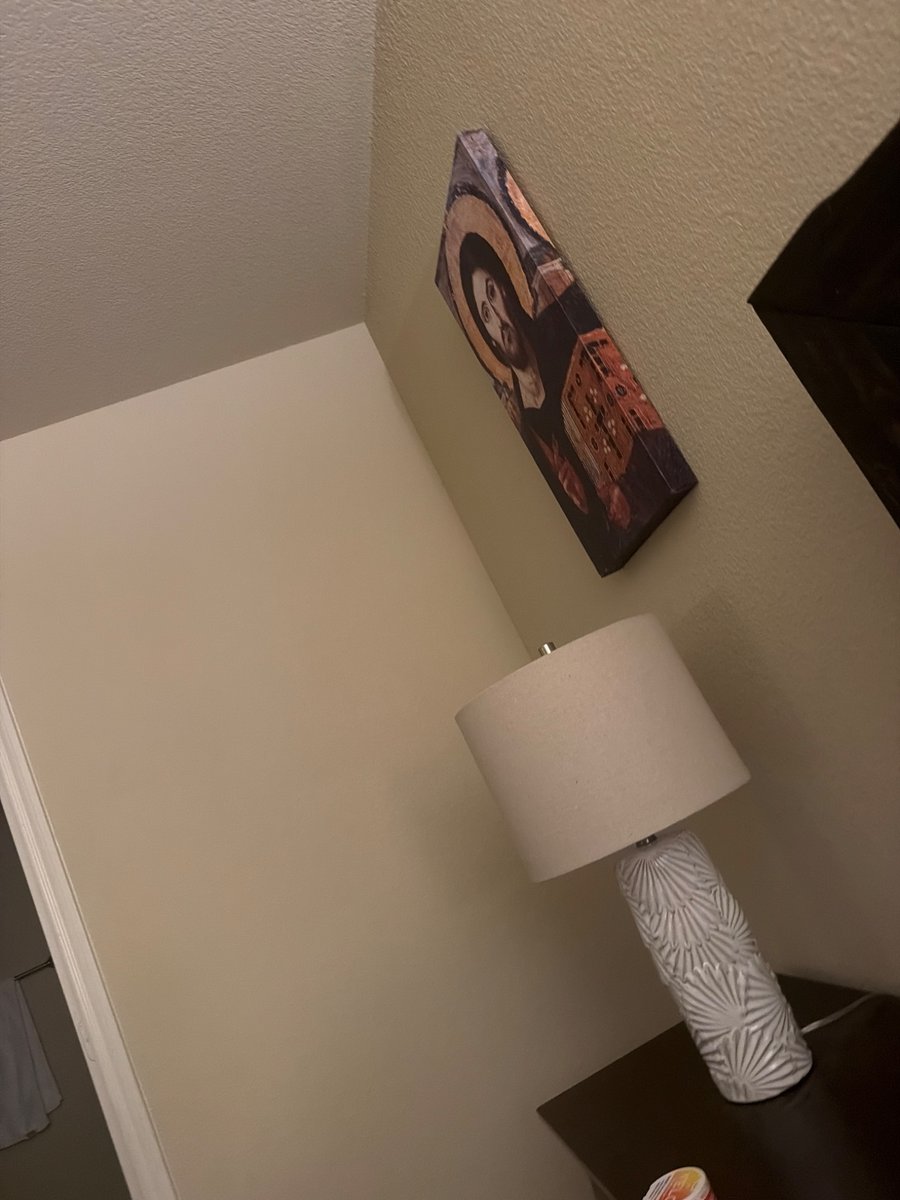
Everyone seems to take it for granted that “hostility and violence” have no place among Christians.
Former Archbishop of Canterbury Rowan Williams just asked Tommy Robinson—who has been vocally critical of Islam and Muslims in Britain—how “attempting to lead a life of Christian discipleship squares with public rhetoric designed to produce hostility and violence.”
This ignores the fact that Jesus Christ Himself used extraordinarily hostile language against those whom He saw as corrupting society. He publicly called the scribes and Pharisees “hypocrites,” “blind fools,” “children of hell,” a “brood of vipers,” and sons of the devil.
He also violently overturned the money changers’ tables, made a whip of cords, and forcibly drove them and their animals out.
So the real Christian question is not whether hostility or force can ever be justified. Scripture itself settles that.
The question is: Hostility toward what? Force against whom? And under what circumstances?
The modern assumption that Christianity requires Christians to be eternally passive, agreeable, and non-confrontational—DOORMATS, even in the face of evil—is NOT Christianity.
It is a lie designed to neuter and make Christians vulnerable.
Youth sports went completely insane at some point over the past several years. Parents spending thousands of dollars, devoting multiple days a week, traveling all around, all so their kid can obsessively play a particular sport and then graduate high school and never play it again. I actually think the “everybody’s a winner, the score doesn't matter” approach was preferable to this. Bring back the participation trophies if this is the alternative.
What a remarkable letter, in which we see, already in 1976, the entire trajectory of Ratzinger's thought that would culminate in the 2007 motu proprio Summorum pontificum, the 2011 instruction Universae Ecclesiae, and the 2020 decrees Quo Magis and Cum Sanctissima. Here was a man who thought things through carefully. And whatever disagreements one may have with certain assertions he makes, it is more than clear that he is right about the rupture and the need to free up the old missal, leaving the outcome to Divine Providence.
[Original typescript attached as images]
------------------------------------
University of Regensburg
14 December 1976
Esteemed Colleague [Wolfgang] Waldstein!
Thank you very much for your kind words. To get straight to the heart of the matter: In my opinion, we should strive to ensure that the old Missal may continue to be used by all priests, provided they recognize the legitimacy of the new Missal as well. The regulations, which will be necessary for the sake of order and to avoid confusion, should nevertheless be worded in such a way as to allow for extensive freedom in the use of the old Missal.
To clarify my position to you, I am enclosing with this letter a photocopy of the letter I wrote to Cardinal Volk on the day before the first Sunday of Lent regarding the matters concerning the Missal. Unfortunately, things had already progressed to the point where it was no longer possible to comply with my proposals that day, although Cardinal Volk himself apparently considered them correct.
In this context, it must be pointed out that the manner in which the new Missal was introduced deviates from previous ecclesiastical legal customs, such as those observed by Pius V during his reform of the Missal, where it was expressly stated that the Pope “nequaquam auferimus” [by no means takes away] a “consuetudo” [custom] that had been practiced uninterrupted for more than 200 years; accordingly, a slightly different type of liturgy remained in use, for example, in Cologne and Trier until the 18th century, in Milan until the Second Vatican Council, and likewise in the Dominican Order—and one could easily cite many more examples.
The “Missal of Pius V” was not a new missal at all, but merely a version of the existing Roman Missal that had been slightly revised based on the sources, and in that sense was simply another stage in a process that had been proceeding in a straight line since Hippolytus. For this reason, I find the terms “Tridentine Mass” and “Missal of Pius V” historically inaccurate and theologically disastrous.
The problem with the new Missal, by contrast, lies in the fact that it breaks away from this continuous history—which had been progressing steadily both before and after Pius V—and creates an entirely new book (albeit from old material), the introduction of which is accompanied by a type of prohibition of the previous form that is entirely foreign to the history of ecclesiastical law and liturgy. Based on my knowledge of the council debates and on a re-reading of the speeches delivered by the council fathers at that time, I can say with certainty that this was not intended [by them].
Admittedly, it is difficult to articulate and defend such a position today because it is all too easy to confuse it with Lefebvre’s position, which is in reality of an entirely different nature—a position that, in fact, must reject any growth and thus places itself in contradiction not only to Pius V but also to the Catholic principle of papal and episcopal authority in general.
For this reason, it seems important to me to emphasize the full legitimacy of the new Missal; on this basis, however, one can and must then advocate for a revision of the prohibitive approach that runs counter to tradition, thereby setting the course of development back on the right track. We can then leave it to the future to determine whether the “new Missal” will flow back into the old and merge with it to such an extent that it ultimately becomes merely a stage in its development—for the ossification of the old Missal would, in the long run, spell its demise; precisely for this reason, we must hope that it will once again be drawn into the living liturgical development.
I warmly return your Advent and Christmas wishes and send you my best regards.
Yours sincerely,
Joseph Ratzinger
In “Apocalypto,” Mel Gibson transports you into the mind of a Mayan 500 years ago. In “The Northman,” Robert Eggers transports you into the mind of a Viking a thousand years ago. In “The Odyssey,” Christopher Nolan transports you into the mind of a liberal woman in 2017.
@casemorrow@PGC1a_RB @dad_nobody Yeah dude I never understood.... why be an asshole? You're being an asshole Richard. You may not think it but you are dude.
Pax Domini sit semper vobiscum Stop being a shithead.
I think this interview of @saylor by @_DannyKnowles is fascinating for two reasons.
1⃣ It exposes how delusional Saylor really is.
Unable to have an intellectually honest conversation, he lashes out like a petulant child when asked fairly simple questions around the BTCTC model.
He then goes on to spin yarns about trillions in free money that will be bestowed on believers in "digital credit," conveniently forgetting to mention that it will come at the expense of the poor schmucks who are common equity shareholders.
Shareholders who will forever look at the Bitcoin on the balance sheet with yearning eyes across an air gap they will never cross.
(1/2)
@realsedepicante@sicutthomass@JeffCassman I’m from Cali originally I was in a bunch of sede circles too - CMRI a couple independent chapels, Mel's, etc. There’s lots of good well meaning sedes. But they’re certainly a lot of quirky ones that give them a bad name, unfortunately. But it’s true for the Novus Ordo as well.


![DrKwasniewski's tweet photo. What a remarkable letter, in which we see, already in 1976, the entire trajectory of Ratzinger's thought that would culminate in the 2007 motu proprio Summorum pontificum, the 2011 instruction Universae Ecclesiae, and the 2020 decrees Quo Magis and Cum Sanctissima. Here was a man who thought things through carefully. And whatever disagreements one may have with certain assertions he makes, it is more than clear that he is right about the rupture and the need to free up the old missal, leaving the outcome to Divine Providence.
[Original typescript attached as images]
------------------------------------
University of Regensburg
14 December 1976
Esteemed Colleague [Wolfgang] Waldstein!
Thank you very much for your kind words. To get straight to the heart of the matter: In my opinion, we should strive to ensure that the old Missal may continue to be used by all priests, provided they recognize the legitimacy of the new Missal as well. The regulations, which will be necessary for the sake of order and to avoid confusion, should nevertheless be worded in such a way as to allow for extensive freedom in the use of the old Missal.
To clarify my position to you, I am enclosing with this letter a photocopy of the letter I wrote to Cardinal Volk on the day before the first Sunday of Lent regarding the matters concerning the Missal. Unfortunately, things had already progressed to the point where it was no longer possible to comply with my proposals that day, although Cardinal Volk himself apparently considered them correct.
In this context, it must be pointed out that the manner in which the new Missal was introduced deviates from previous ecclesiastical legal customs, such as those observed by Pius V during his reform of the Missal, where it was expressly stated that the Pope “nequaquam auferimus” [by no means takes away] a “consuetudo” [custom] that had been practiced uninterrupted for more than 200 years; accordingly, a slightly different type of liturgy remained in use, for example, in Cologne and Trier until the 18th century, in Milan until the Second Vatican Council, and likewise in the Dominican Order—and one could easily cite many more examples.
The “Missal of Pius V” was not a new missal at all, but merely a version of the existing Roman Missal that had been slightly revised based on the sources, and in that sense was simply another stage in a process that had been proceeding in a straight line since Hippolytus. For this reason, I find the terms “Tridentine Mass” and “Missal of Pius V” historically inaccurate and theologically disastrous.
The problem with the new Missal, by contrast, lies in the fact that it breaks away from this continuous history—which had been progressing steadily both before and after Pius V—and creates an entirely new book (albeit from old material), the introduction of which is accompanied by a type of prohibition of the previous form that is entirely foreign to the history of ecclesiastical law and liturgy. Based on my knowledge of the council debates and on a re-reading of the speeches delivered by the council fathers at that time, I can say with certainty that this was not intended [by them].
Admittedly, it is difficult to articulate and defend such a position today because it is all too easy to confuse it with Lefebvre’s position, which is in reality of an entirely different nature—a position that, in fact, must reject any growth and thus places itself in contradiction not only to Pius V but also to the Catholic principle of papal and episcopal authority in general.
For this reason, it seems important to me to emphasize the full legitimacy of the new Missal; on this basis, however, one can and must then advocate for a revision of the prohibitive approach that runs counter to tradition, thereby setting the course of development back on the right track. We can then leave it to the future to determine whether the “new Missal” will flow back into the old and merge with it to such an extent that it ultimately becomes merely a stage in its development—for the ossification of the old Missal would, in the long run, spell its demise; precisely for this reason, we must hope that it will once again be drawn into the living liturgical development.
I warmly return your Advent and Christmas wishes and send you my best regards.
Yours sincerely,
Joseph Ratzinger](https://pbs.twimg.com/media/HN3Da5CXEAAAEj3.jpg)
![DrKwasniewski's tweet photo. What a remarkable letter, in which we see, already in 1976, the entire trajectory of Ratzinger's thought that would culminate in the 2007 motu proprio Summorum pontificum, the 2011 instruction Universae Ecclesiae, and the 2020 decrees Quo Magis and Cum Sanctissima. Here was a man who thought things through carefully. And whatever disagreements one may have with certain assertions he makes, it is more than clear that he is right about the rupture and the need to free up the old missal, leaving the outcome to Divine Providence.
[Original typescript attached as images]
------------------------------------
University of Regensburg
14 December 1976
Esteemed Colleague [Wolfgang] Waldstein!
Thank you very much for your kind words. To get straight to the heart of the matter: In my opinion, we should strive to ensure that the old Missal may continue to be used by all priests, provided they recognize the legitimacy of the new Missal as well. The regulations, which will be necessary for the sake of order and to avoid confusion, should nevertheless be worded in such a way as to allow for extensive freedom in the use of the old Missal.
To clarify my position to you, I am enclosing with this letter a photocopy of the letter I wrote to Cardinal Volk on the day before the first Sunday of Lent regarding the matters concerning the Missal. Unfortunately, things had already progressed to the point where it was no longer possible to comply with my proposals that day, although Cardinal Volk himself apparently considered them correct.
In this context, it must be pointed out that the manner in which the new Missal was introduced deviates from previous ecclesiastical legal customs, such as those observed by Pius V during his reform of the Missal, where it was expressly stated that the Pope “nequaquam auferimus” [by no means takes away] a “consuetudo” [custom] that had been practiced uninterrupted for more than 200 years; accordingly, a slightly different type of liturgy remained in use, for example, in Cologne and Trier until the 18th century, in Milan until the Second Vatican Council, and likewise in the Dominican Order—and one could easily cite many more examples.
The “Missal of Pius V” was not a new missal at all, but merely a version of the existing Roman Missal that had been slightly revised based on the sources, and in that sense was simply another stage in a process that had been proceeding in a straight line since Hippolytus. For this reason, I find the terms “Tridentine Mass” and “Missal of Pius V” historically inaccurate and theologically disastrous.
The problem with the new Missal, by contrast, lies in the fact that it breaks away from this continuous history—which had been progressing steadily both before and after Pius V—and creates an entirely new book (albeit from old material), the introduction of which is accompanied by a type of prohibition of the previous form that is entirely foreign to the history of ecclesiastical law and liturgy. Based on my knowledge of the council debates and on a re-reading of the speeches delivered by the council fathers at that time, I can say with certainty that this was not intended [by them].
Admittedly, it is difficult to articulate and defend such a position today because it is all too easy to confuse it with Lefebvre’s position, which is in reality of an entirely different nature—a position that, in fact, must reject any growth and thus places itself in contradiction not only to Pius V but also to the Catholic principle of papal and episcopal authority in general.
For this reason, it seems important to me to emphasize the full legitimacy of the new Missal; on this basis, however, one can and must then advocate for a revision of the prohibitive approach that runs counter to tradition, thereby setting the course of development back on the right track. We can then leave it to the future to determine whether the “new Missal” will flow back into the old and merge with it to such an extent that it ultimately becomes merely a stage in its development—for the ossification of the old Missal would, in the long run, spell its demise; precisely for this reason, we must hope that it will once again be drawn into the living liturgical development.
I warmly return your Advent and Christmas wishes and send you my best regards.
Yours sincerely,
Joseph Ratzinger](https://pbs.twimg.com/media/HN3Da5AX0AAQqUD.jpg)





![DrKwasniewski's tweet photo. What a remarkable letter, in which we see, already in 1976, the entire trajectory of Ratzinger's thought that would culminate in the 2007 motu proprio Summorum pontificum, the 2011 instruction Universae Ecclesiae, and the 2020 decrees Quo Magis and Cum Sanctissima. Here was a man who thought things through carefully. And whatever disagreements one may have with certain assertions he makes, it is more than clear that he is right about the rupture and the need to free up the old missal, leaving the outcome to Divine Providence.
[Original typescript attached as images]
------------------------------------
University of Regensburg
14 December 1976
Esteemed Colleague [Wolfgang] Waldstein!
Thank you very much for your kind words. To get straight to the heart of the matter: In my opinion, we should strive to ensure that the old Missal may continue to be used by all priests, provided they recognize the legitimacy of the new Missal as well. The regulations, which will be necessary for the sake of order and to avoid confusion, should nevertheless be worded in such a way as to allow for extensive freedom in the use of the old Missal.
To clarify my position to you, I am enclosing with this letter a photocopy of the letter I wrote to Cardinal Volk on the day before the first Sunday of Lent regarding the matters concerning the Missal. Unfortunately, things had already progressed to the point where it was no longer possible to comply with my proposals that day, although Cardinal Volk himself apparently considered them correct.
In this context, it must be pointed out that the manner in which the new Missal was introduced deviates from previous ecclesiastical legal customs, such as those observed by Pius V during his reform of the Missal, where it was expressly stated that the Pope “nequaquam auferimus” [by no means takes away] a “consuetudo” [custom] that had been practiced uninterrupted for more than 200 years; accordingly, a slightly different type of liturgy remained in use, for example, in Cologne and Trier until the 18th century, in Milan until the Second Vatican Council, and likewise in the Dominican Order—and one could easily cite many more examples.
The “Missal of Pius V” was not a new missal at all, but merely a version of the existing Roman Missal that had been slightly revised based on the sources, and in that sense was simply another stage in a process that had been proceeding in a straight line since Hippolytus. For this reason, I find the terms “Tridentine Mass” and “Missal of Pius V” historically inaccurate and theologically disastrous.
The problem with the new Missal, by contrast, lies in the fact that it breaks away from this continuous history—which had been progressing steadily both before and after Pius V—and creates an entirely new book (albeit from old material), the introduction of which is accompanied by a type of prohibition of the previous form that is entirely foreign to the history of ecclesiastical law and liturgy. Based on my knowledge of the council debates and on a re-reading of the speeches delivered by the council fathers at that time, I can say with certainty that this was not intended [by them].
Admittedly, it is difficult to articulate and defend such a position today because it is all too easy to confuse it with Lefebvre’s position, which is in reality of an entirely different nature—a position that, in fact, must reject any growth and thus places itself in contradiction not only to Pius V but also to the Catholic principle of papal and episcopal authority in general.
For this reason, it seems important to me to emphasize the full legitimacy of the new Missal; on this basis, however, one can and must then advocate for a revision of the prohibitive approach that runs counter to tradition, thereby setting the course of development back on the right track. We can then leave it to the future to determine whether the “new Missal” will flow back into the old and merge with it to such an extent that it ultimately becomes merely a stage in its development—for the ossification of the old Missal would, in the long run, spell its demise; precisely for this reason, we must hope that it will once again be drawn into the living liturgical development.
I warmly return your Advent and Christmas wishes and send you my best regards.
Yours sincerely,
Joseph Ratzinger](https://pbs.twimg.com/media/HN3Da5CXsAARDpA.jpg)