After six years in stealth, Atomic Machines is out. Our mission: on-demand, universal command of matter. First beachhead: the Matter Compiler, an AI-native manufacturing system that builds working micro-machines from code alone. No per-product tooling. No process development. Different code, different machine.
ECKARD'S CHRISTMAS CALL: $120 OIL AND A FLOOR THAT WILL NOT BREAK
Oil veteran Troy Eckard woke up to another ship hit and a four-dollar jump in crude. He says the daily Middle East feed is skewed, watered down, and nowhere near the real story. The stored barrels that held oil under $100 are already being burned, a cheap drone can now shut a giant pipeline, and he does not see this as a short spike.
THE STORY PAST HORMUZ
➡️ Eckard says the crisis is much bigger than the Strait of Hormuz.
One day the strait is a record flow. The next day it is the lowest in months. His question is simple: who is telling the truth?
➡️ He says crude, natural gas, and LNG have to be planned much higher than seven months ago, when the war started.
This is not a short-term pop. He sees a lasting step-up in the base price, running from the well through the refinery into every byproduct. The car, the solar panel, and the windmill are still made from, moved by, or derived from a barrel of oil or a molecule of gas.
THE SOFT BARRELS
➡️ Eckard estimates about 1.5 billion "soft" barrels were pulled from storage, pipelines, and transit and burned just to hold oil under $100.
He has seen a three-billion figure. His own math is not that high. He can see the drain pushing past two billion barrels.
➡️ China and other countries bought it cheap and stored it in strategic reserves, salt caverns, tanks, and lines.
That cushion is what kept the screen calm. He says nobody wants to admit the problem cannot be fixed in the short term. Midterms in three weeks do not fix it. A claim that Iran is already on its knees does not fix it either.
THE SUPPLY HOLE
➡️ Eckard puts the global lack of oil and gas investment somewhere between five and eight trillion dollars.
Older wells in Africa, Brazil, the Middle East, and the United States are declining. If demand holds and new drilling does not show up, the straw runs dry.
➡️ He says forget today, tomorrow, and the next six months.
The window that matters is the next 12 to 60 months. He is in the drilling business. Diesel for the rigs means a well costs 15 to 40 percent more, so oil itself needs to be 15 to 30 percent higher just to get drilled.
THE DRONE PREMIUM
➡️ Three weeks ago a simple drone disrupted a Saudi pipeline moving three and a half million barrels a day.
Eckard says any group that wants to hit energy prices can now do it with that same cheap tool. He calls it cataclysmically dangerous, and five to ten times more dangerous than the old system.
➡️ He puts a geopolitical risk premium of at least $25 a barrel on oil and gas at all times.
He also says 45 percent of Russia's refineries are offline from the Ukraine war, and getting worse. Supply is tighter and costlier while reliance on fossil fuels keeps rising. That is the opposite of the AI-equity story.
THE PRICE PATH
➡️ Eckard still sees $125 by year-end, and he says it could be higher.
He thinks there is a good chance crude is well over $100 by the end of October, and that tomorrow could already print $97 to $100.
➡️ His Christmas call is at least $120 a barrel.
Even if Iran folds, he seriously doubts any lasting price under $75 or $80. His go-forward band is $90 to $110 for the next 18 to 36 months. Traders can still slam it toward $50 for a shock. He is talking about what holds. Some buyers, he says, will pay $150 just to get a tanker to port.
THE BOTTOM LINE
Troy Eckard is not trading the next headline out of Hormuz. He is saying the stored barrels are gone, a drone now carries a $25 premium, and the floor has stepped up for years.
The screen can still lie for a session. The barrel cannot.
#OilPrices #TroyEckard #EnergyCrisis #WTI #Hormuz #DieselShock #GeopoliticalRisk
HT: YouTube Eckard Enterprises | Oil & Gas Investing
Everybody is about to find out why Bessent & team fed Druck that AI slop & put him up to the WSJ 🗞️ OpEd….
Warsh will now inevitably get asked about the OpEd @ Jackson Hole 🕳️… & to everyone’s surprise 😮, he will answer along the lines of…
“I think Druck has a point, we should let the market set rates, & if they are going to move higher 📈, Congress needs to begin to listen to what’s the market is saying & enforce more fiscal discipline!”
After an initial hawkish move, w/ the 30-year yields jumping, bonds will stabilize & the WSJ will begin to discuss how Warsh Is restoring credibility to the Fed & the dollar 💵 & actually forcing discipline to control long-run inflation risk.
But, as I have said before, this is all just an elaborate GOOD COP👮/BAD COP👮♂️routine.
(I ask you, do you really think Druckenmiller & Warsh think austerity is the answer?? Do you really think Trump & Bessent brought in Warsh to actually enforce monetary discipline??)
Last week BTC had its largest weekly sigma move in the last decade while breaking above the 200 day moving average. On August 21st, the 200 day moving average slope turned positive for the first time in 279 days. Here are all the times in BTC history where the 200 day slope was negative for more than 100 days and the forward returns once it turned positive. In all cases, the low made during that decline window was never broken.
Today’s news: Treasury may start using its nearly $1 trillion TGA cash balance to fund bond buybacks.
Here is what that actually means.
The TGA — Treasury General Account, is basically the U.S. government’s bank account at the Federal Reserve.
Normally the flow is simple:
Taxes + Treasury borrowing
→ cash enters the TGA
→ government spends that cash
But Treasury is now considering using part of that cash balance to buy back long-duration government bonds from the market.
Suppose Treasury has $950B sitting in the TGA and decides to use $100B for bond buybacks.
The flow becomes:
Treasury buys $100B of long bonds
→ TGA falls by $100B
→ that cash moves back into the banking system
→ bank reserves/liquidity rise
→ long-duration Treasury supply held by the market falls
So Treasury achieves two things at once:
Liquidity goes up Pumping markets
duration pressure goes down
And this is where it gets interesting.
Treasury does not necessarily have to issue $100B of new bills at the same moment.
It can use the existing cash first.
That means:
Buy long bonds today
→ relieve pressure on the long end
→ inject short-term liquidity
→ wait for calmer market conditions
→ issue bills later to rebuild the TGA
So in effect, Treasury is using the government’s bank account to buy time.
It is separating two transactions that normally happen together:
support the bond market now
finance/replenish the cash later
This is still not QE.
The Fed is not creating new money.
The TGA cash already came from previous taxes and borrowing.
Eventually, if Treasury wants to rebuild the TGA balance, it has to issue more debt again.
So the full cycle looks like this:
Long-duration bonds bought back
→ TGA cash released
→ liquidity injected
→ long-end supply reduced
→ bills issued later
→ TGA rebuilt
The end result is effectively a shift from:
long-duration debt → short-duration debt
But the timing matters enormously.
If the 20Y or 30Y bond market is under stress, Treasury can use the TGA as a temporary shock absorber, rather than dumping more issuance into the market immediately.
That gives Treasury more control over:
when debt is issued
where duration sits
when liquidity is injected
when liquidity is drained
So the government is not solving the debt problem.
it is being shifted forward and shortened in maturity.
More bills mean more refinancing risk and greater dependence on stable short-term funding.
And if Treasury increasingly has to manage duration and liquidity to keep long yields contained, pressure eventually moves toward the Fed.
That is the path toward fiscal dominance, financial repression and a weaker fiat system.
Trump: We could have GDP of 10, 12, 15 times if they just leave us alone. Let interest rates go down. It’s a very unfair system.
They should drop interest rates because it means we have a strong country and it's all based on credit, meaning good credit, and we have the best credit and we'd pay off the debt very easily, very quickly.
BREAKING: 🇺🇸🇻🇪 The US is confiscating Venezuela’s gold from the UK bank
All of Venezuela's gold reserves, totaling 31 tons, which are held at the Bank of England, will be transferred to the United States, per EL Nacional.
The value amounts to $4 billion, resulting in the loss of Venezuelan sovereignty over the resources.
Friendly reminder... this chart below is why Anthropic's ARR disappointed, and why they're rushing to dump the IPO onto retail bagholders
It's also why Jensen Huang is backstopping $500B in bagholder loans to new GPU buyers
The great AI Commodification is officially here
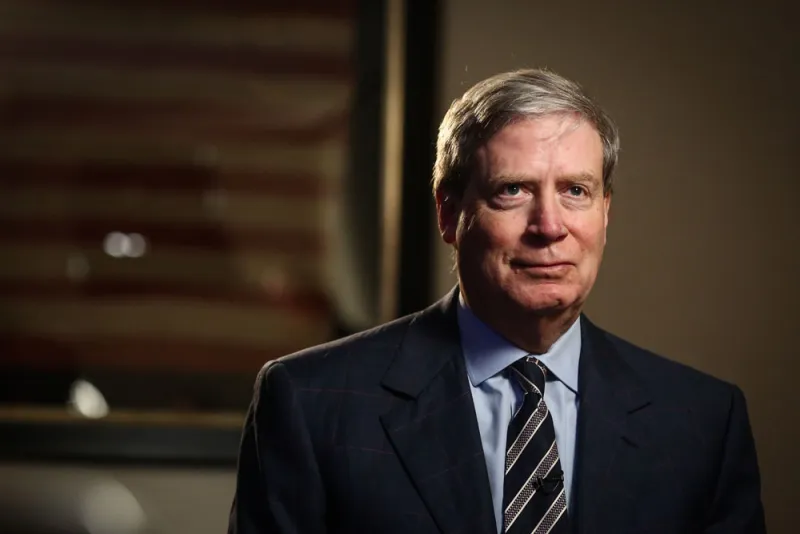
NEW: Stanley Druckenmiller’s Duquesne Family Office closes positions in both Intel and Micron Technology and opens positions in four publicly traded Bitcoin mining companies: Bitdeer Technologies, Riot Platforms, Hut 8, and IREN.
From BI: "Nvidia gets paid upfront, the borrowers and their lenders carry the default risk, and because private credit is ultimately funded by ordinary savers through instruments like pension funds, the tail risk lands on households."
Some perspective on the Unitree IPO, because I don't think people have actually processed what just happened here and how huge the demand for robotics actually is.
Unitree just IPO'd in Shanghai. 9.8 million people tried to get in. Total commitments came in around $1.1 trillion, for a company valued at just $9 billion.
The book was oversubscribed over 8,000x. Almost nobody got an allocation.
Now compare that to SpaceX, the largest IPO in history:
$250B in demand. 3.5x oversubscribed. At a $1.8T valuation.
So Unitree, a company 200x smaller than SpaceX, pulled in 4x the absolute demand and was oversubscribed roughly 2,000x harder.
And the craziest part: this was an IPO almost entirely restricted to Chinese participants, while SpaceX had the whole world bidding.
For the FIRST humanoid robotics company to ever go public.
Robotics is where the entire world wants exposure and almost nobody can get it yet.
Opportunity in there.
NEW: America's largest mortgage lender made a giant $27.5 billion bet that interest rates would go down.
The bet failed. Last week $UWMC suspended its dividend and signed an emergency rescue with the distressed situations desk at Oaktree.
Clinton admin cut cap gains taxes in August ‘97 and the NDX gained 325% over the next 2.5 years.
If you don’t think they’re gonna run this hot until it implodes you’re insane.
We have so much higher to go before the music ends.
No matter how many times they intervene in USDJPY, as long as the U.S.–Japan interest-rate differential remains wide, the underlying carry trade remains alive.
Carry traders are still incentivized to borrow/short low-yielding JPY and buy higher-yielding USD assets.
So intervention can crush USDJPY temporarily, but if the rate differential is unchanged, traders simply rebuild the position.
And there is a dangerous paradox here:
Repeated interventions will only make the carry trade even bigger.
Every sharp yen rally gives leveraged players another opportunity to re-enter the same trade at better levels.
Unless Japan meaningfully raises rates or the U.S. side of the differential collapses, intervention is mostly fighting the symptom,not the incentive creating the trade.
JUST IN: AI agent asked to book a gym class finds vulnerability in the gym’s software, & kicks another member off the waitlist so its user could have the spot.