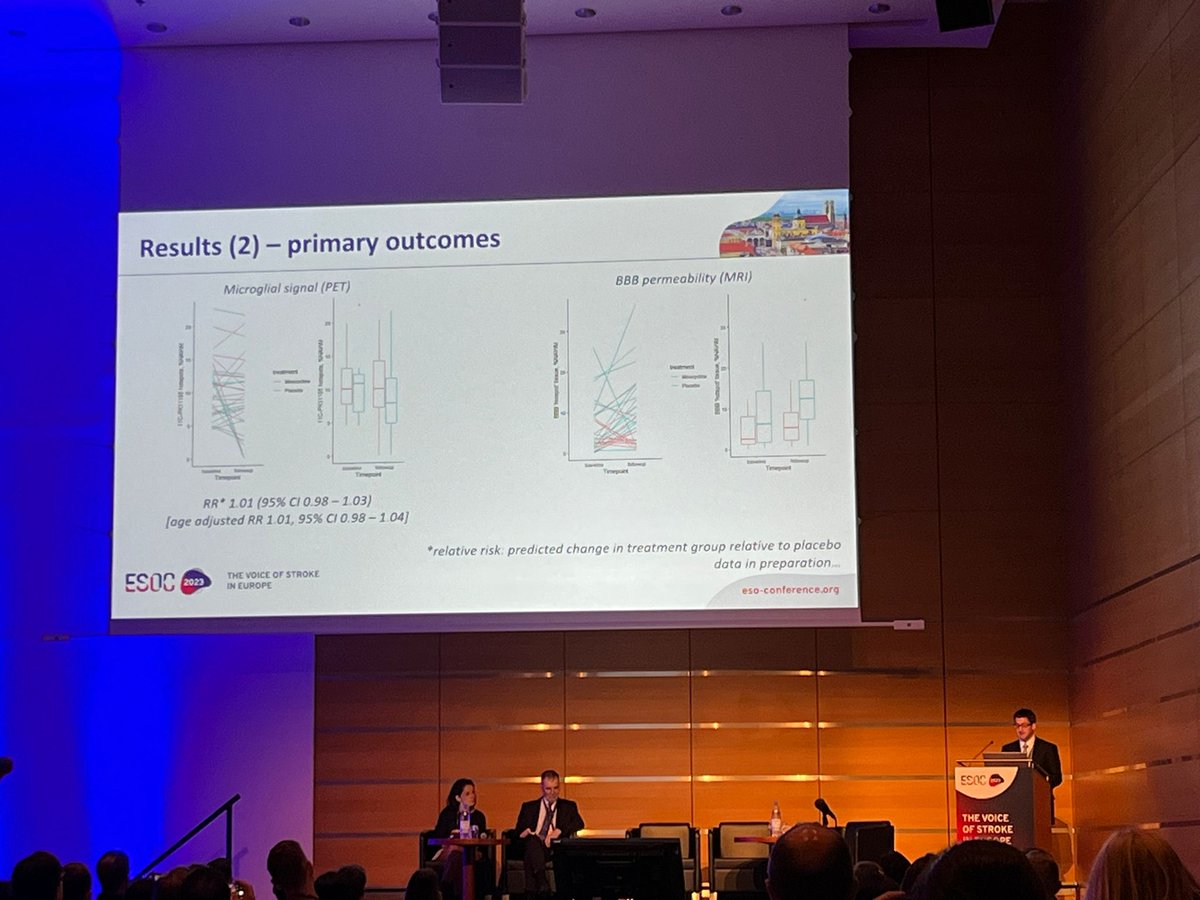
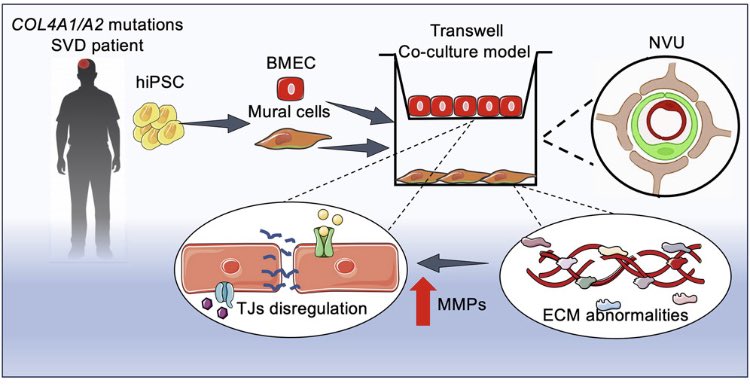
So pleased that the MINERVA trial results are now published in @alzdemjournals - this was a significant part of my PhD work and a huge team effort to complete the recruitment and analysis (1/6):
https://t.co/mTd7W1nQh7
Thanks also to @wbic_cam and @CUH_NHS R&D team and clinical trials pharmacy for supporting the trial and most importantly to our patients for being so generous with their time and energy #SVDtrials (6/6)
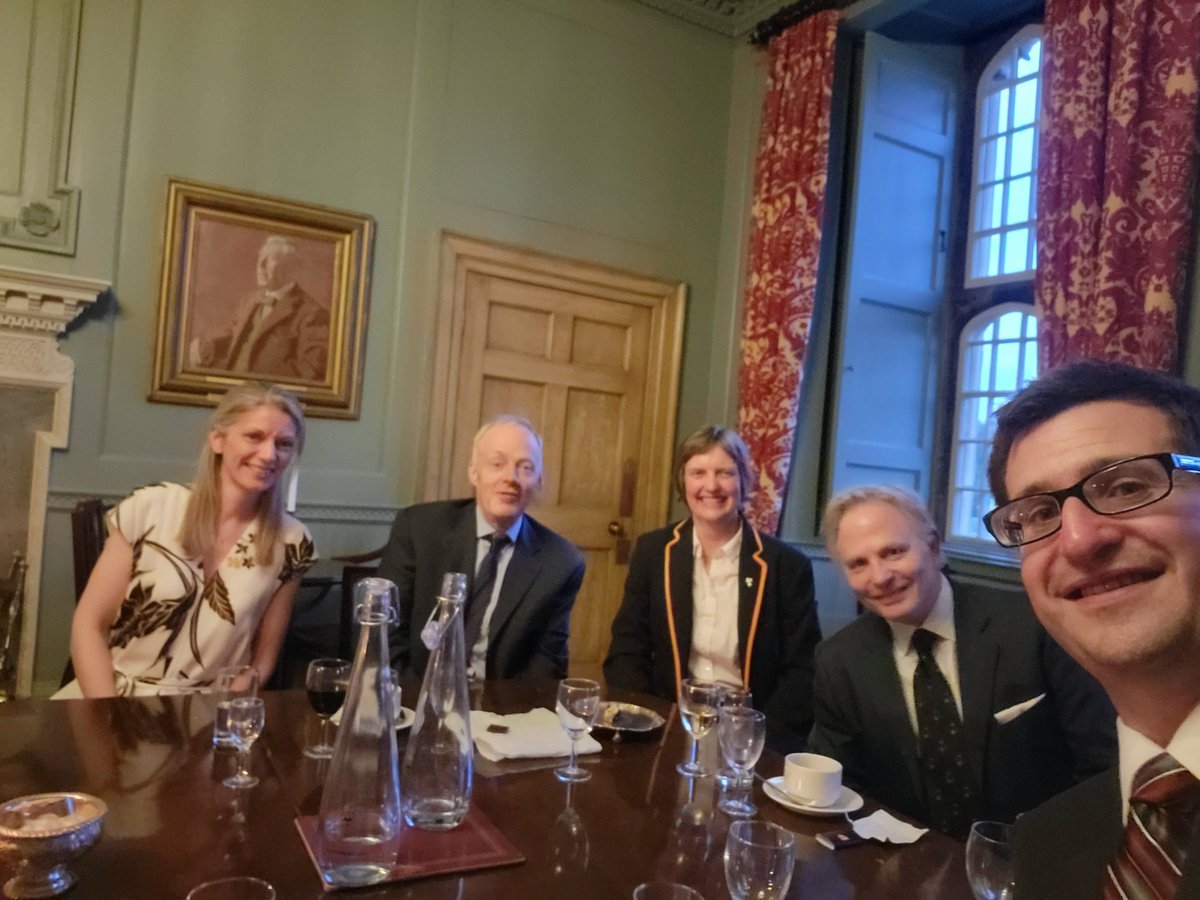
Really enjoyed defending my PhD thesis - with thanks to Caroline Williams-Gray @PDandHDLab and David Werring @UCLStrokeRes for a very stimulating viva examination and Hugh Markus @CamStroke as always for supervising and supporting! Thanks also to funders @Brain1878/@theABN_Info
WMH reduction was more likely in patients with lower lesion burden & favourable DTI markers of white matter integrity at baseline suggesting in severe SVD, lesion regression is unlikely. With @CamStroke and @StrokeNijmegen. Link: https://t.co/qogbse2yYO (open access coming soon)
Our paper looking at the natural history of white matter hyperinitensities in cerebral small vessel disease now out in @IntJStroke. We looked for evidence of lesion regression in three cohorts of SVD patients and found modest volume WMH reduction in few patients
Onto day 2 of our Vascular workshop! Yesterday we heard lots of great talks, took part in poster sessions and a brilliant roundtable discussion👏
Looking forward to more of the same today!
@jhfrudd@nr_evans Firstly deeper immunophenotyping of a larger cohort (work with @CamStroke@mallat_lab funded by @TheBHF@BMAFoundationMR @Brain1878l) to probe the mechanisms and secondly intervention! Results from our trial of minocycline in SVD (funded by @The_MRC) later in the year...
Really interesting data from our PET-MRI cohort of small vessel disease patients. Areas destined to become lesions at follow-up have 𝗹𝗼𝘄𝗲𝗿 microglial signal than normal appearing white matter - suggests that inflammation (if causal) may be relevant earlier than we thought...
#OriginalResearch: Do Regions of Increased Inflammation Progress to New White Matter Hyperintensities?: A Longitudinal Positron Emission Tomography-Magnetic Resonance Imaging Study #stroke#AHAJournals https://t.co/xSorlvLgx0 @CamStroke@rbb_29
Hello Cambridge Twitter!
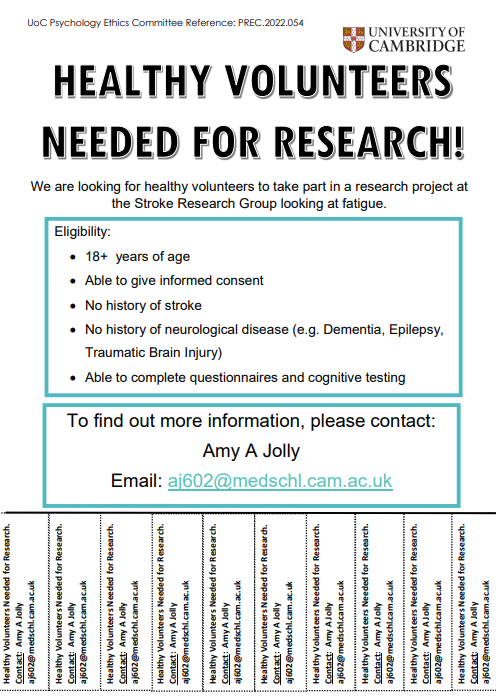
We are looking for healthy volunteers in the local area to #takepartinresearch looking at Fatigue at the Stroke Research Group, Addenbrooke's Hospital.
Please get in touch if interested!
#cambridge#cambridgeresearch