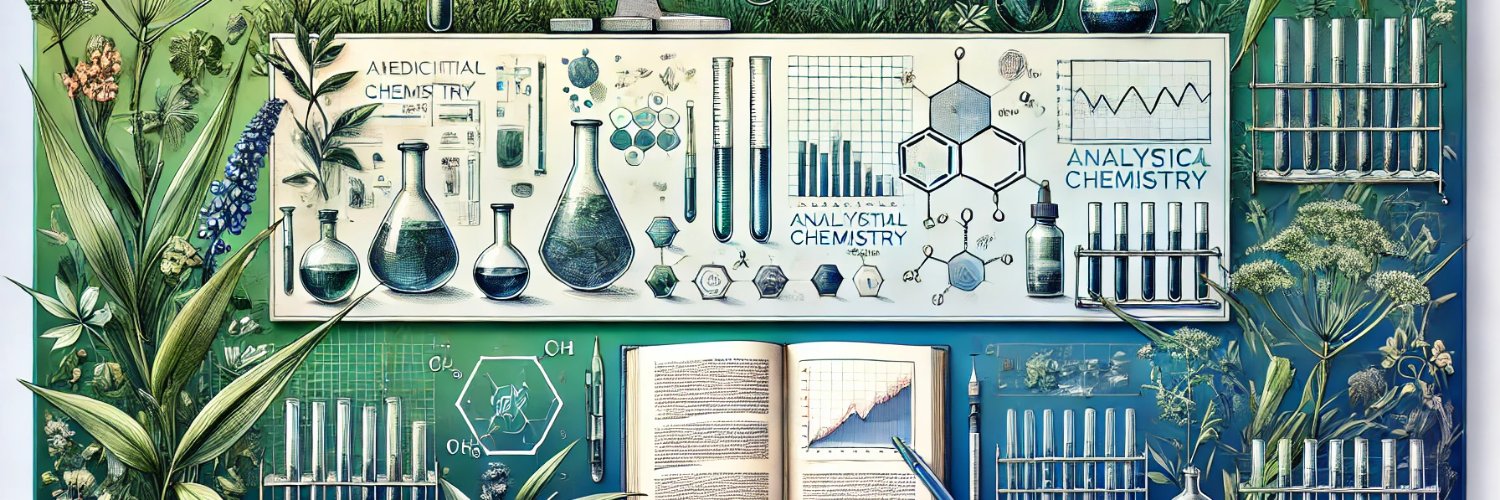
O REACQUA é um sistema de descontaminação de água poluída por agrotóxicos, medicamentos e outros químicos, usando a energia solar. Para saber mais, adquira o livro "REACQUA: um esquema de pirâmide que dá certo" em https://t.co/nAcBK7Biq4
Tenho publicado toda semana no Substack, inclusive o Projeto Puma, livro que tenho trabalhado há algum tempo e que agora resolvi começar a publicar em "fascículos" curtos. Confere lá no meu perfil no Substack! Em "Arquivo", dá para ler os seis primeiros: https://t.co/WYnBEK2Gcm
🌞 One more REACQUA project paper (2 this week!)
Thrilled to share our latest review article:
"Solar-based technologies for removing potentially toxic metals from water sources: a review"
📖 Check out the full article here:
https://t.co/23MbHG0YIK
🚨 New REACQUA project paper 🚨
"Suspect screening and quantitative analysis of 165 contaminants of emerging concern in water, sediments, and biota using LC-MS/MS" .
📖 Read the full article for free until March 8, 2025:
https://t.co/CJ6Yrme71z
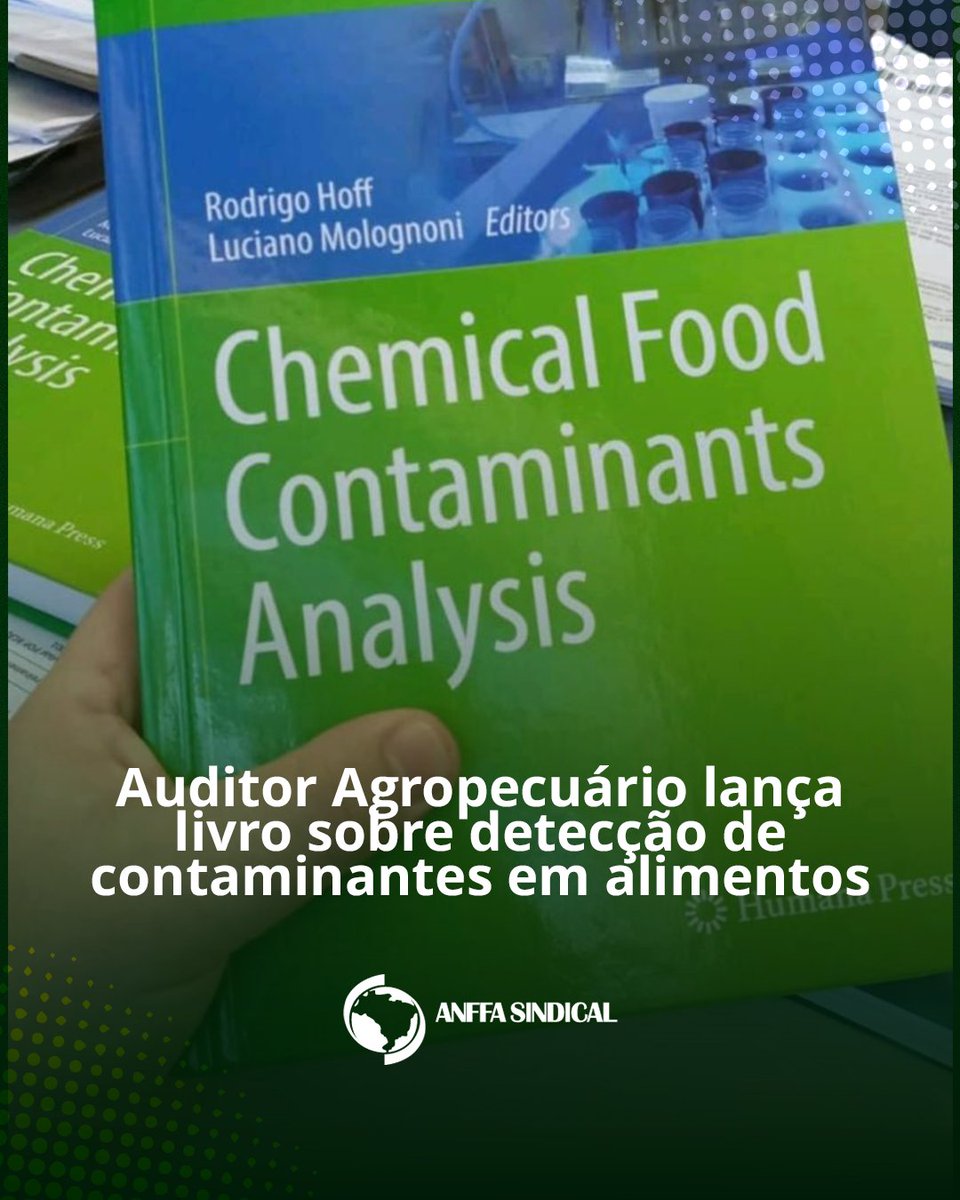
Foi lançado neste mês o livro Chemical Food Contaminants Analysis no qual o Affa Rodrigo Hoff participa como editor e mais da metade dos 22 capítulos é de autoria ou co-autoria de Auditores Agropecuários que trabalham nos LFDAs
👉Leia matéria completa: https://t.co/qUczjVSSWT
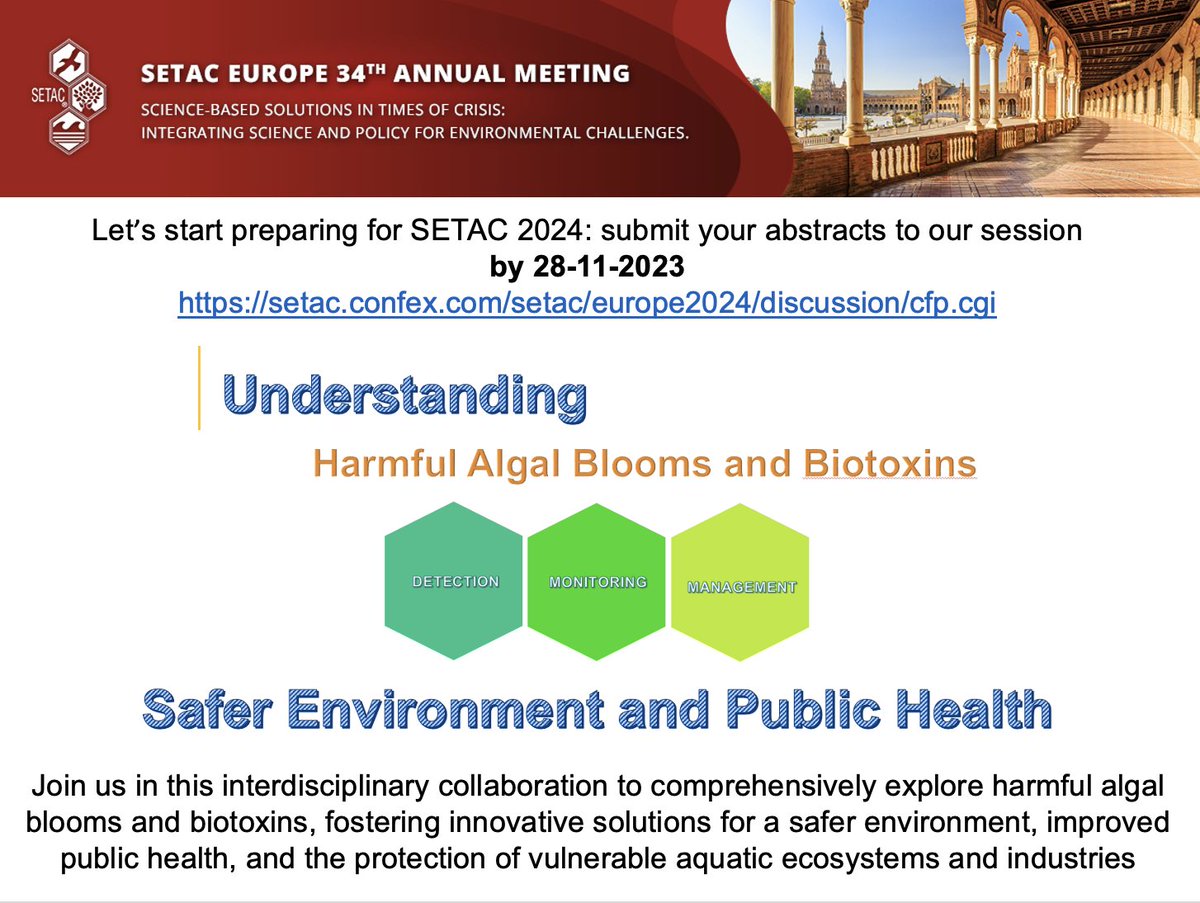
🚨Call for abstracts! Submissions are open for #SETACSeville. Join us at session 4.24 | Harmful Algal Blooms (HABs) And Biotoxins - Detection - Monitoring - Management. @JMoreno_Andres@TXANKEE Marisa Passos https://t.co/ecnJ6LX42f
@dudelbem Uma vez que os dados já estejam tratados, prefiro escrever o artigo do que a resposta aos revisores, em muitos casos. Recentemente, passamos por cenário parecido, 11 páginas de respostas, 90% dedicado a um único revisor (nesse caso, foi o famigerado reviewer #2 mesmo)
E além disso, a @eusouassombrada é autora de um dos livros mais impactantes que li recentemente: Inventário de predadores domésticos, saiu pela @DarkSideBooks
Yuri Knorozov, the Soviet linguist who successfully deciphered the Mayan script in 1953, had a habit of including his Siamese cat Asya as a co-author in many of his works. However, his editors consistently removed her name. Knorozov also used a photo with Asya as his official author photo, and he was upset when editors cropped her out.
Deciphering the Mayan script proved extremely challenging due to the absence of a Rosetta Stone for translation into other languages. The primary clues remained on Mayan stelae scattered throughout various ruins.
Knorozov made a breakthrough by rejecting the idea that Maya glyphs were based on an alphabet and instead recognizing them as a syllabary representing syllables.
When Knorozov published his work, he faced criticism and dismissal from prominent academics, most notably J. Eric S. Thompson, a British scholar who believed the Mayan script was anti-phonetic and based on ideographic principles. It did not help that Knorozov published his research during the height of the Cold War, when Western scholars were quick to dismiss Soviet scholars' work as tainted by Marxist ideology.
It took decades for Knorozov to finally receive the recognition he deserved. One of Knorozov's earliest supporters was an American Anthropology professor at Yale named Michael D. Coe, who would later write, "Yuri Knorozov, a man who was far removed from the Western scientific establishment and who, prior to the late 1980s, never saw a Mayan ruin nor touched a real Mayan inscription, had nevertheless, against all odds, made possible the modern decipherment of Maya hieroglyphic writing."
Primeiro workshop de espectrometria de massas @UFSM_oficial e Sciex: vamos apresentar os desafios analíticos das biotoxinas marinhas emergentes, no dia 25 de outubro em Santa Maria.
O uso atual de plástico na agricultura e a gestão do seu descarte merecem ser repensados. Este artigo de @Hofmann_Lab e colaboradores oferece algumas soluções interessantes! Congrats to the authors!
A comunidade poderá conhecer os projetos da UFSC voltados para a recuperação ambiental da Lagoa da Conceição em um evento aberto que ocorrerá no dia 7 de outubro, na Praça da Lagoa Bento Silverio, na Lagoa da Conceição, em Florianópolis.
https://t.co/vwo2qcjrpu
O nosso método de análise de HPAs em pescado foi destaque no site da @UFSC e foi fruto do doutorado de Ana Paula Zapelini de Melo, com orientação do Prof. Dr. Pedro Barreto e minha coorientação:
https://t.co/dIxQJKIDbt
Em 2019, quando ocorreu o desastre das manchas de óleo no litoral do Nordeste, desenvolvemos um método para análise de HPAs em pescado em tempo recorde, em parceria com a @UFSC:
Método desenvolvido em laboratório do Mapa ganha destaque internacional https://t.co/9v0mvWPL0Q
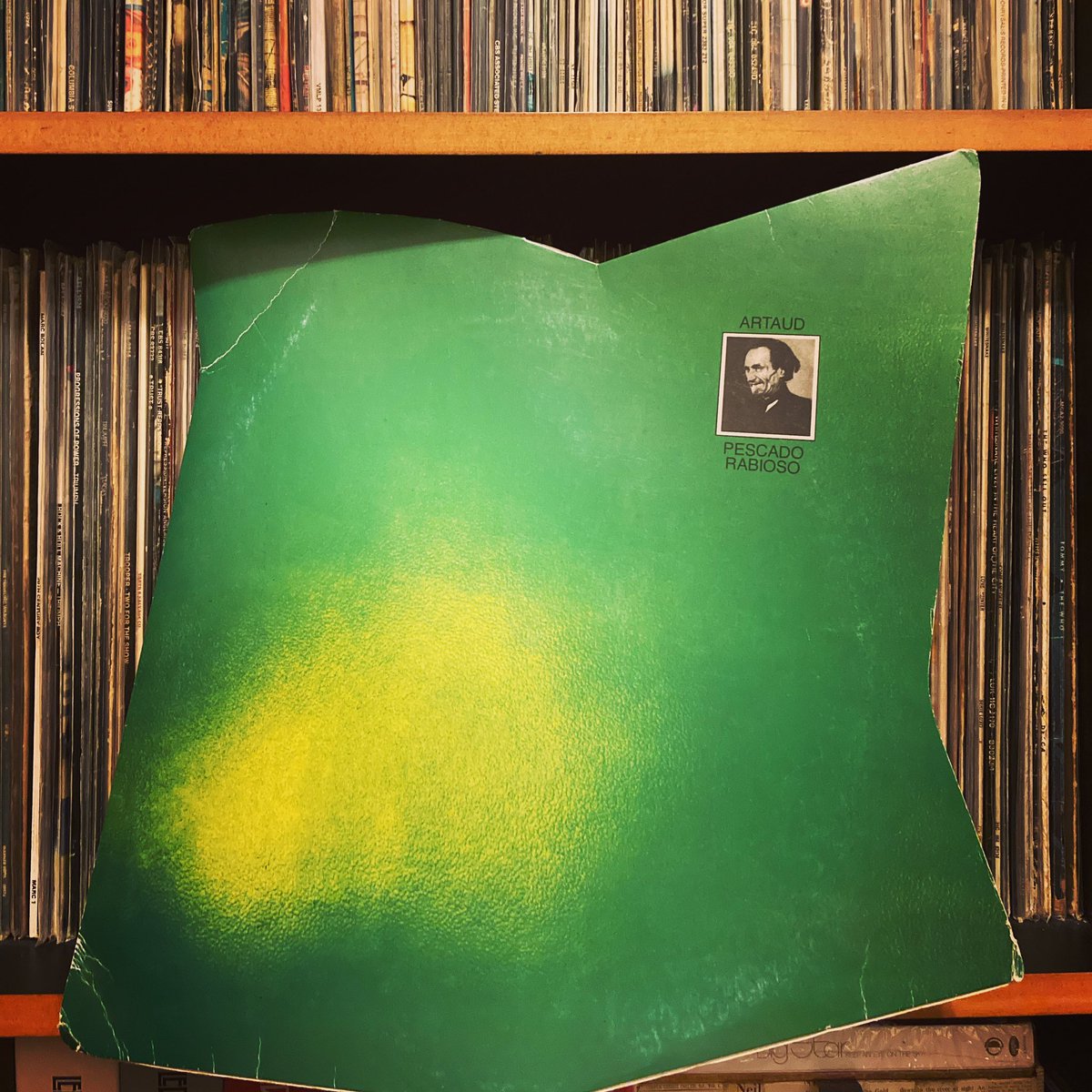
50 anos de Artaud, obra mestra do rock argentino e de Luis Alberto Spinetta.
Se você nasceu na América do Sul você tem obrigação de ouvir esse disco pelo menos uma vez na vida.
📢 Hiring now!
Happy to announce that I will be opening a new mass spectrometry laboratory at the 🇨🇭University of Geneva🇨🇭 in January '24, and I am recruiting several PhD candidates and 1 post-doc.
Please #RT, forward to potential candidates, or apply ⏬
Nature rejected her paper for not being original,
University of Pennsylvania (her employer) demoted her,
and yesterday Katalin Karikó won the Noble Prize in physiology.
In mid-2000s, Karikó and her Drew Weismann submitted their paper on mRNA (messenger Ribonucleic Acid) to Nature.
Nature desk rejected their paper for being "an incremental contribution" only. The paper was later published in another journal, Immunity.
Earlier in her career at the University of Pennsylvania, Karikó was demoted because her applications for grants kept getting rejected.
But Karikó persevered and kept on going.
In 2013, she joined BioNTech, a German company founded by two scientists, Uğur Şahin and Özlem Türeci. In 2018, BioNTech partnered with Pfizer to develop mRNA vaccines against the influenza virus.
When the COVID-19 hit the world, Karikó's research helped Pfizer to produce the first vaccine against the disease.
I don't know how the Nature editors who desk rejected Karikó's paper and the Penn administration who demoted her feel about Karikó Nobel Prize.
Takeaway: Many academics and scientists worry about getting published in "prestigious" journals. Instead of worrying about prestige, we should try to put our work out as quickly as possible like Karikó did.
Once you put your work out without caring about prestige, two good things happen:
1. Your work will lead to newer opportunities.
2. You will start getting feedback from the scholarly community, which you can use to iterate and improve.
Here's another interesting Nobel Prize story.
Peter Higgs, a British physicist, joined the University of Edinburgh in 1956. By 1964, Higgs has published his groundbreaking work about subatomic particles.
After 1964, Higgs published less than 10 papers.
When his department would ask him how many papers, he published in a given year, he would reply "None."
It happened so often that he stared feeling like an "embarrassment to the department."
The University of Edinburgh, however, never fired Higgs because in 1980 he had been nominated for the Nobel Prize.
Higgs retired in 1996 and stayed on as an emeritus professor at Edinburg.
In 2012, experiments conducted at the CERN laboratory confirmed Higgs work and the existence of Higgs Particle.
And in 2013, Higgs was awarded the Noble Prize in physics and the University of Edinburgh got rewarded for being patient.