I'm excited to share that GWU is hosting a World Bank Symposium on AI & the Future of Human Capital.
For those not steeped in the development, Human Capital == people’s skills, knowledge, and health
https://t.co/lV8Rzhk0d3
Some flexibility in the deadline may be possible.
Finally, papers are routed to specific Area Chairs based on expertise. The research community isn't so big once you are in a specific area. I notice the community members that put extra effort into writing reviews, and those that don't. Thank you to those that do! (4/4)
I'm an Area Chair for NeurIPS this year. I spent most of today reviewing all the reviews for my 13 assigned papers to highlight insufficient reviews. A few reviews were incredibly shallow and some had hallmarks of GPT, and this was a chance to reject those. (1/4)
In the past, as an area chair I would end up with a collection of reviews, some of which sucked, and would somewhat throw up my hands and say "these reviews aren't great and I have to decide based on them, but what can I do ... there are too many papers to do much else". (2/4)
This step, where the executive decision maker is obliged to object to or approve of them, aligns the authority to make the decisions with the responsibility to get good reviews. Additionally, the Area Chairs see the name of the reviewer (I'm looking at you, reviewer #2). (3/4)
@rohitgUCF@karpathy I think andrej’s point is that even good data (like textbooks) is full of “crap” like little formatting snippets. I worry that dumb heuristics to fix things lose interesting content. Fineweb (afaik) is mostly filtering/dedup so probably not losing diversity
Question: Does anyone have a pre-computed FAISS indices for large datasets (e.g. LAION 2B, 5B) that have been used to train CLIP-like models, and would be willing to share the index or access for queries?
The one below doesn't seem to work anymore: https://t.co/eJ6uBZ1UDD
I'm lucky to get to work on important problems with really great researchers. @abby621 is talking about our research on image search tools to support sex trafficking investigations tomorrow (wednesday) at noon eastern time, link in the following post: https://t.co/MWui7hUjoc
Having served as Technical Chair for CVPR 2024, I was appointed to serve as Technical Chair for
- CVPR 2025 - 2027
- ICCV 2025, 2027, and 2029
I am so excited to work for @CVPR & @ICCVConference and keep improving the review systems! 🔥🔥
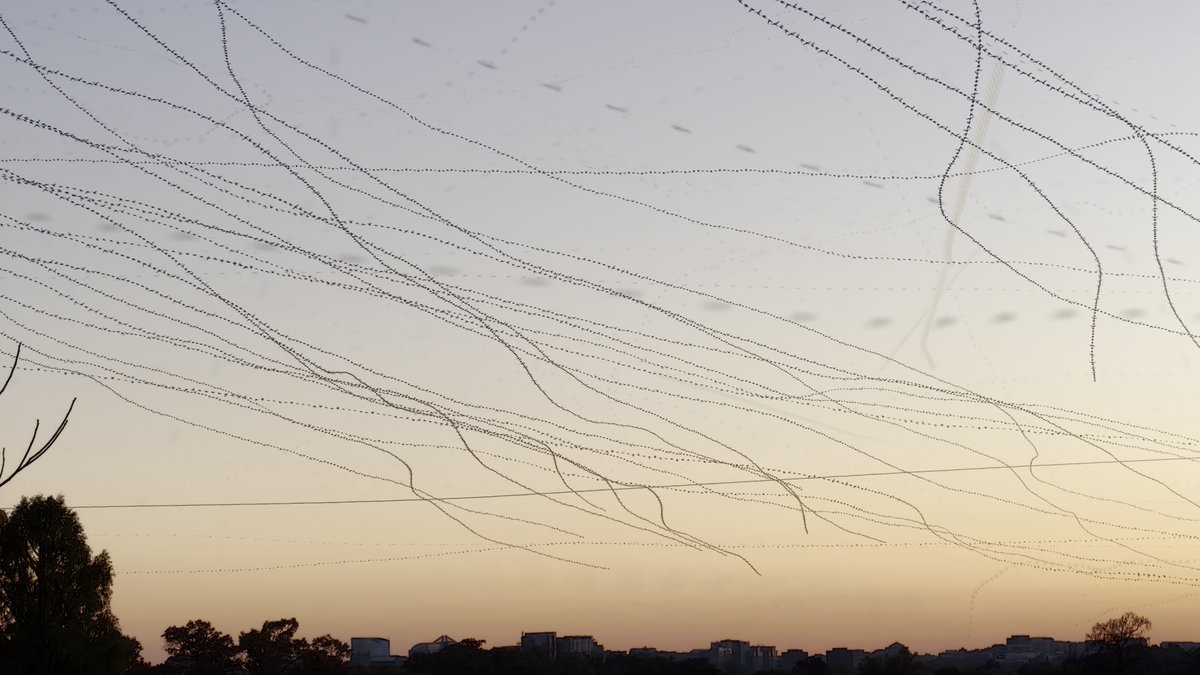
The @CVPR AI Art Gallery is now live 🤖🎨
Featuring 115+ artworks using or about computer vision😎
View them here: https://t.co/XTGoCWbbKG
#AIart#CVPR2024
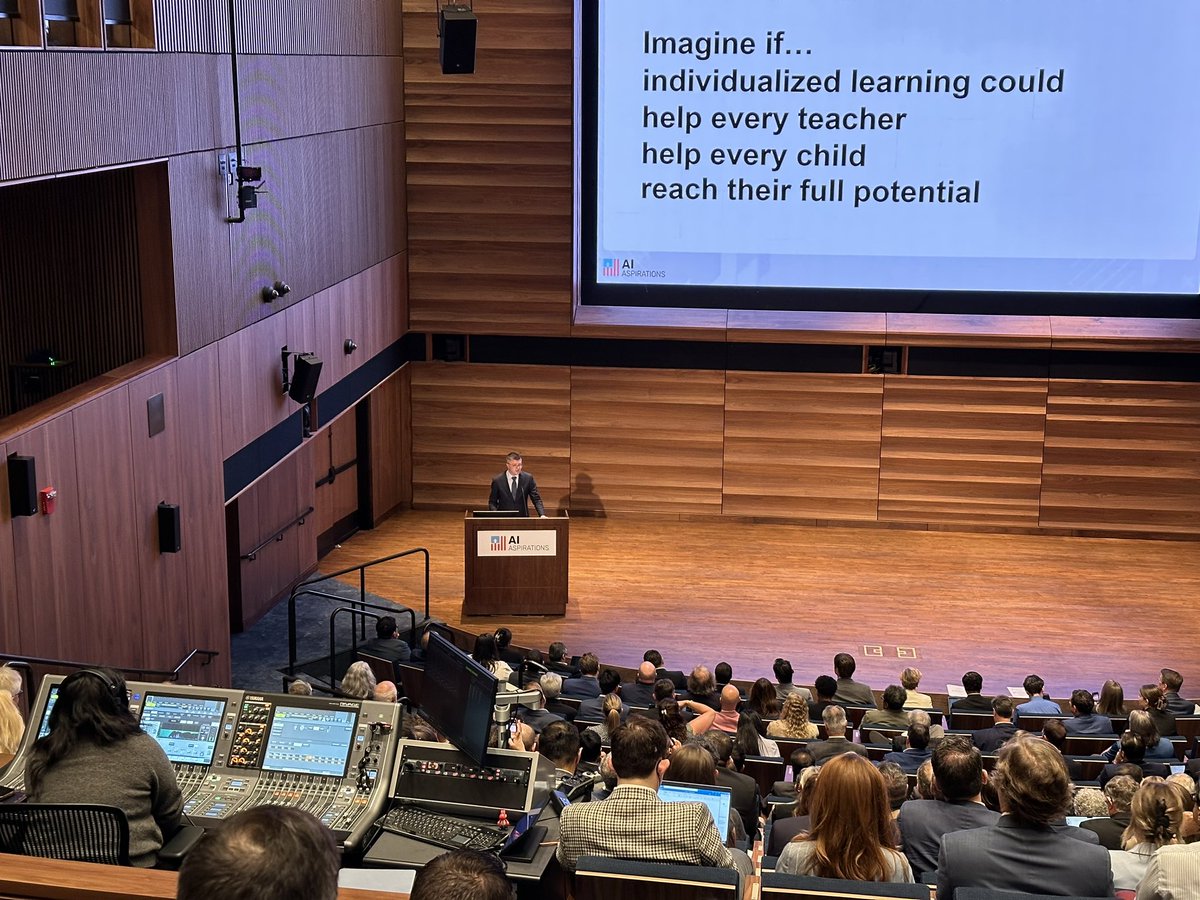
At the AI Aspirations event in the old Newseum building. I love being in DC @GWtweets and finding ways to understand what AI research is most important.
We are thrilled to share our groundbreaking paper published today in @Nature: "Low Latency Automotive Vision with Event Cameras."
Paper: https://t.co/fJ03oksugX
Video: https://t.co/2as1HETZrq
Code & Dataset: https://t.co/sqfWJLBzrH
Frame-based sensors such as the RGB cameras used in the automotive industry face a bandwidth–latency trade-off: higher frame rates reduce perceptual latency but increase bandwidth demands, whereas lower frame rates save bandwidth at the cost of missing vital scene dynamics due to increased perceptual latency (see Fig. 1a of the paper). Event cameras have emerged as alternative vision sensors to address this trade-off. Event cameras measure the changes in intensity asynchronously, offering high temporal resolution and sparsity, markedly reducing bandwidth and latency requirements. Despite these advantages, event-camera-based algorithms are either highly efficient but lag behind image-based ones in accuracy or sacrifice the sparsity and efficiency of events to achieve comparable results. To overcome this, we propose a hybrid event- and frame-based object detector based on Deep Asynchronous GNNs, which preserves the advantages of each modality and thus does not suffer from this trade-off. Our method exploits the high temporal resolution and sparsity of events and the rich but low temporal resolution information in standard images to generate efficient, high-rate object detections, reducing perceptual and computational latency. In doing so, it emulates the slow-fast pathways in biological neural networks and uses them to its advantage. We show that using a 20-Hz RGB camera plus an event camera achieves the same latency as a 5,000-Hz camera with the bandwidth of a 50-Hz camera, i.e., an over 100-fold bandwidth reduction, without compromising accuracy. Our approach paves the way for efficient and robust perception in edge-case scenarios by uncovering the potential of event cameras. We release the code and the dataset (DSEC-Detection) to the public.
Kudos to @DanielGehrig6, who, with this work, also received the UZH Annual Award for the Best PhD thesis!
**Reference**
Daniel Gehrig, Davide Scaramuzza
Low Latency Automotive Vision with Event Cameras
Nature, May 29, 2024.
DOI: 10.1038/s41586-024-07409-w
PDF (Open Access): https://t.co/fJ03oksugX
Video (Narrated): https://t.co/2as1HETZrq
Code & Datasets: https://t.co/sqfWJLBzrH
@UZH_en@UZH_Science@UZHspacehub@ERC_Research@nccrrobotics