Professor of Personality-Social Psychology at the University of Illinois. Studies attachment and close relationships, personality development, and methods.
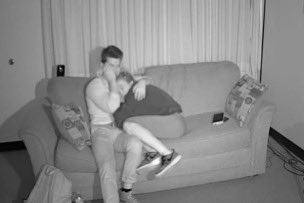
In the spirit of Halloween season, here is a recent paper from our lab on behavioral observations of attachment behavior among couples watching horror films. with Jia Chong and Elle Anderson.
https://t.co/1KlDAhE0Q9
@NicoleBarbaro@kph3k@TKShackelford Wow, so cool, Nicole! One of my recent and most important non-attachment influences is my brilliant and often sarcastic colleague @drderringer. I would pay money to hear her speak on just about anything.
@AndrewRAConway @rubenarslan @BrentWRoberts @bmwiernik Sent you an R script file, Andy. I create a population cov matrix, sim data with the MASS library, and then adjust means.
@rubenarslan @BrentWRoberts @bmwiernik I use simulated data because I need to control the “ground truth”—which patterns are real and which are not. And some of them are real. The students love the exercise. It is team-based and they decide on how to measure the constructs too.
@BrentWRoberts @CJFerguson1111@toddkashdan I just don't understand why you want to turn a quantitative estimate into a "yes/no" decision. Estimate something, quantify the precision of the estimate, and then discuss. If you think it is too small to matter (in some metric), that's fine. But don't say "it doesn't exist."
@drderringer @SpeciesTypical Agree. I think the real issue here is that the field has accepted the conclusion that the shared environmental component, C, in ACE models actually represents the kinds of things that developmentalists think about and study (e.g., parental abuse/neglect).
@dingding_peng @RickCarlsson I’m pleased that a committee has found that there is no crisis. Now I can go back to teaching the original findings that don’t replicate.
After 10 years (!) as director of our graduate program in clinical psychology @uarizona I've gone back to being a "regular" professor. I had a long list of tips I used to pass along to students for having a successful run in graduate school; here are a few of the favorites... /1
@LorneJCampbell@zbaker9113@mjbsp The 2000 ECR-R paper compares a few alternative attachment measures from an IRT perspective, but doesn't necessarily pit them against each other. It might be of interest, Mark. Thanks for linking the PDF, Lorne!