First of all, it is the height of economic illiteracy to denominate the external debt of any country, with the notable exception of the United States, in its local currency when the debt itself was acquired in a foreign currency.
In Nigeria's case, the debt was acquired in dollars, and the foreign exchange earnings with which it is expected to be repaid are equally denominated in dollars. Yet, you choose to conduct your analysis in Naira. To what end, exactly?
It may appear to you as mere propaganda, but this is the social media, where, even ten years from now, people who hail you today may stumble upon these same arguments and begin to wonder whether you ever recovered from the intellectual malnutrition you suffered in 2026. The internet has a long memory, particularly when it comes to our moments of foolery. What you publish today may become tomorrow's permanent exhibit of how ignorant you are in state matters.
Now, to the substance.
Nigeria's public debt figures:
December 31, 2021 – $95.77 billion
December 31, 2022 – $103.11 billion
June 30, 2023 – $113.42 billion
December 31, 2024 – $94.23 billion
December 31, 2025 – $110.97 billion
June 30, 2026 – $120.93 billion
From June 2023, when the debt stood at $113.42 billion, to June 2026, when it stood at $120.93 billion, the increase is approximately $7.51 billion.
Now, why should we not conduct our external debt analysis in Naira?
Quite simply, because the Naira is a volatile currency, susceptible to fluctuations in exchange rates. Consequently, the Naira equivalent of our external debt can rise or fall dramatically without the government necessarily borrowing an additional dollar or repaying a single dollar of the existing obligation.
Let me simplify this for you.
Assume the official exchange rate is N10 to a dollar, and Nigeria's external debt stock is $100. Its Naira equivalent would be N1,000.
Now, let us assume a Tinubu arrives on the scene, floats the Naira, and harmonises the official and parallel market exchange rates, resulting in the Naira exchanging at N50 to a dollar.
Suddenly, that same $100 debt stock now translates to N5,000.
Did Nigeria borrow an additional N4,000 worth of debt? No!
Did the dollar-denominated debt increase by a single dollar? No!
What changed was the exchange rate, not the underlying dollar obligation.
Do you understand the distinction?
This is precisely why serious economic analysis denominates external debt in the currency in which it was contracted and in which it is expected to be serviced. Anything short of that risks confusing exchange-rate depreciation with actual debt accumulation.
Therefore, unless your intellectual capacity is as diminished as Dickson's, this is hardly a gig you should accept, much less propaganda you should lend your voice to.
You are educated. Do not descend into the company of those who have chosen to make a career out of economic illiteracy.
Good Afternoon Severally...
Shall I Begin?
Corruption remains a major challenge in Brazil, yet the country boasts a $2.65 trillion GDP economy.
The Brazilian economy grew from roughly $500 billion in the 1990s to $2.65 trillion today because policymakers made the right decisions to foster growth.
Local Government Autonomy: Brazil established local government financial, political, and administrative autonomy through a major constitutional overhaul in 1988. By contrast, Nigeria is still struggling to fully realize local government autonomy.
Constitutional and Tax Reforms: Brazil has executed comprehensive constitutional updates, including a landmark consumption tax reform in 2023. Meanwhile, Nigeria remains constrained by its 1999 Constitution, and political leaders have openly argued against rushing necessary tax overhauls.
Oil and Gas De-monopolization: In 1997, Brazil passed its Petroleum Act, breaking the 44-year-old monopoly of the state-owned oil giant, Petrobras. It took Nigeria over two decades to pass the Petroleum Industry Act (PIA) and several more years to implement it.
Power Sector Decentralization: Brazil decentralized its electricity sector in 1995 through concession laws that dismantled state monopolies, transitioning to mass privatization and free competition between 1996 and 1998. Nigeria has struggled with power privatization for decades, and only recently allowed states to generate electricity independently.
Monetary Policy: Brazil floated its currency in 1999 and adopted an inflation-targeting framework. Conversely, Nigeria maintained an unsustainable currency peg for decades, depleting its foreign reserves to defend the naira.
Fiscal Reforms: Brazil phased out direct petroleum subsidies in 2002 to deepen fiscal discipline, whereas fuel subsidies remain a recurring fiscal burden in Nigeria.
Educational Funding: Brazil codified its student loan program (FIES) into law in 2001 to expand higher education access. Nigeria only recently established the Nigerian Education Loan Fund (NELFUND), which continues to face public skepticism.
Telecom Liberalization: Brazil’s telecom liberalization began in 1995 when Constitutional Amendment No. 8 broke the monopoly of Telebras, triggering an infrastructure boom.
Brazil’s economic expansion was driven by deliberate macroeconomic design, market liberalization, and systemic unbundling not by anti-corruption crusades.
Structural reforms beat corruption. An honest society will inevitably stagnate if its economy is built on unsustainable, protectionist, and archaic ideologies.
One of my biggest enigmas is how even some of the so-called elites fail to understand that we have a scarcity problem.
Once upon a time, a local journalist who could potentially interview governorship candidates in his state and hold them to account, expressed concern about why the Federal Government could not single-handedly raise $20 billion to build a refinery instead of waiting for Dangote to own one privately.
During the live conversation, the supposed journalist went further to argue that the (few) millions of dollars recovered by our anti-graft agencies were a testament to how much money Nigeria could raise.
I reminded him that these recoveries amounted to a few tens or, at most, hundreds of millions of dollars—barely a fraction of the billions required to build the refinery. And even this is a record recovery, not a guaranteed minimum that can be relied upon for such massive project. The refinery project cost billions, not a few hundred million dollars.
I also reminded him, and the echo chamber he was performing for, that governments have several competing priorities at any given time. This creates opportunity costs and diminishes the amount of money available for any single project, regardless of how substantial that amount might appear to an individual.
I later returned to explain that even if the government stopped paying the armed forces, funding our embassies, provisioning for emergencies and paying civil servants, raising $20 billion would still be an impractical proposition, all things being equal.
He lost me along the way, and the conversation eventually reverted to the usual blame game instead of engaging with the question of empirical possibility.
A few weeks later, we disagreed again over certain concepts of institutional governance. I quietly exited and stopped investing my energy in engaging someone who clearly needed more foundational grounding than another argument.
One thing we must appreciate is that public policy discussions require more than outrage and political opinions. They require an understanding of scarcity, opportunity cost, competing priorities, and institutional constraints.
If you shared everything Nigeria’s federal government expects to collect in 2026 equally among Nigerians, each person would get $114.35 for the year. That is $9.53 a month, about N13,000.
And that assumes nothing else happens. No roads, no schools, no hospitals, no army, no salaries. Just the entire federal revenue divided by the number of Nigerians.
The first delusion to cure yourself of is that Nigeria is a rich country. You cannot heal a disease you refuse to acknowledge.
As a Nigerian, you should be angry that our election conversations almost never touch this, the mother of every other problem we have.
How do we expand our productivity?
That is the question. Everything else sits inside it.
Today is Sunday. When they say “Owó ni kẹ̀kẹ́ ìhìnrere,” what do you think it means?
It does not apply to the gospel alone. Whatever you want to carry, money is what carries it. It is why one of the first things the United States did in its war on terror was go after the money.
PS: Some comparisons below.
For those who cannot read it all or who read it but couldn't understand, this is the summary.
Aisha is a 16 year old girl staying with her mother in Borno. The first accused person who is the only person convicted by the court and sentenced to 14 years imprisonment is her neighbour in Borno named Lami, a Christian. Now the gist is that Aisha had earlier been convinced from her school at the age of 13 by a teacher to leave her house and travel to Jos where she was converted to Christianity and spent a year. She eventually returned home to her mother after feeling homesick. Her mother then handed her over to Lami to help get her back to school and enroll her in WAEC. The same Lami also convinced Aisha who is now 16 to return to Jos and continue her Christian training without the knowledge of her mother. Lami enabled and sponsored Aisha to return to Jos while pretending not to know of her whereabouts when her mother was desperately searching for her. As a matter of fact, Lami was purchasing the household properties of Aisha's mother which she sold to enable her raise money to search for her daughter. Once again, Aisha felt homesick and returned to Borno to meet her mother after a year. Aisha then opened up to her mother about everything including the things Lami has been buying for her to enable her stay in Jos. Aisha's mother confronted Lami about it and it caused an uproar. The court found only Lami guilty of abducting Aisha and forcing her to convert to Christianity. She was sentenced to 14 years imprisonment amongst others.
Most of you know this story, but none of you have heard it from me.
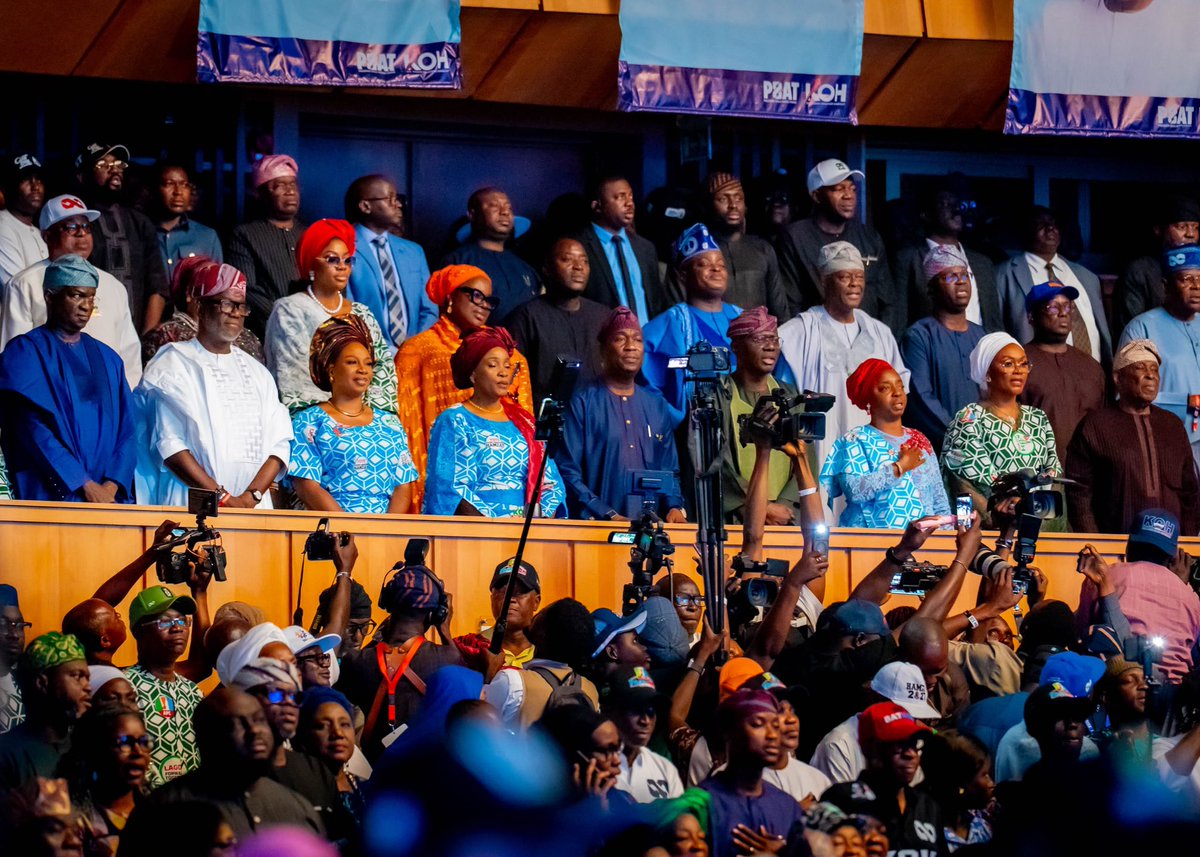
Back in September 2018, Femi Hamzat wanted to be Governor of Lagos State. He had thirteen years of public service under Asiwaju and BRF, with the record and backing to win. Then party leaders asked him to step aside for me.
It takes a rare man to put down what he wants without nursing a grudge. Femi shook my hand and five weeks later, agreed to run beside me. I have never forgotten that.
Anyone can read a CV but only the person in the room with a man when the cameras leave can tell you who he really is. For 2,711 days, I have been in that room with him.
When COVID-19 hit, when we faced our hardest weeks, when the Blue and Red Lines ran and when the Lekki Deep Sea Port opened, Femi was there. Long before any ribbon was cut, he was asking the tough questions an engineer asks.
In many states, deputies are kept in reserve. On day one, Femi promised to be the best deputy governor in Lagos history. He kept his word. In seven years, there has not been a single day I wondered whose side he was on. We have had one government, one direction, and one voice.
Lagos runs on a relay system. The baton is never passed to a runner standing still. You run at full speed inside the exchange zone, together, before the pass. That is how Lagos has been governed for 27 years, from Asiwaju to BRF, to Ambode, to me.
Femi is a deputy governor like no other. He built the Lekki-Ikoyi Link Bridge under Fashola, digitized government under Asiwaju and holds a doctorate in engineering. His father served Lateef Jakande. This is in his blood.
Critics say Lagos keeps choosing from the same pool. I say Lagos trains its people. With major projects underway and a master plan stretching to 2052, this is not the time to experiment. What Femi presents today is not a campaign promise cooked up on a bus, it is the next leg of a race we have been running since 1999.
Lagos does not hand the baton to a man standing still. Today, you have seen the man who is already running. Let us move forward together with The Lagos PROMISE.
Ọmọ! He's lucky o. Someone would have got hurt. That place is too small to have such isn't of venomous snakes. Something bad will definitely happen. They're lucky the snake catcher came early.
Watch this video and let's see how many familiar faces you can spot singing the #UNILORINAnthem alongside our Vice-Chancellor, Professor Wahab Egbewole, SAN, at the Grand Finale of the #UNILORIN41stConvocation Ceremonies!
Drop a comment if you saw yourself or someone you know!
2 term chairman, Lagos Mainland LGA.
House of Reps, Lagos Mainland Federal Constituency.
Former Board chairman, National Broadcasting Commission.
Championed the Otoge struggle that ousted Dr. Bukola Saraki.
Strong Grassroot Mobilizer
Bashir Omolaja Bolarinwa, PhD.
The next Governor of Kwara State.
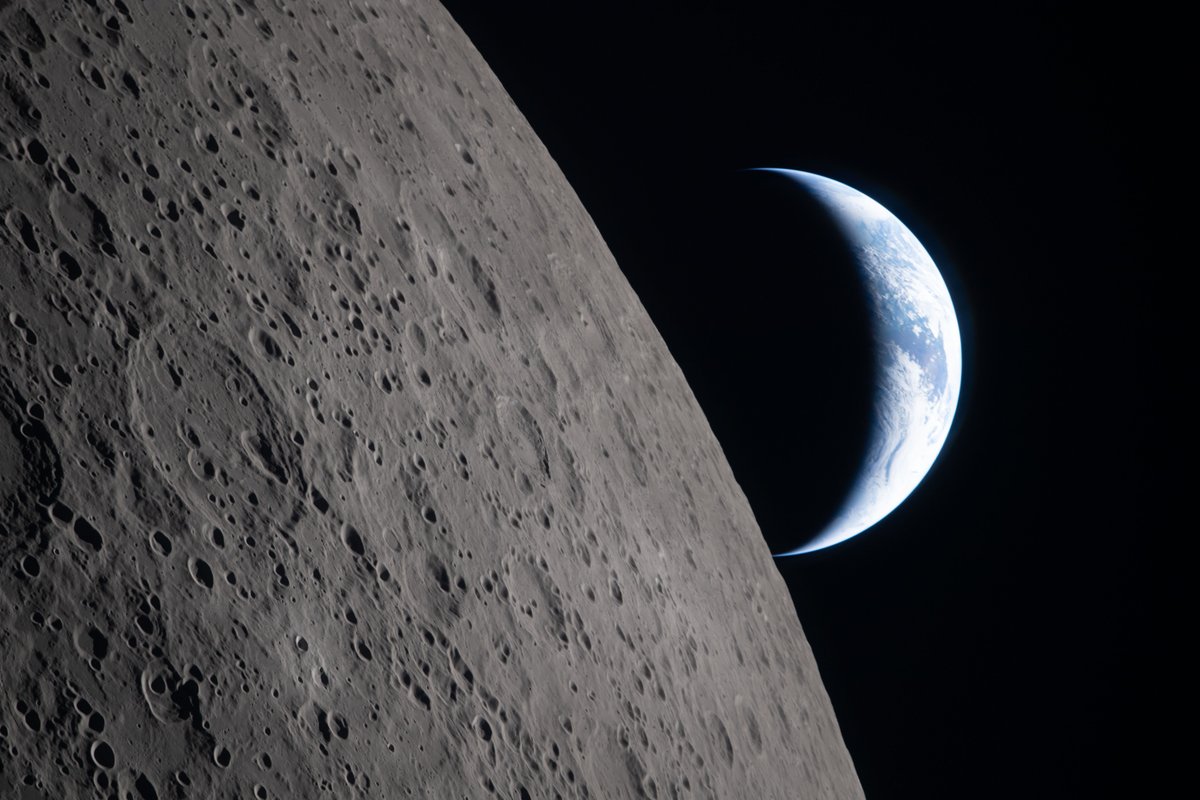
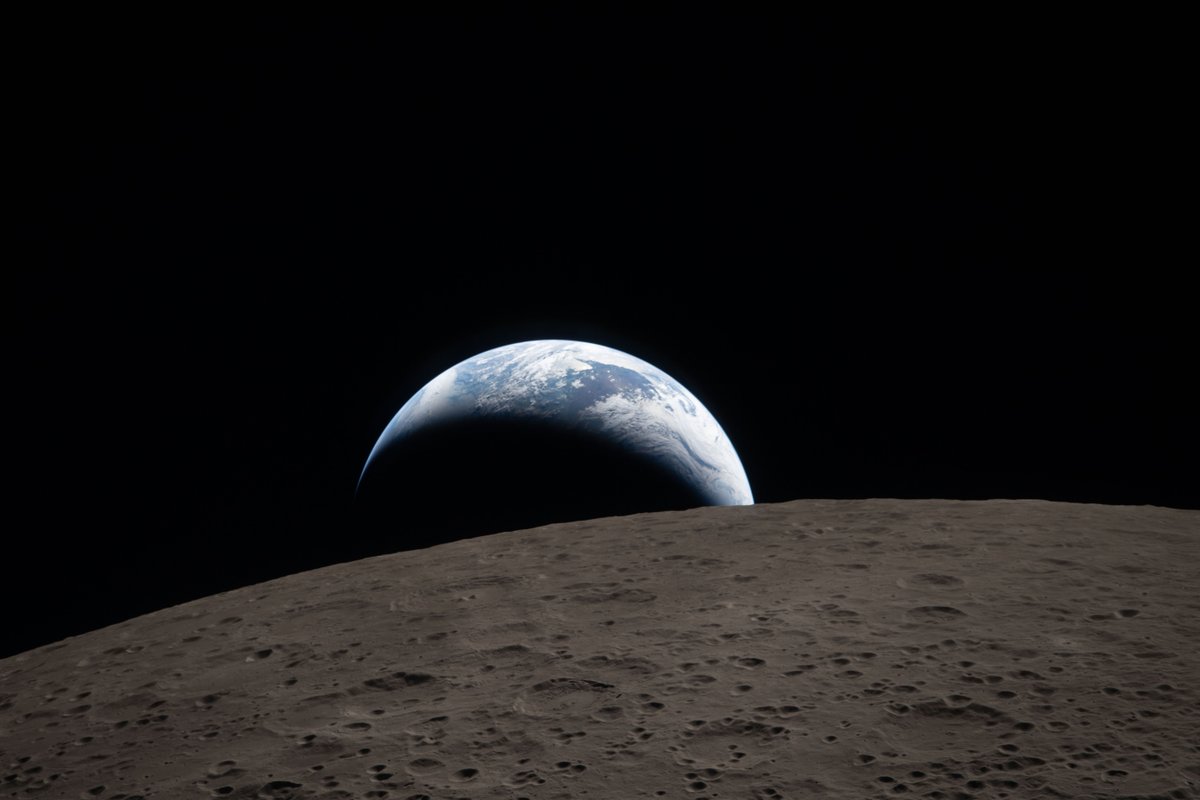
Hello, Moon. It’s great to be back.
Here’s a taste of what the Artemis II astronauts photographed during their flight around the Moon. Check out more photos from the mission: https://t.co/rzM1P0QbOl
Nigeria stands firmly as a democracy governed by constitutional guarantees of religious liberty.
Since 2023, our administration has maintained an open and active engagement with Christian and Muslim leaders alike and continues to address security challenges which affect citizens across faiths and regions.
The characterisation of Nigeria as religiously intolerant does not reflect our national reality, nor does it take into consideration the consistent and sincere efforts of the government to safeguard freedom of religion and beliefs for all Nigerians.
Religious freedom and tolerance have been a core tenet of our collective identity and shall always remain so. Nigeria opposes religious persecution and does not encourage it.
Nigeria is a country with constitutional guarantees to protect citizens of all faiths.
Our administration is committed to working with the United States government and the international community to deepen understanding and cooperation on protection of communities of all faiths.
BOLA AHMED TINUBU
PRESIDENT OF THE FEDERAL REPUBLIC OF NIGERIA
Nigeria is currently an exciting place to invest in and we will be making our move soon
- Bayo Ogunlesi, Global Infrastructure Partners CEO, speaks about his meeting with President Tinubu
Happy World Rabies Day!
Rabies is a deadly virus that's 100% preventable but also nearly 100% fatal once symptoms kick in. It claims tens of thousands of lives every year, mostly from dog bites in places where vaccination isn't widespread.
Here's everything you need to know to stay safe and protect yourself, your family and your dogs. Share this with your people. Let's end rabies together!
WHY RABIES IS SO DANGEROUS
Rabies attack the brain and nervous system, leading to death if untreated. Once you show signs like fever, confusion, or fear of water, it's too late. Survival is EXTREMELY rare. But the good news? We can stop it before it starts!
STEP-BY-STEP: HOW TO PREVENT RABIES
1. Vaccinate your pets: Get your dogs (and cats) their rabies shots on schedule. It's the best shield for them and you.
2. Avoid wild or stray animals: Don't feed or touch bats, raccoons, or unknown dogs. Rabies spread through the saliva of these animals via bites or scratches.
3. Supervise kids and pets: Keep an eye on playtime outdoors to prevent surprise encounters.
4. If you deal with a lot of dogs, get pre-exposure vaccines if needed.
HOW TO SPOT A DOG WITH RABIES (and What to Do)
If you're observant, you'll know a rabid dog when you see one. Rabid dogs act weird. Watch for these red flags:
1. Foaming at the mouth or excessive drooling
2. Aggressive behavior, like unprovoked snapping or biting.
3. Biting things like trees, iron, statues and so on aggressively
4. Staggering, paralysis, or seizures
5. Fear of water (hydrophobia) or sudden shyness.
If you see a dog like this? Back away slowly. Don't run, scream, or make eye contact. Give it space and alert authorities (or community members, if you live in Nigeria). A rabid dog has to be put down. There's no two ways about it.
WHAT TO DO IF YOU'RE BITTEN BY A DOG
Act fast o! Time is everything!
1. Wash the wound: Rinse with soap and water for at least 15 minutes to flush out the virus.
2. Seek medical help ASAP: Head to a doctor or ER immediately for post-exposure prophylaxis (PEP). This is a series of shots that can save your life if given before symptoms.
3. Get the dog quarantined and call veterinarians so that they can test it for rabies.
4. Monitor for symptoms: Even with treatment, watch for signs and follow up with your doc.
Remember, even if the dog seems friendly or vaccinated, get checked. It's better to be safe than sorry!
Lastly, vaccinate, educate, and share this post far and wide!
Tainkyu ✌🏾