Subscribe to KIRO MAGAZINE, Uganda's only Speculative Fiction magazine, and access stories reimagined, based on Bunyoro Kitara folklore, "Amabeere ga Nyinamwiru" at https://t.co/TsCFPdS65n
Saraba Magazine (@Sarabamag) is seeking previously published work for its Revival Project and unpublished work for its general submission category.
The Revival Project is a multi-phase archival and editorial initiative aimed at reclaiming, digitising, and celebrating significant African writing currently inaccessible to the modern digital reader.
For this, the magazine wants previously published work (fiction, poetry, and nonfiction) that is currently inaccessible online. They are interested in the “hidden” gems: the essay from a 2009 print-only magazine issue, the short story tucked behind the paywall of a reputable literary journal, or the poem from a magazine that has since folded.
The deadline to submit your work for this category is 31 August 2026.
General Submission
For our general submission, send your unpublished work in any of the magazine’s broad categories: fiction, poetry, and nonfiction. The maximum word count for prose is 5,000
The deadline to submit your work for this category is 30 June 2026.
For detailed submission guidelines, visit: https://t.co/k4ZzYTEXjp
#AfricanLiterature #Opportunitiesforwriters #SarabaMagazine
"The two languages sway together, sometimes falling over each other. But each time the Luganda phrases surface, my heart dances and lifts in recognition."
On Missing Home and Reaching for Language by Racheal Kimuli
https://t.co/l3XUB8blZU
Applications are now open for the inaugural Africa Women Writers Residency by Majesty Publishing House Africa, a new initiative supporting emerging African women storytellers across the continent. ✨📚
Read more here: https://t.co/r7Bqxh5V35
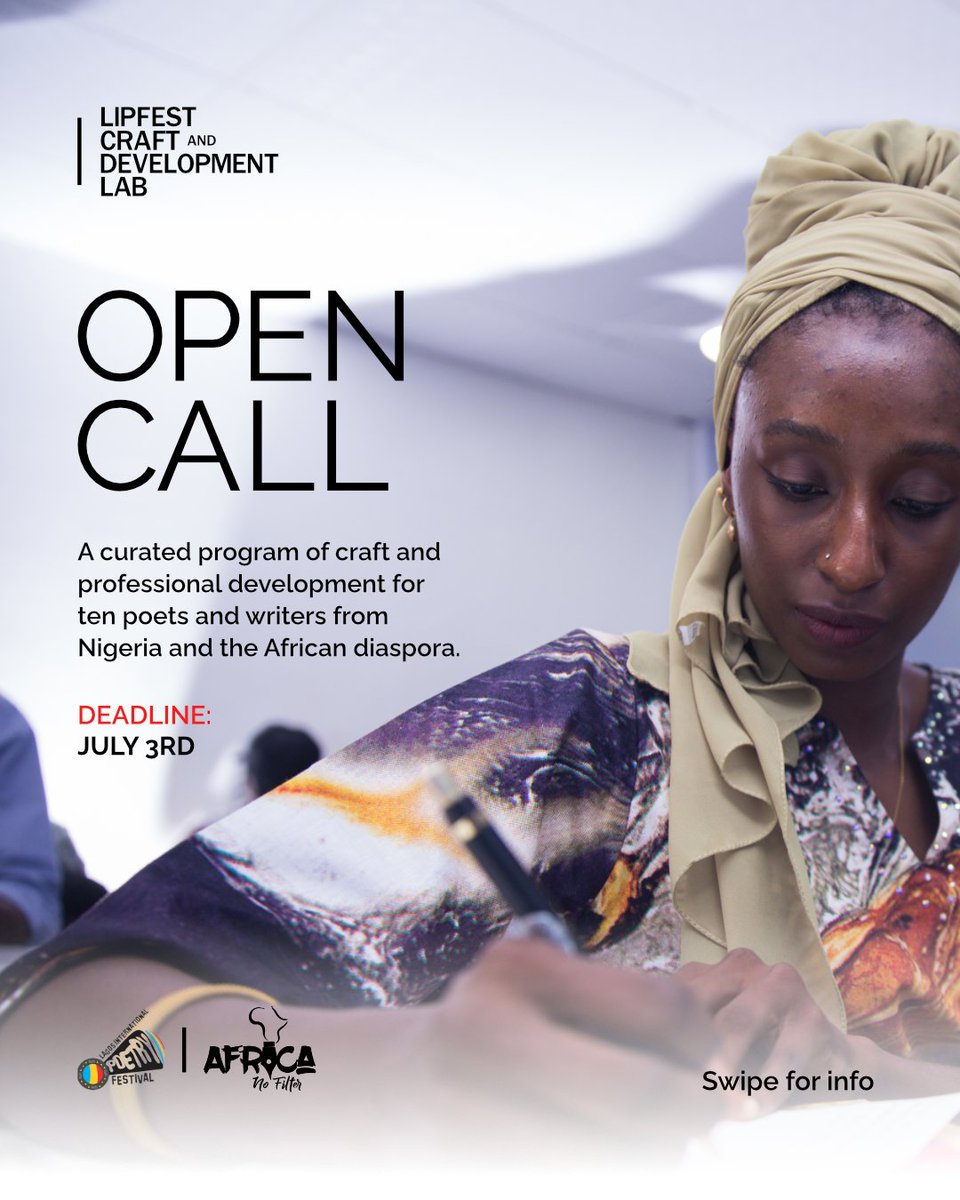
OPEN CALL
Applications are now open for the first Cohort of the LIPFest Craft and Development Lab, a four-month structured program of craft and professional development for poets, spoken word artists, and writers from Nigeria and the African diaspora.
NO 'EXCESSIVE DANCING' IN KENYA. HOW GLOBAL COLONIAL & SLAVER POWERS BANNED 'NATIVE' DANCING, BOOZE, DRUMS, AND PARTYING
Colonial rulers and slave owners often saw music, dance and simple pleasures as dangerous sparks of rebellion. In Kenya local chiefs wielded powers under the Chiefs’ Authority Act, a law rooted in the 1920s and kept after independence. They could ban “excessive dancing” if it seemed too lively, went on too long, or risked stirring up a crowd.
The same rules let them crack down on village brews that brought people together. These controls only ended with democratic reforms in 1997 - 24 years after independence!
In South Carolina the Negro Act of 1740 came straight after the Stono Rebellion. It outlawed drums, horns and any loud instruments among enslaved Africans, along with unsanctioned gatherings. Planters and magistrates enforced it ruthlessly, convinced the beats could help people plan revolts or hold on to their culture.
British officials in India took aim at living traditions too. Devadasis (girls dedicated as children to temple service and trained in sacred song and dance as offerings to the gods), saw their art condemned. In 1910 the Madras Presidency banned dancing inside Hindu temples, calling the graceful performances immoral.
Nautch dancers, professional women who performed intricate storytelling routines with music at private gatherings and courts, faced fierce campaigns by missionaries and reformers that ruined many livelihoods.
Everyday drinks suffered as well. Toddy, the fresh mildly fermented sap tapped from coconut or palm trees, was a traditional village refreshment. Heavy colonial taxes and licensing crushed small tappers while favouring imported liquor.
Under French rule the Code de l’Indigénat, introduced in 1881 and used across Algeria, West Africa and Indochina, gave local administrators power to punish “insolence” or unsanctioned gatherings. They often used it to shut down traditional dances, drumming sessions and celebrations judged too noisy or defiant.
Portuguese authorities in places like Cape Verde suppressed batuku, a vigorous women’s group dance full of clapping, drumming and swaying rhythms. They labelled it primitive and indecent, fearing it encouraged resistance to colonial order.
In the United States the 1883 Code of Indian Offenses, banned indigenous peoples' ceremonies such as the Sun Dance and Ghost Dance together with their songs and feasts. Agents withheld rations or locked people up, seeing these events as obstacles to Christian conversion.
Across these places the goal was the same: to weaken cultural ties, kill collective joy and impose outsiders’ rules on how people should move, sing and celebrate. A drumbeat, a dance or a shared drink carried memory and solidarity, exactly what rulers dreaded. Most of these restrictions only faded in the 20th century under pressure from independence and civil rights movements.
📸This licence is a parody.
Thanks to a generous grant, we are so pleased to be able to offer 150 fee waivers for submitting to the 2026 Queen Mary Wasafiri New Writing Prize!
If you're a low/no-income writer or translator hoping to enter this year’s prize ... 🧵
Writers & Poets of Uganda! 2Sistars Media is accepting submissions for the Ugandan Anthology 2026! 🇺🇬
✍️ Seeking bold, original writing across ALL genres.
📜 Poems (Max 40 lines)
📖 Stories (Max 3k words)
📧 Submit: [email protected]
🗓️ Deadline: 30th June 2026
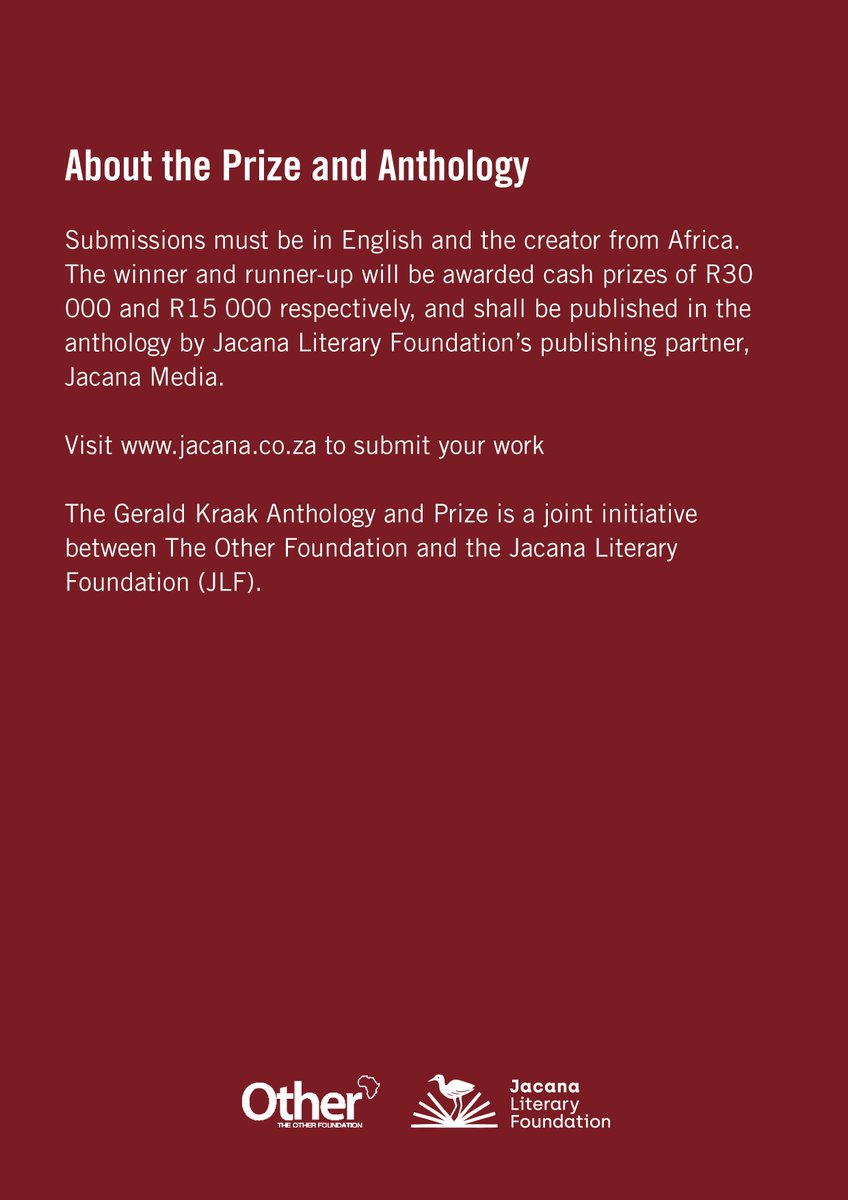
The Gerald Kraak Anthology and Prize is calling for submissions for our sixth anthology.
Submissions for the sixth prize will be open from 𝟐𝟓 𝐌𝐚𝐲 𝟐𝟎𝟐𝟔 and will close on 𝟏𝟖 𝐀𝐮𝐠𝐮𝐬𝐭 𝟐𝟎𝟐𝟔.
Criteria for submission can be found at https://t.co/ObDxKP5bum
#writers
Saraba Magazine is open for submissions from 1-30 June 2026
We are also accepting submissions for The Revival Project, a multi-phase editorial initiative aimed at reclaiming, archiving and celebrating African writing that is currently inaccessible.
https://t.co/LfoVuyqF3U
The Black British Book Festival has spotlighted Black literary agents in the UK actively seeking new voices. If you are a Black writer with a manuscript, these are the names you need to know! ✍🏾📝 https://t.co/xjMQo7LX9r
‘Me and Ma’am’ by Lisa-Anne Julien is a day-in-the-life story about the tangled relationship between a domestic worker and her employer.
Selected as the Africa regional winner for its rich balance of humour, introspection and humanity, the story offers a nuanced exploration of class, care and solidarity in contemporary South Africa.
The story has been published on Granta: https://t.co/JhzEnM1ABI
Brittle Paper is making a horror anthology! We want short stories, poetry, and nonfiction that will make readers’ skin crawl. Submit by May 31 for one of 15 spots available to writers from the continent and diaspora 🕸️🕷️🌘 https://t.co/MyfLEJ4H6M
Lolwe is open to general submissions in English and French across all genres until 31 May.
We’re looking for bold, boundary-pushing work: play with form and language, ignore limitations, send us your fears, joys, doubts, faiths, curiosities, and silences.
https://t.co/7uJ6ma0C3r
🌍 CALL FOR PROPOSALS: Volume 2 – The Future of Work 🌍
We are seeking proposals from African speculative fiction writers interested in developing short stories in collaboration with experts working on the frontier of technology.
https://t.co/hVA8NmJxKU
The Offing, a literary magazine centering marginalized voices, is open for submissions with no fees in 2026. Essays, creative nonfiction, science writing, and translated poetry are welcome. Contributors are paid $25-$100 depending on the submission ✍🏾 https://t.co/XOlPpyzqWN
Calling all African writers! 📣 📣
Peppercoast Magazine is open for submission until June. Send us your babies (& perhaps, some halflings?)
Guidelines here: https://t.co/JnlK3s37tD.