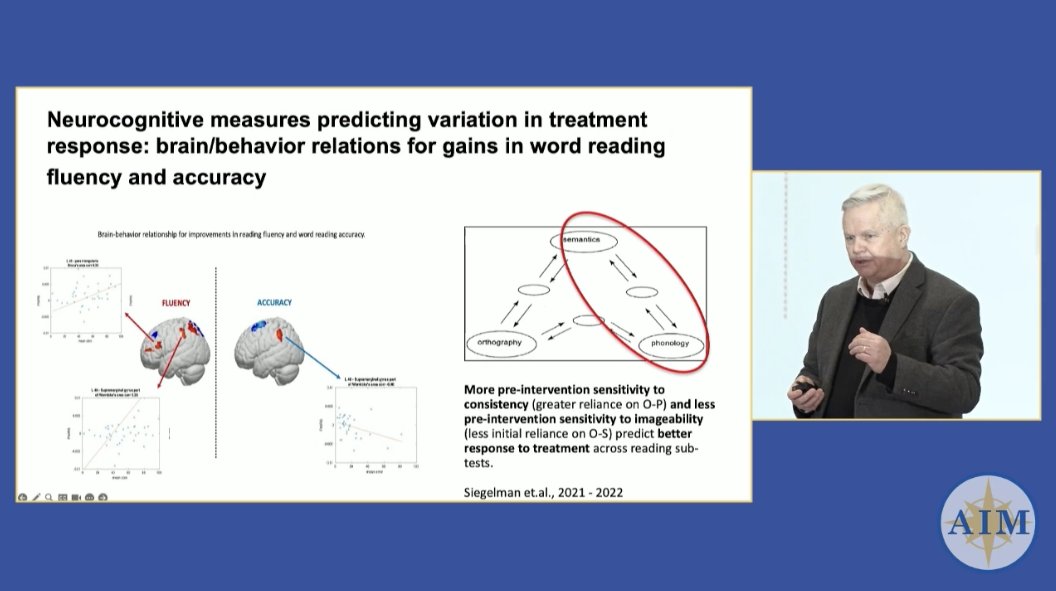
How long-standing and how deep is the science on early reading acquisition? Check out our hyperlinked timeline of history's heavy hitters. https://t.co/51siP2rO6q #notnewnews#sor#scienceofreading@ehanford
@drakmog@karenvaites As a small publisher, I can attest that licensing is a bear. But I have been assuming this pattern is more ideologically driven rather than commercially driven. I don't know.
Do you know someone in the 8th-11th grade who wants to get the Alpha experience but can’t move to one of our cities?
We are giving away 12 scholarships to students with ideas! We will help FUND their idea! Link in the comments.
Another benefit of dumping the syllable-type rules: "We compared the traditional coding method to our chunking and set-for-variability approach. We were able to read about six words using chunking in the time it took to code just one. That was really eye-opening."
Meet Tara Hess, a fellow S2P educator. Tara is a wonderful educator who has learned how 2 accelerate growth & continues to work on refining her teaching skills year after year. Read her story in the thread⬇️
@D99Cicero@tara_deann@ReadSimplified@SoRclassroom
@RplusDyslexia@StamStam193 Strong language. This is a quote from a teacher I know personally who ran an in school experiment that she explains in the article.
Students with dyslexia need more time and intense instruction but no-rules approaches work: https://t.co/gYNbeR9KUa
@laurapatranella Right! After all that effort, one still may need to "try one sound and if it doesn't work, try another." Just do that from the beginning.
❝Ruthless simplicity (doing fewer things) and collective alignment (doing those things the same way) are two powerful levers for reducing this complexity.❞
Habit Assemblies: Accelerating culture for learning
The more complex a school, the more attention and effort is required just to maintain it… attention and effort that could (should) be going into improving learning.
Ruthless simplicity (doing fewer things) and collective alignment (doing those things the same way) are two powerful levers for reducing this complexity.
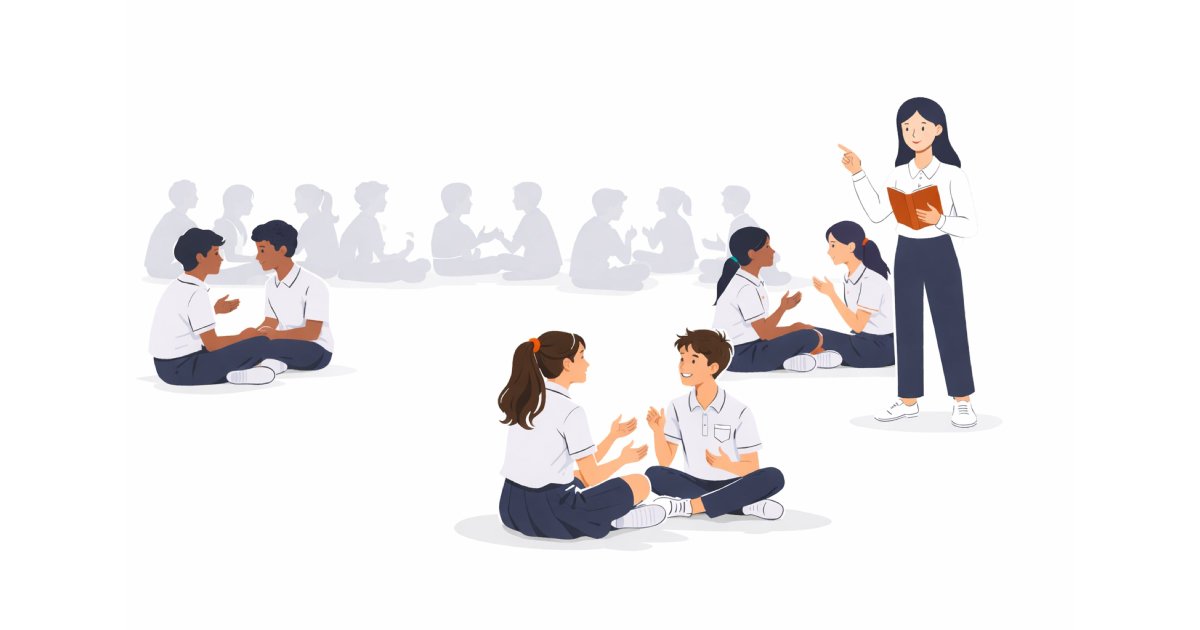
Most schools pursue collective alignment by focussing on teachers... practising agreed routines and norms together, then implementing them back in classrooms. This is great... BUT, the schools that do it best go one step further. They also practise with students. All together. At once.
A kind of *habit assembly*
Imagine 200 year 7s in the hall, all practising how to turn-and-talk. How to answer questions. How to treat others with respect. How to sit and act in ways that optimise attention.
Without this, we have to build culture from scratch, in isolation, 30 students at a time. With habit assemblies, students arrive in our classrooms already primed. We just need to stick to the plan.
The rationale for this is social norms. Our behaviour is shaped less by what we're told to do and more by what we see others doing. In a habit assembly, every student sees every other student doing the same thing. They don't just learn the routine... they internalise the norm… this is how we do things around here.
And culture compounds: once routines are internalised, each lesson reinforces the norm, which makes the next assembly even stronger.
Most schools already have the time for this. Existing assembly slots or collapsed tutor/form time can be repurposed without adding to the timetable.
Of course, this only works if it's done with students, not to them. Roll it out heavy-handedly or without buy-in and things'll backfire fast.
The more we build habits together, the stronger the culture we end up with.
PS. Video of habit assemblies in action coming soon...
@HartofLearning@VinceBoley Thank you! Sometimes just 4 hours of instruction:
https://t.co/kU5lhqjIRV OR 4 weeks: https://t.co/y2cYYW9UDA Or nearly 4 years growth in 17 weeks: https://t.co/U0oBPyqnqo
Couldn’t make it to this year’s Research to Practice Symposium?
You can still learn from the leading voices in literacy and the science of reading.
🎥 Symposium recordings are now available on Nexus, giving you access to powerful sessions from researchers and educators working to transform literacy instruction.
With a free basic Nexus membership, you can explore the full Symposium video library and learn at your own pace.
Start watching:
https://t.co/CdV8gAZGIN
*If you attended the Symposium in person or online, keep an eye on your email for details about accessing the recordings.
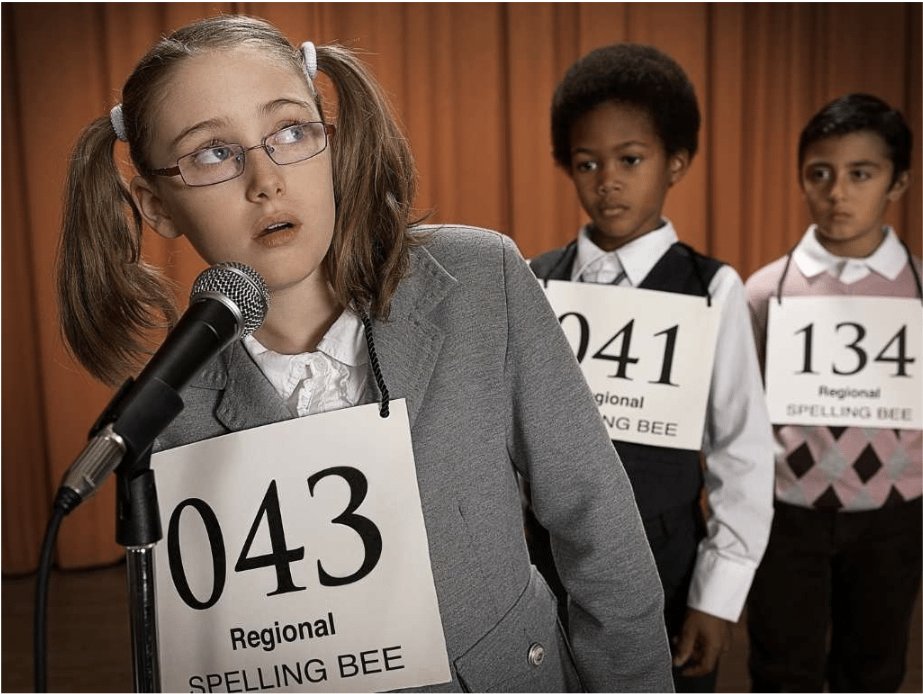
Don't hold up reading instruction because a kid can't spell the words yet. Reading is multiple choice. Spelling is fill-in-the-blank. Of course it takes longer! Let reading lead. 🏇
Learn more. 👇🏾
Teachers and parents: if you know anyone on a curriculum selection committee, please send them this tweet, ask them to choose book-and-paper oriented curricula.
Thank you @karenvaites