SOUVERAINETÉ ÉCONOMIQUE
Le Président du Faso inaugure la première raffinerie d'or du Burkina
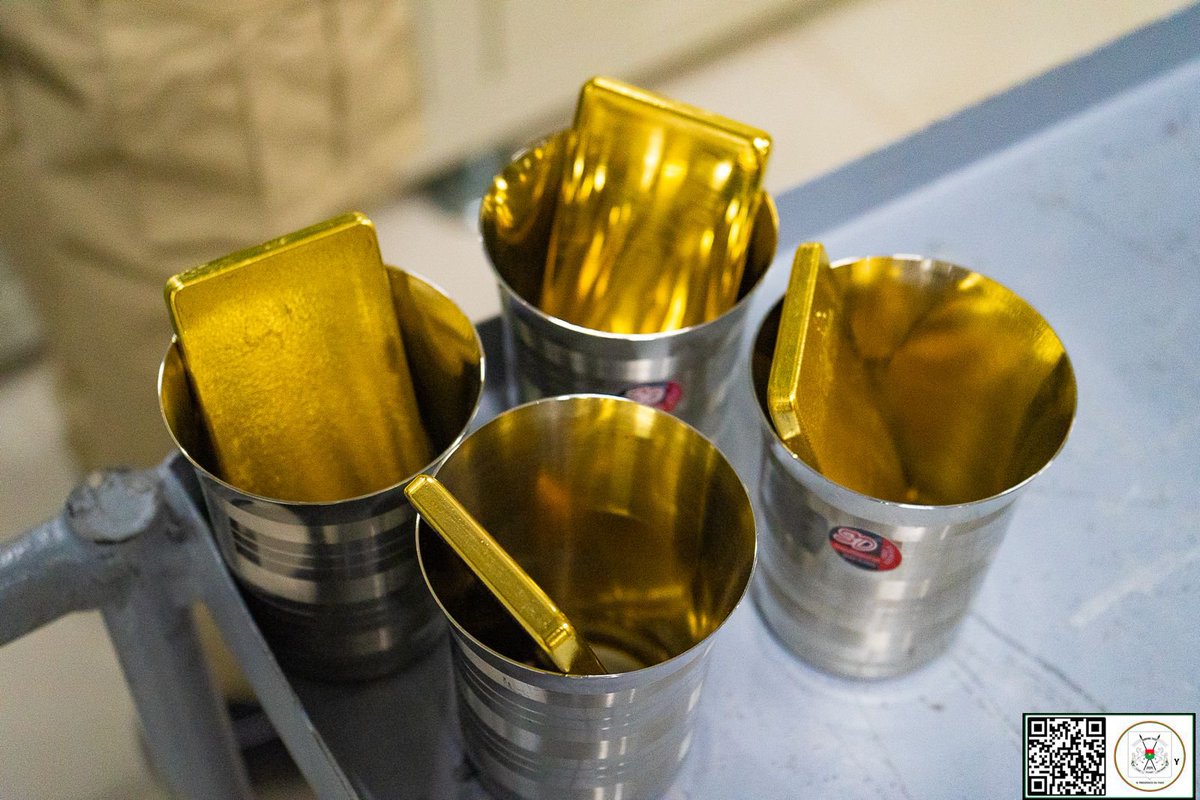
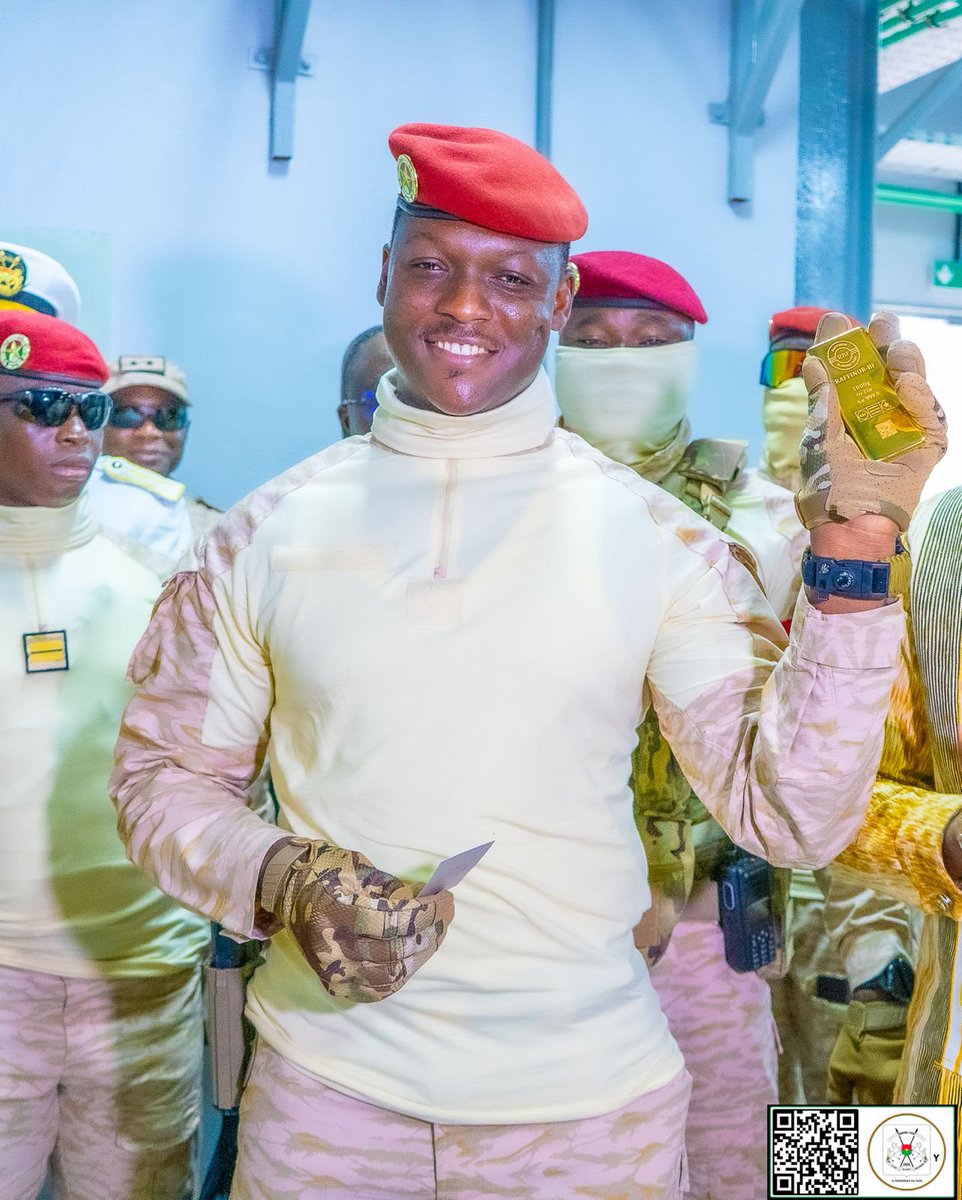
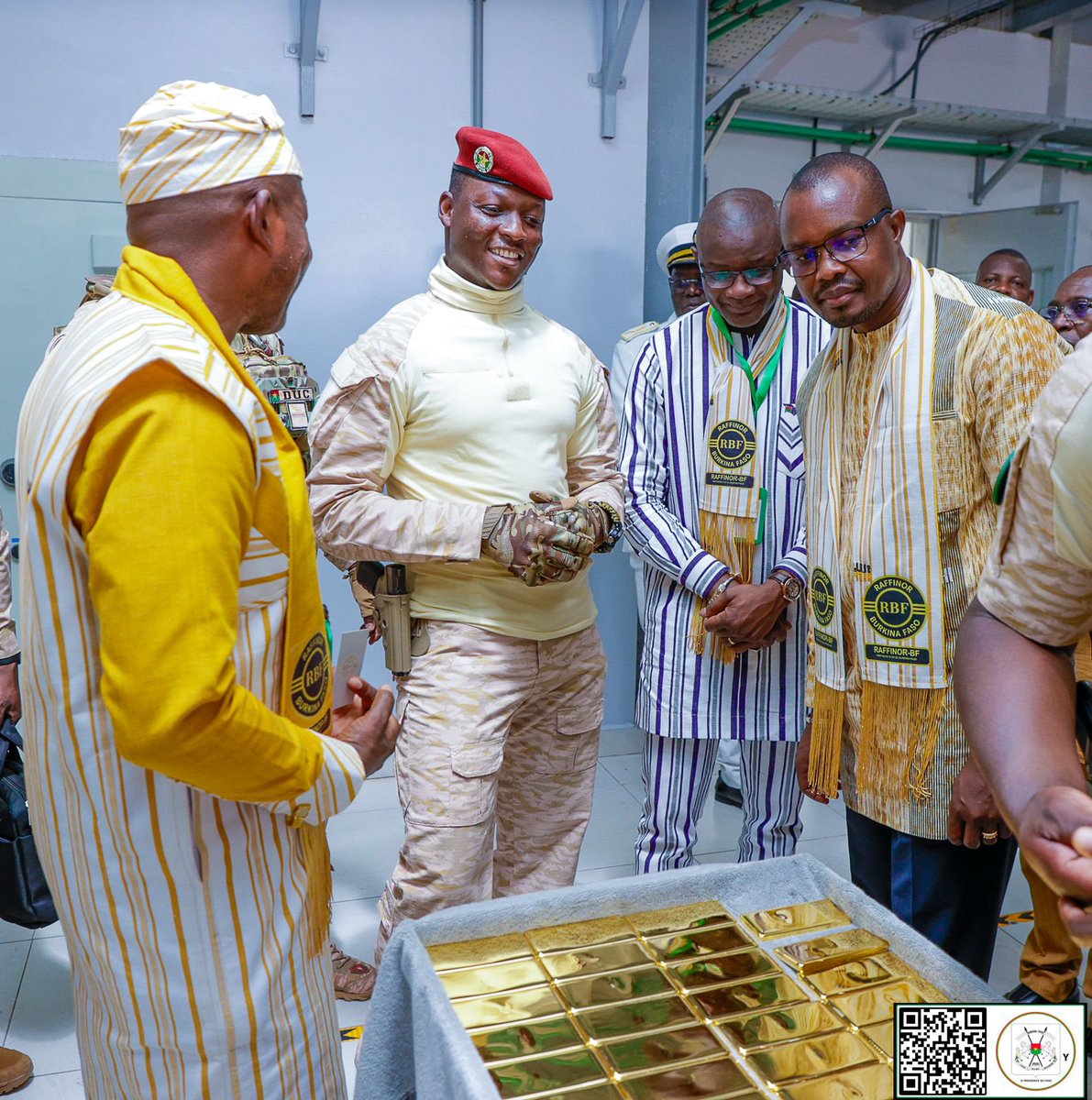
(Ouagadougou, 28 septembre 2026). Le Président du Faso, Chef de l’État, le Camarade Capitaine Ibrahim TRAORÉ, a inauguré ce lundi, la Raffinerie nationale d'Or du Burkina Faso (RAFFINOR-BF). Avec la mise en service de cette première usine d’affinage de l’or, le Burkina Faso franchit une étape historique, dans sa quête d'indépendance économique.
À l'issue de la visite guidée, le Camarade Capitaine Ibrahim TRAORÉ a réaffirmé sa volonté de rompre avec le modèle extractif traditionnel au profit d'une maîtrise intégrée des ressources naturelles. Le Chef de l'État a insisté sur la nécessité de transformer les ressources minérales afin d'en capter la valeur ajoutée sur le territoire national.
« Notre ambition n'est plus d'être juste un pays qui extrait et qui amène sa matière première dehors. Nous voulons affiner tous nos métaux sur place (…) nous voulons avoir toute la chaîne de valeur sur place », a déclaré le Président du Faso.
Au-delà de l'enjeu économique, cette transformation industrielle s'accompagne d'une invite à la jeunesse à développer des compétences techniques pointues, « à s'y mettre et à apprendre à maîtriser toute la chaîne de valeur ».
Cette raffinerie représente un investissement global de plus de 11 milliards FCFA mobilisés par l'État burkinabè, notamment via la Société nationale des substances précieuses (SONASP), en partenariat avec le secteur privé national.
Dotée de technologies automatisées de pointe, l’infrastraucture a été conçue pour répondre aux normes industrielles les plus exigeantes. Dans sa première phase de fonctionnement, l'usine affichera une capacité d'affinage de 164 tonnes d'or par an, avec une projection à terme pouvant atteindre 515 tonnes.
Le Ministre de l'Énergie, des Mines et des Carrières, Camarade Yacouba Zabré GOUBA a qualifié cette inauguration d'acte de souveraineté assumée. « C'est le jour où nous reprenons les clés de notre propre maison. Notre or ne servira plus à créer de la valeur ajoutée pour les autres pendant que notre Peuple reste dans le besoin », a souligné Camarade GOUBA.
Avec RAFFINOR-BF, les autorités sous la Révolution Progressiste Populaire ambitionnent non seulement de traiter l'intégralité de la production aurifère nationale (industrielle comme artisanale), mais aussi de positionner le Burkina Faso comme un pôle de référence pour l'affinage de l'or en Afrique de l'Ouest.
Direction de la communication de la Présidence du Faso
@fadaoluoma Hope Uzodinma chairs the APC Governors Forum, yet he never attacks Peter Obi the way Soludo does. Well-meaning Nigerians won’t stand by while Soludo pushes narratives against Obi. Same energy will be returned
Election result manipulation will ALWAYS leave a trail.
You just have to look deeper and dig further. Eventually, the inconsistencies reveal themselves.
ON THE ANAMBRA DEBT QUESTION
I have remained silent over the past few days because I have been grieving the loss of my very dear elder brother and friend, Chief Okey Ezeibe. However, the time has come for me to address some of the matters that have occupied public discussion in recent days.
I respectfully urge everyone to concentrate on the existential challenges confronting Nigeria and the hardships endured by its citizens, rather than on the needless distractions that have become widespread in our politics.
I wish to assure the public that I have no disagreement with my dear elder brother, Governor Soludo, or with any governor in Nigeria. I am not seeking the office of governor in any state, and I will not seek that position again, even if the Constitution is amended.
Accordingly, I appeal to governors to support whichever presidential candidate they choose while also permitting and assisting other presidential candidates and contenders for other offices to campaign freely and without interruption in their states. Ultimately, voters should be allowed to determine whom they wish to serve them.
Regarding the multilateral funding inaccurately described as “debt owed by Peter Obi” in Anambra State, I wish to state unequivocally:
As Governor of Anambra State, I did not approach any financial institution to borrow funds or issue a bond on behalf of the state. Indeed, at his farewell ceremony, the then Director-General of the DMO, Abraham Nwankwo, appointed me chairman and declared that, during his 10 years in office, I was the only state governor who had not approached him for a loan facility.
When I left office, the Anambra State Government owed no unpaid salaries, gratuities, or pensions. Neither did it owe any contractor or supplier who had completed work that the government had verified and certified.
Regarding development financing from the World Bank, these are concessionary development-support funds secured by the Federal Government for states selected by it to address specific needs. Repayment is spread over 25 to 30 years.
The Anambra State Government must therefore differentiate among three separate figures: the total amount approved for the multiyear development program; the amount Anambra State actually drew during my tenure; and the funding balance outstanding when I handed over on 17 March 2014.
The government has combined these distinct categories, added them together, and described the resulting US$123.77 million as “loans left by Peter Obi.” That is an incorrect application of public-sector accounting.
The eight facilities identified were primarily World Bank and IFAD development programs negotiated by the Federal Government, with participating states receiving access to the funds through subsidiary arrangements. They were not conventional commercial loans that I personally secured during my tenure.
This does not suggest that Anambra had no repayment responsibilities; rather, each facility must be examined in light of its approval, effectiveness, drawdown, and repayment record.
The clearest contradiction appears in the government’s own figures. It states that the original facilities amounted to approximately US$123.77 million and that US$92.35 million remained outstanding in June 2026. However, the DMO’s published records showed Anambra’s total external debt at approximately US$18 million when I began my tenure in March 2006, about US$30 million in March 2014, when I left office, and approximately US$45.15 million as of 31 December 2014, nine months after my departure.
The Anambra State Government must therefore clarify how a state whose recorded external debt was about US$30 million in March 2014 and US$45.15 million in December 2014 could supposedly have inherited US$123.77 million from Peter Obi, who left office in March of that same year.
We need to know who all the 37 States INEC Returning Officers are and their family members.
These people are often Professors who kept rigging elections and putting the nation in jeopardy just to feed their greed.
We need to know them and begin to warn them against rigging 2027 elections.
37 greedy people cannot continue to ruin our nation! Not anymore!
Ire o✌🏾
@ola_bliss95 Keep comparing apples to oranges. Obi paid billions clearing arrears for civil servants and teachers. He blocked the Water Corp because they generated zero output and refused to submit a sustainability blueprint to justify funding. Taxpayers won't fund a pipeline for fraud.
Digging up a memo from April 25, 2006—when Peter Obi was barely one month in office—to prove he failed is the height of political desperation!
He inherited those Water Corp arrears from the previous administration. You are literally posting the receipt of him discovering your old mess, refusing to fund a dead urban bureaucracy, and choosing to build over 925 clean water schemes straight for the grassroots instead. Nice try!
Our adversaries always noticeably avoid the topic of Peter Obi's impeachment. They completely skip this part of his history because they know that the actual reason behind that impeachment is more than enough reason to elect any leader, in any part of the world. They cannot afford to let the public focus on it, because it completely destroys the narrative that he was a weak or ineffective administrator.
The historical fact remains that the hostile, opposition-dominated Assembly moved against him simply because he locked the state vault against legislative greed and firmly refused to inflate the state renovation budget. Instead of playing dirty politics and sharing taxpayers' money to secure his own seat, he chose to be impeached rather than compromise his fiscal discipline and personal integrity. He stood his ground alone against a corrupt system, fought back, and forced his way back into office through sheer resilience.
This is exactly why his detractors run away from the topic. His impeachment wasn’t a sign of failure; it was a badge of absolute honor. It proved to the entire world that Peter Obi is a leader who will never collude with cabals to bleed the public treasury dry. If Nigeria is looking for a president who can aggressively dismantle institutional corruption and stand firm under pressure, his Anambra history has already given us the answer.
Peter Obi protected public funds. The Anambra Water Corp was a commercialized agency legally required to fund itself. Obi requested a viability blueprint, but management failed to deliver. Refusing to bail out a moribund entity isn't 'owing salary'—it's prudent governance.
Please fact check this @grok
State if the loans were multilateral
State the borrower
State the disbursement dates
State the DMO verified figure for external and local debts when obi handed over.