NWB just turned 10 years old! Researchers worldwide have downloaded 1.9 PB of NWB data from the @DANDIArchive. This animation shows the reach of NWB, facilitating collaboration across the globe. What impact has open neurophysiology data had on your science? Share your stories! 🧠
Six tips for going public with your lab’s software: https://t.co/Kc6svMnzZg
1) make time for maintenance
2) simplify installation
3) add a GUI or good CLI
4) good documentation
5) use github/git
6) automated testing
Any other tips people have?
#OpenScience#OpenSource
Funders' failure to support boring but critical utilities was a common theme at our recent National Academy/Royal Society Data Summit.
"Everyone's wants to build a new gleaming fountain but no-one wants to pay for the plumbing" was the meme of the day.
Neuroscience needs research engineers, but orgs are not ready for this. I agree wholeheartedly with Gaelle and Olivier.
1. RSEs should be inside of a ladder/org where they can learn from each other. A lone RSE in a lab is a recipe for isolation, skill atrophy, low mobility. 1/
Another insightful, forward-thinking article from The Transmitter.
I'll go even further. As someone with experience in both academia and industry, I think that academia's inability to create meaningful careers beyond principal investigator roles is significantly holding it back. The concept of research software engineers sounds like a dream.
The reality is that even accomplished neuroscientists have to leave academia if they don't aspire to become PIs or aren't willing to accept second-class status. This narrow career path structure is limiting the potential of academic research in today's highly interdisciplinary, large-project neuroscience.
With neuroscience datasets and scientific collaborations growing in size, Gaelle Chapuis and Olivier Winter explain why neuroscience needs to create a career path for software engineers.
https://t.co/y8VpwO5R4p
Wrapping up an incredible #NeuroDataReHack at Janelia! ☕️ Excited to continue advancing open data in neurophysiology with the amazing #NWB community. Until next time! 🧠🔬 #OpenScience
🚀 Excited to kick off NeuroDataReHack 2024 at Janelia! 🧠🔍 Join us in empowering neuroscientists to analyze open NWB datasets on DANDI. Here’s @reallyryanly sharing insights to get us started. Let the innovation begin! 💡
#NeuroDataReHack#OpenScience#Neurophysiology
🚀 1/n Exciting developments in #Neurophysiology! The ODIN symposium showcased how open data can transform neuroscience research. Dive into our latest paper summarizing findings & future directions in open science, neurophys, sysneuro, compneuro . 🧠 #OpenScience#NeuroData 👇🧵
🎉 We’re thrilled to announce the release of NWB GUIDE! Think TurboTax for your neurophysiology data - convert to NWB and upload to @DANDIArchive with zero coding. 🚀 Supports 40+ popular formats. Explore our docs: https://t.co/qwUn3vKTXN and tutorial: https://t.co/LaUi57donT
Question for folks in collaborations of 5+ labs: do you feel like you are all set with data architecture? Did you get enough funds for this? What are the limitations right now?
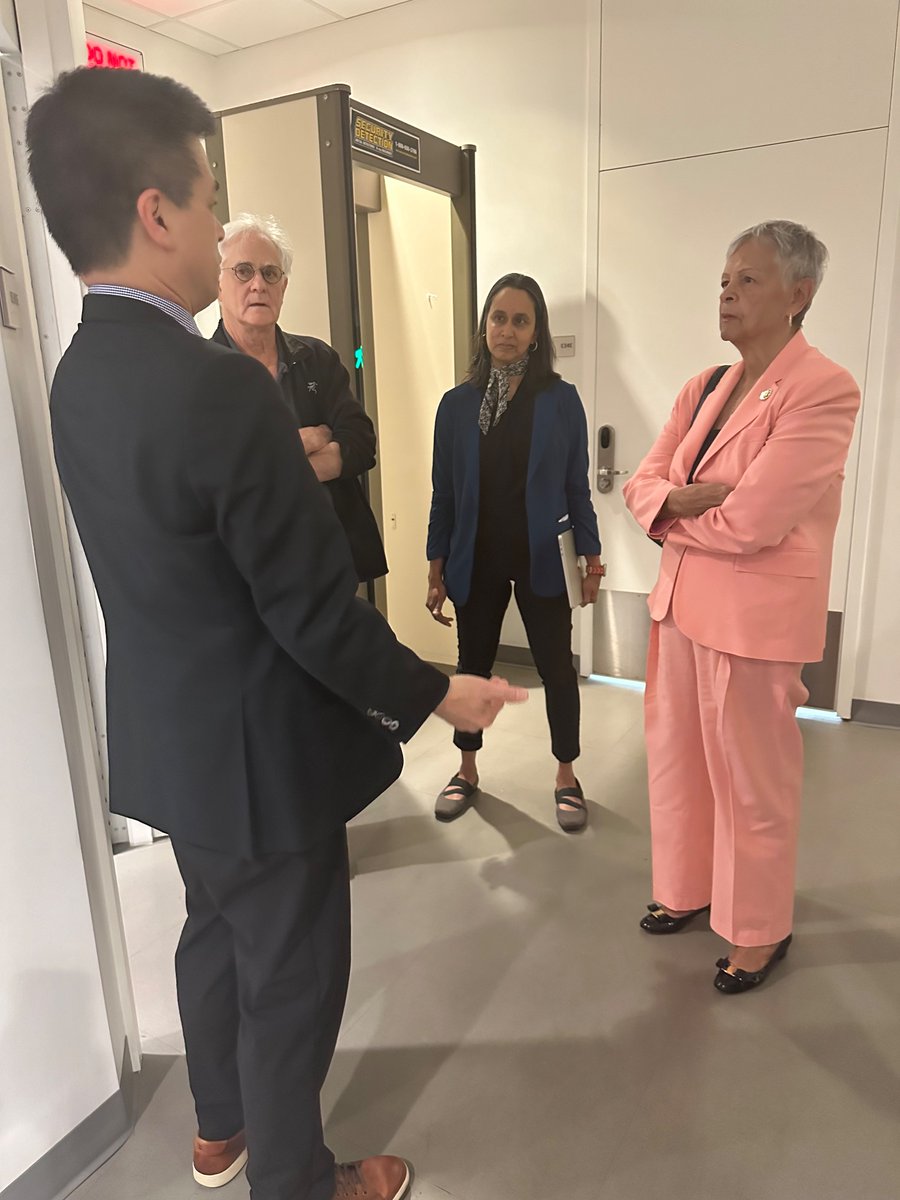
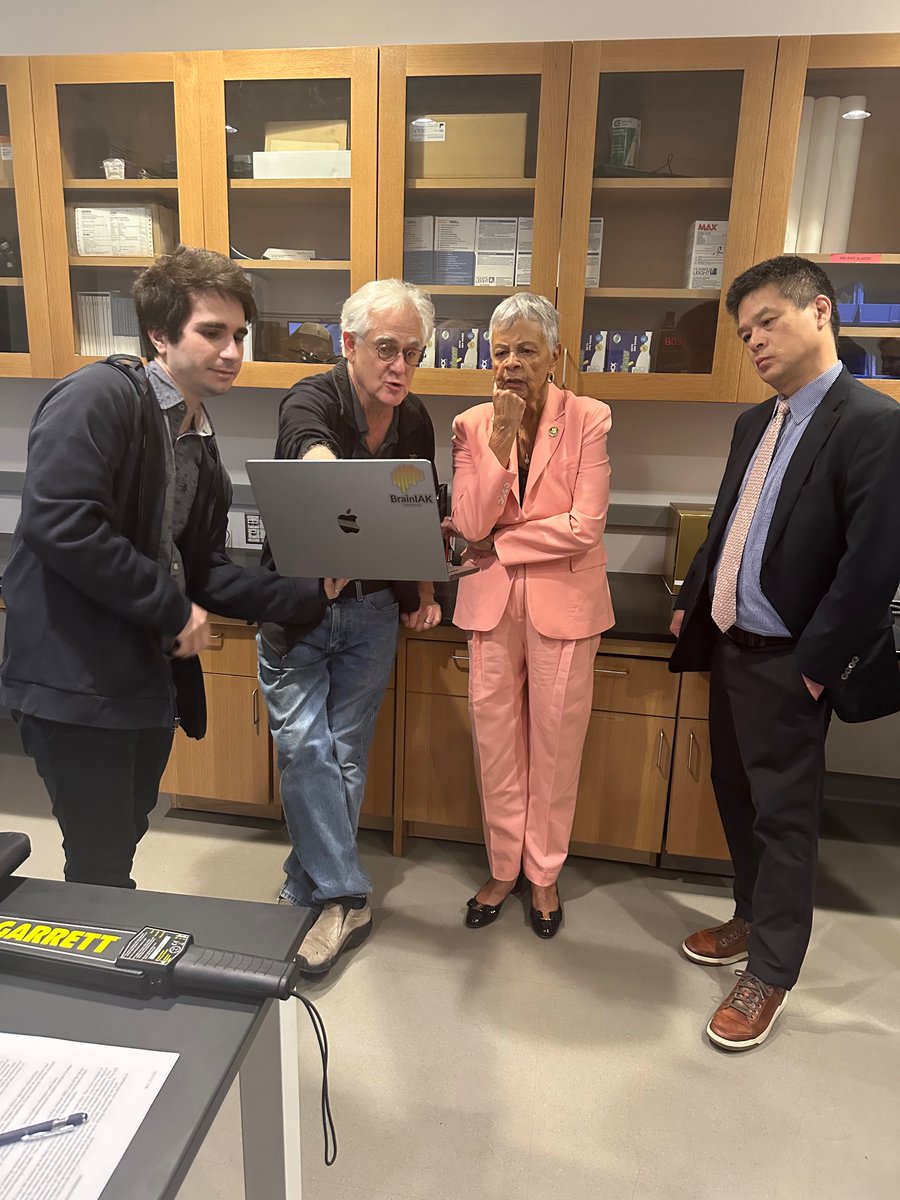
Today I toured @PrincetonNeuro to learn more about the groundbreaking work they're doing to understand the human brain.
Congress must provide robust support for these scientific pursuits, which may reveal solutions to mental illness, brain disease, and other neurological issues.
Hey Neurotweeps!! What are Youuuuu doing to revive the BRAIN initiative?
Thanks to @CoryMillerMarmo and @ardemp for leading the charge in opening up a dialogue about the importance of BRAIN Initiative funding, which is much needed to get all the essential neuroscience that falls thru the cracks of funding mechs at NIH (like tech, or multidiscipl), to train new generations, to be the connective tissues that makes the most of an investment initiated a decade ago to do everything from cure disease to improve AI.
We are getting ready to launch *NWB GUIDE*, a user interface for converting neurophysiology data from 40+ formats to NWB, without coding! If you would like to learn how to use GUIDE and provide feedback to help improve the app, please let us know: https://t.co/Z11Ow5P4Wk
I've been spending time analyzing open-source systems neuroscience datasets, and my general impression is that there are major problems with how people organize their data and write their code. This needs to be a bigger part of training.
Our paper, Crows ‘count’ the number of self-generated vocalizations, is out! With this amazing team (@KatharinaBrecht, @lena_veit, A_Nieder), we uncovered that crows are able to control the number of vocalizations produced.
https://t.co/b9zpgV3qhC
If you're a neuroscientist, you've probably heard that congress passed final appropriations for FY24, with deep cuts (~40%) to BRAIN Initiative. Advocates are now pushing for +$740 million in FY25 and @SfNtweets made it easy for you to add your voice here:
https://t.co/lxqJ7KhooW
Next @us_rse neuro-RSE meeting this mon 12p EST / 9a PST (part 2):
For the discussion of career paths, @adamltyson will briefly introduce the pathway his group has developed at UCL, as a jumping-off point
Again, reply/DM for invite, and RTs appreciated!
2/2
Next @us_rse neuro-RSE meeting this mon 12p EST / 9a PST
- @reallyryanly will give a talk on @NeurodataWB
- @yarikoptic will update us after the @BIDSstandard maintainers summit
We'll also talk discuss paths for RSEs in neuro
Reply/DM for invite! RTs appreciated!
1/2