Spent the last few months building @AscendBet privately.
We just completed our first structured prediction test season with:
- live leaderboards
- performance tracking
- competitive progression
- recurring engagement loops
Still early.
But the vision is becoming real.
Building a different kind of prediction platform focused on competition, consistency, and long-term engagement.
A lot of betting products are built around transactions.
I'm more interested in building around participation.
The transaction happens once.
The competition can last a season.
One thing I've learned building AscendBet:
People don't just want to participate.
They want to know where they stand.
The prediction is the activity.
The competition is the experience.
That's a very different product.
Founder AscendBet,
Building a competitive sports prediction platform around progression systems, rankings, and repeat participation.
The goal isn't to make predictions more accurate.
The goal is to make participation more meaningful.
As a technical founder, my default solution to every problem is to build.
Lately I'm learning that visibility, distribution, and feedback loops are just as important as code.
One of the least popular decisions we made during AscendBet's early testing was limiting users to just 3 predictions per day.
We also introduced maximum stake limits and maximum odds limits.
At first, participants pushed back.
Many were used to unlimited betting opportunities and viewed the restrictions as unnecessary.
But something interesting happened over time.
The conversation shifted from:
"How many bets can I place today?"
to
"Which prediction is actually worth using one of my 3 slots on?"
Participants became more selective.
More deliberate.
More focused on long-term performance instead of short-term excitement.
What started as a restriction became a behavioral filter.
The goal was never to encourage more betting activity.
The goal was to encourage better decision-making.
We're still early, but one of the most interesting lessons from our first validation cycle is that sometimes engagement isn't created by giving users more freedom.
Sometimes it's created by giving them meaningful constraints.
That's one of the principles we're exploring at AscendBet.
Interesting how quickly doors open when you focus on learning instead of pitching.
The last few weeks have been spent connecting with operators, founders, investors, and gaming executives across multiple markets.
Still early, but the insights are compounding.
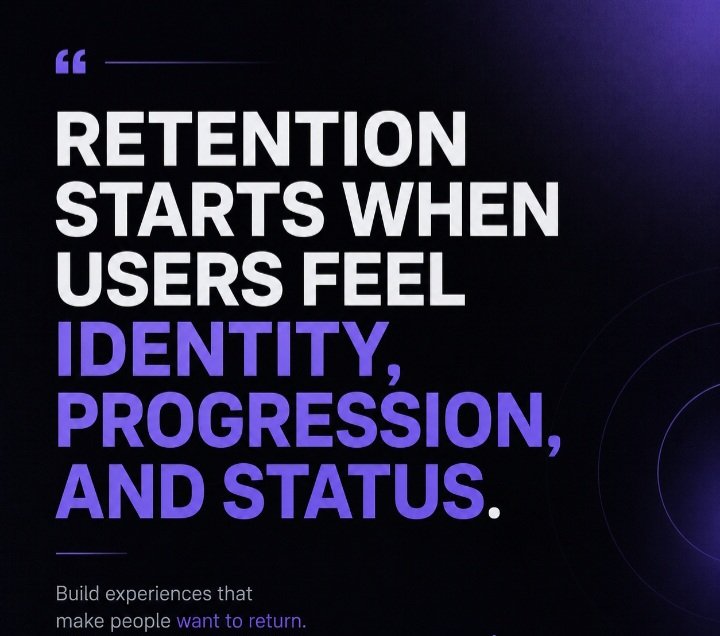
One thing the betting industry underestimates is identity.
Most platforms treat users like temporary transactions.
But people stay engaged longer when they feel:
• ranked
• recognized
• improving
• part of a competitive ecosystem
That’s why games retain.
That’s why leaderboards work.
That’s why people revisit apps even when no money is involved.
The real opportunity may not be “more betting.”
It may be turning prediction into an ongoing competitive experience people emotionally attach to.
That shift changes retention completely.
What keeps people coming back isn’t always the payout.
Sometimes it’s the feeling that:
“this could finally be my moment.”
That psychology drives more engagement than most people realize.
A lot of iGaming platforms are competing on acquisition.
I think the next evolution of the industry will be driven more by:
retention,
competition,
progression systems,
and community engagement.
That’s one of the reasons I’m so interested in what we’re building with @AscendBet right now.
One underrated founder skill is staying consistent long enough for people to finally notice the work.
A lot of great things spend a long time unnoticed before they finally click.
Building consumer products really changes how you think about metrics.
A lot of things can create temporary spikes.
But the real signal is simple:
do people genuinely come back when nobody forces them to?
That’s where the interesting behavior starts showing up.
Something interesting during testing:
users were checking leaderboard positions more than we expected.
Not because there was some huge prize attached.
People just genuinely wanted to know:
“am I moving up or down?”
That changed my perspective a bit.
Prediction becomes very different when you add progression and competition into the experience.