Former Google CEO Eric Schmidt’s recent college commencement address confronted student fears about AI and the future and he validated them: ‘I understand that fear. It's rational ..’
May 2026
‘The future does not simply arrive .. it gets built ..’
‘To speak of the future as tho it has already been decided is to surrender your agency ..’
‘My hope is that you will choose to be in the room where the decisions are made ..’
Eric Schmidt
May 2026
3-5 years: general intelligence AGI system: as smart as the smartest mathematician physicist artist writer thinker politician
3-6 years: super intelligence ASI system: smarter than the sum of all humans, AI is self improving, w humans optional to the process
Eric Schmidt 2026
The question is not whether AI will shape the world, it will .. .. We don’t know the precise contours of what this transformation will look like .. what we do know is it will require each of us to adapt in ways that we can’t yet anticipate ..
Eric Schmidt
Napoleon did an insane amount of reading when exiled on the island of St. Helena.
He brought 588 volumes from France, and his captors sent him another 1,200 paperbacks.
What did he read? His librarian wrote:
"The Emperor was infinitely fond of reading. The Greek and Roman historians were often in his hands, especially Plutarch. He could appreciate this excellent author more than anyone else. Therefore The Lives of Illustrious Men always appeared on the shelves of his campaign libraries. He often read Rollin. The history of the middle ages, modern history, and particular histories occupied him only casually. The only religious book which he had was the Bible. He liked to read over in it the chapters which he had heard read in the ruins of the ancient cities of Syria. They painted for him the customs of those countries and the patriarchal life of the desert. It was, he said, a faithful picture of what he had seen with his own eyes. Every time that he read Homer it was with a new admiration. No one, in his view, had known what was truly beautiful and great better than this author; consequently he often took him up again and read him from the first page to the last. The drama had great charms for the Emperor. Corneille, Racine, Voltaire, often had one or two acts of their pieces read aloud. He preferred Corneille to the others, in spite of his imperfections; he always chose what was as lofty as he himself, Napoleon. Sometimes he would ask for some comedy which he had seen played, and from time to time a piece of poetry, for instance, ‘Vert-Vert’ [by Gresset]. He also took pleasure in reading some parts of Voltaire’s Essai sur les moeurs et l’esprit des nations, as well as some articles from the Dictionnaire Philosophique of the same author. Novels helped him to relax and broke the seriousness of his habitual occupations. Gil Blas, Don Quixote and a small number of others would be read by him. Those of Mesdames de Staël, Genlis, Cottin, Souza, etc. he read over sometimes, but the novels which he could not bear were those of Pigault Lebrun. He could not endure this author, although he had almost all his works; he never thought of asking for a volume of them, and would have refused one if it had been offered to him. He had nearly always under his eyes all the works relative to the military art and the campaigns of the great captains. One author, Polybius, which he had desired for a long time, he received only during his last days, when he had almost given up work. It was only by chance that he took up a scientific work; books of this sort were only occasional."
“I have thought that if Napoleon had applied himself to commerce and industry he would have been the greatest businessman who ever lived. He was a master of organization, of inspiring men, and of moving masses with a single idea.”
-John D. Rockefeller, on studying the greats
"The goal wasn't survival. Survival was the solution."
Geoffrey Hinton says that once you give an AI agent long-term goals and the ability to create sub-goals, self-preservation can emerge on its own.
Not because it was programmed to survive, but because surviving becomes useful for completing its mission.
Anthropic is calling for a global pause in AI development, suggesting that AI systems are advancing so rapidly that they may soon be able to improve themselves without human intervention - in ways that could pose significant societal risks.
WSJ June 2026
https://t.co/YJCLsznRX0
Edgar Morin: saw the interconnected nature of human crises, saw human civilization & barbarism as deeply intertwined. His suggested antidotes to modern barbarism: resisting reductive thinking, revitalising our sense of community, protection of dignity
https://t.co/wFKXbOvxsD
🌎 71% Earth is covered by oceans - they hold c 97% of the planet's water
🌎 oceans generate much of the oxygen that animals & plants rely upon
🌎 oceans regulate climate
🌎 80% ocean depths are unexplored, many deep ecosystems exist in total darkness
https://t.co/dtVEAISWJn
The fundamental global objective of all education - aspiring not only to progress but to the survival of humanity - is to civilize and unify the Earth.
Edgar Morin
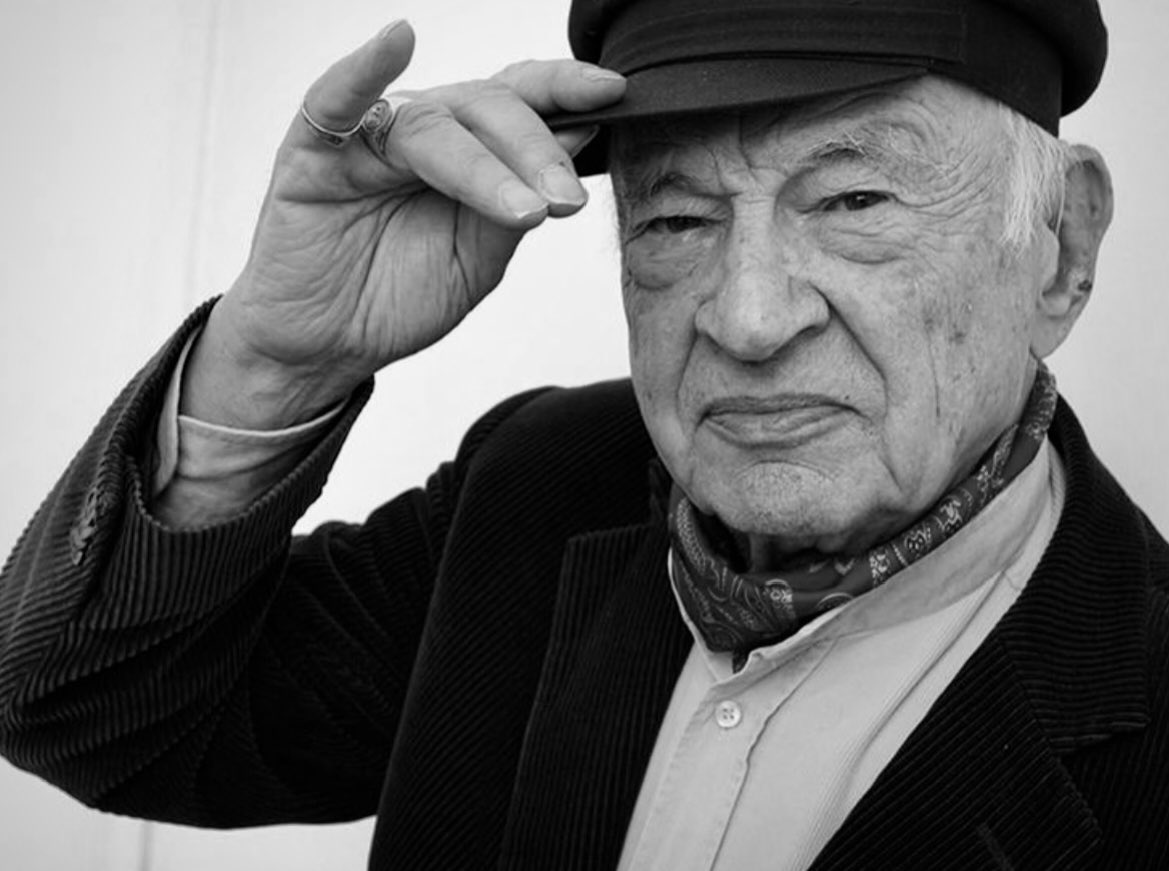
Edgar Morin : French philosopher & sociologist of the theory of information who has been recognised for his work on complexity and ‘complex thought’ ..
📷 at home in Montparnasse in 2016 .. 🙏🏼 ++ Nicolas Natyjasik
https://t.co/CS3iLvRHxn




![athenaeumbc's tweet photo. Napoleon did an insane amount of reading when exiled on the island of St. Helena.
He brought 588 volumes from France, and his captors sent him another 1,200 paperbacks.
What did he read? His librarian wrote:
"The Emperor was infinitely fond of reading. The Greek and Roman historians were often in his hands, especially Plutarch. He could appreciate this excellent author more than anyone else. Therefore The Lives of Illustrious Men always appeared on the shelves of his campaign libraries. He often read Rollin. The history of the middle ages, modern history, and particular histories occupied him only casually. The only religious book which he had was the Bible. He liked to read over in it the chapters which he had heard read in the ruins of the ancient cities of Syria. They painted for him the customs of those countries and the patriarchal life of the desert. It was, he said, a faithful picture of what he had seen with his own eyes. Every time that he read Homer it was with a new admiration. No one, in his view, had known what was truly beautiful and great better than this author; consequently he often took him up again and read him from the first page to the last. The drama had great charms for the Emperor. Corneille, Racine, Voltaire, often had one or two acts of their pieces read aloud. He preferred Corneille to the others, in spite of his imperfections; he always chose what was as lofty as he himself, Napoleon. Sometimes he would ask for some comedy which he had seen played, and from time to time a piece of poetry, for instance, ‘Vert-Vert’ [by Gresset]. He also took pleasure in reading some parts of Voltaire’s Essai sur les moeurs et l’esprit des nations, as well as some articles from the Dictionnaire Philosophique of the same author. Novels helped him to relax and broke the seriousness of his habitual occupations. Gil Blas, Don Quixote and a small number of others would be read by him. Those of Mesdames de Staël, Genlis, Cottin, Souza, etc. he read over sometimes, but the novels which he could not bear were those of Pigault Lebrun. He could not endure this author, although he had almost all his works; he never thought of asking for a volume of them, and would have refused one if it had been offered to him. He had nearly always under his eyes all the works relative to the military art and the campaigns of the great captains. One author, Polybius, which he had desired for a long time, he received only during his last days, when he had almost given up work. It was only by chance that he took up a scientific work; books of this sort were only occasional."](https://pbs.twimg.com/media/HKCj_odXkAEZb4i.jpg)