@SkodaIndia@skoda@SkodaHyderabad Skoda Vehicle given for repairs on 07th April 2026. No update yet despite regular follow ups. No response to mails. Visited garage yesterday, vehicle is lying idle and no repaid works initiated. Zero communication and zero accountability.
Last year we got 5x more signups from Google than from ChatGPT.
See the graph with insights from ~250K self-attributed signups — a “small” subset of our total annual signups. 🙃
There’s a lot of fearmongering about SEO being dead, yet Google is still our biggest source of signups.
By far.
Yes, yes… self-attribution data is far from perfect.
But considering how much search traffic our site still gets (despite the whole zero-click massacre), these numbers look pretty reasonable.
The fact that ChatGPT is already our #3 signup source also speaks volumes about how important this channel has become in such a short time.
Do you think it could overtake YouTube this year?
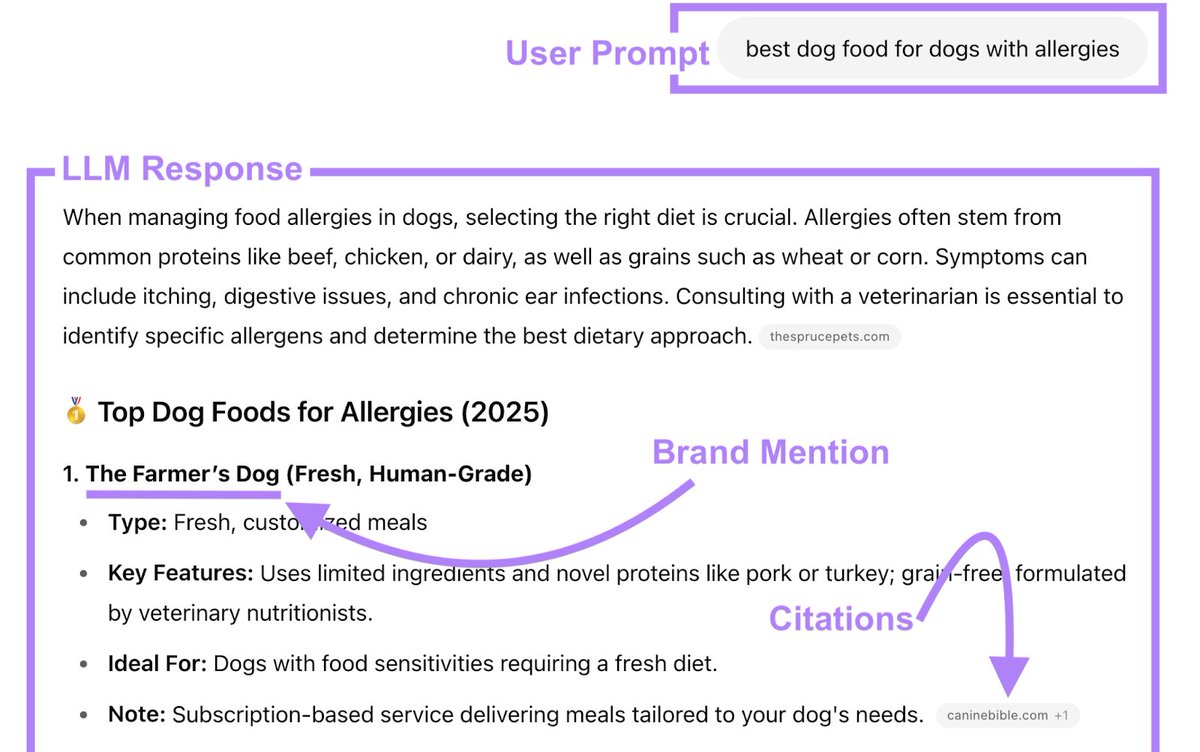
LLM optimization helps your brand show up in AI tools (like ChatGPT) by getting good mentions online and creating content AI can easily use in answers ⬇️ https://t.co/ozoSsQWu7t.
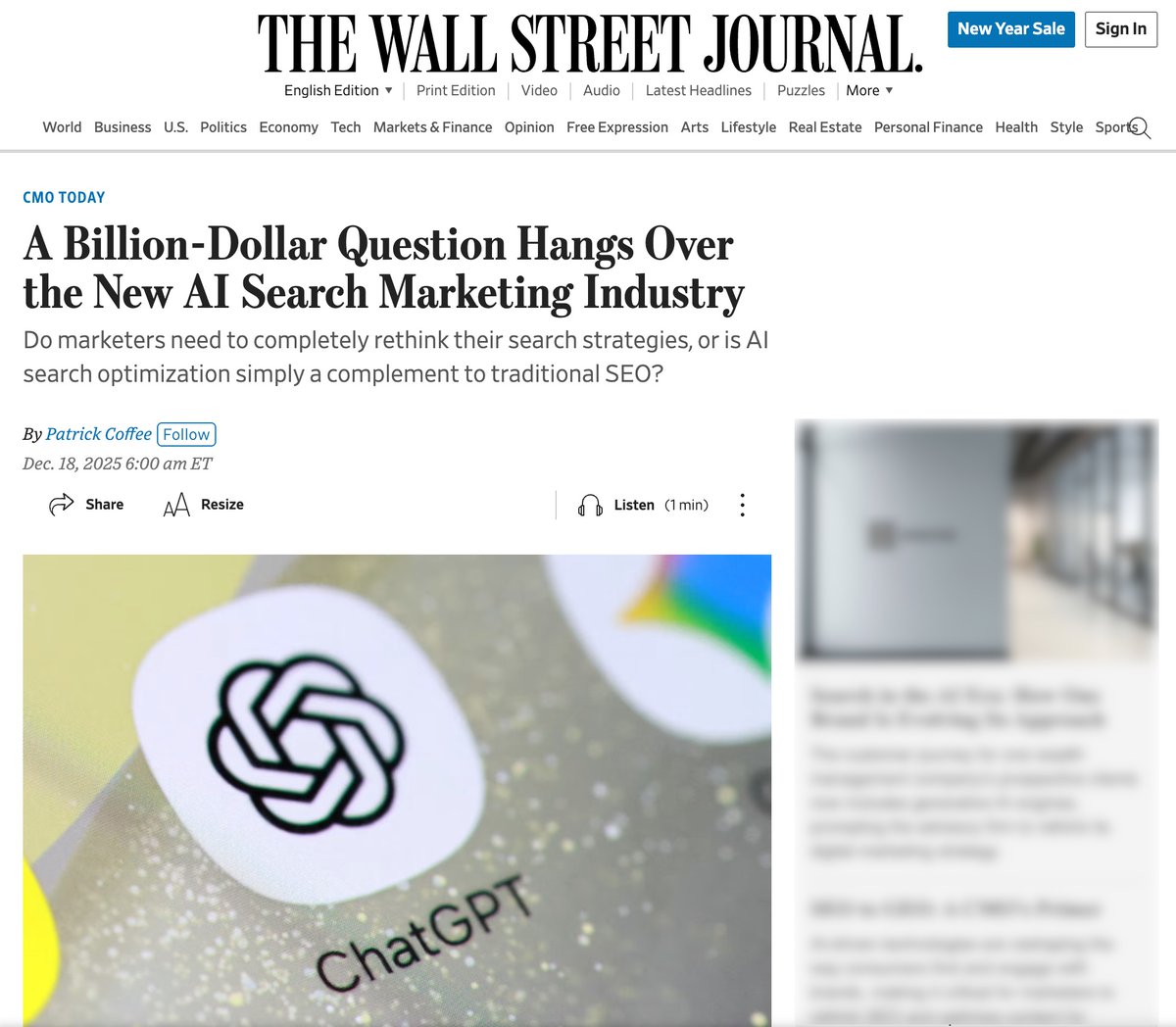
"The global SEO and AEO services market will grow to $171 billion by 2030 from $81.4 billion last year" - Wall Street Journal
The future is bright, ladies & gentlemen.
As it has always been. 🙂
What’s so unique about AI wrappers? Feels like everyone’s just slapping a UI on the same models and calling it innovation. Some have better workflows, some integrate well, but isn’t it just a fancy middleman? Or is there more to it? Thoughts? #AI#Tech#ML
🟣 Key Takeaways:
✅ 51% lower risk of disease progression or death
✅ 63% remained progression-free at 5 years (vs. 41% with monitoring)
✅ Higher survival rate at 5 years (93% vs. 87%)
🚨 Manus AI 3 is BREAKING the internet!
Think Claude + Deep Research + OpenAI Operator… but on steroids.
Here are 8 insane things it can do (you won’t believe #3): 👇
For the first time, HER2-low MBC patients are seeing real survival benefits from a HER2-targeted therapy.
Top influencers on X:
@hoperugo@PTarantinoMD@aksoysercan@DenizCanGuven1 @prat_aleix
🔗More on the trial: DESTINY-Breast04 (NCT03734029) - https://t.co/4x1n9n2Gix
@Larvol
To enable more data-driven decision-making, we tried integrated KM curves from multiple trials into a single, unified curve—offering a more comprehensive & holistic perspective on patient outcomes!
@Larvol
Addition of analytics generated based on insights from prominent oncology influencers
🔹 Influencer Posts on X
🔹 Top Companies
🔹 Trending Trials by Influencer Posts on X
📢 Check out : https://t.co/5ptY8XQ6hW
@Larvol#cancerdata#Oncology
Sentiment Analysis for Clinical Trials is Here! 🏥
It’s a fantastic start to the week as we gear up to launch a new feature. We can’t wait to share more! Check it out now: https://t.co/gVB6eCypm4
#Larvol#OncologyData#CancerResearch#ClinicalTrials
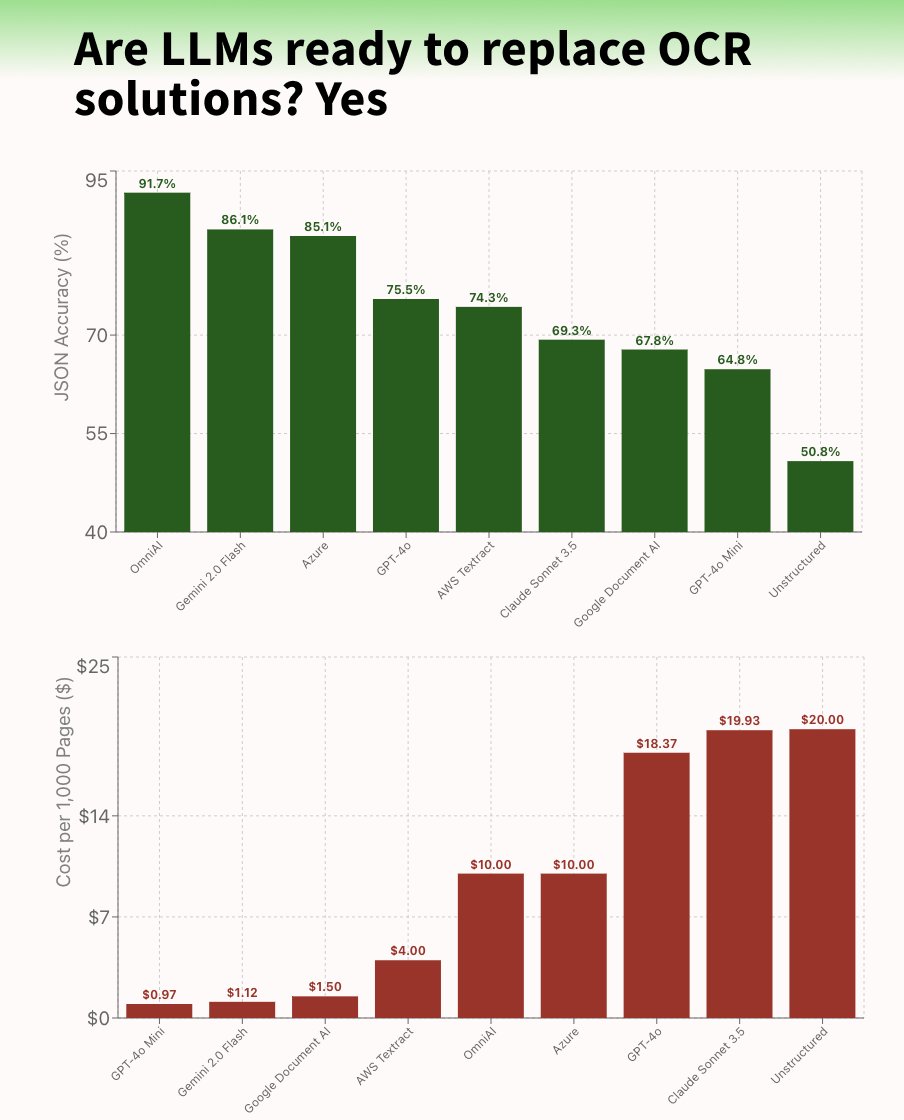
Are LLMs ready to replace OCR solutions? Yes, the OmniAI OCR Benchmark compared OCR providers against LLMs across accuracy, cost, and latency metrics showing Multimodal LLMs are not only better, they are also cheaper with @GoogleDeepMind Gemini 2.0 Flash offering the best price-performance! 👀
TL;DR:
📊 OmniAI OCR Benchmark evaluates JSON extraction from documents.
🥇 OmniAI 91.7%, Gemini 2.0 Flash 86.1% and Azure 85.1%.
💰 OmniAI $10 per 1000 pages, Gemini 2.0 Flash $1.12 and Azure $10.
🏦 Claude Sonnet 3.5 most expensive ($19.93/1000 pages)
💪 VLMs best at complex inputs (charts, handwriting, checkboxes) and low-quality scans
📑 Traditional OCR better textbooks, research papers and standard forms
🚫 Policies can limit VLM effectiveness (e.g., won't process ID documents)
📈 Dataset and code available and monthly updates planned
Traditional vs. Agentic RAG, clearly explained!
The future is Agentic RAG, and it's because a traditional RAG setup has some major limitations...👇
1) Retrieve once and generate once.
↳ This means if the retrieved context isn't enough or correct, the LLM can not dynamically search for more information.
2) Inability to reason through complex queries.
↳ If a query requires multiple retrieval steps or CoT (chain of thought), traditional RAG falls short.
3) Limited adaptability
↳ The system can't modify its strategy based on the problem at hand. Eg. Whether to do vector search, web search or call an API.
Agentic RAG addresses these issues.
The core idea is to introduce agentic behaviors at each stage of RAG.
Agents can actively think through tasks—planning, adapting, and iterating to find the best solution, rather than just following a set of instructions, and LLMs enable this.
The image below illustrates the workflow of an agentic RAG. Refer to it as you continue reading...
Steps 1-2) The user inputs a query, and an agent refines it (corrects spelling, simplifies for embedding, etc.)
Step 3) Another agent decides if more details are needed.
↳ Step 4) If not, the refined query is sent to the LLM.
↳ Steps 5-8) If yes, the agent selects the relevant sources (vector database, tools/APIs, internet), retrieves context, and sends it to the LLM.
Step 9) A response is generated.
Step 10) A final agent checks if the answer is relevant.
↳ Step 11) If yes, return the response.
↳ Step 12) If no, restart from Step 1. This process repeats until the system provides an acceptable answer or concedes it cannot respond.
This makes the RAG much more dynamic and robust.
However, it's important to note that building RAG systems often comes down to design preferences and choices.
The diagram below is just one of many blueprints an agentic RAG system may have.
You can adapt it to suit your specific use case.
Enjoyed this? You should also my RAG series! From building and optimizing RAG apps to evaluating performance and crafting agentic & multi-modal systems—it's all here.
Link in the next tweet!
_____
Find me → @akshay_pachaar ✔️
For more insights and tutorials on AI and Machine Learning!