🇪🇷🇪🇹 Someone at Sputnik is finally listening to Africans who have raised concerns. Sputnik Africa, based in Ethiopia, the last few months appears to push only pro–Abiy Ahmed content while excluding broader news from the Horn of Africa.
This is good @SputnikInt
🇪🇷 Eritrea marked the 35th anniversary of Martyrs' Day with a procession to the Patriots Cemetery and cultural shows.
The day commemorates those who died for Eritrea's independence and in the Eritrean–Ethiopian War.
🕯 Established as a national holiday in 1991, the event features candlelight vigils, memorial services, moments of silence, and artistic tributes, with communities aiding families of the fallen.
🔴Cuba’s Revolutionary Legacy in Eritrea: A Debt History Must Not Forget
Despite the historical mistake of the Cuban Revolution in supporting the pseudo-Marxist Derg regime in Ethiopia, Cuba initially and rightfully stood with the Eritrean struggle for liberation. After a protracted 30-year armed struggle, Eritrea achieved liberation in 1991. Notably, the Eritrean state maintained warm relations with Cuba and held no lasting historical animosity toward it.
As early as 1968, following the death of Ernesto "Che" Guevara, Cuba expressed solidarity with global anti-colonial movements, including the Eritrean cause. Key figures like Ibrahim Afa, along with other dedicated fighters, received training abroad, including in China, and returned to Eritrea to ignite a sustained and determined resistance against colonial domination.
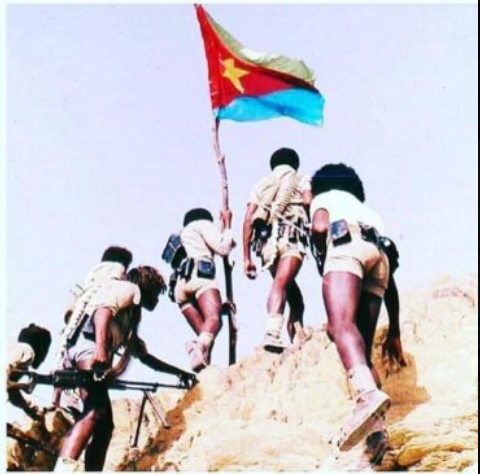
The Eritrean revolutionaries pictured here, trained in Cuba, helped ignite a three-decade-long fire of anti-colonial resistance that ultimately led to Eritrea’s liberation
Netanyahu points his finger at Laascanood, Somaliland alongside President Cirro of Somaliland.
Amongst the delegation that went to Israel were the head of the army of Somaliland and the Defense Minister.
Details of incoming new military hardware will be released here shortly.
** … Always remember the martyrs of Eritrea. They did not fight only for Eritrea but also sacrificed their lives for change in the region."………
** …We will succeed very ssoon with the new concept we have, Ximdo “ጽምዶ”
Prof. Mohamed Hassan speaking at the Eritrean Martyrs' Day event on June 20, 2026, in Nairobi, Kenya
On the occassion of Eritrean Martyrs' Day, the Chinese Embassy pay its tributes to those who martyred for the cause of Eritrean independence and national liberation. May their spirit live on forever. Eternal glory to the martyrs!
ብምኽንያት መዓልቲ ሰማእታት ኤርትራ፡ ኤምባሲ ቻይና ኣብ ኤርትራ ነቶም ኣብ ምምጻእ ናጽነትን ምውሓስ ሃገራዊ ሓርነትን ኤርትራ ዝተሰውኡ ክብሪ የቕርብ። መንፈሶም ንዘልኣለም ይነብር።
ዘለኣለማዊ ክብሪ ንሰማእታት!
@RaidersFC2002 You mean the 24/7 365 North American Left/Radlib Lagely guided hyper fixation on the Levant as "internationalism" wont free Africa
This is quite shocking
Too bad the North American infected "Pan-Africanist/Socalist" wont get it and will lose to the end.
🇪🇷 During and after the Mao era, the strategic move was to engage the business class and industrialists to build productive capacity and accumulate capital. GOE has tried in the past but important timing to do so next 5 years
U.S. company’s African revenue from $150 million to $3.8 billion.
“There were moments of isolation,”
he said. “You are expected 2deliver results, build trust &drive change while navigating scepticism, resistance and subtle forms of exclusion.” #Eritrea
https://t.co/8Pu87EMI1F
🇪🇷🇪🇹 Washington Opposes Tigray Rapprochement and Peace with Eritrea
For years, Tigray has been used by Washington as a base to wage war of attrition and attempt to weaken Eritrea to collapse. Washington opposes Tigray to not be at peace with Eritrea and its neighbors.
🔴In Defense of Cuba’s Strategy to Survive and Adjust Through Free Market Reforms Amid Pressure from Washington and Criticism from the North American Left
Much of this criticism first emerged during the 1990s, in the initial phase of the Special Period, the dark era when Cuba came under immense pressure following the collapse of Soviet support. It was during this period that Cuba bore the brunt of European and North American leftist puritanism, Marxist judgment, condemnation, and endless lectures directed at a state attempting to preserve itself through limited reform rather than collapse.
Today, as Cuba again faces severe pressure, including total electricity blackouts and renewed efforts from Washington toward a softer form of regime change, the latest moves by more pragmatic elements within the leadership should be understood as attempts to save both the state and the revolution, not betray them. Instead of indulging the sterile fantasies of sections of the North American and European left, or the rigid moralism of online puritanical Marxists, who seem to believe that a revolutionary state must choose martyrdom, isolation, starvation, or total capitulation, Cuba is seeking to adjust, endure, and preserve the gains of the revolution through each new phase of crisis, much as China and Vietnam have done in their own ways.
The smugness of those who lecture from afar, without bearing any of the sacrifices or concrete burdens locally themselves, reflects a rigid and abstract Marxism detached from reality and dismissive of the actual constraints states like Cuba, Venezuela, Vietnam, and Eritrea face in making internal decisions about markets, sovereignty, and engagement with Washington.
Prayer Service in Connection with Martyrs Day
Sermons and prayers in commemoration of Martyrs Day, presided by His Reverend Abune Basilios I, 5th Patriarch of the Orthodox Tewahdo Church , was held at St. Michael’s Church in Asmara during the mid-morning hours today. The prayer service was attended by religious leaders of the Tewahdo Orthodox, Catholic, and Lutheran Christian denominations.
Merigeta Mulugeta Simon from the Office of the Patriarch, indicating that the martyrs who paid with their precious lives attested to their love for their people and country, urged citizens to renew their pledge to live up to their expectations.
Similarly, in the afternoon hours, Salat and Dua services were conducted at the Al-Khulafae Al-Rashideen Grand Mosque, led by Sheik Salem Ibrahim Almukhtar, Mufti of Eritrea.
Sheik Salem Ibrahim, noting that 20 June, Martyrs Day, is a day on which the Eritrean people proudly commemorate their martyrs who brought independence and safeguarded national sovereignty, urged every citizen to strengthen contributions in support of families of martyrs. #Eritrea
@george_posts There is no economic model when the state has been under pressure to survive since the 1990s. These online fanatasy debates about "GOE need to do this private sector" will not work without proper investigation of the constraints and why we are in the current phase.
🇪🇷🇪🇷🇪🇹 The peoples of the Horn of Africa have to continuously challenge the narratives of a “3,000-year-old Ethiopia” and “never colonized,” because these claims are MYTHS that disregard the region’s complex history and the independent polities that existed for centuries.
After the Ship Has Sailed: Ethiopia’s Myth of 3,000-Year Ownership of the Red Sea Coast
June 11, 2026
By Simon Zecharias
@RedSeaBeacon
Introduction:
Ethiopia did not lose Assab in 1993. It lost an occupation. It lost the temporary possession of a coastline that had never been the natural, lawful, or sovereign inheritance of an Ethiopian state.
For decades, successive Ethiopian governments have wrapped the question of Eritrea’s Red Sea coast in mythology, grievance, and imperial nostalgia. They speak as though Ethiopia was robbed of an ancient birthright, as though Assab and Massawa were severed from a timeless Ethiopian body, and as though Eritrean sovereignty is an inconvenience to be corrected rather than a legal and historical reality to be respected and accepted.
The foundation of the claim rests on a larger myth: the assertion that Ethiopia has existed as a continuous state for three thousand years. That claim has been repeated so often that it has acquired the sound of truth among some Ethiopians who are lazy to study history of Africa, including Ethiopia’s own history. Some think repetition will be evidence. Ancient civilizations, churches, monasteries, and kingdoms existed in the region, but their existence does not prove the existence of a modern Ethiopian state stretching unchanged across millennia. To claim otherwise is to confuse civilization with statehood, religious continuity with political sovereignty, and imperial imagination with international law.
The modern Ethiopian state, as defined by recognizable territory, central government, and the capacity to enter binding relations with other states, is a far more recent construction. Its borders were consolidated not in antiquity, but through conquests, treaties, and diplomatic bargains of the nineteenth and early twentieth centuries. The historical record shows fragmented polities, competing kings, shifting allegiances, local rulers, and foreign treaties signed without reference to any unified Ethiopian sovereignty over the Red Sea coast.
This article examines that record. It asks a simple but devastating question: if Ethiopia truly possessed ancient sovereign rights over Assab, Massawa, and the Eritrean coastline, where is the evidence? Where are the treaties? Where is the continuous administration? Where is the recognized authority? Where is the international acknowledgment? The answer is clear. It is not there.
What the record shows instead is that Ethiopia’s Red Sea presence was brief, imposed, and historically exceptional. It began not with ancient sovereignty, but with the UN-imposed federation of Eritrea with Ethiopia in 1952, was deepened through annexation and occupation, and ended when Eritrea’s liberation struggle restored the rightful sovereignty of the Eritrean people in 1991.
The issue, therefore, is not how Ethiopia “lost” Assab or a Red Sea coast. The real issue is how Ethiopia acquired it in the first place, what it did to keep it, and what misery its claim inflicted on Eritreans. Once the mythology is stripped away, Ethiopia’s Red Sea grievance is exposed for what it is: not a legal claim, not a historical right, but an imperial hangover searching for a coastline
ReadMore @RedSeaBeacon@hawelti@Sudan #Djibouti #Somalia #Egypt #SaudiArabia #Turkey #Qatar #UAE
@EmbassyEritrea@hadnetkeleta@SirakBahlbi@EliasAmare@Afc2012Alula@Ghidewon@Yehdavid@GhideonMusa@globalezra@SharronYemane@Winta_eri@PMEthiopia@MFAEthiopia@MOFAEGYPT@AfricanUnion@antonioguterres@cnni@AJEnglish@BBCWorld@Reuters@AFP@AlAhramWeekly@FT@latimes@nytimes@BBCWorld@AlJazeera@tberhan0437898@shabait@ERiTV_Official@ForeignPolicy@TheAtlantic@CanadaFP@tewerwari_1
https://t.co/KTOeUtYs2O
(Former) British settler colonies (SA, Kenya especially) have a big problem when it comes to identity. We adopted the British monarchy logic and africanized it. So our identities are never political. They are always confined to the genetic/ethnic. All political problems (like the economy) are therefore addressed ethnically (anti-immigration). And then we call this politically engineered imagination natural and what our ancestors intended. That's why Kenyans admire the British king and spruce up for royal weddings. They call those contrived ceremonies "culture" and say we should do the same in our ethnic groups. Instead of questioning that legacy, we believe we are now equals with the UK because they have "culture" and so do we.
We seem not to understand that colonialism wasn't primarily cultural but primarily political. So we don't see racism. We see different and "equal" cultures. The Europeans and us are "partners." @DavidHundeyin said something yesterday that explains that difference between African Americans and us. African Americans are clear that the system hates us. We are not.
Look at Kenyan responses to the Ebola importation to Kenya. Doctors who were against it cited international protocols and global health standards. Doctors who supported it cited Western confidence in our system. No one mentioned racism or imperialism. Because it doesn't apply to settler colonies. We are special enough to live with wazungu. What a privilege. We're not like other African countries.
🇪🇷This is A Lesson on Online Performative and Co-opted Eritrean Nationalism by Regime Change and Opportunist Elements
One can perform Eritrean nationalism while still harboring regime-change aims or a counter revolutionary agenda.
Flag waving online is not a litmus test.
@meNssura The ELF/EPLF, and now the GOE, have never demonized or participated in the targeted demonization of any ethnic group or in ethnicized propaganda.
Anyone doing that is either non-Eritrea or counter revolutionary element with chauvinistic tendacy and enemy of the people/progress
🇪🇷🇪🇹 Any anonymous account that demonizes Oromos, Tigrayans, or Amharas by name, or promotes a chauvinistic response toward Ethiopia under the guise of defending Eritrea, is acting against the initiatives of the Government of Eritrea and the interests of the region.
An investigation by Yale HRL has exposed an active military logistics chain inside an Ethiopian base in Asosa. Civilian trucks are being repainted, fitted with 50-calibre machine guns, and sent across the border to supply Sudan’s RSF.
https://t.co/Y2rhkwGhAH
@SirakBahlbi This is a revisionist narrative that Eritreans must challenge....The Aksumite Empire ≠ Abyssinian feudal entity. Ethiopia, like Eritrea after 1890, was a relatively recent European construction, although the two were formed through different historical processes...
Young, talented, and proud Eritrean players — you joined the national team from abroad to represent your homeland. Good luck to you all! 🇪🇷 #Eritrea @eritreafootbal
@redseablueisee Greatest strategic contribution to the liberation of Eritrea is EPLF
What would be valuable to preserve history but put a non-factional view of history
Without the elders of the of the 40/50s,without ELM,without ELF and without EPLF there wouldnt be Eritrea-A totality view!