📌Save the Date!
The flagship conference of the Network Science Society - 𝗡𝗲𝘁𝗦𝗰𝗶 𝟮𝟬𝟮𝟲 - is coming to Northeastern University’s Network Science Institute, 𝗝𝘂𝗻𝗲 𝟭-𝟱, 𝟮𝟬𝟮𝟲.
Registration opens soon!
🔗 https://t.co/LH8ikP4bTj
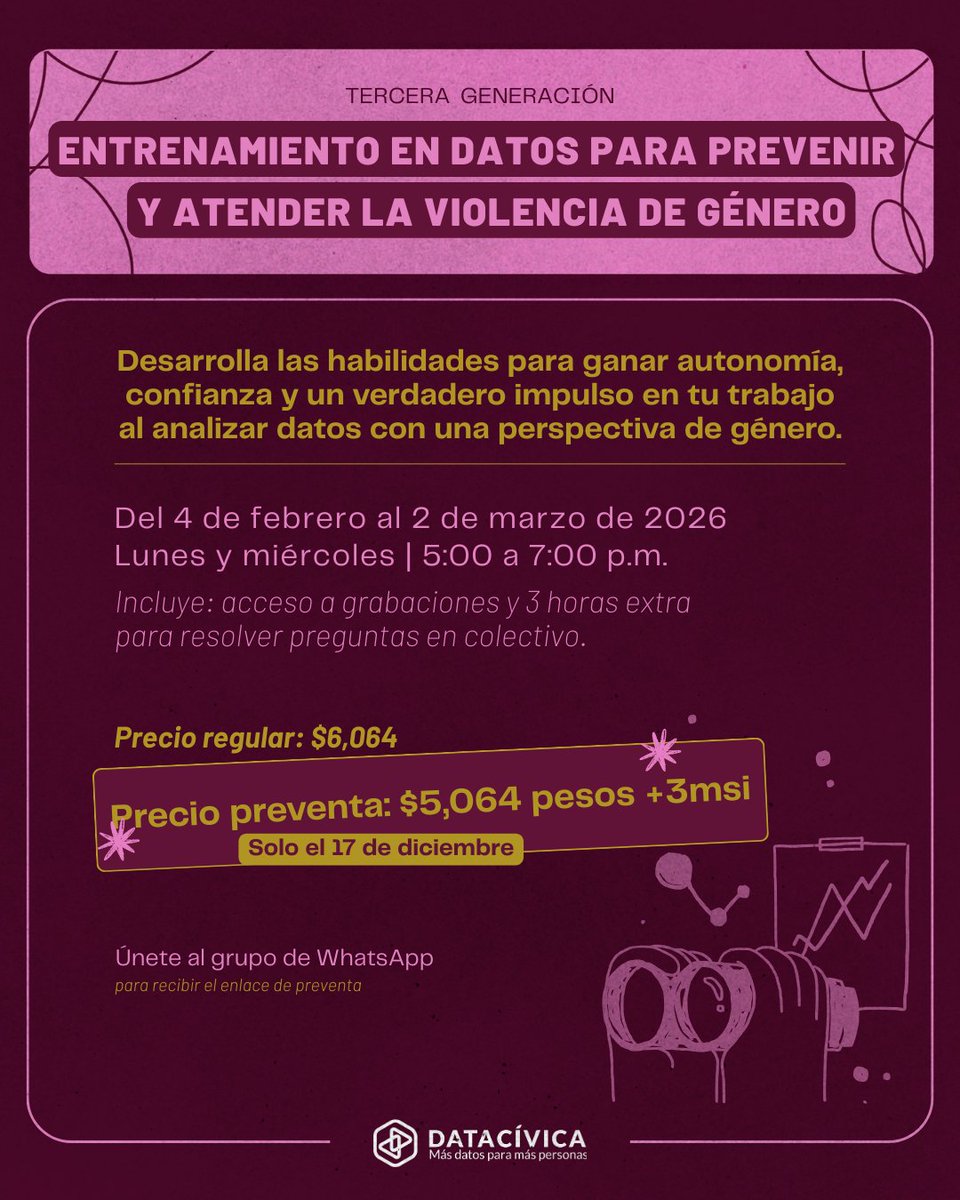
¡Comienza el 2026 con el pie derecho en el análisis de datos! 📊✨
Lanzamos la tercera edición de nuestro curso "Datos para prevenir y atender la violencia de género".
Únete a nuestro grupo de WhatsApp y recibe más información: https://t.co/qfGjJM1E3l
You can read the World Inequality Report 2026 in 10 different languages: English, Arabic, Chinese, French, German, Hindi, Portugese, Spanish, Russian, Thai
Spread the world and join the global fight for equality!
https://t.co/mnkh4fbQFE
2. This network is an estimate of the research space: a network connecting fields that tend to share authors.
It is the latest addition to https://t.co/HCN0cVwiVr, a platform exploring scientific impact using methods that eschew away from rankings.
Very interesting paper about how populist authoritarian leaders have targeted universities eroding academic freedom — as seen in Hungary and Turkey, but also in Mexico with AMLO and CIDE.
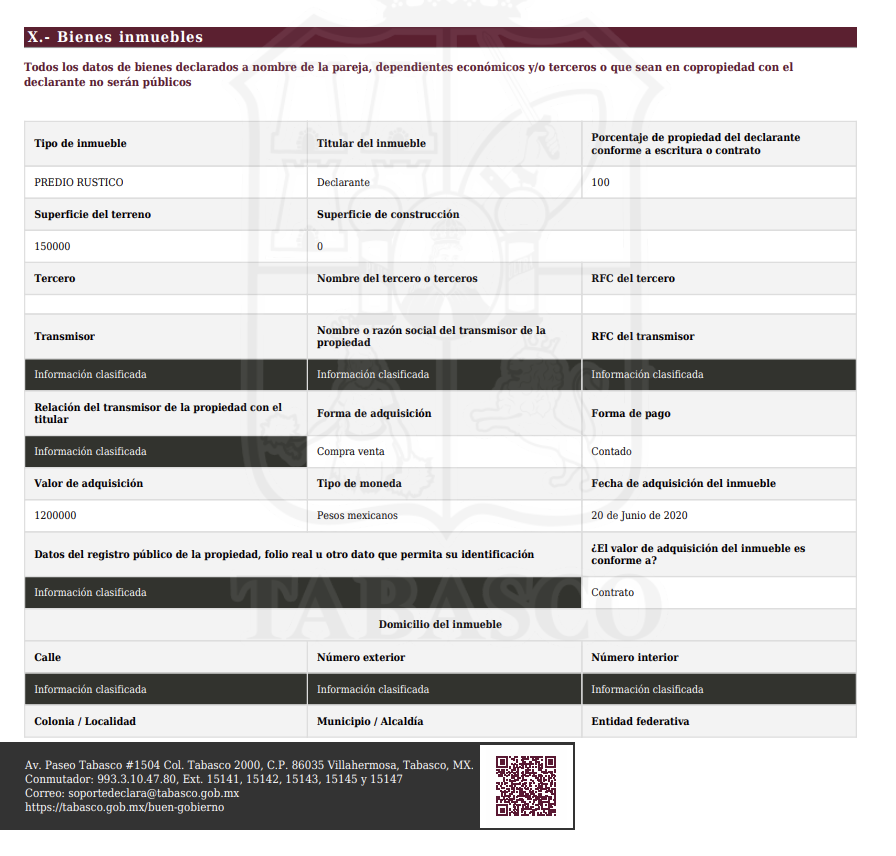
José Ramiro López Obrador, hermano de Andrés Manuel López Obrador salió dueño de 13 ranchos en Tabasco, la mayoría adquiridos durante la presidencia de su hermano. ESTO ES UN ESCÁNDALO. Aquí va el hilo con CADA 1 de los predios.
📜La primera sesión del Seminario DISCA explora cómo la correspondencia de Johannes Kepler se convierte en un mapa de relaciones científicas, patronazgos e ideas.
🗓️ 17 oct |🕙10 am
📍 Salón 13, Edificio C del IIMAS
✉️ [email protected]#RedesSociales#HistoriaDeLaCiencia
✅✅ A reminder by Dr. Rahaf Ajaj:
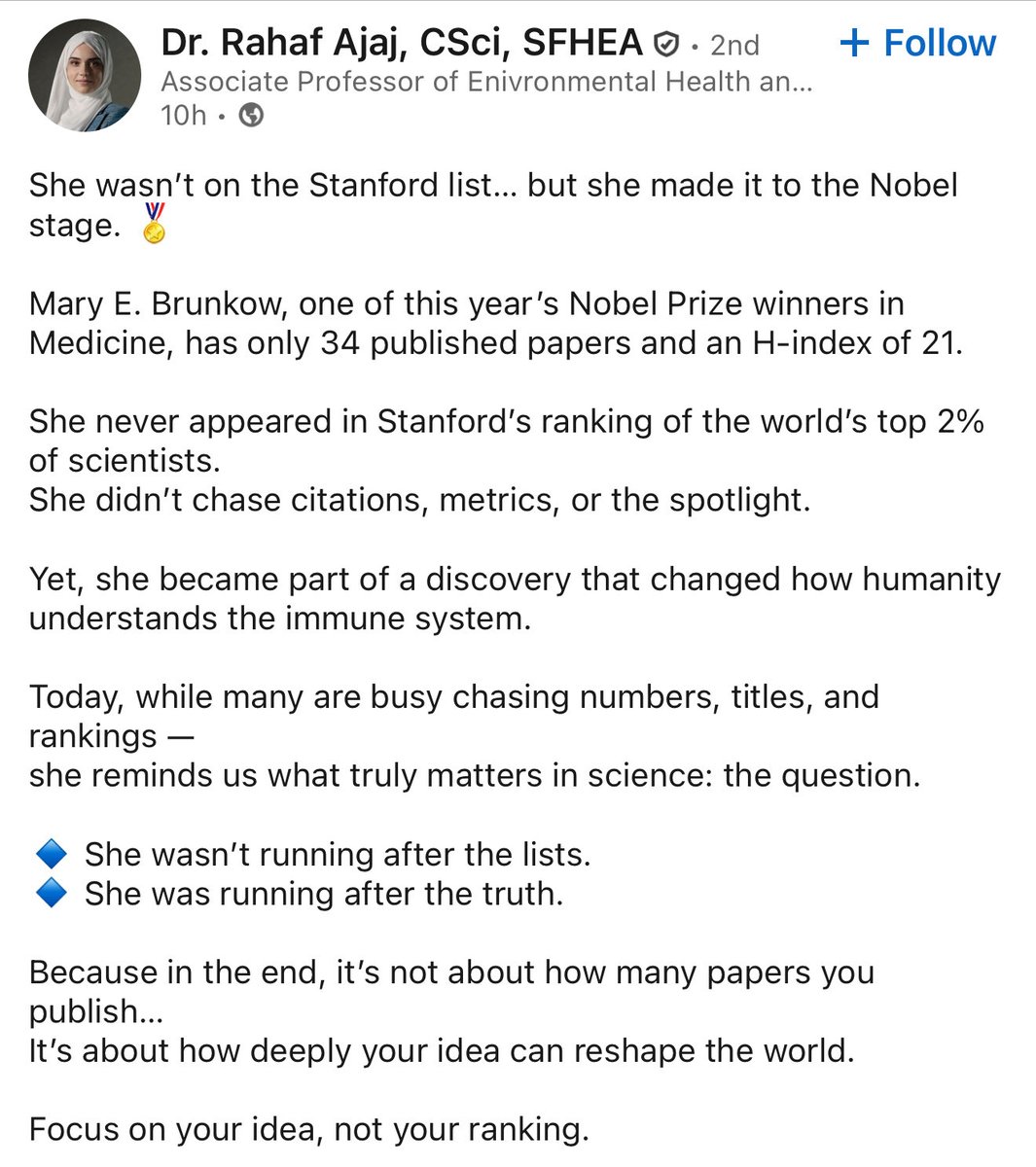
She wasn’t on the Stanford list… but she made it to the Nobel stage. 🏅
Mary E. Brunkow, one of this year’s Nobel Prize winners in Medicine, has only 34 published papers and an H-index of 21.
She never appeared in Stanford’s ranking of the world’s top 2% of scientists.
She didn’t chase citations, metrics, or the spotlight.
Yet, she became part of a discovery that changed how humanity understands the immune system.
Today, while many are busy chasing numbers, titles, and rankings —
she reminds us what truly matters in science: the question.
🔹 She wasn’t running after the lists.
🔹 She was running after the truth.
Because in the end, it’s not about how many papers you publish…
It’s about how deeply your idea can reshape the world.
Focus on your idea, not your ranking.
Are you interested in hierarchical dimensionality analysis? Here's our new "Taxonomic Graph Analysis" used to model the IPIP-NEO Personality Hierarchy. The project is led by Andrew Samo and Alexander Christensen, with the collaboration of Luis Garrido, Paco Abad, Sam McAbee, and me!
In our preprint (link in the comments) we introduce a new approach to understanding personality structure: Taxonomic Graph Analysis (TGA), is a comprehensive network psychometrics approach that identifies hierarchical personality structures from the bottom up rather than imposing existing theoretical models. We applied TGA to the open-source 300-item IPIP-NEO dataset with over 149,000 participants and reveal a three-level structure of personality:
28 first-level dimensions (facets)
6 second-level dimensions (traits)
3 third-level dimensions (meta-traits)
What makes this approach very interesting is how it addresses longstanding methodological challenges in personality assessment:
Local independence violations
Wording effects
Dimensionality assessment
Structural robustness
While some dimensions aligned with traditional IPIP-NEO structure, we found significant deviations. The emergence of novel dimensions like "Sociability," "Integrity," and "Impulsivity" at the second level and a "Disinhibition" meta-trait at the third level represents a major departure from the traditional five-factor model.
Our research effectively integrates empirical findings scattered across personality literature into a coherent hierarchical structure. This data-driven framework demonstrates TGA's value for investigating complex psychological constructs and offers a rigorous new perspective on personality taxonomy.
This work exemplifies how innovative psychometric methods can reshape our understanding of fundamental psychological constructs. Its implications extend beyond personality assessment to potentially revolutionize how we conceptualize and measure human traits across psychology.
Compartimos con ustedes este gran trabajo de @ZonaDocs: el podcast #PorqueLosAmamos, "que recupera la historia y lucha de los colectivos que buscan a las personas que han sido desaparecidas en Jalisco".
https://t.co/r7jV4tA3Ma
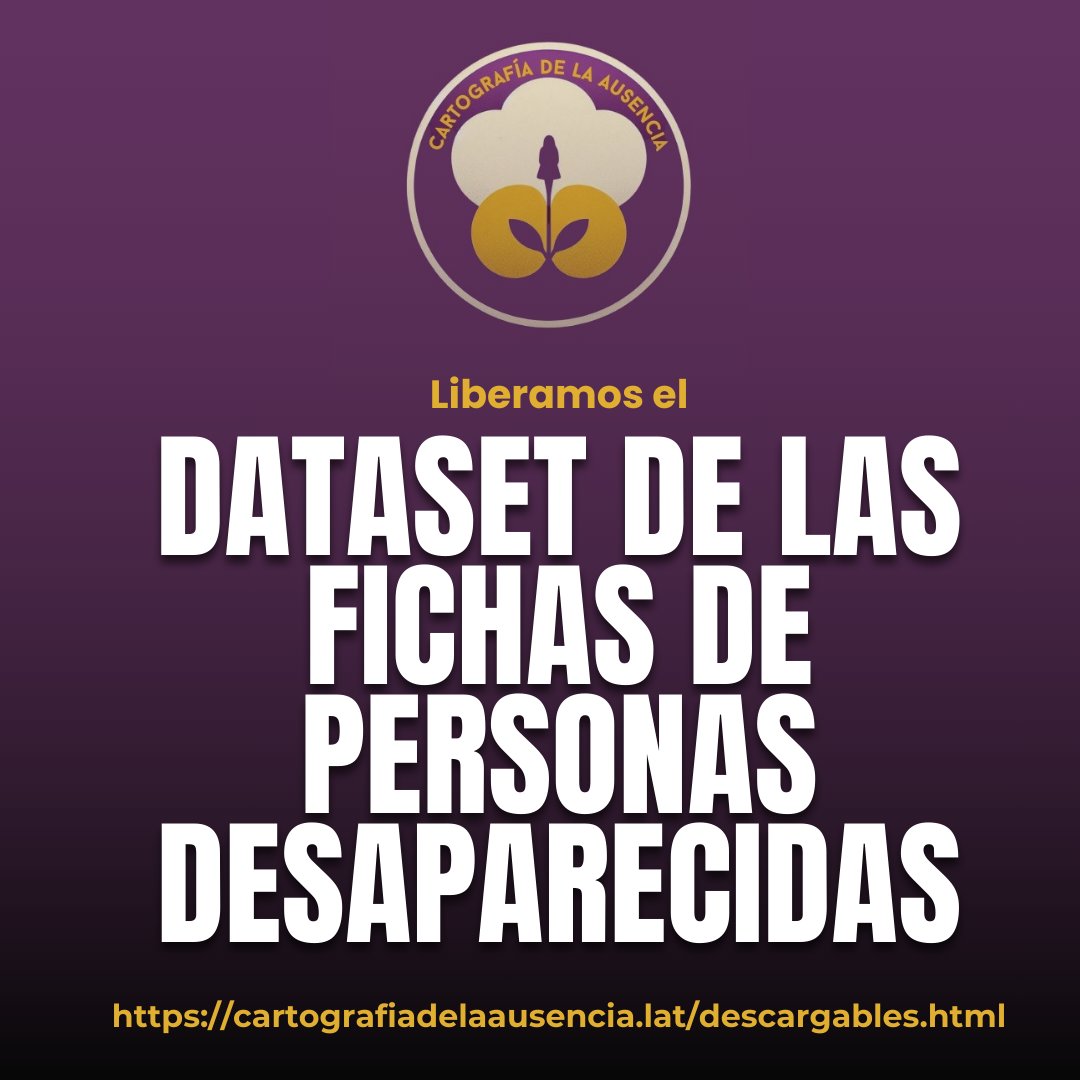
📢 Ya liberamos el dataset de desapariciones en Jalisco con el que trabajamos en @cartodeausencia.
📂 Está disponible para consulta, análisis y acción.
📊 Datos abiertos para la memoria, la denuncia y la investigación.
➡️ https://t.co/EwUF3lNGYU
Humans are biased.
AI trained on human knowledge is also biased.
Read the consensus statement I signed together with 100+ experts:
https://t.co/KVkLnCEqT7
Governments need to help identify and mitigate the negative effects of AI bias.
"Science policies set the rules for actors 🏛️. The ideal scenario is a long term vision of science🧪👨🔬. Yet this is not a virtue of middle and low-income countries"
A post in the remarkable @LSEImpactBlog 🖊️ about our research
Thanks! @MichaelTaster
https://t.co/dW4YAyV225
📢 Watch Pierre Lévy's (@plevy) #KGC2024 keynote now on YouTube!
The inventor of the #IEML language, explores the cognitive processes in humans & animals, highlighting symbolism & language in intelligence.
📺 Watch here: https://t.co/Om35JXI2ve
#techtalk#AIphilosophy#tech