the phrase "lipstick on a pig" has always inspired a deep sadness in me. I think of the pig, looking forward to her big night out, and I bring myself to the verge of tears.
Seems like a bit of an oversight for the headline to mention him asking if he could kiss her, but not mention him cornering her, leaning his body against her and grabbing her hair. Or that she was a child sexual abuse survivor and he was a stalker.
This is the kind of thing that was said about the Jews in the 1930s.
It is not hyperbolic to say that degrading an entire culture leads us to a very dark place. Reform are playing with fire right now trying to stop themselves being outflanked by the extremists of Restore.
We talk a lot about how therapy speak has been coopted by manipulators, but not enough about how social justice language gets used by people "advocating" for shit that isn't an actual injustice.
@ben_eales Phoebe wants nobody to have phones to increase the death toll when those attacks do inevitably happen. Phoebe Bridgers is trying to get you to put your phone away so you can be killed. So idk why anyone even wants to buy a ticket to her concert. She has blood on her hands.
"Art is not inherently political" the writers of the minions movie had to exile those little freaks for 200 years until the 60s because they realized too late that making them follow "the evilest people on earth" has very ugly implications, to the surprise of nobody else but them
Once again, "rape accusations" don't ruin men's lives, as rapists get to live their lives freely, have careers, ruin more women's lives, become politicians and get to play in the biggest tournament in the world.
Your regular reminder that while the "Gender Critical" movement is primarily about removing trans rights and abusing transgender children, it's also deeply, obsessively homophobic.
You say that post-Floyd DEI training created the policing culture that killed Henry Nowak. This is testable. If you're right, the pattern should begin after 2020. It doesn't.
Christopher Alder, 1998. Falklands veteran. Dragged handcuffed and unconscious into a Hull custody suite. Left face down on the floor. Officers stood around while he choked to death. Ten minutes before anyone helped. Inquest: unlawful killing. Five officers charged. All acquitted.
Sean Rigg, 2008. Schizophrenic man, died at Brixton police station after restraint. Inquest found "unsuitable and unnecessary force" and police failings "more than minimally" contributed to his death.
Robert Edwards, 2011. Died in a Suffolk cell. The IPCC found police "failed to take appropriate care" and didn't carry out proper welfare checks. The coroner said he should never have been deemed fit for detention.
Wayne Couzens, 2015–2021. Reported for indecent exposure in 2015. Kent Police had his name, address, and plate number. The investigating sergeant knew his brother, also a police officer. No action. Failed vetting twice, still became a Met officer. Exposed himself days before murdering Sarah Everard. The investigating officer lied about CCTV. Three forces had twenty years of red flags. Nothing to do with DEI
Post-Floyd, still no DEI involvement: Stephen Reardon, 2023, had seizures in a police van while the officer said he was "playing games". Died. Jerome Cowan, 2022, found unresponsive in a library, officers failed to provide first aid. Died. A man at St Erth, 2022, left drunk and vulnerable outside a railway station on a cold night, officers drove past without stopping. Died. All officers dismissed or facing gross misconduct.
Same pattern every time. A person in distress needs help, officers dismiss it or walk away. It happened in 1998, 2008, 2011, 2022, 2023, and 2025. DEI didn't create it. It predates it by a generation.
You also claim "determined, institutional silence". The Speaker acknowledged the case on 1 June. The Home Secretary called it "a horrifying act" and Digwa's false accusation "an evil act" in an oral statement to the Commons on 2 June. Debated in both Houses. Starmer and Baddenoch clashed over it. Front-page news for a week. There is no silence. You invented it because your baseless argument needs it.
You ask pretentiously what you call a system where a dying teenager's word counts for less than his killer's.
I'd ask you: what do you call a system where Christopher Alder choked to death on a custody floor in 1998 while officers stood around, and twenty-seven years later Henry Nowak bled to death saying the same words?
That is an ideology. But not the one you're describing. It's an institutional ideology of indifference to people in police custody, and it has been killing people for decades.
Blaming a training course that's existed for five years for a rot that's existed for hundreds of years isn't analysis. It's a deflection that protects the actual dangerous ideology.
In 1965, a 17-year-old girl in Sicily was kidnapped, assaulted, and held captive for over a week.
Then her attacker offered her a deal:
Marry him, and everything would be “forgiven.”
At the time, Italian law allowed rapists to avoid punishment if they married their victims.
It was called “reparatory marriage.”
The logic was horrifying:
A woman’s “honor” mattered more than her consent.
If she married the man who violated her, her reputation could supposedly be restored — and the rapist could walk free.
Most women had no real choice.
Families pressured them.
Communities expected obedience.
The law itself encouraged silence.
But Franca Viola said no.
At 17 years old, traumatized and publicly shamed, she refused to marry the man who assaulted her.
That single word changed Italy forever.
Her decision sparked outrage in her town.
Neighbors turned against her family.
Their vineyards and olive groves were burned in retaliation.
But Franca’s father stood beside her and supported her decision to press charges.
In 1966, Franca testified publicly against her attacker in court.
At a time when most victims were expected to stay silent forever, she spoke openly in front of the entire country.
Italy watched in shock.
Her attacker, Filippo Melodia, was convicted and sentenced to prison.
For the first time in Italian history, a woman had publicly rejected “reparatory marriage” and won.
The case became international news.
But the law itself still remained.
For another 15 years, rapists in Italy could technically still escape punishment by marrying their victims.
Then finally, in 1981, Italy abolished the law completely.
And many activists pointed to Franca Viola as the moment the country first began confronting the cruelty of that system.
Years later, Franca married a childhood friend who had stood beside her through everything.
Not because she needed her “honor restored.”
But because she deserved love, dignity, and a life defined by her own choices.
That’s why her story still matters.
Franca Viola wasn’t just resisting one man.
She was resisting an entire culture that treated women’s suffering as something to hide rather than something to fight.
At 17 years old, she stood against her attacker, her community, and even the law itself.
And eventually, the law changed.
Sometimes history moves because powerful people decide to act.
And sometimes history moves because one terrified teenager quietly refuses to surrender.
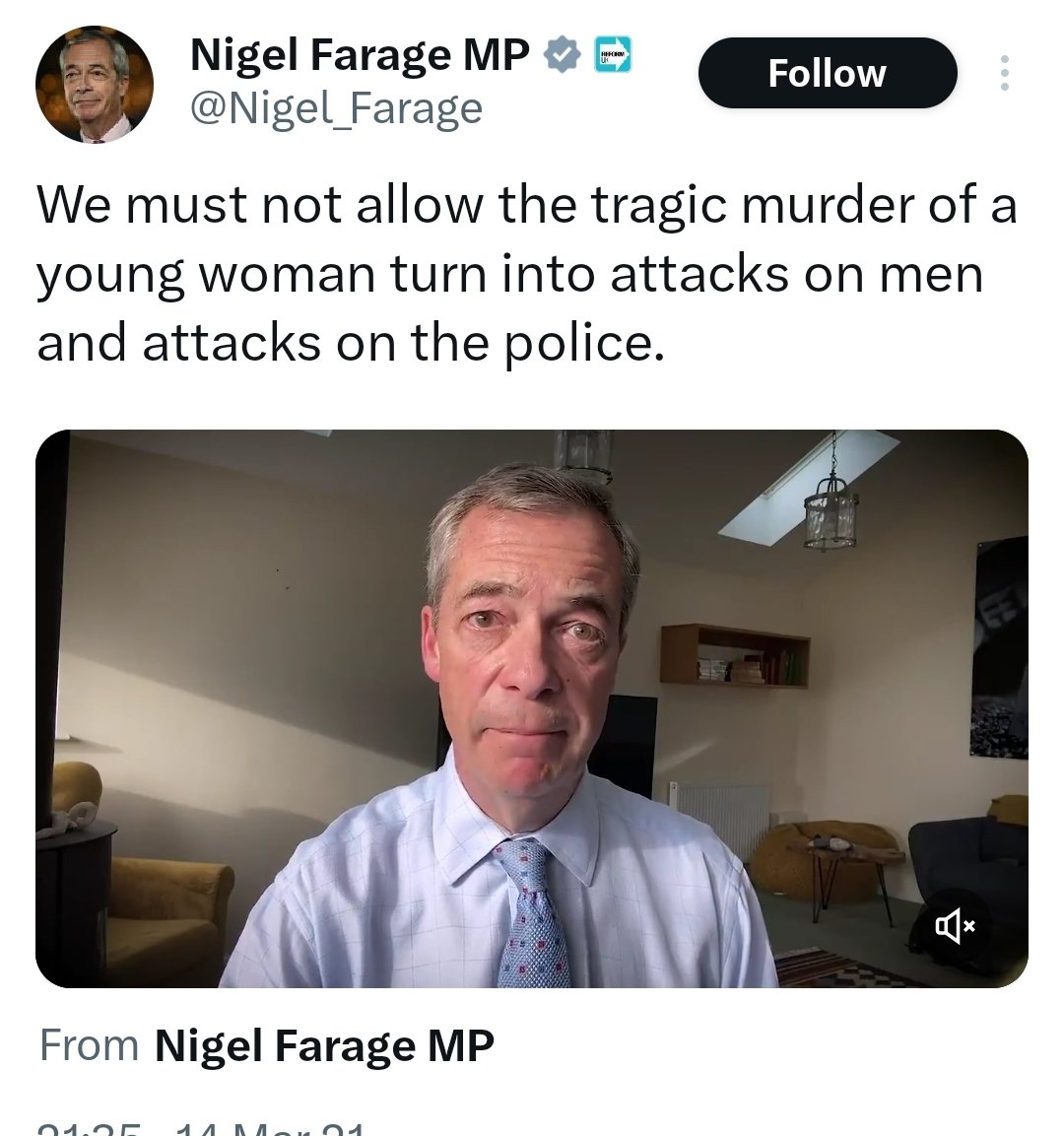
When Metropolitan Police officer Wayne Couzens kidnapped and murdered Sarah Everard, Nigel Farage released a five-minute video urging people not to attack men or the police.
Today, in response to the murder of Henry Nowak, he called for "pure cold rage."