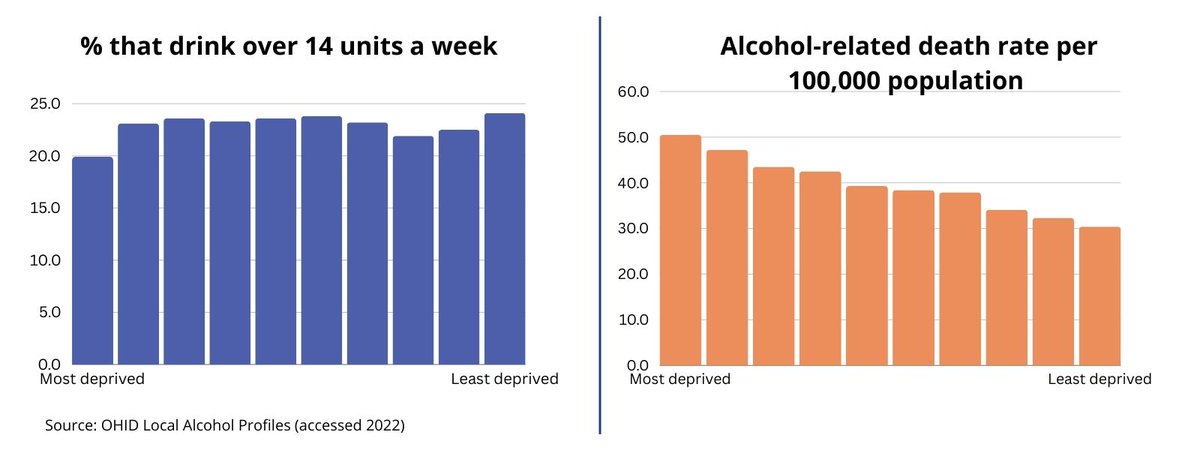
The burden of alcohol harm falls disproportionately on the most deprived.
Policies such as minimum unit pricing and better regulated availability can help to reduce alcohol-related harms in lower socioeconomic groups.
What should we do to influence large groups of people to change their behaviour? The most comprehensive synthesis of studies on behaviour change ever undertaken has been published & offers some clear steers:
1) For behaviour change at an individual level:
- giving accurate information or trying to change beliefs is less effective
- providing social support, tapping into individuals’ behavioural skills/habits & removing practical obstacles to behaviour is more effective
2) For behaviour change at a social/structural level:
- interventions seeking to increase trustworthiness or targeting knowledge, general attitudes, beliefs, or mandates or other administrative/legal sanctions have negligible effect
- access to resources that facilitate behaviour change & social support have the greatest impact
https://t.co/d8JorQ46mu. Via @AnnenbergPenn Karen Lord
📰An interesting article written by @spidermaani and colleagues in the BMJ.
"Commercially driven efforts to frame alcohol harms have no place in UK health policy development"
https://t.co/7RKXwc5jWv
📽️Here we can see Prof Ewan Forrest (@EwanForrest1) discussing the affordability of alcohol, liver failure and why preventative measures such as MUP can help in Scotland
#65pMUPsaveslives
#MothersDay is a strange one: thinking of those who wanted to have children but couldn’t, who had miscarriages or a baby or child die, whose mothers are gone, & those who don’t have a good or any relationship with their mum.
In the face of this deterioration in child health, the PM and his Chancellor are thinking about reducing public expenditure further after removing national insurance.
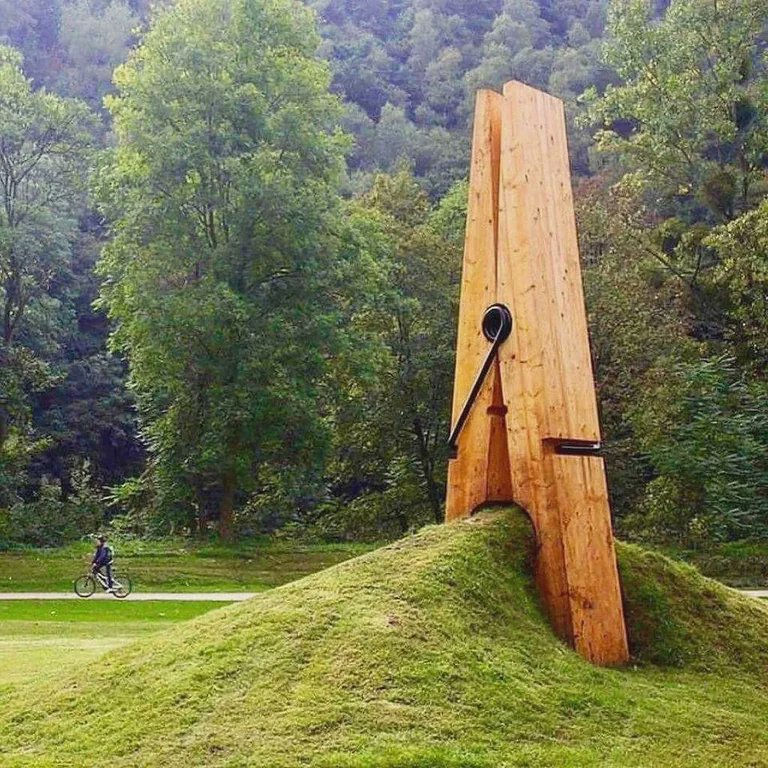
Designed by Turkish artist Mehmet Ali Uysal, this giant clothespin sculpture that seems to be holding onto a mound of dirt and grass, resides on the outskirts of Liege, Belgium.
Delighted to be featured in the @HCDMagazine this month. Co-designing with users delivers results to please children, young people, families & staff. It is a joy to see how children and families interact with the new space.
@operanomad @EHDCongress@redfernjam@jasonleitch
The Minimum Unit Pricing (MUP) policy in Scotland is due to expire on 1st May 2024, unless the @ScotParl votes to continue it.
📽️Why is MUP important for Scotland? Here’s a quick explainer by our Chair, Dr Alastair MacGilchrist (@AlastairMacG57)
#MUPSavesLives