Tired of dull-looking car paint? This Nano-Quick Ceramic Coating helps create a glossy finish while adding a slick layer that repels water and dirt for easier maintenance.
Get yours =>https://t.co/dxPoTdtgF1
🚨 SON DAKİKA 🚨
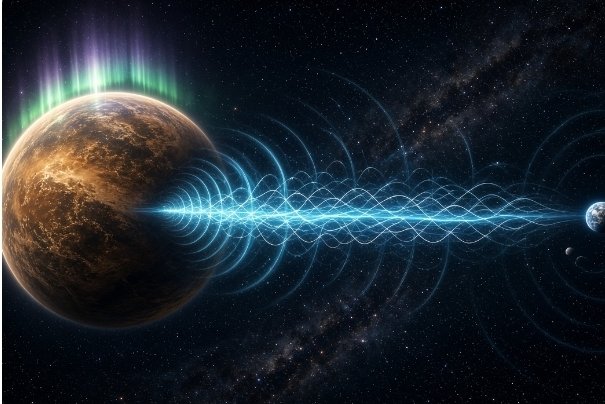
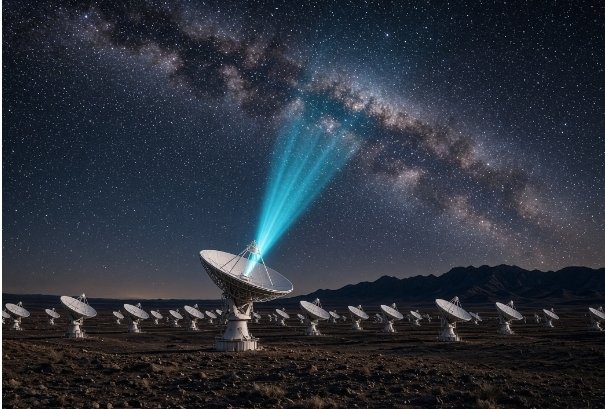
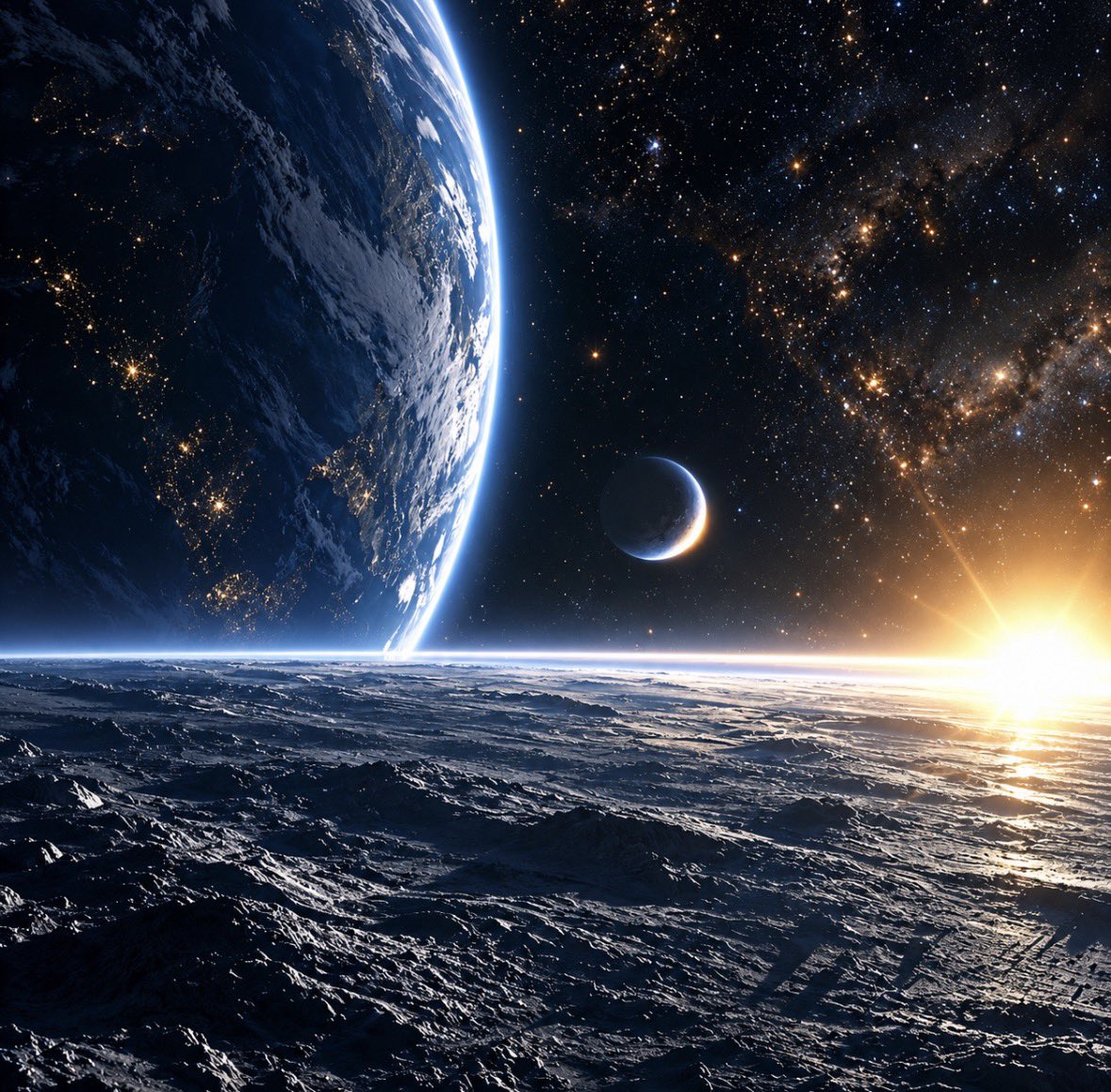
Bilim insanları tarihte ilk kez başka bir gezegenden radyo sinyali yakaladı. 😱
Uzaylı değil.
Film değil.
Dünya’dan 63 ışık yılı uzakta gerçek bir gezegen.
Gezegen: Beta Pictoris b
Manyetik alanı: Dünya’dan 2.500 kat güçlü
Duyulan şey: çılgın aurora’lardan gelen doğal radyo patlamaları ⚡🌍
O sinyal gezegenden 63 yıl önce çıktı.
Biz ancak şimdi duyduk.
İlk kez bir radyo sinyali doğrudan bir ötegezegene bağlandı.
Bir yabancı dünyanın manyetik alanı ilk kez ölçüldü.
Evren ses verdi.
Ve burdayız dedi📡✨
#Uzay #Ötegezegen #Bilim
#Space #Exoplanet #Science
AI Video Generation Prompt
> A cinematic hand-drawn anime scene of a young schoolgirl riding a skateboard along a narrow seaside promenade in a vibrant coastal city. She wears a loose blue school uniform, red socks, sneakers, and a bright yellow backpack. The camera follows smoothly from behind as she gently skateboards forward, her short brown hair and uniform moving naturally in the ocean breeze. On the left, colorful densely packed seaside buildings, small shops, signs, pedestrians, balconies, electrical wires and street details create a lively urban atmosphere. On the right, brilliant turquoise-blue ocean waves crash dramatically against the seawall, with white foam and sparkling water. In the distance, the coastline curves toward the horizon beneath an enormous vivid blue sky filled with soft white cumulus clouds. Warm afternoon sunlight, long shadows, rich saturated colors, detailed hand-painted backgrounds, nostalgic Japanese anime aesthetic, fluid 2D animation, subtle parallax between foreground and background, realistic wave motion, gentle camera tracking, peaceful adventurous atmosphere, highly detailed cinematic composition, vertical 9:16.
Motion: smooth forward skateboard movement, natural hair and clothing flutter, pedestrians subtly moving, ocean waves continuously rolling and splashing, clouds drifting slowly, gentle handheld/cinematic camera movement.
Negative prompt: photorealistic, 3D CGI, distorted anatomy, extra limbs, flickering, warped buildings, changing clothes, changing backpack, blurry details, jittery motion, unnatural skateboard movement, text artifacts, oversaturated neon colors.
🚨 ALERTE GÉNÉRALE !
Les scientifiques ont détecté des signaux radio provenant d'une exoplanète pour la première fois de l'histoire 😱
La planète se trouve à 63 années-lumière de la Terre et possède un champ magnétique 2 500 fois plus puissant que le nôtre…
Is Water Conscious? New Findings Suggests Water Might “Remember” and Replicate What It Encounters! 💧❄️🧠
How Could This Be Possible? 👇
🔹 Quantum Coherence & Field Interactions
Water might function as a quantum “memory,” absorbing information from electromagnetic fields created by images or objects it encounters. Quantum coherence, where particles are linked and influence each other’s states, could allow water molecules to align in a way that encodes subtle energy fields. When frozen, these coherent molecular arrangements could visually reveal what the water has “seen,” displaying previously invisible information as ice patterns. This theory aligns with discoveries in quantum biology, suggesting water might be “tuned” to hold memory-like fields.
🔹 Biofield Energy and Information Imprinting
Could water “record” the biofield energy, an electromagnetic aura thought to be associated with human thought and physical characteristics? Some researchers believe that a participant’s intentions or physical presence might leave energetic imprints in water, “programming” it with aspects of their unique biofield. This concept could explain why placing a thumb in water leaves such detailed imprints, even replicating future changes like a chip. The frozen ice might be capturing potential future states, hinting that water has a sensitivity to biofield energy, which could encode aspects of reality that haven’t yet unfolded.
🔹 Morphic Resonance and Collective Memory
Imagine water responding to a form of collective memory field, as suggested by biologist Rupert Sheldrake’s theory of morphic resonance. Water exposed to an image or thumbprint might “resonate” with this specific pattern across space and time, not only replicating it but potentially creating complementary or “negative” images in subsequent samples. This resonance could mean that each dish of water aligns with the energetic “memory” of what’s come before, allowing the water to express previously “recorded” images or even anticipate features that have not yet appeared.
🔹 Quantum Entanglement and Nonlocality
Could water molecules entangle with the electromagnetic or informational field of an object or image they encounter? Quantum entanglement suggests that particles, once connected, share information instantaneously, regardless of distance. This might imply that water, a highly polar molecule, can interact with the field of objects it touches, “remembering” these fields across multiple water samples.
🔹 Holographic Principle and Information Encoding
Some researchers speculate that water could serve as a holographic memory medium, capable of encoding and displaying multi-dimensional “blueprints” of objects and people it interacts with. The holographic principle, which theorises that the entire information of a system can be contained on a lower-dimensional surface, could mean that water, structured by hydrogen bonding networks, might store not only physical images but potentially even anticipate future events based on these interactions. In this sense, water could act like a complex “memory crystal,” expressing past encounters or potential futures in astonishing detail when frozen.
Another beautiful example of holding the Prophet as the crown of our heads is the aigrettes of the Ottoman sultans. The feathers used in these aigrettes were used in the cleaning of the Prophet's noble tomb and were subsequently sent to the Caliphs
🧠 Your Pen May Be Doing More Than You Think
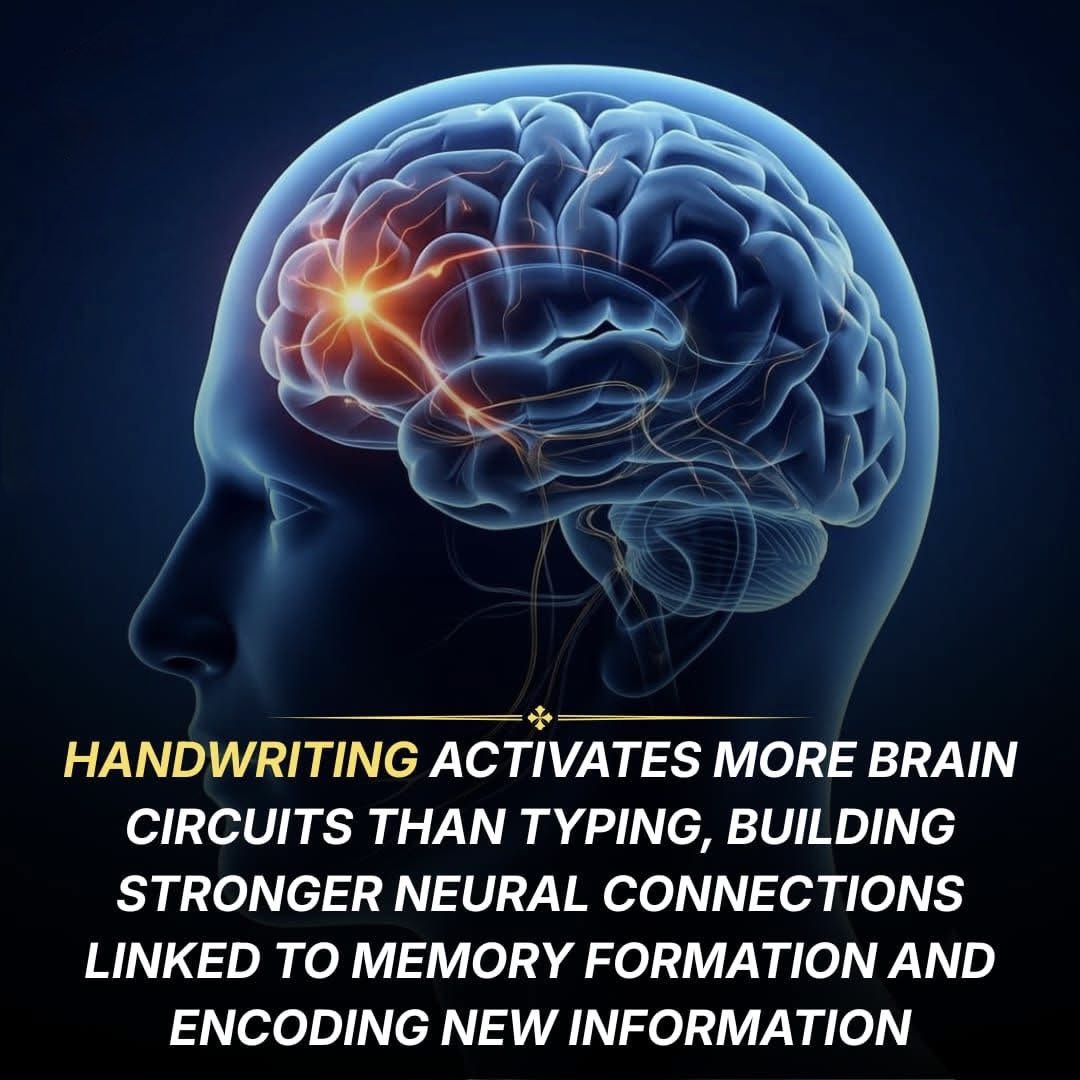
A 2024 study found that handwriting produced more widespread communication between brain regions than typing on a keyboard. These brain connections are involved in processes linked to learning, memory, and encoding new information.
The reason may be the combination of seeing, moving your hand, and carefully forming each letter. Every stroke gives your brain more sensory and movement information to process.
So the next time you write something down, remember: you may not just be putting words on paper—you may be engaging your brain in a different way.
Note: The study was small (36 university students), and later commentary raised limitations about how strongly the findings can be interpreted. More research is needed.
Source: Van der Weel, F. R. R., & Van der Meer, A. L. H. (2024). Handwriting but not typewriting leads to widespread brain connectivity: A high-density EEG study with implications for the classroom. Frontiers in Psychology, 14, 1219945.
Looks like the US is heading toward using nukes against Iran
This will give the Khorasani (Iran supreme leader) the ultimate pretext to do whatever is necessary for the expansion phase, there's no turning back after that
CC @cirnosad