Tracking mango puree across East Africa reveals where the @AfCFTA is working and where barriers are still holding regional #trade back. https://t.co/uZYcwc9nUF
You probably missed AI. You will probably miss Quantum if you aren't already looking. Don't overlook Qubitcoin.
All sources are publicly available and linked below.
One of the next big narratives in the stock and crypto spheres is quantum. What does that mean? It means any stock, crypto, derivative or security quasi-associated with quantum technologies will likely gain attention and interest from retail speculators - and, if the tech is credible, institutions too.
11 years ago, on 23 May 2015, there was a stock valued at $0.52 per share. Today, that same stock is worth over $200 per share - Nvidia. An increase of more than 41,000%...
"Yeah... but... that's Nvidia!" - sure; but you also have PLTR, AMD, MU, AVGO ...then $TAO, $FET, $RNDR, $WLD and others. All unique but with macro crossover.
Quantum technologies, unlike AI, which is truly revolutionary from a productivity and enterprise perspective, will not only be revolutionary because of its benefits to industry - it is a necessity for cybersecurity, science and business.
According to McKinsey (2024), the economic value derived from quantum technologies is expected to exceed $1 trillion by 2035 [1].
What is more, revenue generated by quantum computing companies exceeded $1 billion in 2025 - expected to rise to nearly $4.5 billion by 2028 [2]. The rate of R&D will also grow exponentially.
Within the broader quantum sector lies variance, uniqueness, innovation and niche. A large part of the space is concerned with cybersecurity - developing business solutions, with the backing of political mandates in some cases, to protect everything from communication, satellites etc., to the global banking system itself.
Crypto has already taken a stand and some bona fide projects are quantum secure - or working to implement quantum-resistant signature schemes.
But what about the other potential applications and market/economic opportunities?
One of the main sub-sectors, but currently smaller than quantum-resistant security/PQC, is quantum simulation. Mainstream businesses are already working with simulation - as are top universities - but only one crypto, and decentralized, option exists: Qubitcoin $QTC.
Qubitcoin is a decentralized network focused on using power from miners and their GPUs in exchange for $QTC tokens, the native token of the Qubitcoin network, an L1.
The Qubitcoin website says:
"Qubitcoin is a cryptocurrency that combines blockchain technology with quantum computation through Quantum Proof of Work (qPoW). Miners solve quantum tasks during the mining process, which helps to advance quantum simulation techniques...
Qubitcoin is a quantum-accelerated cryptocurrency built on a fork of Bitcoin’s codebase. Unlike traditional Proof of Work (PoW), which relies on solving cryptographic puzzles, Qubitcoin’s qPoW requires miners to simulate 16-qubit quantum circuits using GPUs. This unique consensus mechanism turns mining into a race to advance quantum computing, making Qubitcoin a bridge between blockchain and cutting-edge tech. Developed by the non-profit Superquantum, with contributors from MIT and Vanderbilt, QubitCoin is open-source and community-driven."
Continued below...
Mikhail and Yudong recently had a great discussion with Fred Chong, one of the world’s leading voices in quantum computer architecture.
Quantum computing is still largely a field shaped by physicists, which makes Fred’s perspective especially valuable, coming from computer architecture and supercomputing.
They drilled into the challenges of building the full stack required for fault-tolerant quantum computing: compilers, error correction, verification, scheduling, and hardware/software co-design, and debated where NISQ-era approaches may still provide value, particularly for optimization problems with limited datasets such as biomarker discovery and cancer treatment prediction.
For the Qubitcoin community, this direction is highly aligned with what we have been building:
In addition to our VQA-based component already being part of qPoW, for the last few months, we have been heavily focused on integrating tasks directly relevant to fault-tolerant quantum algorithms and the future quantum software stack.
The long-term goal is not just to make a quantum-aware blockchain, but to help create computational infrastructure naturally connected to the emerging fault-tolerant quantum ecosystem.
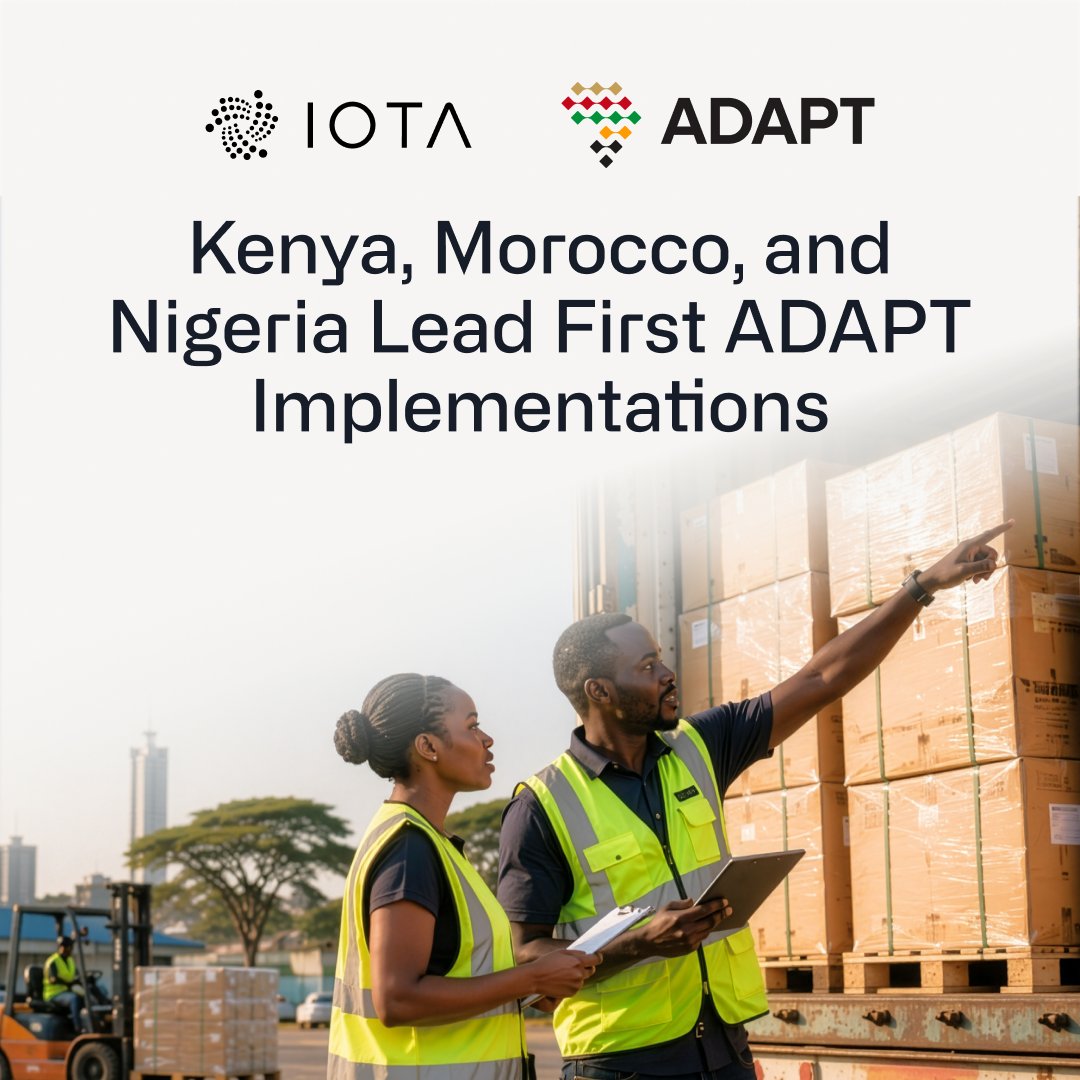
Kenya, Nigeria, and Morocco have been selected as the first countries to implement ADAPT - the Africa Digital Access and Public Infrastructure for Trade initiative.
@Ponzinator1@svs1946@Grahlkesajo65 Da es sich vermutlich um eine Kaminkassette handelt und nicht um einen Grundofen wird der Ofen trotzdem betroffen sein.
While we focus on quantum simulation and research, we still closely follow how base-layer cryptography evolves.
These kinds of protocol-layer shifts are what our founder, @MYShalaginov, will be discussing this April at MIT Bitcoin Expo, hosted by @MITBitcoinClub, alongside researchers, industry leaders, and policymakers. Ethereum’s post-quantum roadmap will also be part of that discussion.
We would be glad to see you join the conversation!
https://t.co/zWJoQbjpEz
I’ll be real with you ➟ I’ve been watching the trade finance space for a while now and most of the blockchain solutions that claim to be “fixing” it end up being 🙂 well, you know. So when salus started showing up in my feed I did what I always do, I went looking for the part where it falls apart. And I’m still looking, which is honestly why I’m writing this.
➥ Let me start with the problem because I think a lot of people scroll past the context too fast. There is a $2.5 trillion annual funding gap in global trade finance. Not billion. Trillion 😅. That is real commerce, real goods, real businesses that cannot access affordable capital because the information asymmetry between borrowers and lenders is so severe that banks simply won’t take the risk. A miner in Rwanda with a legitimate, conflict-free tantalum operation and proper documentation still has an incredibly hard time convincing a European institutional lender to finance a shipment because that lender has no reliable way to verify the claim independently. The goods exist. The documentation exists. The legitimacy exists. But the trust infrastructure to communicate all of that credibly to distant capital providers doesn’t… or at least it didn’t. That’s the actual gap Salus is trying to close and I think it’s worth sitting with how large and how structural that problem is before evaluating whether the solution makes sense.
So here’s what Salus is doing that caught my attention. The manifesto showed them tokenizing 0.5 tons of tantalum as a mainnet proof-of-concept, and I want to be clear that this is not testnet, not a demo environment; this is on mainnet, already working, already live within @iota ecosystem. That matters more than people are giving it credit for because the gap between “we can technically do this” and “we have done this on a real network with real assets” is enormous in this space and most projects never cross it. Salus crossed it.
The choice to focus on critical minerals first is something I think is smart from a strategic standpoint and not just for the obvious market size reasons. Lithium, cobalt, tantalum, rare earth elements…. these commodities come disproportionately from regions where provenance verification, conflict-free sourcing, and environmental compliance are legitimately hard to prove and increasingly legally required to prove.
Manufacturers building batteries, renewable energy infrastructure, and electronics are sitting on real regulatory and reputational risk because their supply chains pass through areas with questionable labor and environmental practices and they often have limited visibility into what’s actually happening upstream. Salus creating immutable records of extraction, processing, and transportation that any funder can verify independently before providing capital is solving two problems at once:
⚘ It enables financing for legitimate operators who previously couldn’t prove their legitimacy, and
⚘ It gives downstream manufacturers the supply chain transparency they’re increasingly being required to demonstrate to regulators and consumers. That’s a tighter product-market fit than most DeFi projects ever find.
@MegabullishIota
👇👇👇👇
Honored to have @MYShalaginov representing Qubitcoin at #MITBitcoinExpo2026 // @MITBitcoinClub
Thoughtful dialogue around quantum computing and Bitcoin’s future security is more important than ever.
🏗️ The most important work in blockchain is often the "boring" stuff.
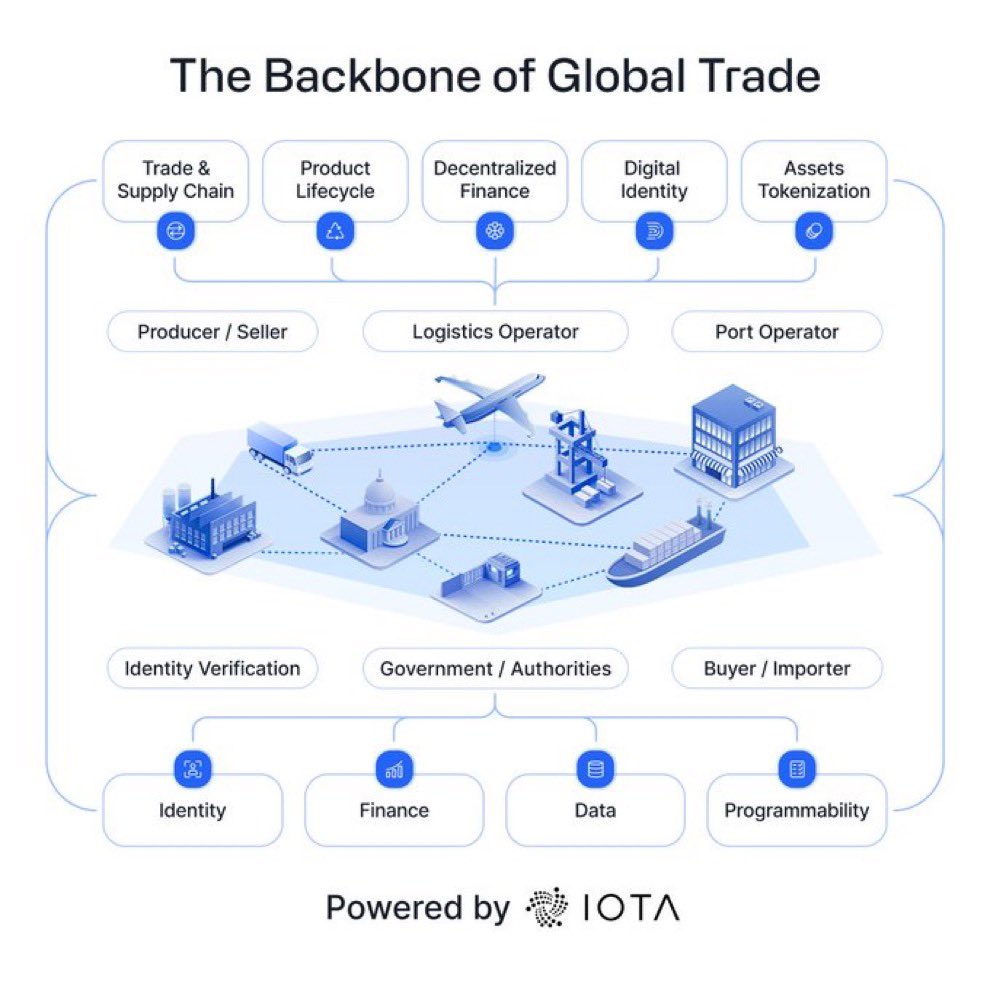
@IOTA CMO, @bondjanebond joins #GenC to reveal the high-stakes roadmap to transform the $35 trillion global trade industry from archaic paper systems into a frictionless, blockchain-powered engine.
@KundinP Auch vorher mussten Schornsteine den First um 40cm überragen. Es hat sich lediglich geändert das neu errichtete Schornsteine nicht mehr in der Dachfläche erlaubt sind, die Mündung muss jetzt Firstnah angeordnet werden.
Nach 1.BimschV und FeuVo ist es so nicht zulässig ;)
Celebrating 10 Years of $IOTA ! 🎉
To mark this milestone, we’re giving away 1000 $IOTA shared between 5 lucky winners 🎉
How to join:
✅ Follow @encapHQ & @iota
❤️ Like this post
🔁 Retweet
⏳ Winners will be announced in 72 hours
Let’s celebrate a decade of innovation with #IOTA 🚀


![RealLadon's tweet photo. You probably missed AI. You will probably miss Quantum if you aren't already looking. Don't overlook Qubitcoin.
All sources are publicly available and linked below.
One of the next big narratives in the stock and crypto spheres is quantum. What does that mean? It means any stock, crypto, derivative or security quasi-associated with quantum technologies will likely gain attention and interest from retail speculators - and, if the tech is credible, institutions too.
11 years ago, on 23 May 2015, there was a stock valued at $0.52 per share. Today, that same stock is worth over $200 per share - Nvidia. An increase of more than 41,000%...
"Yeah... but... that's Nvidia!" - sure; but you also have PLTR, AMD, MU, AVGO ...then $TAO, $FET, $RNDR, $WLD and others. All unique but with macro crossover.
Quantum technologies, unlike AI, which is truly revolutionary from a productivity and enterprise perspective, will not only be revolutionary because of its benefits to industry - it is a necessity for cybersecurity, science and business.
According to McKinsey (2024), the economic value derived from quantum technologies is expected to exceed $1 trillion by 2035 [1].
What is more, revenue generated by quantum computing companies exceeded $1 billion in 2025 - expected to rise to nearly $4.5 billion by 2028 [2]. The rate of R&D will also grow exponentially.
Within the broader quantum sector lies variance, uniqueness, innovation and niche. A large part of the space is concerned with cybersecurity - developing business solutions, with the backing of political mandates in some cases, to protect everything from communication, satellites etc., to the global banking system itself.
Crypto has already taken a stand and some bona fide projects are quantum secure - or working to implement quantum-resistant signature schemes.
But what about the other potential applications and market/economic opportunities?
One of the main sub-sectors, but currently smaller than quantum-resistant security/PQC, is quantum simulation. Mainstream businesses are already working with simulation - as are top universities - but only one crypto, and decentralized, option exists: Qubitcoin $QTC.
Qubitcoin is a decentralized network focused on using power from miners and their GPUs in exchange for $QTC tokens, the native token of the Qubitcoin network, an L1.
The Qubitcoin website says:
"Qubitcoin is a cryptocurrency that combines blockchain technology with quantum computation through Quantum Proof of Work (qPoW). Miners solve quantum tasks during the mining process, which helps to advance quantum simulation techniques...
Qubitcoin is a quantum-accelerated cryptocurrency built on a fork of Bitcoin’s codebase. Unlike traditional Proof of Work (PoW), which relies on solving cryptographic puzzles, Qubitcoin’s qPoW requires miners to simulate 16-qubit quantum circuits using GPUs. This unique consensus mechanism turns mining into a race to advance quantum computing, making Qubitcoin a bridge between blockchain and cutting-edge tech. Developed by the non-profit Superquantum, with contributors from MIT and Vanderbilt, QubitCoin is open-source and community-driven."
Continued below...](https://pbs.twimg.com/media/HJCSV8AWQAAzXHL.jpg)