I will be posting weekly videos of our Sunday school lessons starting this Sunday on Substack. We will be going over Genesis 43-45. These videos will be available to everyone, while Bible Notes will remain for paid subscribers.
I started this method fairly recently and it’s working out better. Color coded note cards that I make a week before and review this a couple of times a day, everyday leading up to it, so it can be off the top of my head everyday. However, please let me know what you do, I’m always looking for a better a method to teach Sunday school
Genesis 40-41:40:
Many readers can identify with a major let down after hopes have been dashed. Joseph has lots of ups and downs, but it trains him and we can use him as a model for us. It’s a story about Joseph but for all of us who follow God.
The narrative gives us clues as to his state of mind. He is surprisingly okay with his plight, and remained close to God, living a life of prayer. However, his main prayer, to be released from imprisonment as an innocent person, seems to go unanswered.
Joseph is experiencing a similar pain of the patriarchs, who hadn’t had children, Gen. 15:2; 25:21; 30:1. Job prays for his vindication of being in pain even though innocent. Job 19:7. The Psalmists discuss the same thing. Ps. 13:1; 22:1. Jesus experienced a similar situation as Joseph. Matt. 26:38-42; 27:46. Paul has a similar experience too. 2 Cor. 1:8-10; 11:24-29.
Jesus, Matt. 5:10-12, Hebrews, 12:1-11, and Peter 1 Peter 2:19-21, all warn Christians will suffer even though they are righteous, and in fact suffer because of righteousness. Joseph demonstrates what followers should do and how to react.
Joseph’s story often repeats the phrase that God is with him, more than the other patriarchs. And he is reversing the family tradition of not being the greatest. He is developing into a model follower of God. Joseph interprets two dreams, which remind us of the two dreams he had where his brothers and father all bow down to him.
Joseph’s time in prison is the steppingstone to the palace. The suffering of one righteous person led to the saving of many lives, not just a single nation. Gen. 50:20. This is a partial fulfillment of the promise in Gen. 12:3. There is an obvious parallel to Jesus, one who was righteous and suffered, but saved many, not just the nation of Israel.
Joseph spent 13 years in slavery and imprisonment for crimes he didn’t commit. However, suddenly he finds himself in the palace. The change in circumstances reflects his change in character. He is no longer this arrogant prince where he could do anything.
On Revelation 1:4=
Vs. 4: ‘Seven.’ ‘The number of completeness. God finished the work of creation in six days and rested on the seventh—thus the idea of completion. The complete, or entire, [Church] is here referred to in seven states of its existence throughout the ages. In Hebrew, the word “sheba” signifies both “seven” or “oath”. An “oath” completes a contract, thus to the Hebrews, the number seven had the spiritual significance of completion.’[1]
‘Churches.’ ‘The word “church” is a corruption of the Greek—“Kuriake”—“pertaining to a lord”. From this word is derived the Scottish word “kirke”. The modern usage of “church” makes it quite unfit for its presence in this verse. The Greek word “ekklesias”…“never signifies the place where Christians meet, or which they consecrate to the worship of God.” In place of the word “church” [it has been suggested] the Anglicized form of the original Greek: “Ecclesia”. This word is far to be preferred to the word “church”. It is compounded of two Greek words: “EK” meaning “out of”, and “KLESIS” signifying “a call or invitation”. Thus an Ecclesia is an assembly of people who have obeyed the “invitation” or call, to “come out” from among the Gentiles (see 1 Thess. 2:12; Acts 15:14; Gal. 3:26-29; Acts 20:28). The “servants” of Rev. 1:1 constitute the “ecclesia” of v. 4. Thus the Revelation was not written for “the churches” as commonly understood, but for those “called out” as such. The first portion of the word “ecclesia” (i.e., “ek”—“out of”)—is found in such passages as Rev. 5:9-10; Acts 15:14; 2 Cor. 6:17, and is translated “out of”. “Klesis” is found in Rom. 11:29; 1 Cor. 1:26; Eph. 4:1; Eph. 1:18, etc., and is rendered “calling”, etc. As an adjective (“kletos”) it is found in Mat. 20:16; 22:14; Rom. 1:1, 6, 7; 1 Cor. 1:2. Invariably the idea of a call or invitation is associated with this word. One Greek scholar has defined the word “ecclesia” as “An assembly called forth by the herald”. Wherever the word “church” appears…(with the exception of Acts 19:37—where the word is “temples” in the Greek) the word in the original is “ecclesia.”’[2]
‘Him who is and who was and who is to come.’ ‘The reference is to [God]… He was with Moses at the bush when He proclaimed to him His name (Exod. 3:14); He revealed Himself in the Lord Jesus, who is now the manifestation of the Father in glory; and He is the coming One—yet to be revealed in the earth. When the Lord Jesus appears in glory, he will reveal Him who is invisible (1 Tim. 6:15-16) Men shall see in him the manifestation of [God]. In the Revelation, the great Creator is set before His servants in the several phases of manifestation in which He has and will reveal Himself. This manifestation is referred to in Isaiah 41:4: “I am the first and with the last”. The word “first” in this verse is in the singular number, and the word “last” is in the plural. “The first one” relates to the Lord Jesus who is the manifestation of the Father; the “last ones” relate to the brethren in Christ, who will be exalted to similar glory and honor at His coming—cp. Rom. 5:2; 2 Pet. 1:4; Rev. 3:12. [God] was revealed in His word from the beginning (John 1:1-5). He is today revealed in His son (1 Tim. 3:16); and is yet to be revealed in the glorious company of the redeemed, at the second advent of the Lord. The name of [God] signifies “He who will be” and speaks of the intention of God to reveal Himself in a son and sons according to His purpose.’[3]
Revelation 1:3: “Bless those who reads and those who hear the words of the prophecy.” This book, and other parts of the Bible, was read in public because most people could not read. Please refer to Revelation 22:19.
‘Near East writers and copyists always said a short prayer in which they blessed the readers of the books they wrote or copied. It still is a general custom. They also admonished the people to keep the prophecy and not to add or omit anything from what had been written. This was done so that they could safeguard the teaching from falsification.’[1]
‘Bless are those who read.’ ‘Here is a grand incentive to study. The book closes with a similar benediction (Rev. 22:7). Similar words are given in the companion book to the Apocalypse, i.e., the Prophecy of Daniel (Ch. 12:10). So anxious was John to experience the fullness of the blessing that he wept when he found that the Apocalypse was a sealed book (Rev. 5:4), but his joy at the opening of those seals must have been great. Such anxious desire to learn the wisdom of [God] should characterize all the saints of God. An increasing knowledge of the Truth is an urgent need (cp. Col. 1:10; Acts 20:32) because it is the means designed of God for the sanctification of His saints (John 17:17; 1 Thess. 2:13). God has promised to help us in attaining knowledge if we approach Him aright—see James 1:5; Psalm 25:9).’[2] ‘The man who signifies more than he actually says, and who by a slight obscurity of style imposes upon the mind of an effort to penetrate his meaning, is a more interesting talker than the man who lets all out in a plain way. The effect of symbols after understanding is attained, is to make the matter set forth much more vivid and striking than it would be in a merely literal presentation.’[3]
‘Those that hear.’ ‘[T]he Greek implies not merely hearing, but giving heed to what is heard. Mere “reading” is not sufficient for the blessing, it requires a gathering of exact knowledge. We must exercise the greatest care to ascertain the true meaning of this wonderful book—then the blessing will be ours. To do this takes time and effort, but a blessing awaits those who thus labor in faith.’[4]
‘First, read; then study; finally, keep! This should be the object of Bible study. Note the example of Ezra (Ezra 7:10). The study of the Apocalypse will enable us to view life from the standpoint of God. It will reveal to us the truth nature of the political and religious organizations surrounding us, and the significance of the times in which we live. Thus, it will underline for us the importance of both studying the things of God, and giving practical application to them by keeping His commandments.’[5]
‘For the time is at hand.’ ‘The time was at hand, in the days of John, when the beginning of the prophecies contained in this book were to commence their fulfillment.’[6]
Today in Sunday school, we went over Genesis 29-30. It is a good reminder that God’s grace and mercy wins out despite our failings and our deserved condemnation. Jacob did a lot that the Bible condemns (Lev. 18:18), but still received blessings.
The Kingdoms of men rise and fall like dust in the wind.
Our hope is not in politics, wealth, or power, but in the coming Kingdom of God on earth under Christ.
“Thy kingdom come. Thy will be done in earth.” — Matthew 6:10
My very brief notes on the first two verses of Revelation. I have about 300 more resources to add to them. But it’s a working progress. Will eventually add all my for the entire Bible to this.
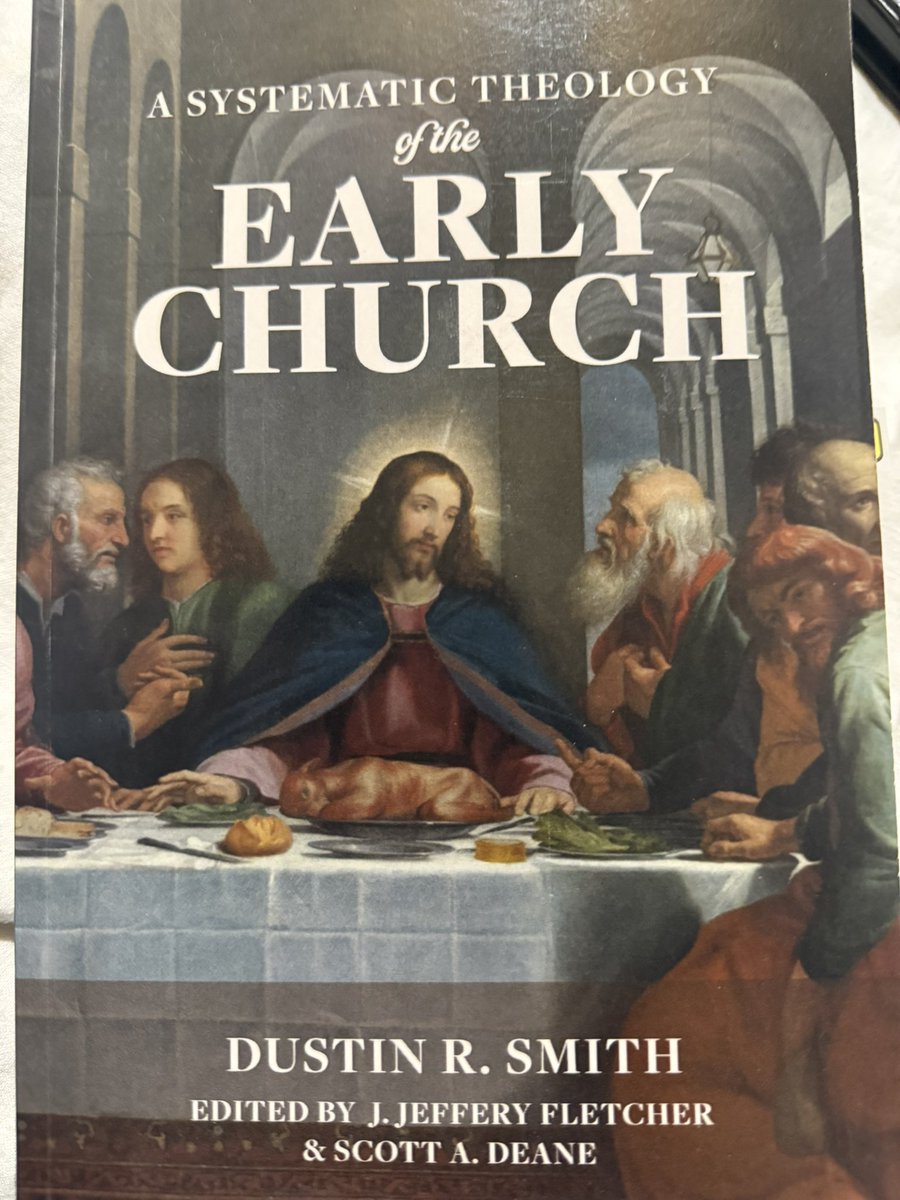
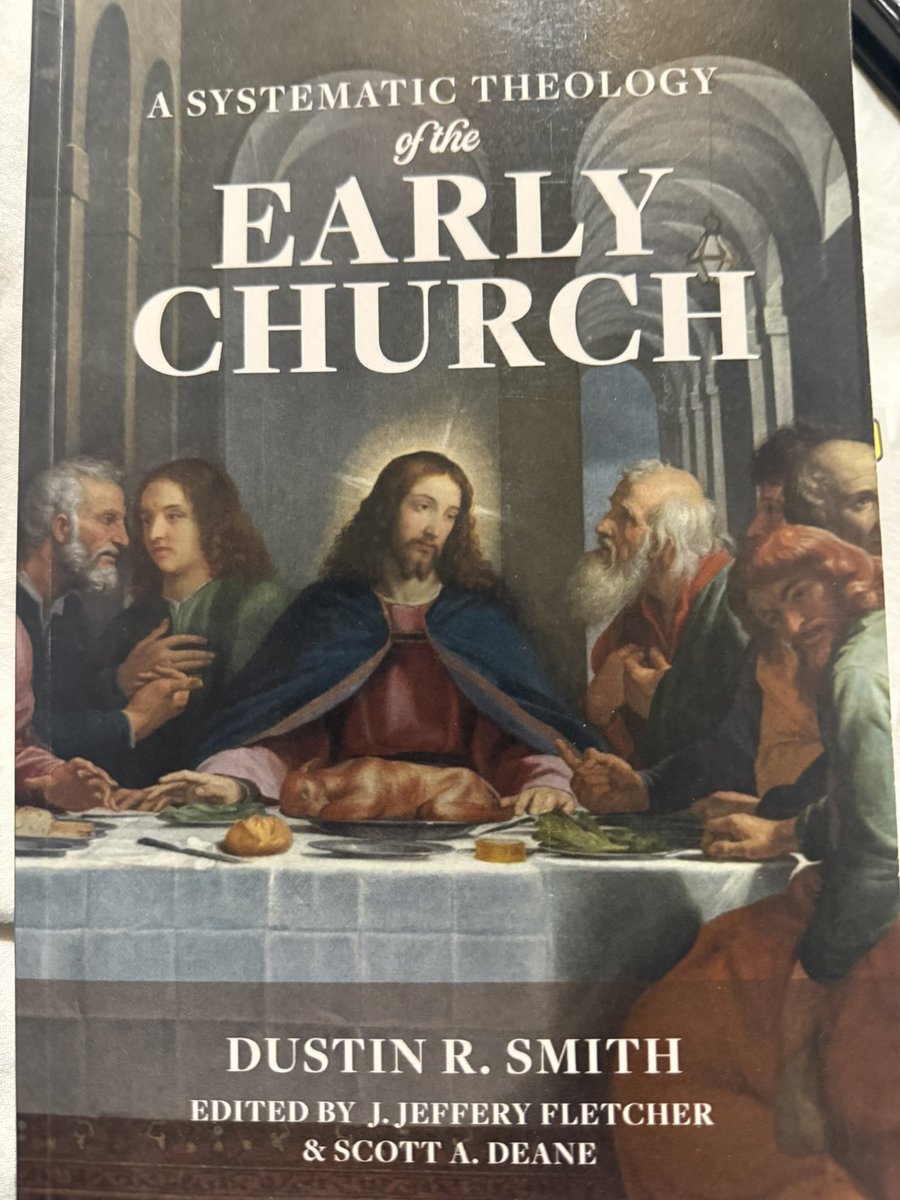
Council of Nicea: Multiple Hypostases is heresy.
Council of Constantinople: Multiple Hypostases is orthodox Trinity.
Holy Spirit bringing clarity and consistency here.
"Theistic evolution, paired with a historical Adam specially created in the literal sense to form a covenant community and Genesis 1 as a polemic, requires a hybrid model: the broader creation developed through divinely guided evolution, but Adam and Eve were uniquely formed by God as described in Genesis, yet biologically indistinguishable from evolved humans. Genesis 1’s polemical nature emphasizes theological truths about Yahweh’s sovereignty, allowing flexibility in interpreting its timeline to align with evolutionary science. This model aligns with the historical Christadelphian openness to an old earth while preserving Adam’s literal special creation and covenantal role, crucial for the doctrines of sin and atonement."
“The Christadelphian perspective on the devil, Satan, and demons represents a robust and academically defensible theological framework. Through rigorous biblical exegesis, it demonstrates that diabolos and satan are personifications of sin and opposition, while daimonion reflects cultural idioms for illness. Historically, it aligns with resistance to pagan dualism, restoring apostolic monotheism. Philosophically, it avoids dualism and fosters ethical accountability. Empirically, it mitigates the psychological harms—such as anxiety, depression, and suicidal thoughts—associated with belief in a personal devil and demons, offering a compassionate and rational approach to mental health. While critics may cite passages suggesting supernatural beings, Christadelphians contextualize these within the Bible’s broader narrative. By challenging traditional demonology, this theology invites believers to reconsider the nature of evil, bridging ancient Scripture with modern psychological insights.”