Executive Coach & Work Psychologist. Helping businesses & individuals perform in high stakes environments. Huge believer of positive psychology and wellbeing
Luck doesn’t just happen, it’s created. You can do things to increase the odds of serendipity.
Meeting more people makes you lucky.
Learning more skills makes you lucky.
Being willing to fail makes you lucky.
Offering to help others more often makes you lucky.
Here’s the paradox of modern work:
Organizations are asking people to deliver more creativity, innovation, and adaptability -- while doing little to support the conditions that make those things possible: Autonomy, rest, belonging and psychological/emotional #WellBeing.
#Leadership #HR #SHRM #CSuite #Work
Give me someone who can be responsible for an entire area--someone who can design, hire, and sort to achieve the goal--and I can be comfortable things will go well. These are the most important people to choose and manage well. Senior managers must be capable of higher-level thinking, and understand the difference between goals and tasks--otherwise you will have to do their jobs for them. The ability to see and value goals is largely innate, though it improves with experience. It can be tested for, though no tests are perfect. #principleoftheday
Most high achievers are terrible at leisure, and that's a problem.
Drawing on the work of philosopher Josef Pieper, @arthurbrooks argues that meaningful leisure—learning for its own sake, deepening relationships, growing philosophically—makes you happier, more creative, and more effective.
What does your leisure actually look like?
A mentor told me this: “Always assume things will work out, then do the work to make it true.” I’ve found the combination creates a quiet confidence that allows you to tolerate uncertainty better than anything else. I’ll never forget that.
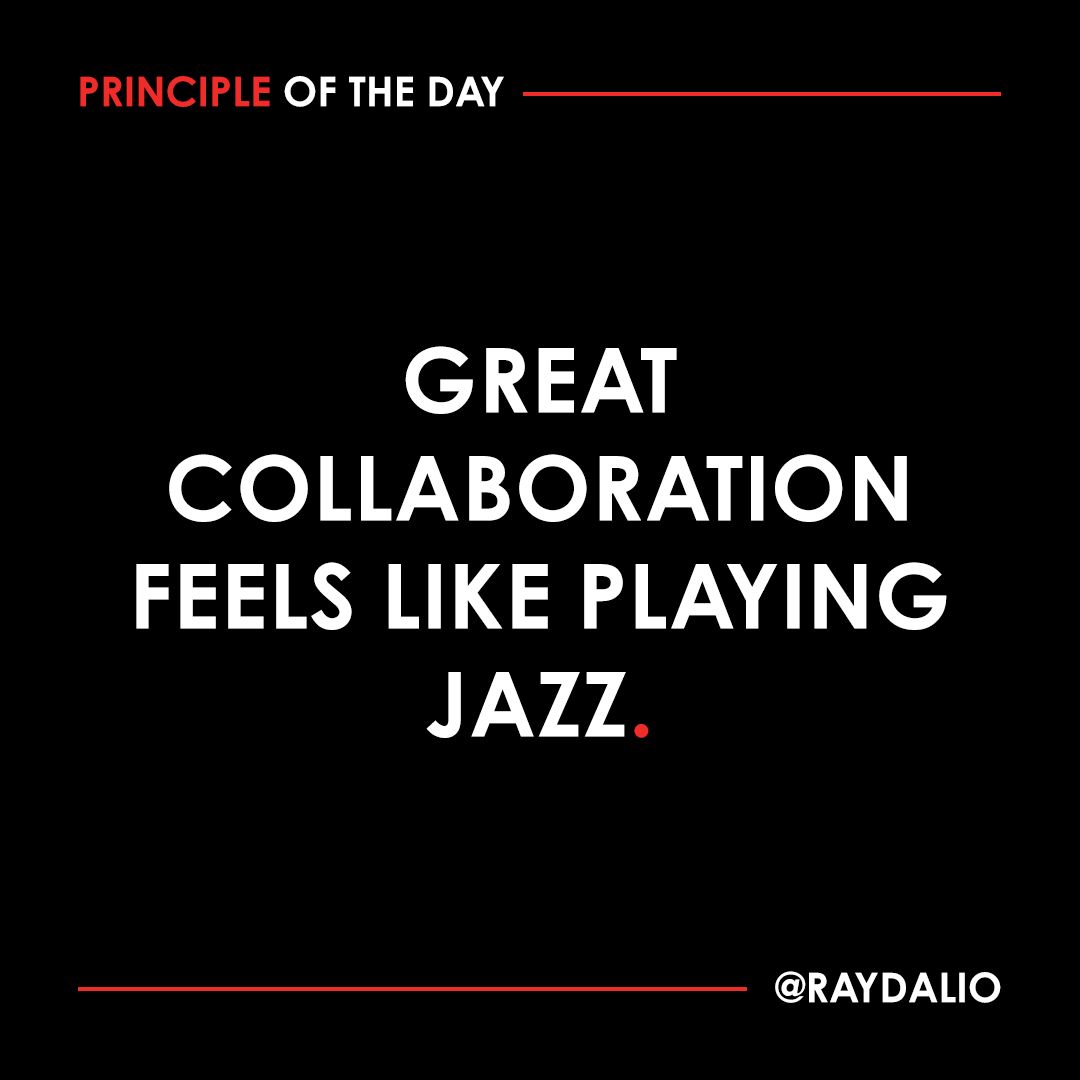
In jazz, there's no script: You have to figure things out as you go along. Sometimes you need to sit back and let others drive things; other times, you blare it out yourself. To do the right thing at the right moment you need to really listen to the people you're playing with so that you can understand where they're going.
All great creative collaboration should feel the same way. Combining your different skills like different instruments, improvising creatively, and at the same time subordinating yourself to the goals of the group leads to playing great music together. But it's important to keep in mind what number of collaborators will play well together: A talented duo can improvise beautifully, as can a trio or quartet. But gather ten musicians and no matter how talented they are, it's probably going to be too many unless they're carefully orchestrated. #principleoftheday
Grief is the loss of something you love.
We often think of it as death, but it can be a job, a relationship, or a future you thought you had. And when it happens, it feels deeply personal, almost like something only you are carrying. But at the very same time, millions of people are quietly carrying their own version of loss. You can look around and never see it, and still be standing next to someone who’s grieving.
That’s the strange part of grief. It feels isolating, even though it’s one of the most common human experiences there is.
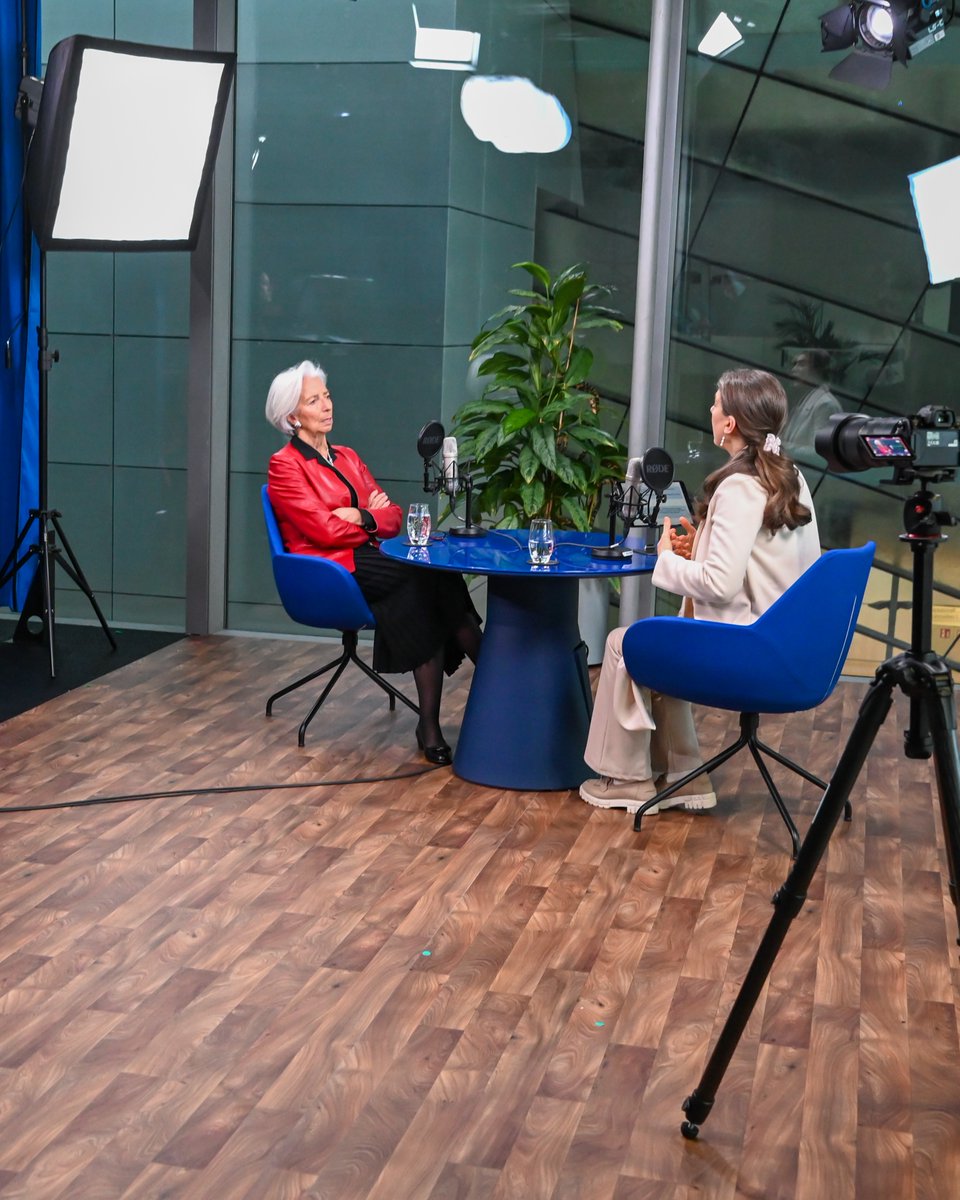
Financial knowledge is still low in Europe – especially for women.
Who first taught me about money? What advice shaped me? And how can we boost people’s financial confidence?
I was happy to be the first guest of the @ecb’s new look Euro Matters podcast.
Tune in https://t.co/L1n83NbFyZ
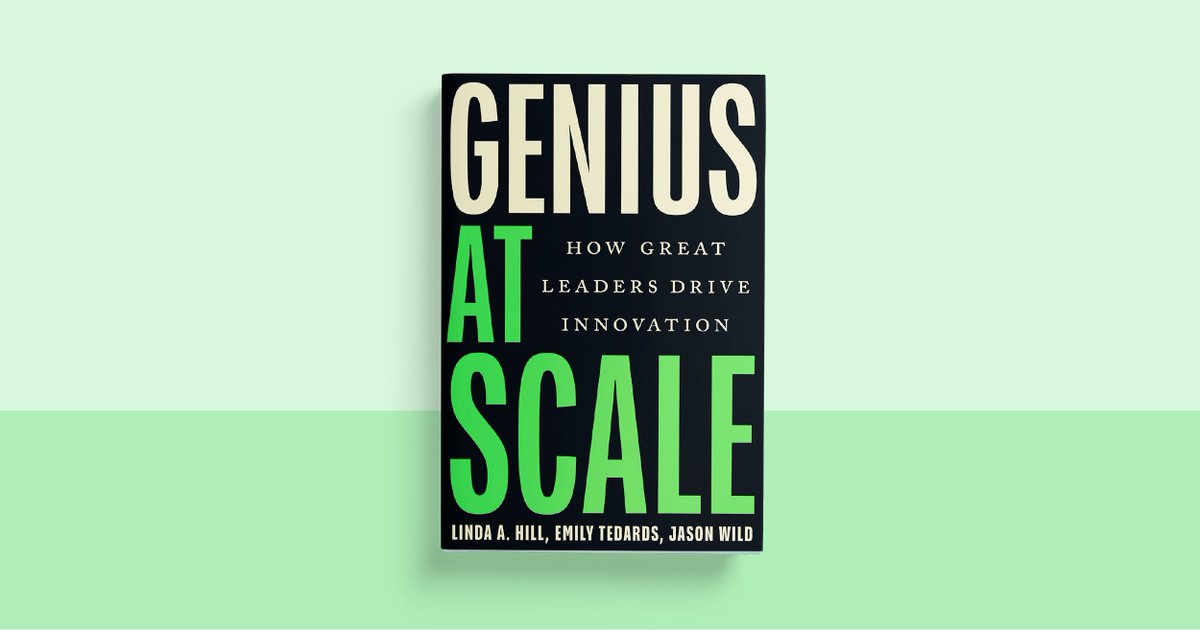
Constant tech disruption. Unrelenting economic volatility. Radically shifting demographics and work norms. More than ever, we need to innovate amid these daunting global challenges. But do we have the leadership it takes to make this innovation happen successfully?
The authors of “Genius at Scale” profile three types of leaders with individuals from all kinds of companies—from Mastercard, Pfizer, and Procter & Gamble, and more—who illustrate the mindset, skills, and digital savvy needed for leading in a world more uncertain and challenging than ever before.
The book is available today: https://t.co/O5fdjzLVa7
Only 10-15% of workforce training transfers to workplace practice: part 2.
Here are themes from the comments to my previous post across multiple socials: "Only 10-15% of workforce training transfers to workplace practice: what we can do about it".
The environment where learning lands dominated the comments. Reza Hosseini Ghomi described teams leaving training energised only to return to unchanged incentives, zero protected time, and blame culture. Anthony Lawson talked about “the system eating the learning”. Ish Ahmed described how changing the conditions around a clinical service— not new training — moved performance from the 4th quartile nationally to the 1st.
There was discussion about the “validity” of the “10-15% of workforce training transferring” statistic. A challenge by Jim Sellner that the figure is an opinion & not evidence-based made me delve deeper & I couldn’t find an empirical basis for it in the quoted literature. However, Jim Campbell said it was consistent with findings in The Lancet of a 10% figure in healthcare workforce development. For me, the underlying message (that formal training alone has a significant transfer problem) still stands and is supported by the broader research literature regardless of the precise percentage.
David Wylie and Stefan Powell named specific barriers. David raised "tall poppy syndrome": managers feeling threatened by team members developing capabilities beyond their own, leading to skills suppression. Stefan pointed to eroded line manager capacity — managers working more "in the business" than "on it," leaving little space to develop their people.
Learning as an ongoing process, not a training event, was another strong theme. Paul Jocelyn argued that using training to address performance problems is a limited lever and that L&D is structurally over-indexed as an intervention. John-Paul Crofton-Biwer stressed learning happens in the days and weeks after training - testing whether what people are being asked to do actually fits their work.
Callum Brown described the 70:20:10 model and argued the best time for improvement training is when someone has a live project to consolidate skills. Dr Ian Thomson flipped this to 10:20:70 to reflect the transfer sequence and discussed the importance of define outcomes and behaviours before designing content. Paula Beattie included individual coaching as standard and used the Toyota A3 as a personal development instrument for each participant, with experimentation as the site of real learning. Helena Jackson, Ralph Talmont and Lesley Parkinson, extended the conversation to varied methods (on the job practice, arts based approaches, micro learning over time) and the need to match delivery to busy realities.
Across the comments, a consistent set of themes emerged: co design rather than top down training, coaching and feedback embedded into work, timing learning around real problems, supporting and equipping line managers, addressing cultural blockers and treating training as one element in a broader system of change rather than the primary solution.
Thanks to all commenters.
In an idea meritocracy, openness is a responsibility; you not only have the privilege to speak up and "fight for right" but are obliged to do so. This extends especially to principles. Just like everything else, principles need to be questioned and debated. What you're not allowed to do is complain and criticize privately-- either to others or in your own head. If you can't fulfill this obligation, then you must go.
Of course open-mindedly exploring what's true with others is not the same thing as stubbornly insisting that only you are right, even after the decision-making machine has settled an issue and moved on. There will inevitably be cases where you must abide by some policy or decision that you disagree with. #principleoftheday
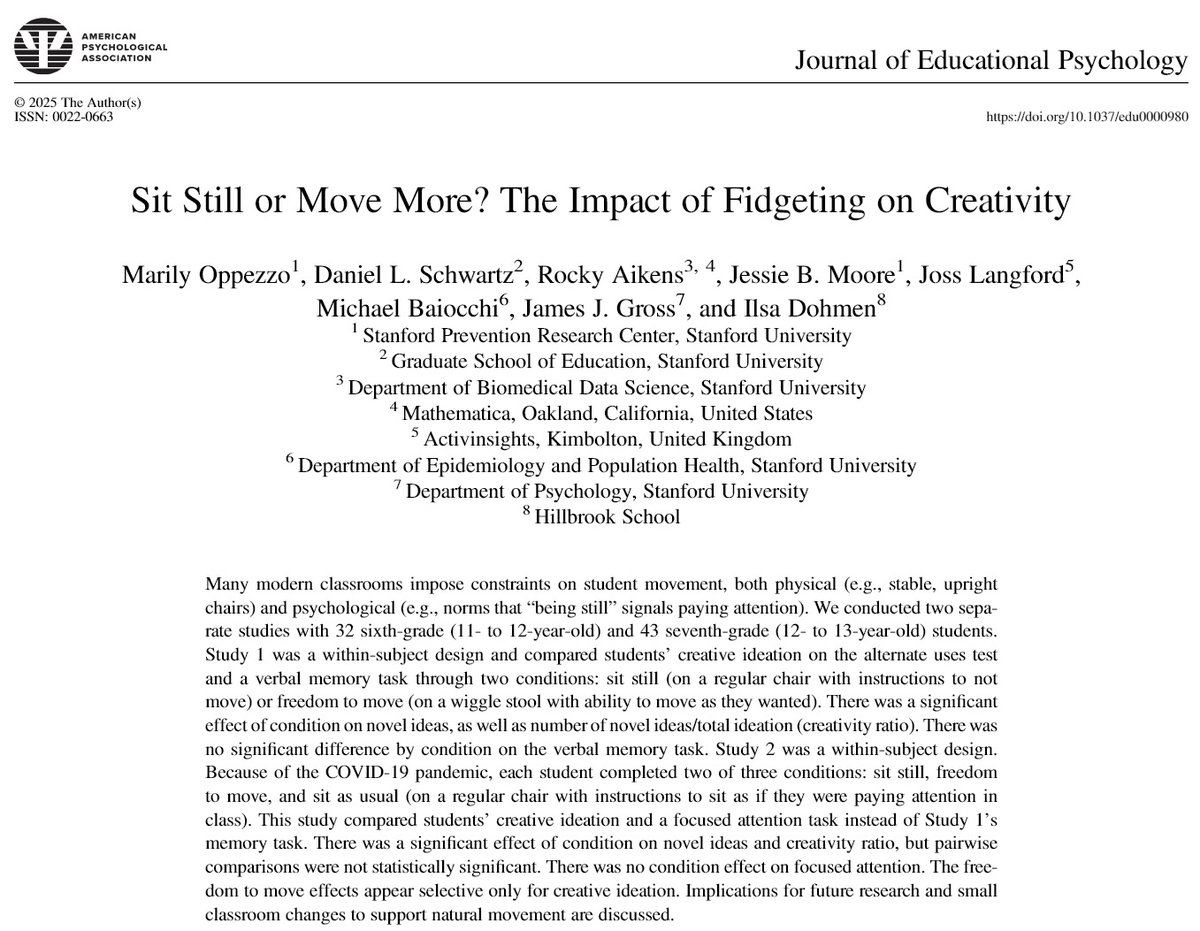
Telling kids to sit still doesn’t build discipline. It stifles imagination.
Evidence: When students are given freedom to fidget and wiggle in their seats, they pay just as much attention—and generate more creative ideas.
Physical activity unlocks mental agility.
Also from the IMF, this on stock-bond correlation:
"Since the start of the pandemic period...bonds have become less effective in cushioning volatility in stocks. Instead of offsetting equity risk, bonds are increasingly moving in tandem with stocks. This shift is particularly pronounced during sharp market selloffs."
(I would note that the substantial move up in positive correlation between the two, which undermines the traditional effectiveness of stock/bond portfolio diversification, has been partially reversed in the most recent subperiod. Having said that, the negative correlation remains unusually weak.)
#economy #markets #portfoliodiversification #investing #investors @IMFNews
Most people are reluctant to take in information that is inconsistent with what they have already concluded. When I ask why, a common answer is: "I want to make up my own mind." These people seem to think that considering opposing views will somehow threaten their ability to decide what they want to do. Nothing could be further from the truth. Taking in others' perspectives in order to consider them in no way reduces your freedom to think independently and make your own decisions. It will just broaden your perspective as you make them. #principleoftheday
The stories we tell about our lives—formed from old wounds, limiting beliefs, incomplete narratives—are what keep us stuck.
So what if you edited the story?
That's the work, and I loved talking about it with @melrobbins on The Mel Robbins Podcast.
Discuss your issues until you are in sync with each other or until you understand each other's positions and can determine what should be done. As someone I worked with once explained, "It's simple--just don't filter." #principleoftheday
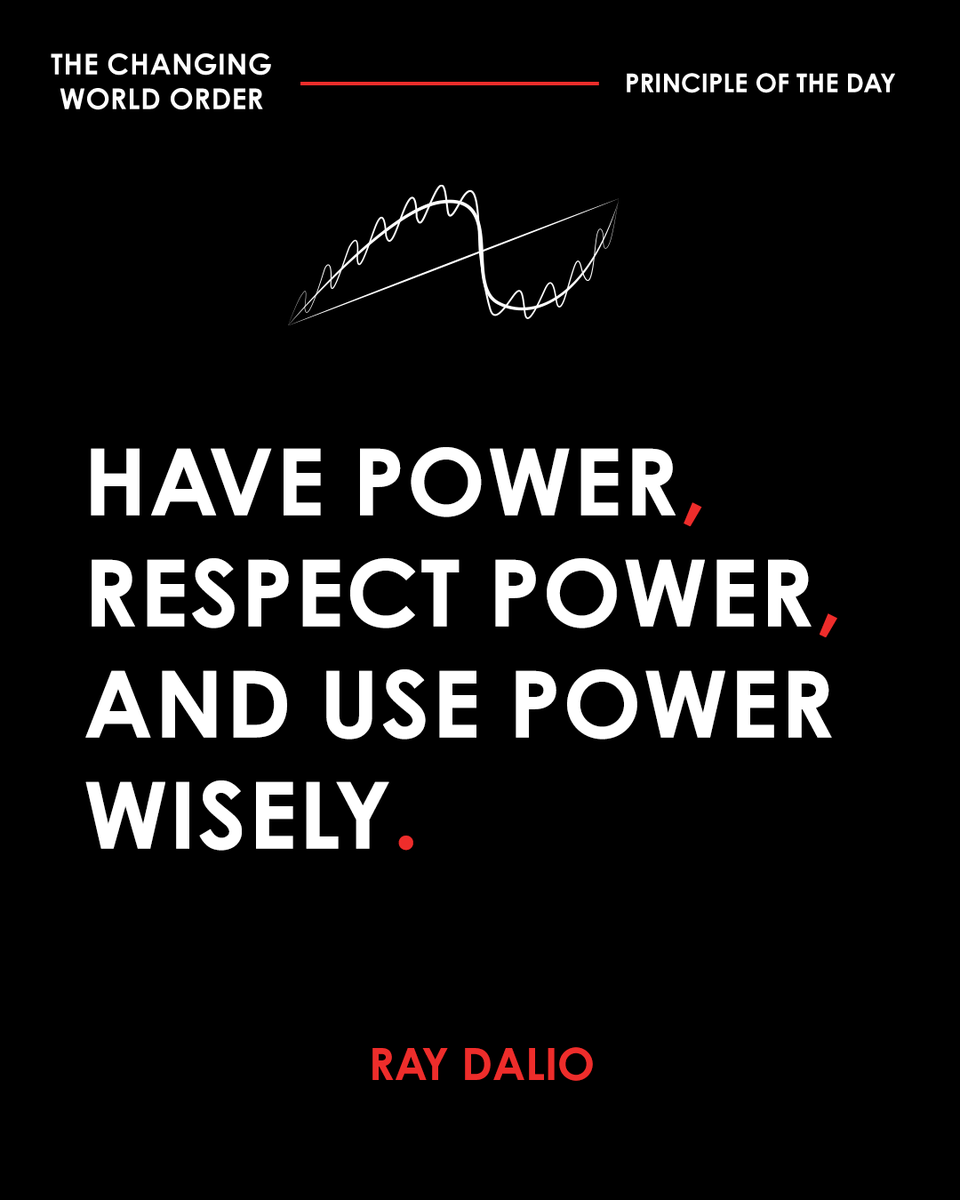
Having power is good because power will win out over agreements, rules, and laws all the time. When push comes to shove, those who have the power to either enforce their interpretation of the rules and laws or to overturn them will get what they want. It is important to respect power because it’s not smart to fight a war that one is going to lose; it is preferable to negotiate the best settlement possible (that is unless one wants to be a martyr, which is usually for stupid ego reasons rather than for sensible strategic reasons). It is also important to use power wisely. Using power wisely doesn’t necessarily mean forcing others to give you what you want—i.e., bullying them. It includes the recognition that generosity and trust are powerful forces for producing win-win relationships, which are fabulously more rewarding than lose-lose relationships. In other words, it is often the case that using one’s “hard powers” is not the best path and that using one’s “soft powers” is preferable.