Medical repatriation, worldwide.
Air ambulance, stretcher flights, medical escort, bed-to-bed transfers & repatriation of deceased.
Led by one of Türkiye's most experienced health-tourism professionals.
24/7 · EN/TR/NL/DE · WhatsApp +90 555 095 07 42
https://t.co/Lhj8g2wdWk
@BTN_News Congratulations to both teams. Villa holidays often mean families are far from a resort desk, so a clear 24/7 line for medical problems is a real part of the service. Good to see specialist operators growing.
@TravelWeeklyUS Hope the PreCheck updates also make it smoother for travellers flying with medical devices, oxygen or a wheelchair. Clear screening steps for them save a lot of stress at the gate, for passengers and crew alike.
@CeoVine@CureMeAbroad Congrats to @CureMeAbroad. The part of medical travel that platforms often underestimate is what happens if a patient needs to fly home on a stretcher or with a nurse after surgery. Building that into the journey early saves families a lot of stress.
@fap_pt Duas missões no mesmo dia entre Porto Santo e a Madeira mostram bem o valor de ter meios aéreos prontos a qualquer hora. Nas ilhas, o tempo até ao hospital certo faz toda a diferença. Parabéns à Esquadra 751 e às equipas médicas.
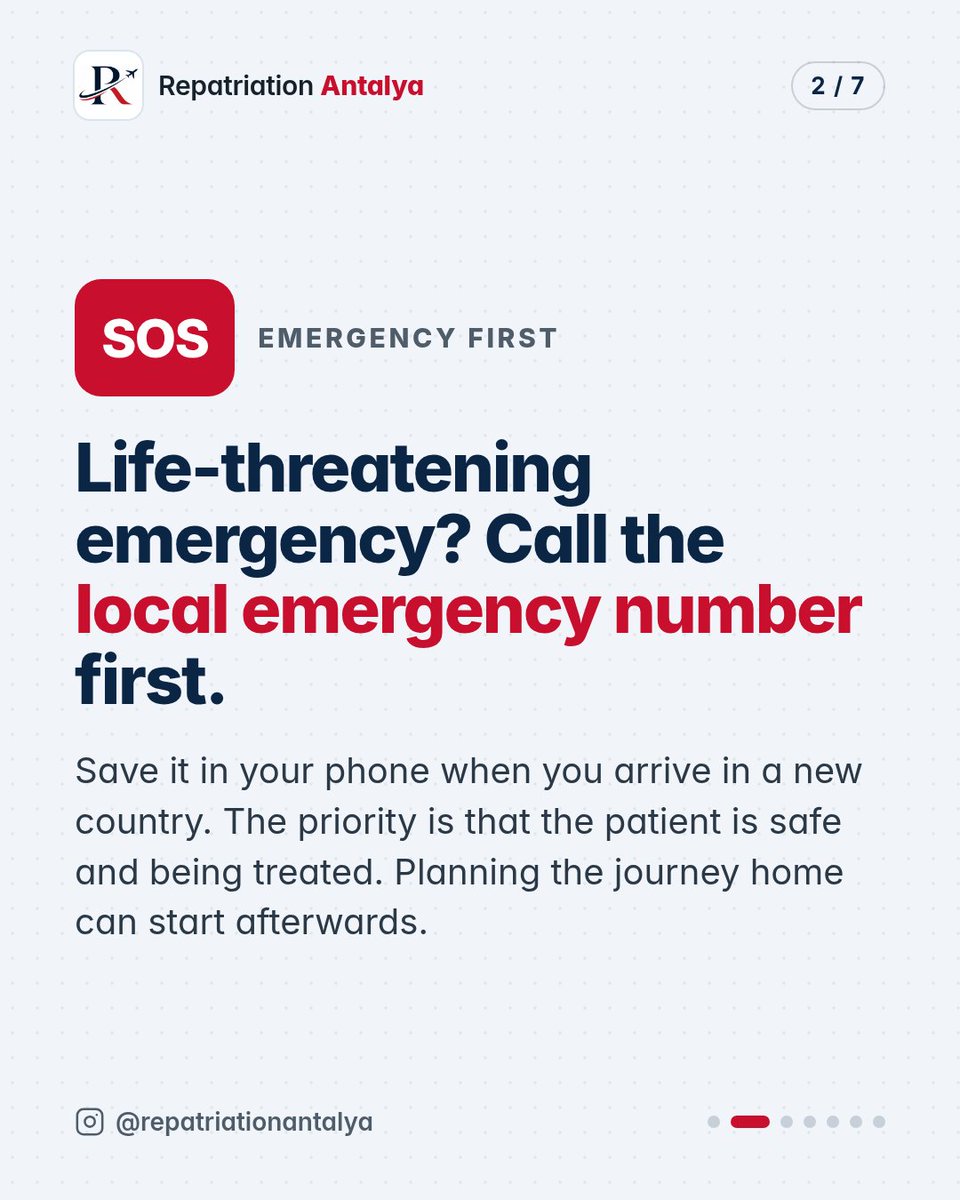
In hospital abroad? First steps:
1. Call your insurer's 24h line
2. Keep passport, policy and receipts at hand
3. Get a medical report in English
4. Contact us to plan the trip home
Direct contact in English, Dutch, German, Turkish and Russian.
#TravelInsurance
@Proengin1@WHO Medevac planning for burns and CBRN casualties is where coordination gets tested: receiving-hospital capacity, crew protection and aircraft decontamination all have to line up before anyone moves. Good to see WHO bringing teams together on this.
@TheEyeSurgeon9 Thank you! It is one of those details most people only read after something goes wrong abroad. A two-minute look at the policy wording before travel saves families a lot of stress.
@portsmouthnews Wishing the sailor a full recovery. For crew injured far from home, the next challenge comes once they're stable: getting them home safely, often with a medical escort, while family and employer coordinate across borders.
@hangar3BLK A discreet private terminal makes a real difference on repatriation flights: ramp access for the ambulance, no terminal transit for a stretcher patient, and a calm space for the family. Good to see regional airports building this capability.
Someone you love is in hospital abroad. Here's how they get home.
Air ambulance, stretcher flights, medical escort & bed-to-bed transfers worldwide.
Direct contact in English, Dutch, German, Turkish and Russian.
WhatsApp +90 555 095 07 42
https://t.co/Lhj8g2wdWk
@maskellp@LNAACT Good luck Phil, brilliant cause. Air ambulance crews save lives every day and most of it runs on donations like yours. Wishing you a strong training block on the way to London 2027.
@OrbitKE254 AMREF Flying Doctors are a great example of what a well-run medevac service does. Across East Africa a light aircraft can turn a two-day road journey for a patient into a couple of hours, and that time often decides the outcome.
@BTN_News More long voyages means more guests who fall ill far from home. The hard part is rarely the ship's medical centre, it's the hand-off at the next port: hospital bed, insurer approval, then a stretcher seat or air ambulance home. Worth planning that chain before sailing.
@ClaimsMedia Phones drive the claim volume, but the claims that change lives are medical: a hospital stay abroad or a medical flight home. Worth every traveller checking their medical and repatriation limits before they leave, not after.
@FintechNewsMy Good move. As travel cover spreads to new markets, the line buyers check least is medical evacuation and repatriation. It's the part that matters most when someone ends up in hospital far from home and needs a stretcher or air ambulance back.
@MedicalTravelCo Lovely to see. From the repatriation side, the trips that go smoothest are the ones where every condition was declared upfront: the insurer approves medical transport quickly and nobody argues about cover while the patient waits abroad.
@Rolston_Paul_HC In clinic ops, uncertainty with international patients often peaks at discharge: flight dates slip, fit-to-fly letters come late, escorts need booking. A clear owner for that handover is one of the simplest ways to keep patients and families calm.
@SpiceFMKE@nduokoh@dennisaseto Good to hear protocols are in place. The step that often gets overlooked is the trip home: who confirms the patient is fit to fly, and whether they need a nurse escort or a stretcher. Planning that before treatment starts saves families a lot of stress.
@ParadeMagazine Useful comparison. One gap people miss: refundable bookings protect your money, but only insurance gets you home if you fall ill abroad. A medical flight or stretcher seat on a scheduled flight can cost more than the whole trip, so check that part first.
@Medivoyage1 One point of contact is exactly what oncology patients need. Something families often ask about late is the journey home after treatment: fit-to-fly timing, oxygen or seating needs, and whether an escort should travel along. Worth planning from day one.