Since we launched Endowments in April, the total value locked (TVL) in ResearchHub has steadily climbed to 𝗻𝗲𝗮𝗿𝗹𝘆 $𝟯𝗠 in ResearchCoin.
More science funders are depositing their $RSC into @ResearchHub Endowments to earn high-yield Funding Credits, allowing them to fund research without spending their principal.
No lockups. Withdraw anytime and retain the Funding Credits you've earned.
Something huge just landed at @ResearchHub.
Introducing: Endowments.
Starting today, everyone holding ResearchCoin (RSC) in their ResearchHub account will automatically earn high-yield Funding Credits, distributed daily.
Funding Credits must be used to support projects on ResearchHub, turning your one-time investment into a continuous source of research funding.
Science organizations are either embracing AI or keeping it out of their workflows.
@ResearchHub is leaning into AI for writing and reviewing funding proposals, as a complement to human experts, not a replacement.
Lots of debate this week on whether journals should ban AI in peer review.
We actually tested this in our new preprint, and the results were pretty clear to me.
For context, I've reviewed for most of the big journals and evaluated 1,000 human reviews as an editor. I love to read and evaluate science.
TLDR: From now on I won't do any peer review without AI. For clinical trials, I'd even call human-only review dangerous 🧵
RSC Transparency Update
Over the coming days, the ResearchHub Foundation will carry out planned RSC token transfers between internal wallets. None of the tokens are being moved for sale.
The community does not need to take any action.
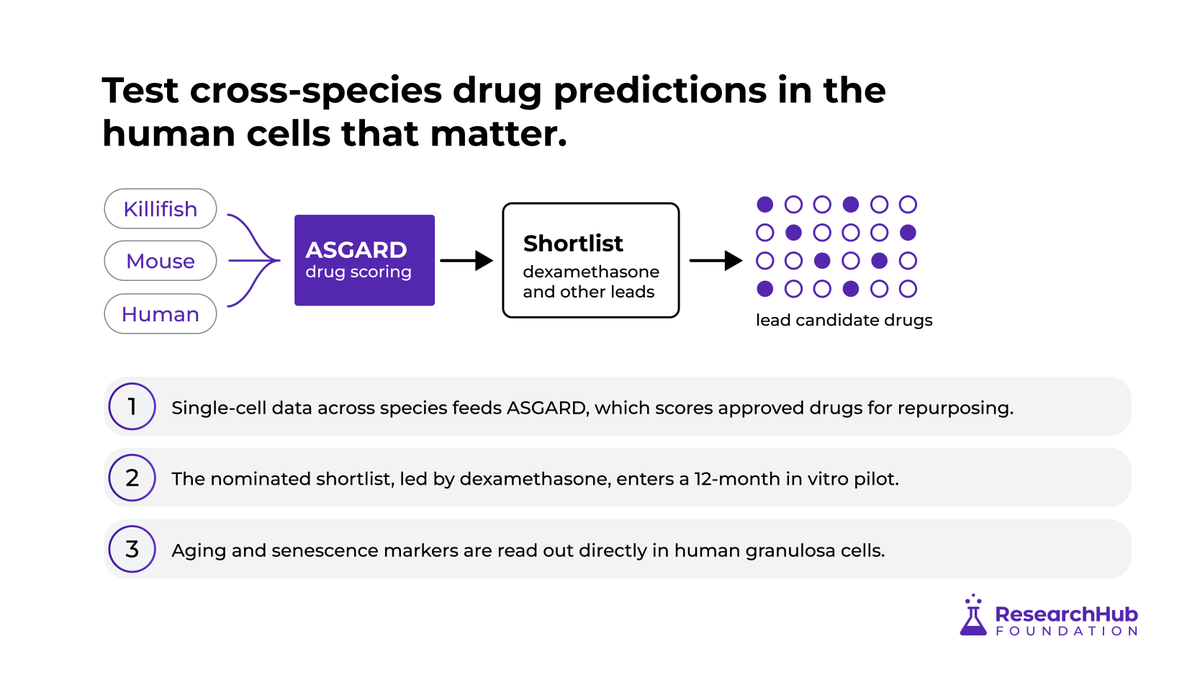
If successful, the findings could help identify promising candidates for future reproductive longevity research.
Follow the funded proposal and its research updates on ResearchHub.
https://t.co/IZnIqSCY2Q
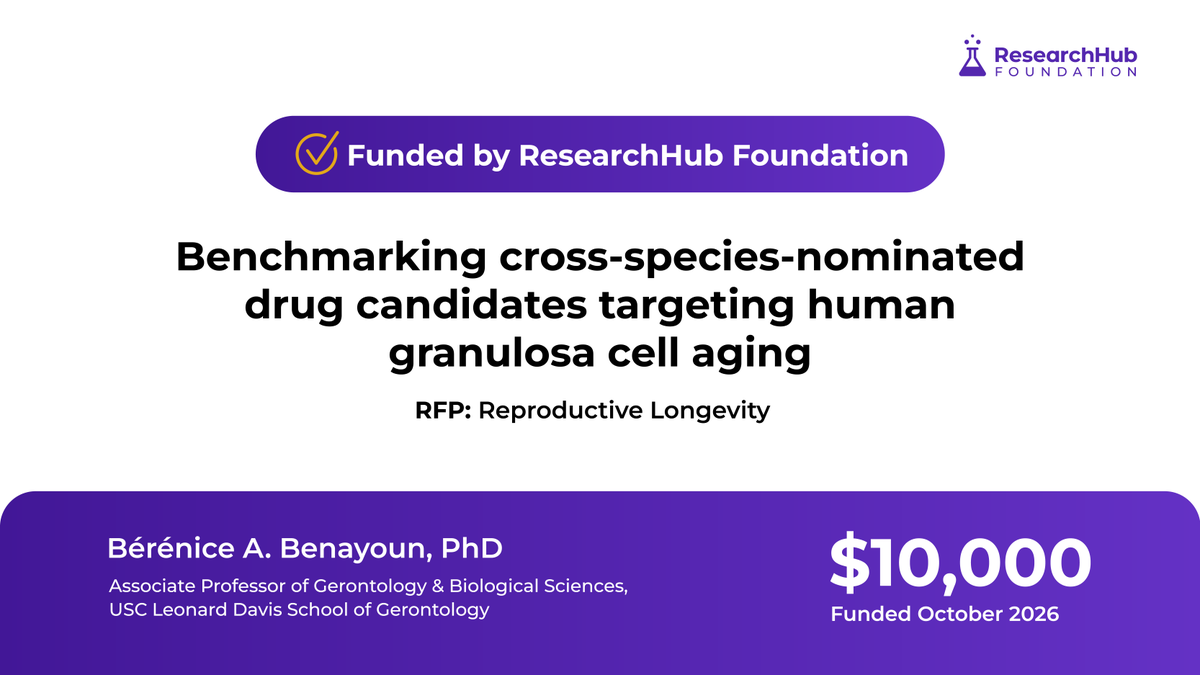
Can existing drugs be repurposed to target ovarian aging?
We just funded a proposal by @BBParis1984, Associate Professor at @uscleonarddavis, to test leading candidates directly in human ovarian cells. 🧵
Dr. Benayoun's research will test whether these drug candidates can:
🔬 Reduce cellular senescence
🔬 Reverse molecular signs associated with ovarian aging
@VitalikButerin We’re funding research on this through an open-science RFP.
• If you work on airborne disease defense, apply with an open proposal.
• If you want to back it, add to the funding pool.
https://t.co/ZD1BdQQ8k2
@VitalikButerin We’re funding research on this through an open-science RFP.
• If you work on airborne disease defense, apply with an open proposal.
• If you want to back it, add to the funding pool.
https://t.co/ZD1BdQQ8k2
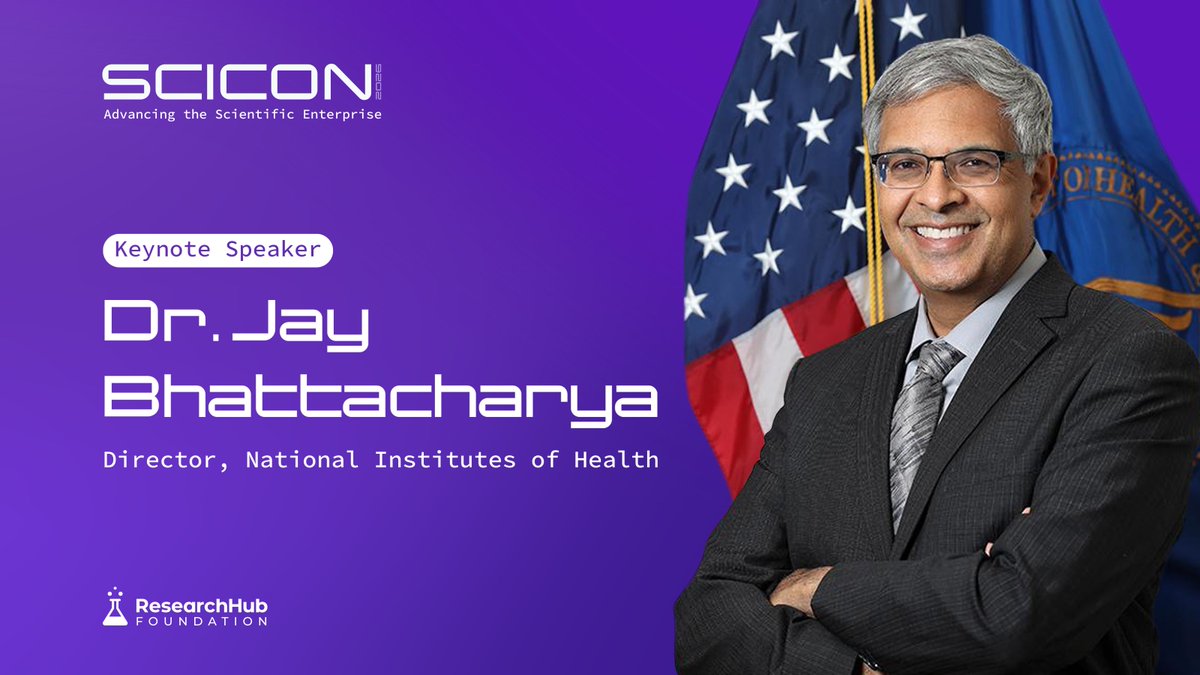
Introducing our SciCon 2026 keynote speaker: Dr. Jay Bhattacharya!
NIH Director, former Stanford professor, and author of 170+ peer-reviewed papers.
🗓 December 10
📍 San Francisco
OpenAI posted this on Tuesday. By Wednesday there was a $44,220 protocol on ResearchHub to test it in human iPSC neurons, reviewed and open to fund. The lead took 32 minutes. Testing it is still the slow part, and that's the part we're working on.
@VinVomero@OpenAI You nailed it - the study designs on ResearchHub are preregistrations, which helps lock in the protocol. Very aligned with your thoughts.
@VinVomero@OpenAI That’s actually exactly why we are separating the designer and executor of the study.
AI designed + human refined proposal. Then a new scientist is found to execute.
Feel free to DM if interested in any part!
@VinVomero@OpenAI Up to the scientific community on which study gets curated to the top.
We’ve also developed an AI expert finder to target 1000s of labs to run it (that’s the easier part once the capital is available)
Glad to see someone is on board with making replication a top priority! Although the notion that NIH is “scaling down” our work on replication is complete fiction.
We are deeply committed to making replication a core part of the biomedical research enterprise. Work is moving forward on many fronts:
🔎 Investing $174M in efforts to test interventions that incentivize replication, support research with built-in replication, and more.
🔎 Created the Linked Discoveries tool in PubMed Central, which connects researchers with related evidence and replication studies.
🔎 Issued highlighted topic encouraging research on rigor, transparency and replicability.
🔎 Creating a new S-index to measure (and incentivize) data sharing among researchers, with other new metrics to come.
🔎 [Coming soon]: a new journal focused on replication work.
No amount of money will fix the issues the scientific enterprise faces on this topic. It requires a major cultural change affecting how we conduct, evaluate and reward scientific work.
The culture of biomedical science must reward replicable, reproducible research — or else we won’t make much progress improving human health.
https://t.co/ThnPPzPiIY
(former?) wet lab scientist/mAb engineer here: hypothesis generation was never a major blocker to developing new drugs/advancing science. It's easy to generate low-quality hypotheses. You can waste years chasing bad ideas
It's much harder to ID the good ideas and determine how to best test/implement them with reasonable time and cost
Borrowing from @mfgrp & the late Chris Walsh: often the problem choice constrains feasibility and impact
We used GPT Sol 6.1 to draft 10 preregistered proposals to test this hypothesis in the wet lab.
1. Funders: pool funds on the RFP
2. Scientists: upvote, comment, or review to strengthen the experimental design
3. Wet labs: comment if you want to run one
https://t.co/5mozAzgZ2f
We used GPT Sol 6.1 to draft 10 preregistered proposals to test this hypothesis in the wet lab.
1. Funders: pool funds on the RFP
2. Scientists: upvote, comment, or review to strengthen the experimental design
3. Wet labs: comment if you want to run one
https://t.co/5mozAzgZ2f
We used GPT Sol 6.1 to draft 10 preregistered proposals to test this hypothesis in the wet lab.
1. Funders: pool funds on the RFP
2. Scientists: upvote, comment, or review to strengthen the experimental design
3. Wet labs: comment if you want to run one
https://t.co/5mozAzgZ2f
GPT-Rosalind surfaced a new lead for drug discovery: could restoring cholesterol transport protect neurons from degeneration?
DCTN1 is a gene linked to Perry syndrome, a rare neurodegenerative disorder. In mouse-brain data, disrupting it increased expression of genes involved in making cholesterol. GPT-Rosalind suggested a possible explanation: cholesterol may not be reaching where neurons need it.
That gives scientists a specific mechanism to test and, if confirmed, a direction for developing new treatments for neurodegenerative disorders.
With @perturbai_tx and @scrippsresearch, a team of thousands of GPT-Rosalind agents worked in parallel, connecting gene-expression results from millions of mouse brain cells with scientific literature in just 32 minutes. We’re now expanding this collaboration to identify new drug targets.
https://t.co/oHdF3ELsMj