You can point an LLM at your data and ask which clients are likely to leave.
But without rigorous evaluation, you’ll mostly get false positives—wasting money on unnecessary interventions and eroding confidence in the entire solution.
Prediction isn’t the hard part. Proving the predictions are reliable is.
https://t.co/JFo2tfCm3K
Genuine question for anyone running an LLM against their own stack — HubSpot, Intercom, wherever.
You ask it what's going on with an account. It answers. Confidently. Every time.
A confident answer and a correct one look identical on the screen.
So how are you actually trusting the output?
Not "it read well." Not "it sounded right." What's in place that lets you trust what it tells you - enough to act on it?
The question I keep coming back to: show me where. Which conversation? Which date? What changed?
Curious what's working for you?
@boardyai building Resonant IQ, full conversation coverage for CX teams, built on verified data reliability vs raw LLM output. would love to get Boardy Pro
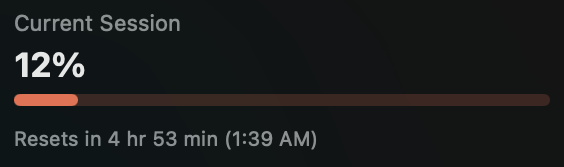
@ClaudeDevs I'm 7 minutes into a new session and usage is already showing at 12% - that's WAY more than I typically use doing roughly the same workflow.
I believe things may not be fixed....
You who use Claude Code, do you use CLI for everything, including your planning/decision discussions with Claude? Or do you use chat for planning/discussions, or ??
Today I burned real API spend debugging a validator bug that didn't need a single LLM call to find.
The fix wasn't smaller test runs. It was realizing test runs were the wrong tool entirely.
LLM QA on customer conversations is only as trustworthy as the corpus you test it against. Plant known passes. Plant known failures. If your prompts don’t catch both, you don’t have QA — you have vibes.
Before we score a single conversation for a customer, our detectors are getting measured against thousands of labeled ones.
If we’re going to tell you an account is at risk, that signal has to mean something.
Foundation work. Worth doing right.
A good customer intelligence layer doesn't tell you what you already knew. It tells you what the CSM, the sales rep, the AM, and the onboarding lead each knew separately — together.
Most "health scores" in CRMs are lagging indicators of feelings the CSM already had. The data didn't discover the problem. The data confirmed what they suspected two weeks ago.
@akcushman We're building something like this - although first version is more geared toward making sure your conversations provide actual insights vs reminders to follow up, but I could see that being a possible future feature. https://t.co/3K15WJiTTF
ResonantIQ doesn't replace Intercom, HubSpot, or Zendesk. It sits on top, reads every conversation, and gives every team the same picture of every account. Not a dashboard. A layer.
You don't have a customer understanding problem. You have a customer fragmentation problem. The knowledge already exists — in Zendesk, Hubspot, Intercom, Gong, Slack. ResonantIQ puts it in the same place, at the same time, in the same shape.