Caught doing 🤌
Thanks to Brian @Googleorg, Yolanda @GiveWell, and Manoela @WoodwellClimate for a great conversation about where and how AI can help communities be more resilient. Video here: https://t.co/50tOdVNH1F
Special thanks to Woodwell for the #COP31 photos
Step up adaptation and resilience at #COP31.
In Africa, adaptation cannot be separated from cities. In this video, Aklilu Fikresilassie, Director, Thriving Resilient Cities, @WRIafrica explains why.
Visit WRI's resource hub regularly for the latest commentary, analysis, events and more: https://t.co/EmYLdbBykO
🌡️It’s now certain: the world will exceed 1.5°C of warming, at least temporarily. But we can still bring temperatures back down this century, and it will take going beyond net zero.
The good news: we already know how to get there. Read how: https://t.co/W8NnQRKNas
🚨 New data from #SystemsChangeLab finds that global efforts to conserve forests and land are not just falling short — they are largely moving in the wrong direction.
📊 Explore the data and see what’s needed to reverse course: https://t.co/RSMTI4436N
📉 The latest UNEP Emissions Gap Report warns that the world will exceed 1.5°C of warming.
But can we bring temperatures back down?
@WRIClimate’s Clea Schumer explains why reaching net zero won’t be enough, and why net-negative emissions are essential: https://t.co/pywVtbMuGa
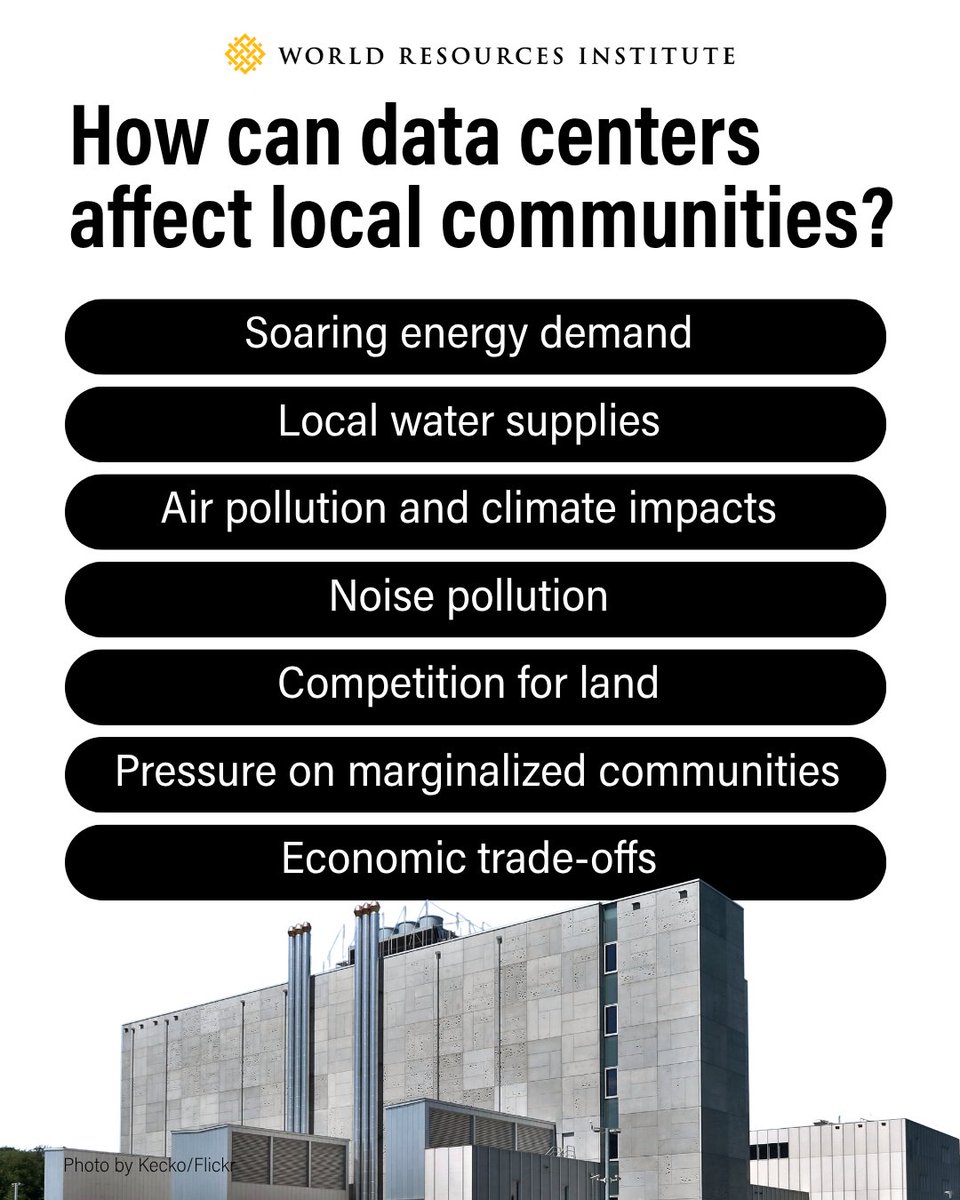
💬Everyone is talking about data centers. But how exactly do they impact our lives? What can states do to deal with these impacts?
We examined seven ways data center growth is reshaping local conditions in the US: https://t.co/2cov4cTJmL
The @WRIRossCities#PrizeforCities 🏆 recognizes bold initiatives sparking change in #cities around the 🌍.
One Grand Prize Winner will receive $250k. Does your project have what it takes?
Apply by Jan. 13, 2027 👉 https://t.co/feocmfxfCW
Read more ➡️ https://t.co/1cFC63Dcjn
Data Lab, led by @EvanTachovsky, is the team driving innovation at WRI, turning research and data into tools that enable better decision-making.
During Climate Week NYC, we hosted an open science fair showing prototypes of the products we're currently building.
Curious? Check out https://t.co/LiMyzAPaQq
☀️🥗What if farms could produce food and clean energy at the same time?
Agrivoltaics involves incorporating solar panels onto agricultural land, enabling the simultaneous production of energy alongside crops or livestock.
Places like the community farm at Roundabout Meadows in rural Virginia are already generating clean, affordable power through this emerging practice. Read their story and learn about other #SolutionsInFocus happening around the world: https://t.co/AUSePxUuzU
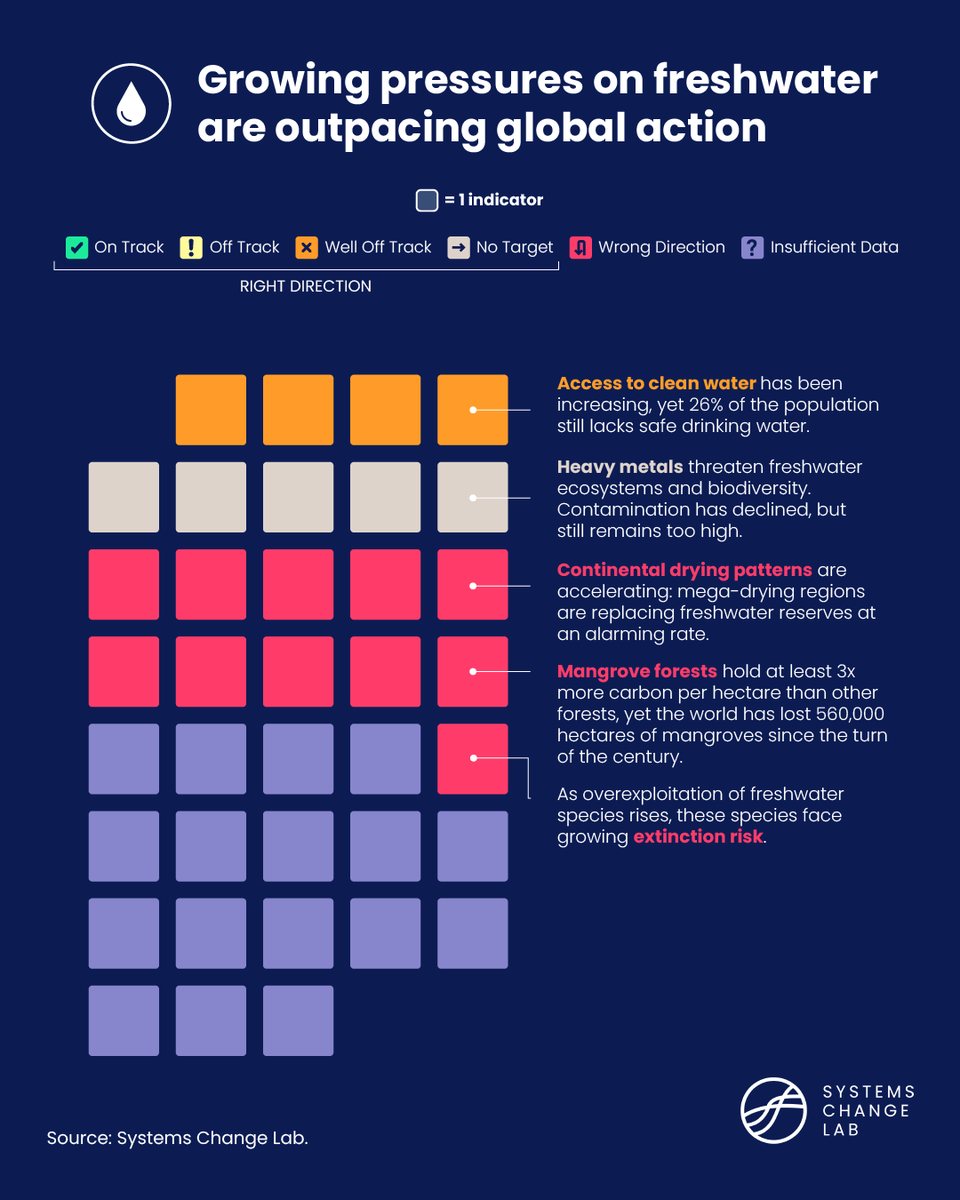
🚨 New Data: #SystemsChangeLab, @unepwcmc, WRI and @BezosEarthFund just released new findings on transforming the global freshwater system.
📊 Explore the data and see what’s needed to transform the freshwater system: https://t.co/d6ymTLbaOW
📱Launching during #LCAW2026: WRI’s new climate intervention calculator.
It helps policymakers, city planners, companies & institutions estimate the emissions impact of decisions that shape everyday choices at scale.
Explore it here: https://t.co/yGaNG1B3Wv
What can happen when temperatures rise in your city? Here are a few key impacts👇🌡️
Discover how 1.5 and 3 degrees C of global warming might affect your city: https://t.co/7fuO4ue4US
🌊One of the most promising areas for climate action has been largely overlooked and underinvested: the ocean.
Research commissioned by the @oceanpanel found that ocean-based climate solutions can deliver over a third of the annual emissions cuts needed in 2050 to limit temperature rise to 1.5 degrees C (2.7 degrees F), a globally agreed target to avert the worst outcomes from climate change.
Learn more about the seven key opportunities for ocean-based climate action👉 https://t.co/rfis74Rss3 #WorldOceanDay
✅Follow @WRIOcean for more ocean-related content
Carbon dioxide and other greenhouse gases are rapidly warming the planet. But where do they come from? Insights from #ClimateWatch explain which sectors emit the most GHGs: https://t.co/94o4Prnb2i
With the war in Iran posing uncertainty in energy markets around the world, The New York Times asked WRI's President & CEO Ani Dasgupta if this means the world might begin to reevaluate its dependence on oil and gas.
🔗Find out how he responds➡️ https://t.co/YpLmjsx9xH
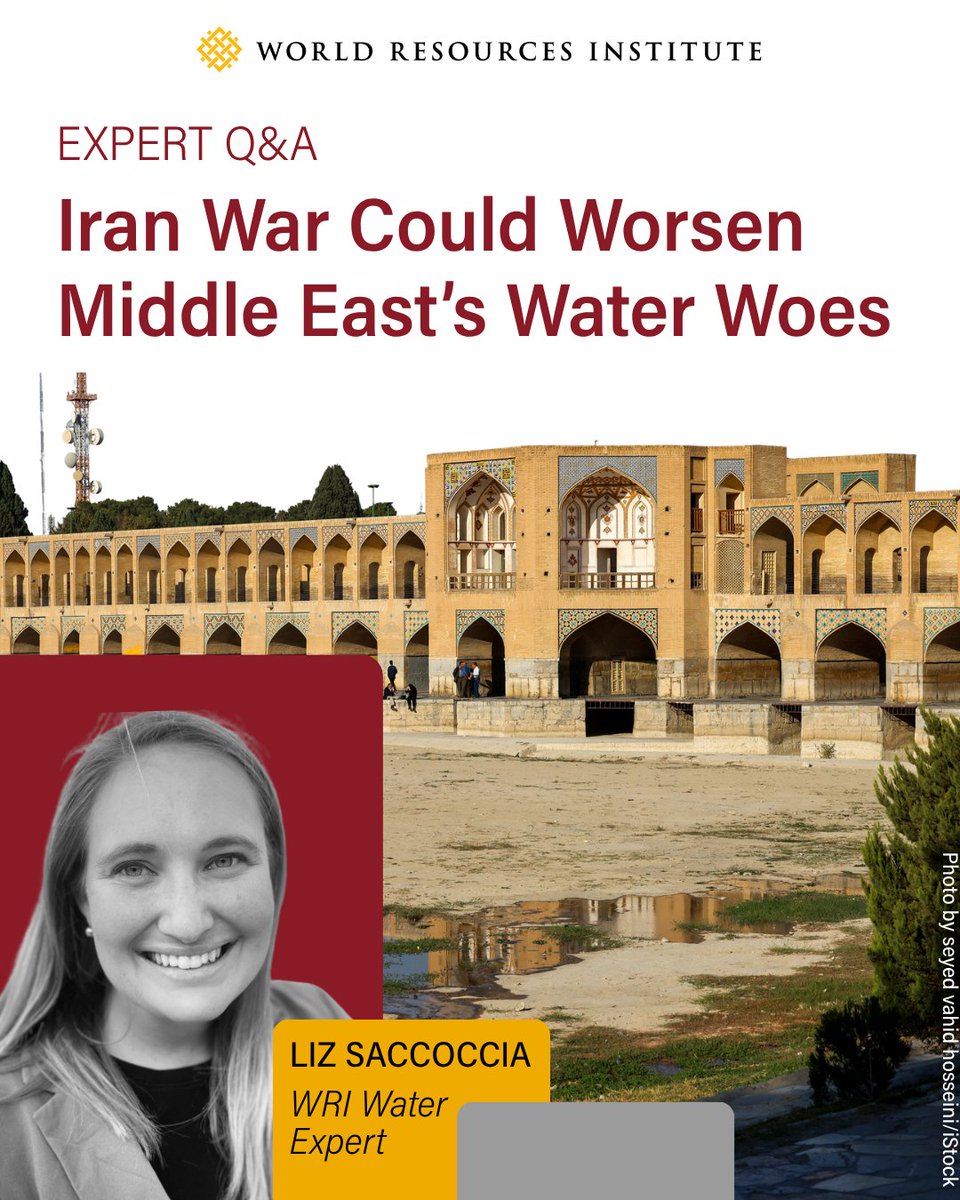
Iran is moving toward what experts call “water bankruptcy.”💧
WRI water expert, Liz Saccoccia explains Iran’s long-running water crisis, how conflict and water crises can reinforce each other, and what it means for the millions of people caught in between➡️ https://t.co/yzYDpa8E4S
New data platform available!
Cool Cities Lab helps city planners estimate the cooling potential of planned heat-resilient infrastructure using robust data and map visualizations.
Introducing #CoolCitiesLab, WRI's 🆕 heat data platform.
Developed w/ support from @Googleorg, Cool Cities Lab helps #cities identify where heat risk is highest 🔥 & target cooling solutions where they’ll matter most 🌳.
Explore it now 👉 https://t.co/Yoq0FnBDzg
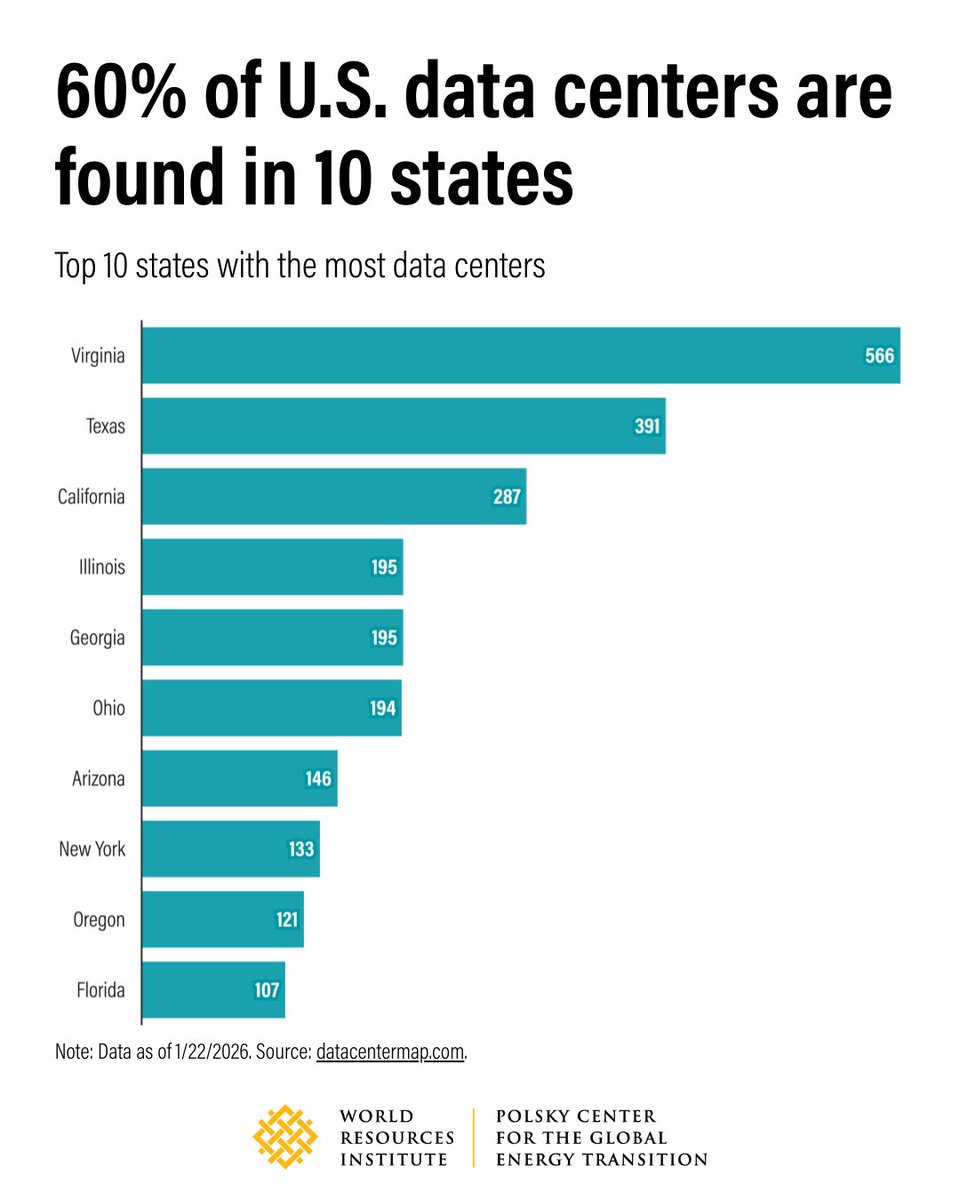
Close to 40% of all data centers in the world are in the United States, and more are being built at breakneck speed.
In the country itself, 60% of all data centers are found in 10 states. How will they impact communities in the short and long run? We unpack seven ways: https://t.co/BCV7eabiFT